What a Fed rate cut could mean for your wallet
What a Fed rate cut could mean for your wallet
Eight times a year, the Federal Open Market Committee (FOMC) of the Federal Reserve meets to assess the economy and determine whether it should adjust the federal funds rate. That may not sound like something that would affect you, but it certainly does.
The Fed鈥檚 benchmark rate is used by banks when they borrow and lend money to one another overnight, and the domino effect impacts everything from how much it costs to finance a car to how much interest you鈥檒l earn in your savings account to the stock market鈥檚 movements.
, a consumer fintech banking platform, explains what you should know about the central bank鈥檚 upcoming FOMC meeting, and how an interest rate cut could affect your personal finances.
Will there be an interest rate cut at the next Fed meeting?
In an effort to fight inflation levels we hadn鈥檛 seen in roughly 40 years, the central bank raised the federal funds rate aggressively between March 2022 and July 2023. It then held the rate steady for about a year, cutting rates at the end of last year. So far in 2025, it鈥檚 left the rate unchanged at a range of 4.25% to 4.50% 鈥� but that may be about to change.
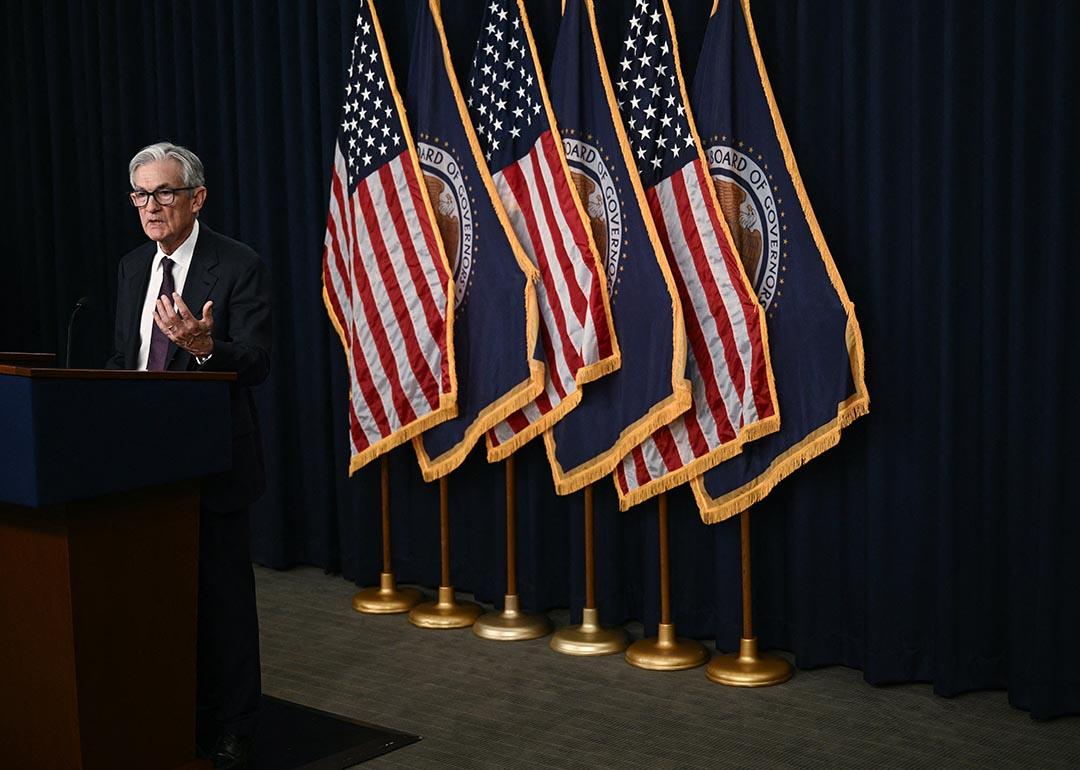
The Fed鈥檚 decision regarding interest rates is coming Sept. 17, and experts predict we may see a rate cut come out of that meeting. To be clear, there鈥檚 no way to know for sure what the Fed will decide to do. But the widely-used from the CME Group says, as of Sept. 5, there鈥檚 a 88% chance the central bank will drop the target for the federal funds rate to a range of 4% to 4.25% (and 12% chance it will drop even lower). And in August, Fed Chair Jerome Powell indicated that rate cuts could be on the way.
How an interest rate cut would impact borrowing costs
The federal funds rate influences how expensive it is for banks to lend money to consumers: When the rate drops, lending becomes cheaper. As a result, interest rates may impact how much interest you have to pay on new personal and auto loans 鈥� though it will likely take time. Keep in mind that existing, fixed-rate loans鈥� interest rates won鈥檛 change no matter what the Fed does next.
With mortgages and credit cards, it鈥檚 a bit more complicated. When the Fed cuts rates, the move only directly impacts overnight rates, either for deposits by banks at the Fed or loans banks get from the Fed, explains Tom Graff, chief investment officer of Facet Wealth, a financial planning firm.
鈥淭his does have some impact on mortgage or credit card rates, but it is relatively minor,鈥� he adds.
Because mortgage rates are influenced by the Fed but not dictated by it, they鈥檙e hard to predict. If you鈥檙e looking to buy a home or refinance your existing mortgage, you probably want to focus on improving your credit rather than trying to guess where rates are headed next. One option could be to use a secured credit builder card, which allows you to only spend the amount of money in your account, so you can build your credit history with minimal risk of debt. You鈥檒l want to look for one that reports to all three major credit bureaus and has a low (or no) deposit requirement.
As for credit cards, annual percentage rates (APRs) are typically tied to the prime rate, and the prime rate is influenced by the federal funds rate. That means if you have a card with a variable interest rate, which most do, your APR could come down. But you likely won鈥檛 see a huge drop and, if your APR does decrease, it will probably take some time to do so. Either way, you鈥檒l still want to pay your bills on time and work on lowering your credit card debt if you have any.
How an interest rate cut would impact your savings accounts
When the central bank lowers its benchmark interest rate, banks and credit unions tend to follow by cutting the interest rates that savers earn on savings accounts, certificates of deposit (CDs) and other savings products.
鈥淚t is very likely that if the Fed cuts by 0.25% on Sept. 17, you will see a lower rate on these kinds of accounts the very next day,鈥� Graff says. 鈥淵ou should be smart about how much cash you hold. I would assume the rate being paid on savings vehicles keeps falling.鈥�
Rate cuts mean less interest income on short-term cash, which will lead to less disposable income for savers, says Thomas Van Spankeren, a wealth advisor and chief investment officer at Rise Investments. He says that savers 鈥渟hould plan around having less disposable income.鈥�
But keep in mind that you鈥檙e still likely to earn more interest on your hard-earned cash in a high-yield savings account than you would in a regular savings account, and these accounts are a good place to store and savings you may need in the near term. Many online or mobile-only banks offer rates significantly higher than traditional banks and are a good place to look. And if you currently have money in a CD with a fixed rate, that interest rate won鈥檛 change.
How an interest rate cut would impact your investments
Interest rate cuts tend to make it less expensive for businesses and consumers to borrow money, meaning businesses can often grow while consumers spend. As a result, corporate profits often increase.
鈥淕enerally stocks cheer rate cuts at first,鈥� Graff says. So you may see your investments get a boost.
But don鈥檛 get too excited. 鈥淚f Fed rate cuts can help the economy regain momentum, then it can be a major boost to the economy,鈥� Graff adds. 鈥淗owever, if the Fed keeps cutting because the economy continues to weaken, that tends to be trouble for stocks.鈥�
As for fixed income, he says he would be cautious about investing in longer-term bonds.
鈥淭he market is already worried that Fed rate cuts could cause inflation down the road,鈥� Graff says. 鈥淭he more the Fed cuts, the more this worry will grow, and that will hit long-term bonds the most.鈥�
was produced by and reviewed and distributed by 麻豆原创.