
Breakthrough discoveries in the evolutionary biology and behavior of pets
This story originally appeared on Native Pet and was produced and distributed in partnership with Â鶹ԭ´´ Studio.
Breakthrough discoveries in the evolutionary biology and behavior of pets
Pets are smarter than some people give them credit for, and many of their habits that seem so endearing can come with intentions more different than we realize. When your cat curls up on the bed covers or rubs up against your legs, for example, it’s seen as a display of love and affection—as opposed to a means of marking you with its scent. Or when your dog follows you around the house, you may take it as a sign of loyalty, though it is as equally possible that it's bored or anxious. Or maybe your pooch just wants a treat.
Like all species, domesticated or otherwise, household pets are subject to evolutionary development. While there is still plenty we don’t know about evolutionary biology, strides have been made in the research and understanding of pet behavior.
Take Raymond Coppinger, for example. The biology professor devoted his entire career to the study of canine behavior. He bred and raced sled dogs and became—along with his scientist, wife Lorna—a renowned expert in the behavior of sheepdogs. Coppinger published several books, among them “Dogs: A Startling New Understanding of Canine Origin, Behavior, and Evolution,” which made an impact in the world of animal behavioral research. The book that present-day domesticated dogs evolved not from cross-breeding with wolf pups—which had been a widely accepted theory—but rather from self-domestication. This domestication resulted from scavenging off humans and adapting to the ever-growing human population.
More recently, there is John Bradshaw, author of “Cat Sense,” who believes there is the average household cat has evolved much from its ancient ancestry. Yet, Bradshaw concedes the adaptive behaviors in cats can be tagged to their interactions with humans.
When pets furrow their brows at you or look guilty for doing something they shouldn’t have, it may look cute and sweet, but in actuality, these are evolutionarily developed behaviors pets have formed to adapt to living with humans. These traits arise often in response to a human’s own behavior or as a means for pets to get what they want, such as more food in their bowl or receiving more attention. These behaviors are, in essence, survival instincts and communication tools pets have picked up after living with humans for thousands of years.
To gain a little perspective on certain common pet behaviors, compiled a list of scientific insights from journals and news reports. Keep reading for a look at how—and why—our pets behave the way they do.
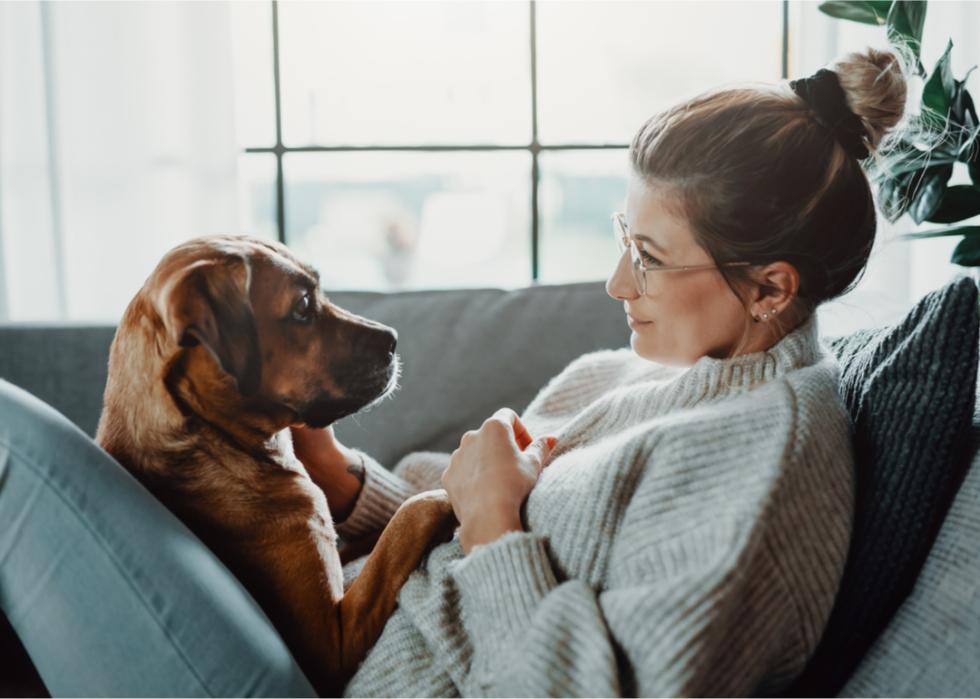
Dog eyebrows evolved to communicate with humans
When your pup uses its eyebrows to communicate with you, it can give them a human-like quality that many owners find endearing. According to a 2019 study published in the , dogs are masters of reading human facial expressions. Over thousands of years, canines have evolved to use their facial muscle anatomy to communicate with humans.
According to the study, “this movement increases paedomorphism [the retention and presentation of child-like characteristics] and resembles an expression humans produce when sad, so its production in dogs may trigger a nurturing response.” Those puppy eyes your dog gives you may be a sophisticated evolutionary response developed to get more of your attention.
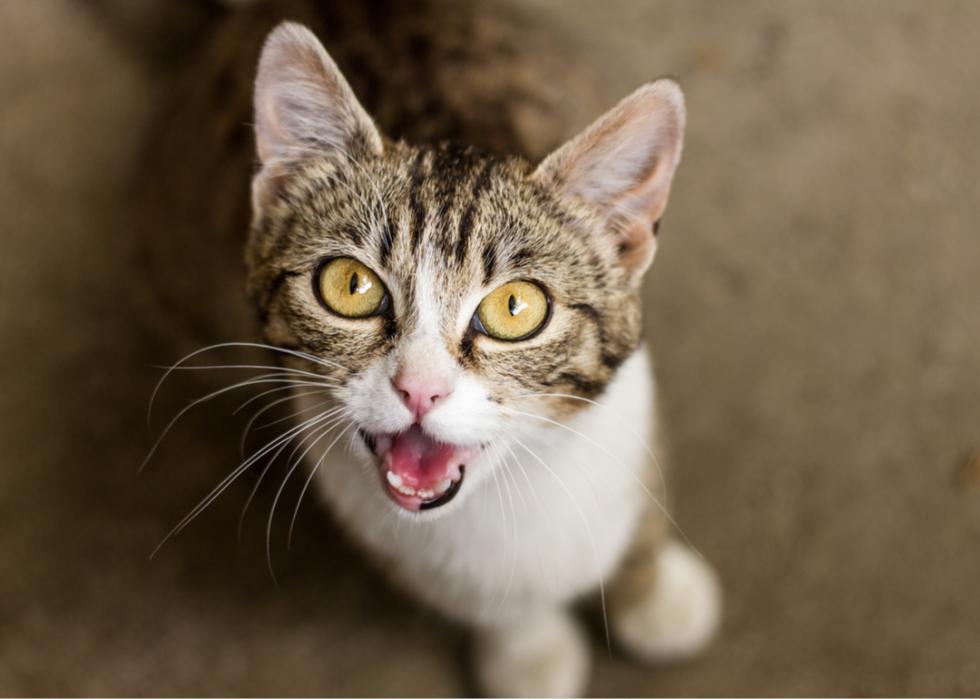
Some cat meows sound like baby cries to get you to do their bidding
Just like dogs, cats have their own way of communicating with humans. Sometimes, they might even be trying to manipulate a response. For instance, some meows sound similar to a baby or small child’s cry, which may be an attempt by them to get you to do something they want, such as fill their food bowl or give them a treat.
According to research published in , “In the domestic cat, many signals given when interacting with humans seem to originate from the period of dependency on the mother—which is also the time when social behavior in this ancestrally asocial species is most prevalent. Purring … is one such signal.” Cats, who are totally dependent on their human companions to fulfill their needs, may be mirroring a time when they were completely vulnerable and relied on their mothers for food. found while cat and human dynamics are among the most common relationships in the world, humans are not good at deciphering cats’ needs based on their meows.

The ‘guilty’ look is in response to owner cues, not actual guilt
Who doesn’t like those cute dog videos online that show a guilty-looking pup getting caught having eaten something they shouldn't have? Or turning a couch into a FEMA-level disaster zone?
According to a study published in the , that guilty look is more about your response than any guilt the dog is actually feeling. During the study, researchers examined the behaviors of 14 dogs and their owners. Owners instructed their dogs not to eat a treat, then left the room. Some dogs disobeyed and some were well-behaved, but they still gave the same guilty look when they were scolded by their owner—even if they were innocent. So when your pooch sneaks the other half of your hamburger off your plate, all the angry looks in the world probably won’t stop them from doing it again if given the chance.
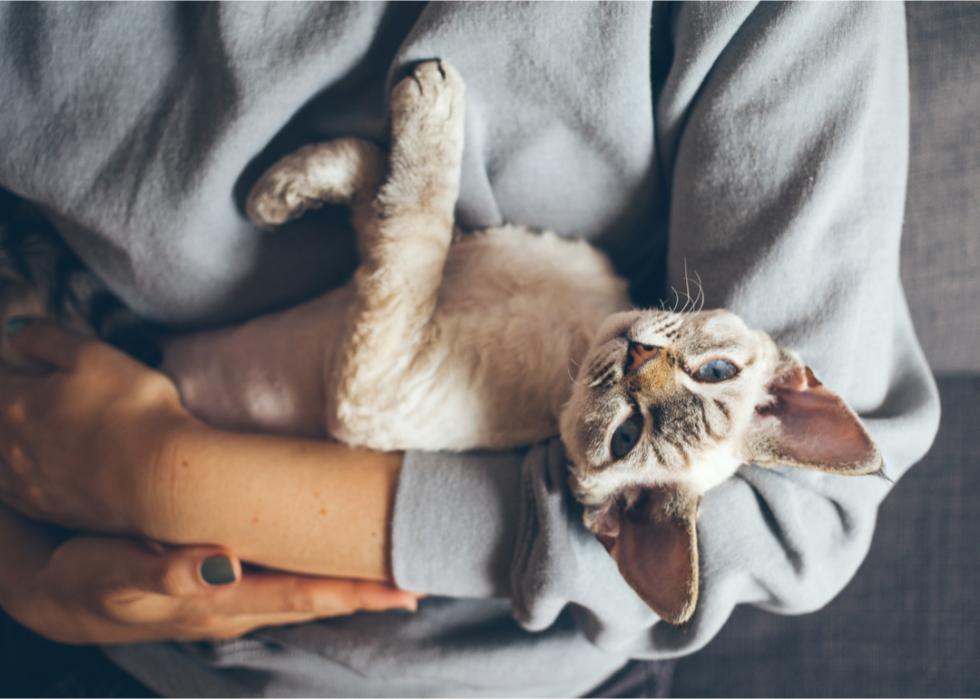
Domesticating cats likely caused them to keep 'making biscuits' into adulthood
If you don't have much experience with cats, you may have never heard of (or experienced) the term “” This refers to when a feline kneads its paws against a soft surface, similar to the way a bread maker presses raw dough. The reason behind this behavior varies from cat to cat. Some experts believe this rhythmic kneading can be traced back to when cats were kittens nursing with their mother; the behavior was both a survival instinct and a means of stimulating the mother’s production of milk. Other experts believe it’s simply a way for cats to relax or even mark their territory. Whatever the reason may be, rest assured, “making biscuits” is a very normal feline behavior.

Canine and human genomes evolved together
The secret to why dogs are considered man’s best friend may be that dog and human genomes evolved together. In a 2013 study focusing on grey wolves, Chinese indigenous dogs, and various dog breeds, researchers determined “” could be found in functions such as digestion, metabolism, and brain function.
Scientists believe these overlaps likely resulted from sharing the same environments, and the process of domestication began approximately 32,000 years ago. This may have been the result of a decisive demographic split from wolves. Researchers also found dogs and humans share genomic similarities when it comes to risk levels for cancer and cholesterol levels.
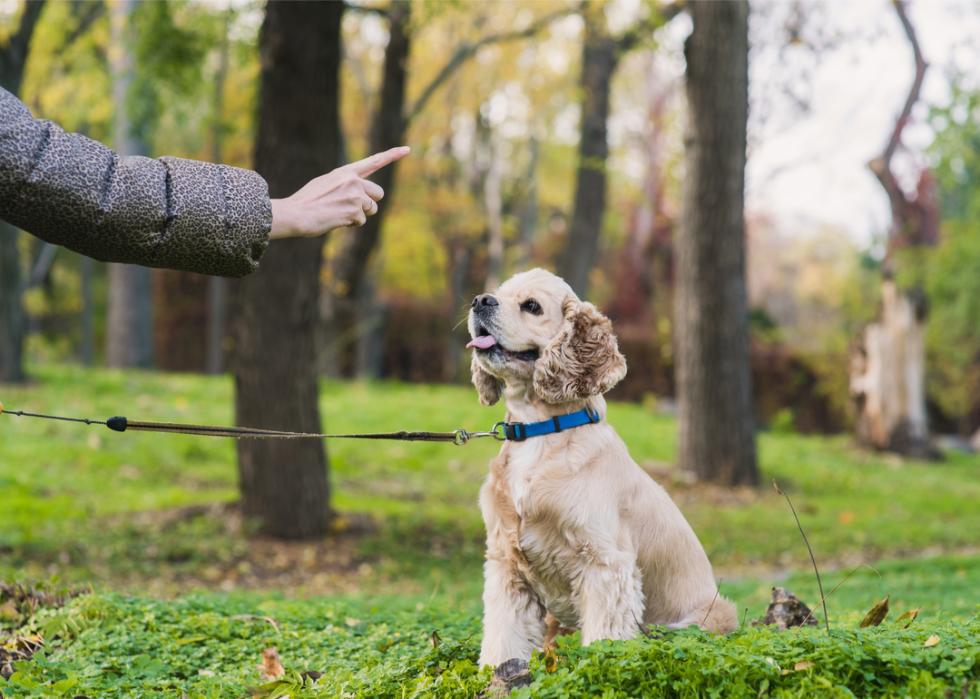
Dogs evolved to understand our hand signals
You know that feeling when your dog intuitively seems to know when you need extra love or comfort? That’s because domesticated dogs have evolved to understand humans. A 2021 study in found dogs raised by humans understand human emotions better than wolves raised by humans.
Researchers concluded, “dog puppies are more attracted to humans, read human gestures more skillfully, and make more eye contact with humans than wolf puppies.” Dog cognition has evolved specifically to be attuned to human emotions and even communicate with them. This explains why many dog training techniques employ hand signals as a successful way to communicate.
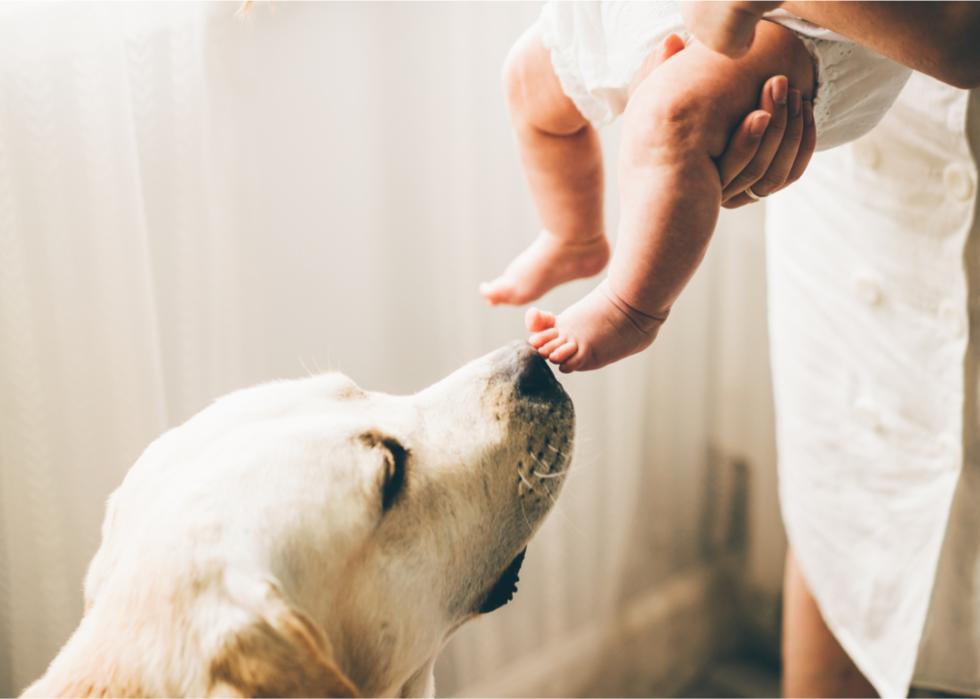
When a baby cries, dogs react similarly to humans
Human beings aren’t the only ones who have an emotional or nurturing response to baby cries. A study published in found dogs display similar psychological behavior when they hear a baby crying. When a baby wails, humans typically become more alert and their cortisol levels increase.
When dogs hear the same noise, they often become more alert—and also more submissive. According to the study, “These findings suggest that dogs experience emotional contagion in response to human infant crying and provide the first clear evidence of a primitive form of cross-species empathy.” If you hear your baby crying in the next room, chances are, your dog is almost as worked up and concerned as you are.

Dogs may have domesticated themselves
You may have heard the phrase “we didn't domesticate dogs, they domesticated us.” In reality, that saying may have a ring of truth to it. In 2001, researchers Raymond and Lorna Coppinger published in which they hypothesized that dogs did not evolve from wolves, nor were they domesticated by humans. Instead, they began to self-domesticate during the Mesolithic period in order to take advantage of food at local village dumps.
In another paper published in Scientific Reports, , an assistant professor of biology at Skidmore College, wrote wolves most likely became familiar with humans by associating villages (and, thus, humans) with food. As a result, these wolves, which eventually became the ancestors of dogs, ingratiated themselves to humans and became domesticated.
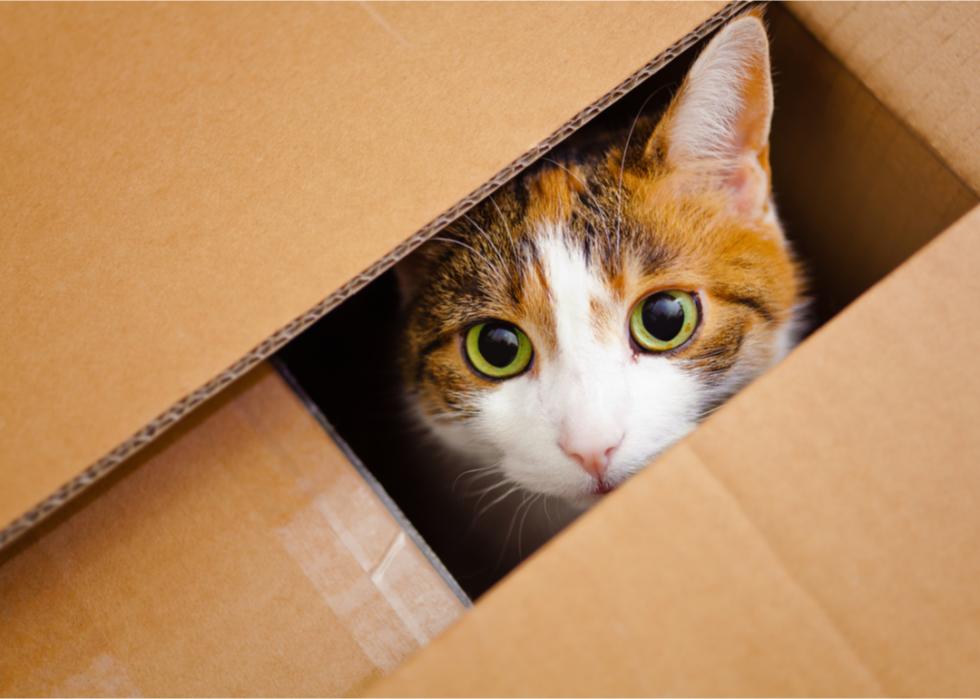
For cats, boxes are their safe space
Living in a shelter can be a stressful experience for any animal, particularly for domesticated cats. These heightened stress levels can lead to serious health issues for felines.
To explore potential solutions to this, from the University of Utrecht looked into whether hiding boxes could reduce stress among shelter cats. When seeking safety and security, cats will often look for small, cozy hiding places. During the experiment, researchers discovered that when cats were supplied boxes, they adapted to their environment far more quickly than those without boxes. When your kitty decides to occupy a laundry basket or empty shoe box, it’s best to let it happen—in fact, it’s good for the cat
Animals may have been domesticated as ‘living tools’
The relationship between humans and their pets is a mutually beneficial one. Not only do pets rely on us for necessities such as food and shelter, we rely on them for companionship and protection—and this relationship has some scientific weight.
In a 2010 study published in , researcher Pat Shipman named the relationship between humans and their pets the “animal connection,” and he posited this connection is “the underlying link among the other key human behaviors and that it substantially influenced the evolution of humans.” Shipman suggests humans and animals have become partners—essentially companions to each’s existence—which has impacted both human and animal evolution and behaviors. Such a theory lends credence to any owner’s belief that life would be incomplete without a pet.