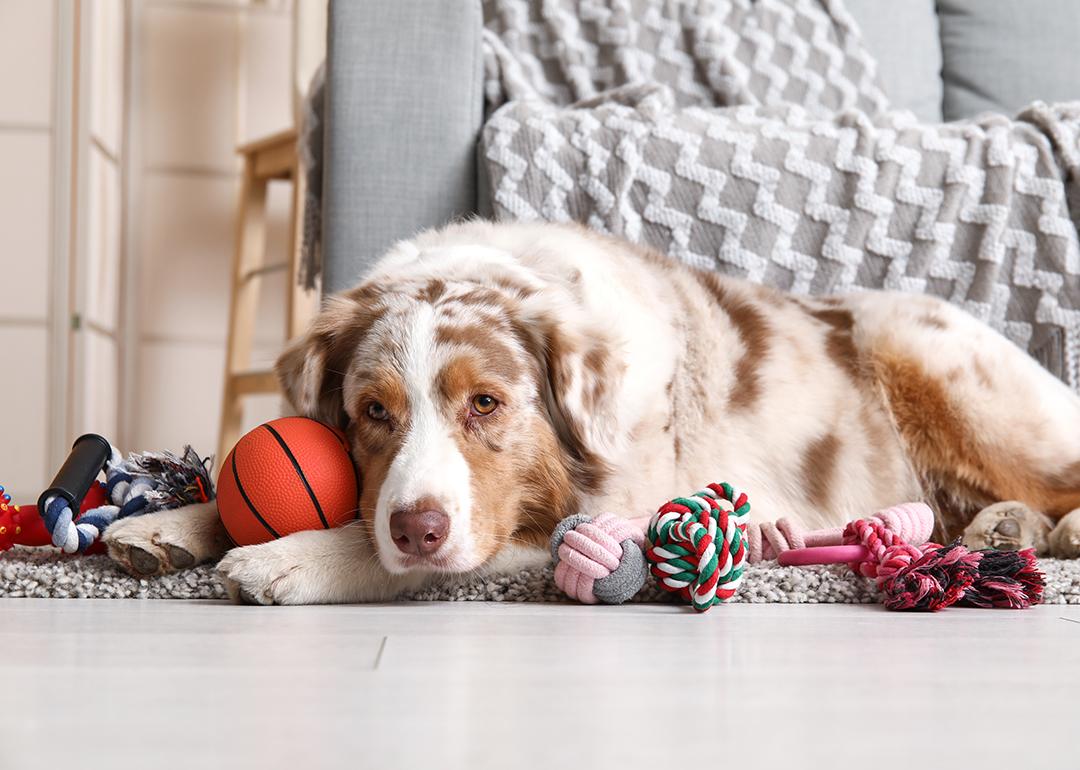
Is your dog a toy addict? A new study says it’s totally possible
Is your dog a toy addict? A new study says it’s totally possible
Dogs . Whether it’s that first stuffie they get as a puppy or the ratty old relic they still drag around as a senior dog, they are absolutely devoted. But can a dog ever love a toy too much? Concerned pet parents might notice that their dogs become way too into certain toys. It can turn from simple love to obsession … and maybe even addiction. According to a new study, some dogs may display addictive behavior when it comes to their toys.
A group of researchers from the University of Veterinary Medicine Vienna conducted a study on — and their . But does this one study mean we should all be watching our dogs at home for signs of a problem? unpacks what’s really going on with dogs and their toy obsessions.
What did the study say about dogs and toy addiction?
In humans, addictive behaviors, or “disorders due to addictive behaviors,” are recognized by distress and interference with daily life that develop after repeating actions that were initially rewarding, according to the World Health Organization (WHO). These are different from substance abuse disorders, which but in which substances are altering the brain chemistry. Currently, WHO officially recognizes as behavioral addictions, and there is research being done on shopping and social media addictions — your pup’s overly enthusiastic attachment to their saliva-covered plush alien is not currently on the list.
So, when it came to studying similar behavior in dogs, the researchers behind this study specifically looked at “excessive fixation on toys, reduced responsiveness to alternative stimuli, and persistent efforts to access toys.” The study revealed that some of the dogs who displayed high levels of addictive-like behavior would whine when the toy was not accessible and would even ignore food in favor of the toy.
To be clear, this study doesn’t prove that dogs can develop addictions — at least, not in the way it is manifested in humans. The key to diagnosing an addiction is to identify the negative consequences that stem from the repetitive behavior. And while the study identified some patterns of this, especially when it came to ignoring food and treats, further work would be needed to determine whether this is a chronic condition.
What should you look out for in your dog?
Veterinarian Dr. Adam Christman knows a thing or two about how obsessed dogs can get with their toys.
“I’ve seen dogs that treat their toy like it’s their emotional support pickle,” he says. “I’ve met Labs who can’t function without that one tennis ball and Border Collies who would auction off their soul for a frisbee. If I had to give the emotional support dog toy of the year award, it has to ... pick a size, pick a themed Lamb Chop; it doesn't matter. There is something infused in that fake wool that makes dogs happy!”
But it escalates from simple love to obsession when a dog becomes aggressive and anxious. As the Vienna study indicated, one big sign of this escalation is whining when the toy is taken away and ignoring food in favor of the toy. Dr. Christman and certified professional dog trainer and behavior consultant point out other indicators, like guarding the toy and aggression; , or ; and physical wear and tear on the dog, like cracked teeth and sore gums.
When should you be concerned about your dog’s intense toy attachment?
Bassett says that pet parents come to her with concerns about their dogs’ all the time. She says some are just mildly annoyed at having to constantly play with the specific toy, while others have actual medical and financial concerns. Bassett adds that excessive toy fixation becomes a cause for concern when a dog’s response becomes disproportionate, but there are ways to work on this.
“First, remove the toy temporarily and observe your dog’s response,” Bassett advises. “If they become highly distressed, , or start to redirect their obsession onto other objects, it’s time to consult a professional trainer or veterinary behaviorist.”
Likewise, Dr. Christman emphasizes that dog parents should be concerned when a dog’s relationship with a toy starts to interfere with their day-to-day life.
“Here’s the line in the sand,” Dr. Christman says. “When the toy stops being fun and starts being a problem. If your dog can’t relax without it, becomes anxious or aggressive, or starts losing interest in everything else, that’s when we’ve crossed into clinical concern. It’s not cute anymore; it’s compulsive. Think of it like a doggie version of screen addiction.”
What can you do about your dogs’ toy addiction?
First and foremost, Dr. Christman advises all dog parents not to panic. “Your dog isn’t ‘crazy’ ... they’re wired to chase, chew, and play,” he says. “Some just take it too far.”
He warns against completely cutting off the toy, though. Instead, dog parents should rotate toys and add new outlets to stimulate the dog. He also suggests in the dog. “Reward when they walk away from the toy,” he says. “That’s gold.”
Bassett agrees with adding new enrichment to the dog’s schedule. She also recommends desensitizing the dog to the toy’s absence and implementing tools, such as playpens or baby gates, to prevent access to the toy. Additionally, Bassett says that this intense attachment to a toy might come from underlying reasons.
“It’s important to recognize that obsessive behavior often has an emotional element — , anxiety, or unmet needs,” Bassett adds. “What looks like a ‘cute’ or ‘quirky’ behavior at first can actually be your dog’s way of coping with overstimulation, lack of enrichment, or too much time spent alone. With patience and the right behavioral guidance, most dogs can learn a healthier relationship with their toys. Sometimes, if a dog's daily needs and behavioral training requirements are a mismatch for what a household can provide.”
Both Dr. Christman and Bassett say that if the cause does stem from , it might be a good idea to see a veterinarian about .
Can this behavior be prevented?
Redirecting this behavior earlier on is always easier than trying to rectify it later. Both experts emphasize that variety is key to deterring this type of behavior early on.
“Early structure that includes a , enrichment activities, and training goes a long way,” Bassett says. “Introduce different types of toys and rotate them regularly so no single object becomes too valuable.”
“Rotate toys regularly,” Dr. Christman says. “Don’t let one become ‘the chosen one.’”
Customizing playtime around breed instincts also goes a long way. Some breeds, like herding types and retrievers, will naturally need more stimulation than others. Keeping your dog’s daily life full of enough physical and mental stimulation means that they’re less likely to develop obsessive tendencies down the line — and it just makes them happier. And who doesn’t want that?
was produced by and reviewed and distributed by Â鶹ԭ´´.