Australia's fires have already killed 1 billion animals鈥攗npacking the tragedy through statistics
Fire has been a crucial part of Australia's ecosystem for millennia. Many species in the nation's forests and deserts are purposefully flammable, relying on regular, mid-sized burns to manage plant and animal diversity. Aboriginal tribes such as the Martu lit controlled fires that shaped their ecosystems; modern conservation groups are .
But Australia's 2019-2020 fire season has been anything but controlled. In late June 2019, in the northeastern state of Queensland, which doesn't see its fire season typically begin until August. By September, fires were raging in New South Wales. Gladys Berejiklian, the state's Premier, two months later; hundreds of schools were closed and thousands were evacuated as over 60 fires burned across the region.
As of February 2020, many fires remain uncontained across eastern Australia. Millions of acres of wilderness have been destroyed, thousands of homes and buildings have been destroyed, and over 1 billion local animals have been killed. According to Robinson Meyer, a climate reporter for The Atlantic: "Over the past six months, Australian fires have burned , by California's 2018 fires and the Amazon's 2019 fires." Meanwhile, the country's federal government lags many other nations on climate policy, and Prime Minister Scott Morrison denies a link between bushfire severity and climate change.
To demonstrate the scale of this environmental crisis, 麻豆原创 scoured news reports on Australia's fires from the past six months, and research by nonprofit groups such as , to identify 15 key statistics on the environmental damage caused by these fires, as well as the political legacy they are leaving. If you would like to contribute to recovery efforts, both firefighting organizations such as the and wildlife organizations such as are soliciting donations.
Read on to learn about Australia's worst fire season in recorded history.
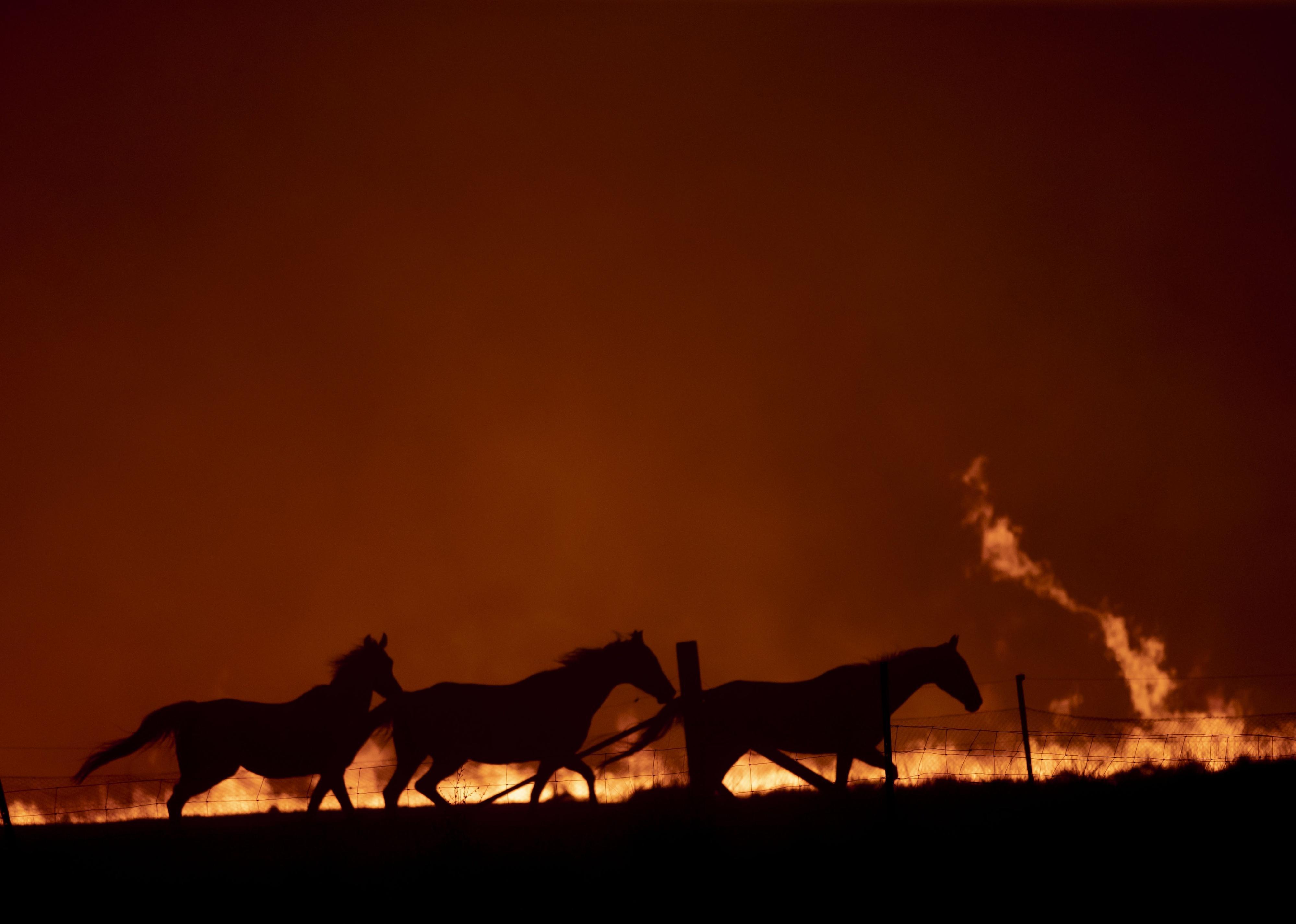
[Pictured: Horses panic as a spot fire runs through the property of Lawrence and Clair Cowie on Feb. 1, 2020, near Canberra, Australia.]
27 million acres of wilderness destroyed
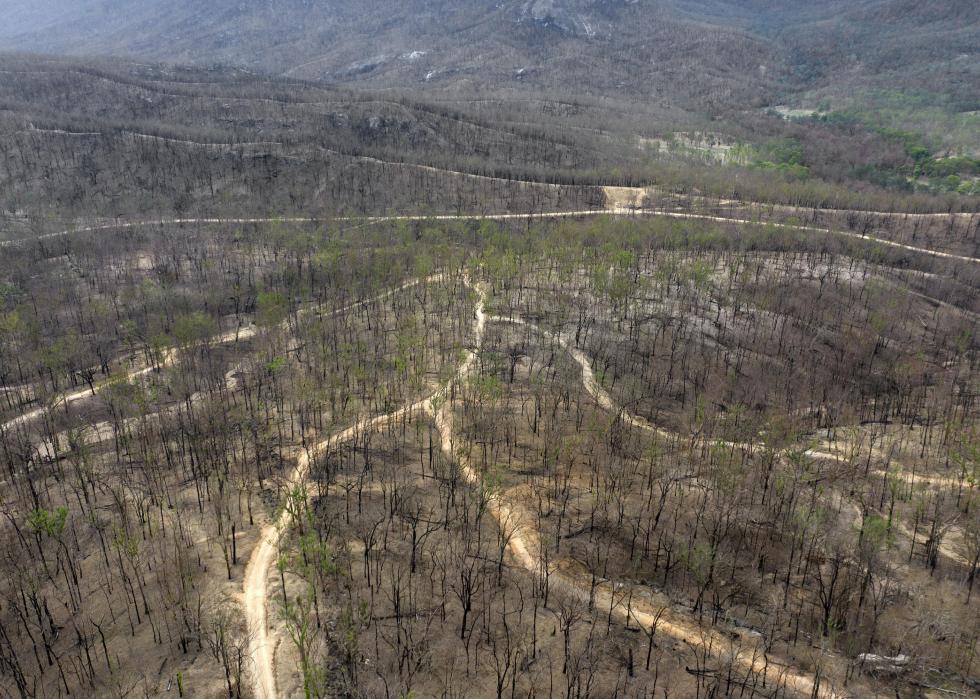
Since September, about (11 million hectares) have been devastated by the fires鈥攖hat鈥檚 an area larger than , or one-third the size of Germany. The fires have impacted Australian habitats , threatening a diverse range of people and wildlife.
[Pictured: An aerial view blackened bush, with some new regrowth is seen on Jan. 14, 2020 in Wytaliba, Australia.]
Over 1 billion animals killed in the fires
Prof. Chris Dickman of the University of Sydney estimated in January that in the bushfires. 800 million of those estimated deaths were in New South Wales, a southeastern province that is , and other endangered species. Prof. Dickman鈥檚 calculations are based on a which analyzed the impacts of land clearing in New South Wales.
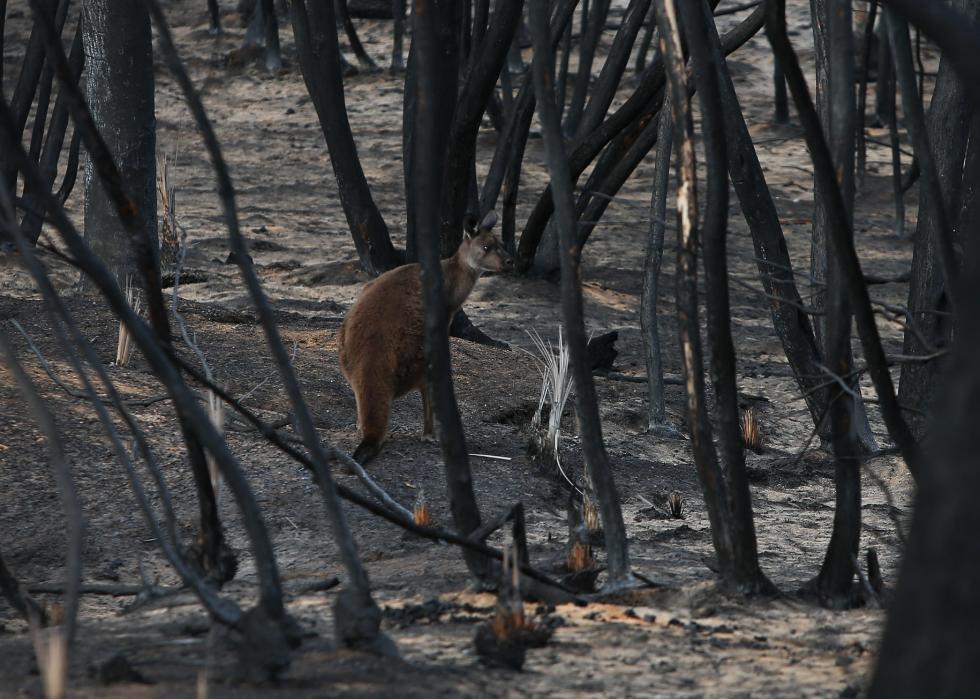
鈥淚 think there's nothing quite to compare with the devastation that's going on over such a large area so quickly,鈥 in an interview with NPR. Many animals which try to escape the blaze end up in ecosystems that do not have the resources they need, or fall prey to predators.
[Pictured: A kangaroo is seen at the edge of the bushfire-damaged Flinders Chase National Park on Jan. 12, 2020 on Kangaroo Island, Australia.]
70% of fires burning in forests
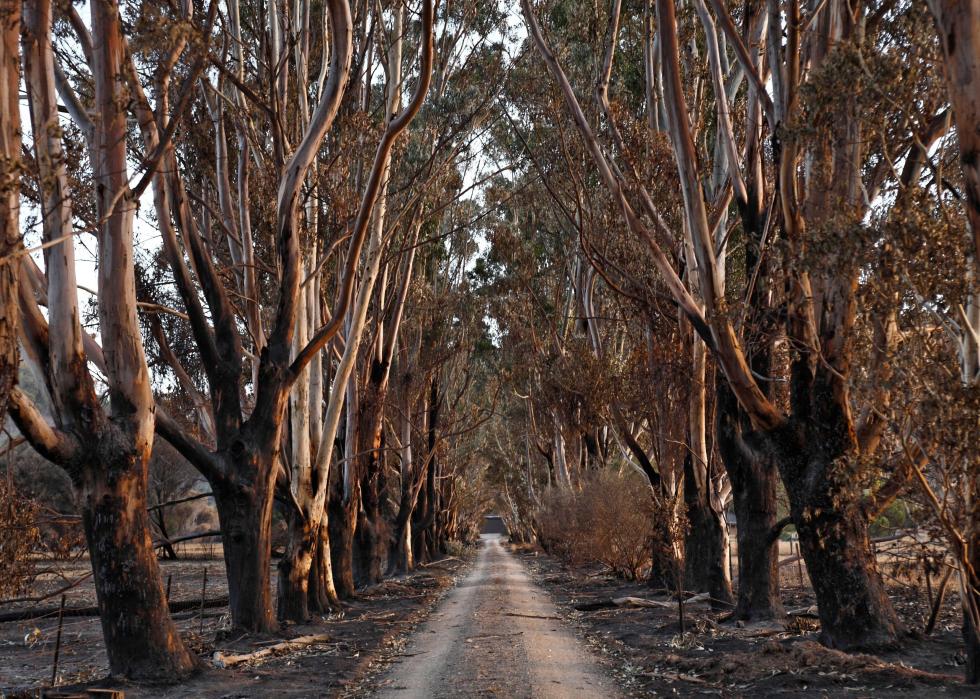
According to Global Forest Watch Fires, an online platform by the World Resources Institute that monitors forest destruction, have raged through the nation鈥檚 forests. Many of these forests are comprised of Eucalyptus trees, plants which are both a for Australia鈥檚 unique animals (such as koalas) and hold cultural significance for the nation鈥檚 indigenous people. These trees are more naturally flammable than many other species, and the speed and duration of these recent bushfires have prevented Eucalyptus forests from recovering.
[Pictured: Destruction after bush fires and burnt eucalyptus trees in the state of Victoria.]
40% of fires burning in legally protected areas
Almost by the country鈥檚 National Reserve System. This land includes forests storing about 1.65 billion U.S. tons (1.5 billion metric tons) of carbon, and is carefully managed to keep that carbon in the ground to prevent further carbon dioxide emissions鈥攐r at least, it would be managed if the forest were not on fire.
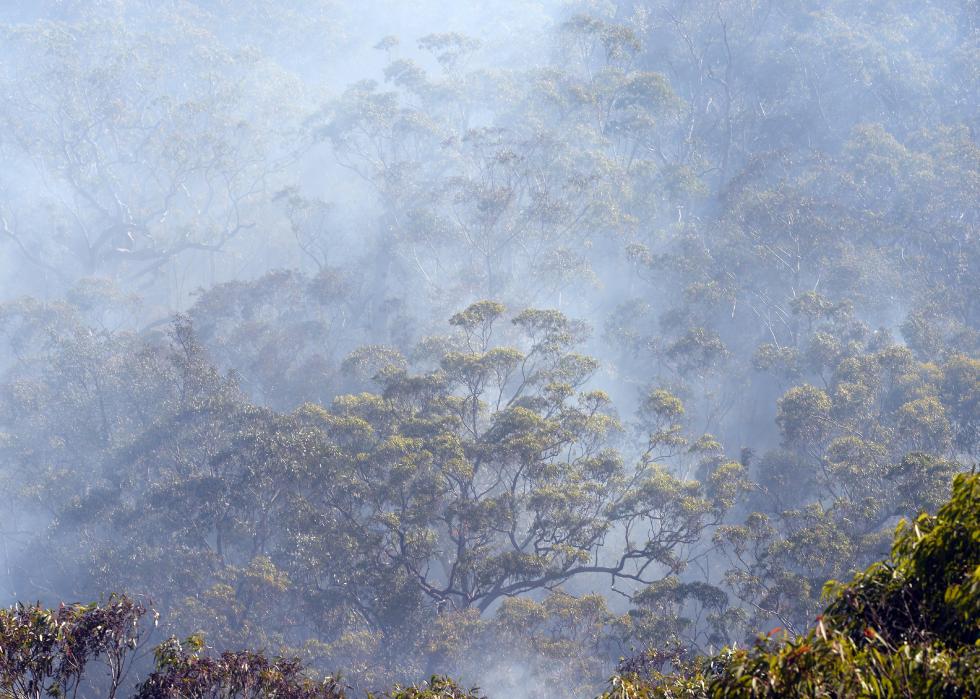
These protected areas on fire also include many of , regions which are the sole habitats for endangered species that only live in Australia. Fires in these areas threaten unique species such as the Wollemi pine tree and Corroboree frog.
[Pictured: The Blue Mountains region west of Sydney, Australia.]
2,000 houses destroyed in New South Wales
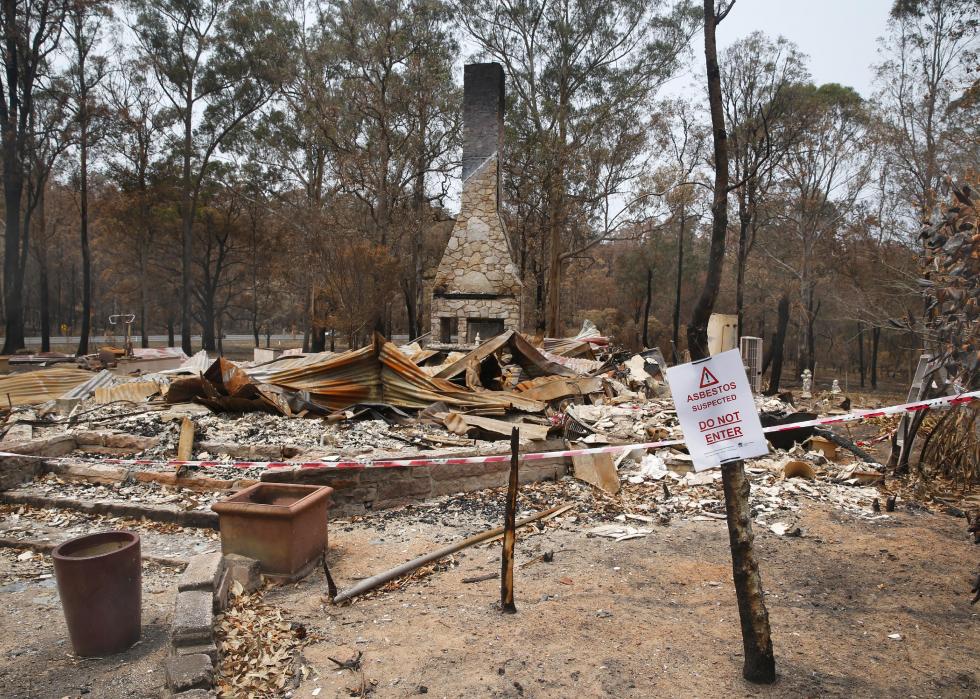
New South Wales is the , home to about 8 million people鈥攖hat's almost the population of New York City (8.5 million). Fire has impacted over 12.3 million acres (5 million hectares) in this region, ; more than 2,000 households have been destroyed and thousands more have been forced to evacuate. More than 1,600 New South Wales firefighters, many of them volunteers, are currently working to slow the blaze.
[Pictured: Hundreds of buildings were destroyed in Mogo and Batemans Bay during the bush fires in New South Wales, Wednesday, Jan. 15, 2020.]
Sydney air in November equivalent to smoking 32 cigarettes
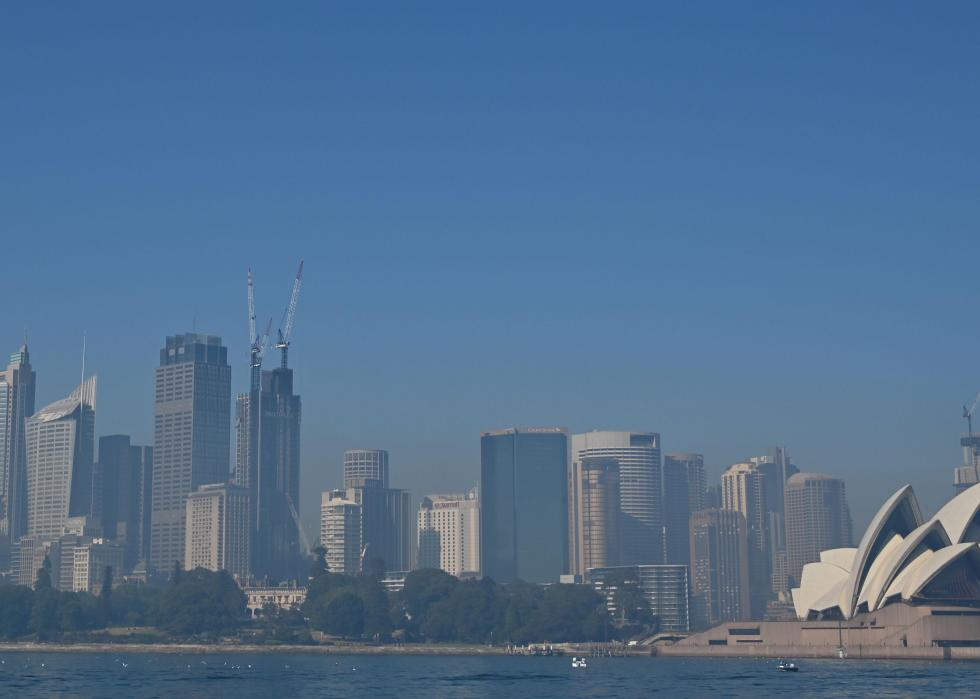
Almost two-thirds of the New South Wales population lives in greater Sydney, the nation鈥檚 largest city, which has been hard hit by the fires. This past November, Brian Oliver, a professor specializing in respiratory diseases at the Sydney University of Technology, estimated that simply inhaling the air in Sydney鈥檚 fire haze areas had the . Prof. Oliver told News.com.au: 鈥淲alking out into and inhaling the current pollution could cause heart inflammation and trigger a cardiac arrest.鈥
[Pictured: Smoke from bushfires blanket Sydney on November 19, 2019.]
4,000 people trapped in seaside town Mallacoota
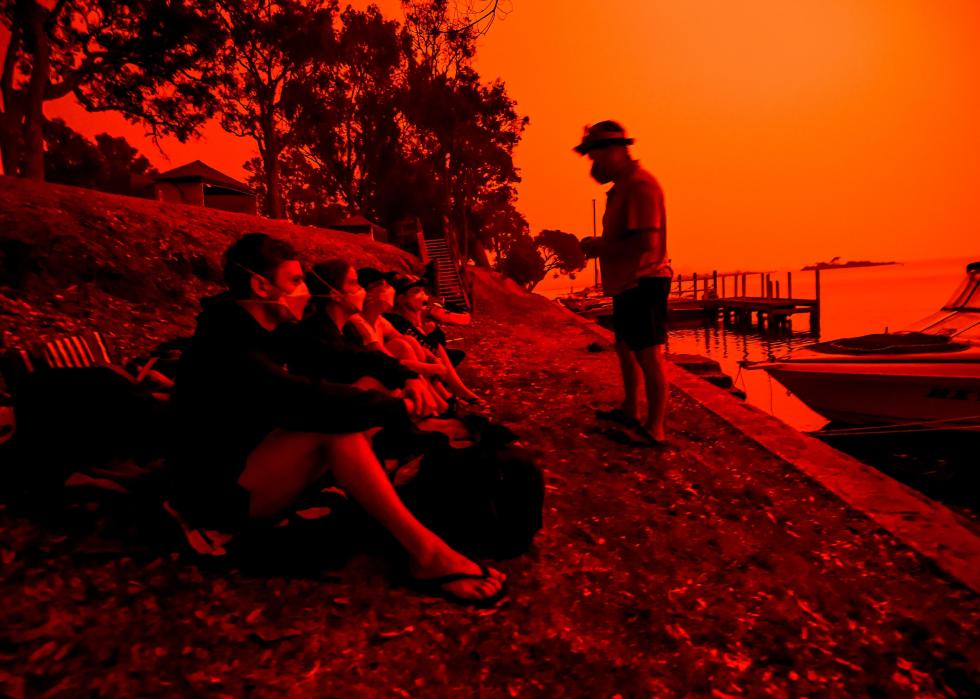
Perhaps the most devastating images from these bushfires so far came from Mallacoota, a small southeastern town and tourist destination with 1,000 year-round residents. About 4,000 people were forced to evacuate by air and sea when winds pushed fires toward the town. show unnerving red skies, widespread destruction of homes and buildings, and rescue services unprepared to handle the catastrophe.
[Pictured: A parent reassures his children as the skies above turn red during the day on Jan. 4, 2020 in Mallacoota, Australia.]
Bushfire smoke traveled 7,000 miles
Besides uprooting Australian people and wildlife, the bushfires have pushed a plume of smoke across the globe. This smoke contains vast amounts of carbon dioxide which will further damage the atmosphere that enabled the fires in the first place. Dr. Pep Canadell, an Australian climate scientist and executive director of the Global Carbon Project, estimates that fires in Australia鈥檚 southeast have emitted about 400 million tons of carbon; this is more than two-thirds the emissions that man-made sources in Australia sent up in the entirety of 2019.
The smoke plume has traveled so far, according to satellite images released by NASA. It had hit Chile and Argentina by the beginning of January, and could reach the Atlantic basin depending on wind conditions.
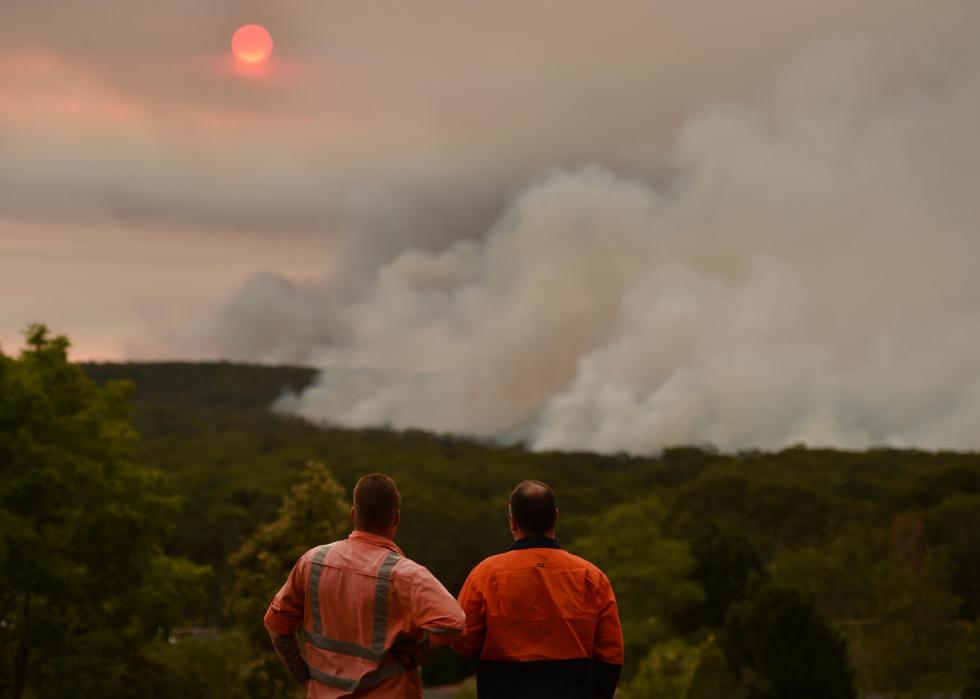
[Pictured: Residents watch a large bushfire as seen from Bargo, 150km southwest of Sydney, on Dec. 19, 2019. ]
25,000 koalas killed on Kangaroo Island
Kangaroo Island, Australia鈥檚 third-largest island off the coast of Adelaide, is such as kangaroos, wallabies, echidnas, platypuses, cockatoos, and koalas. Fires have devastated and slashed animal populations, including koalas: 25,000 of the island鈥檚 50,000 koala population are estimated dead.
鈥淧eople call this place a little Noah鈥檚 Ark,鈥 Land for Wildlife ecologist Heidi Groffen told the Guardian. 鈥淭he island is a refuge. This is the largest fire we have seen in a long time.鈥
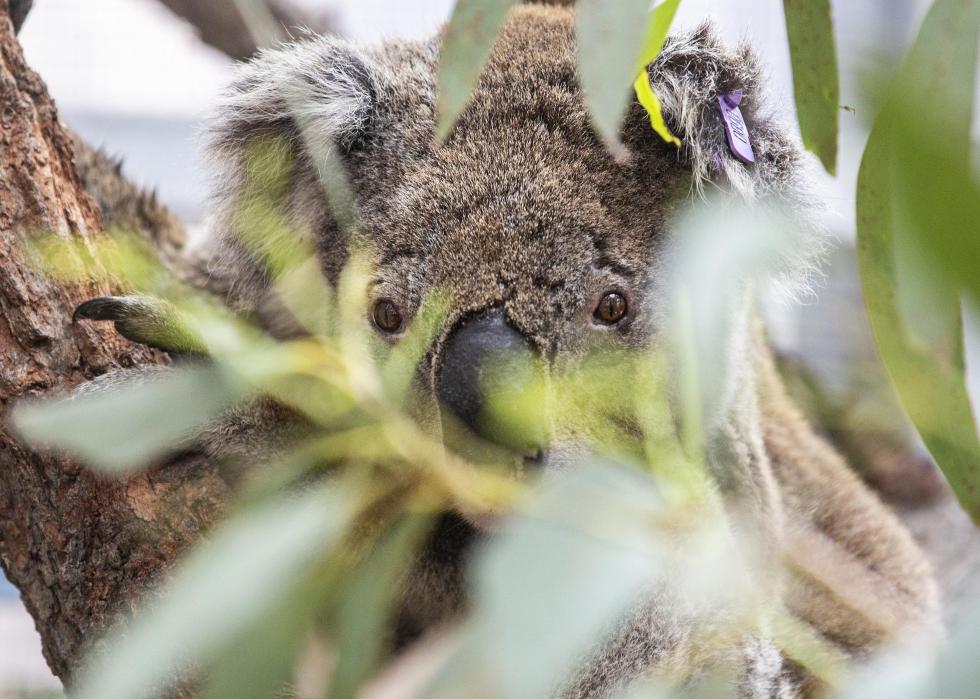
[Pictured: Purkunas the koala is seen peering through gum leaves at Taronga Zoo on Jan. 14, 2020 in Sydney, Australia.]
Australia ranks #56 of 61 countries on climate policy
The past few months' bushfires have called attention to a severe lack of environmental action on the part of Australia's federal government. The Climate Change Performance Index, a research partnership between the research groups Germanwatch, the NewClimate Institute, and the Climate Action Network, on their 2020 list.
According to the country's rating page, the Australian government has not proposed renewable energy targets beyond 2020 and continues to promote fossil fuels. In June 2019, for example, the government , a project that will severely threaten the already endangered Great Barrier Reef.
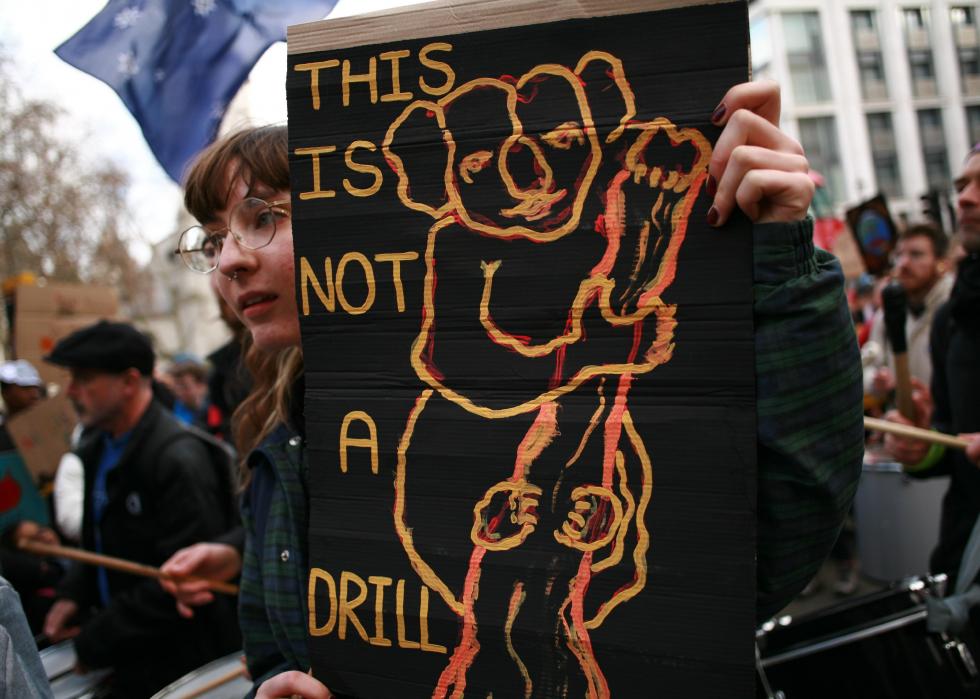
[Protester holds a placard during a demonstration by members of the climate change activist movement Extinction Rebellion (XR) outside the Australian High Commission in London.]
You may also like:
300,000 Australian students strike for climate in September
Students across over 100 Australian cities and towns on Friday, Sep. 20 as part of an international week of action. The strikes included about 100,000 students in Melbourne and 80,000 in Sydney, organizers estimated; the Guardian called this Australia鈥檚 largest public demonstrations since anti-Iraq War marches in 2003. Students at the rallies spoke about the steps needed to ensure a future for Australia, and called directly on Prime Minister Scott Morrison (or 鈥淪COMO,鈥 as he was called on signs) to take action.
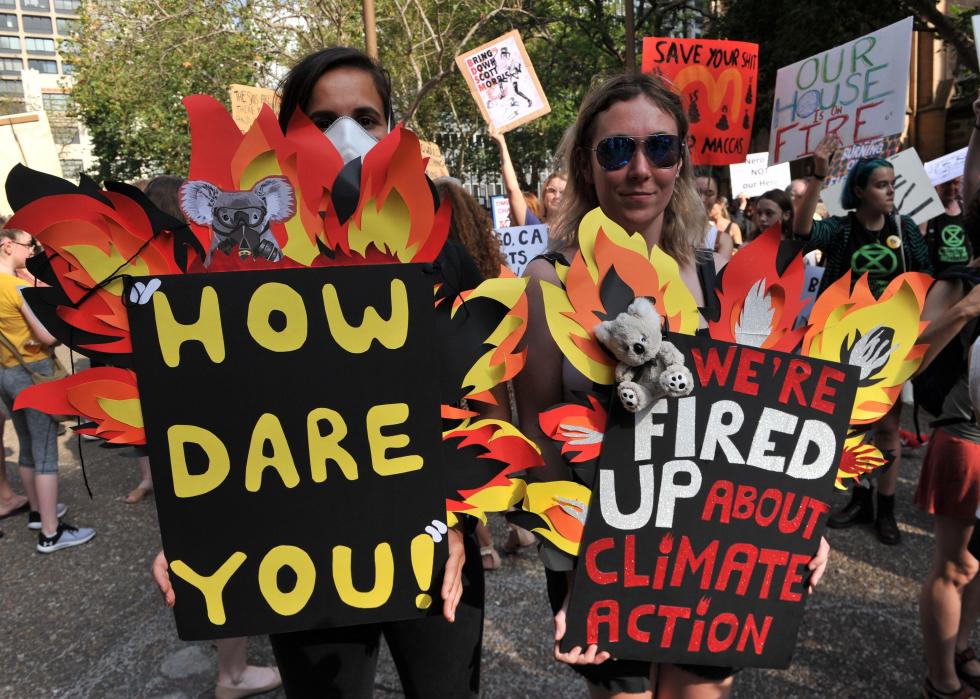
[Pictured: Participants take part in a demonstration demanding the government take immediate action against climate change in Sydney on Jan. 10, 2020.]
18 warnings ignored by Australia government since 2013
In November 2019, about two months into the bushfire crisis, Prime Minister Scott Morrison claimed that there was from greenhouse gas emissions to fire severity. In response, however, David Ritter, CEO of Greenpeace Australia Pacific, outlined 18 instances between 2013 and 2019 in which Australia鈥檚 climate experts warned their political leaders about how global warming exacerbates bushfires.
In the most recent warning included in , several Australian climate scientists cited and called on the government to act accordingly. 鈥淲hat climate change does is exacerbate the conditions in which the bushfires happen,鈥 said Dr. Imran Ahmed of Australian National University.
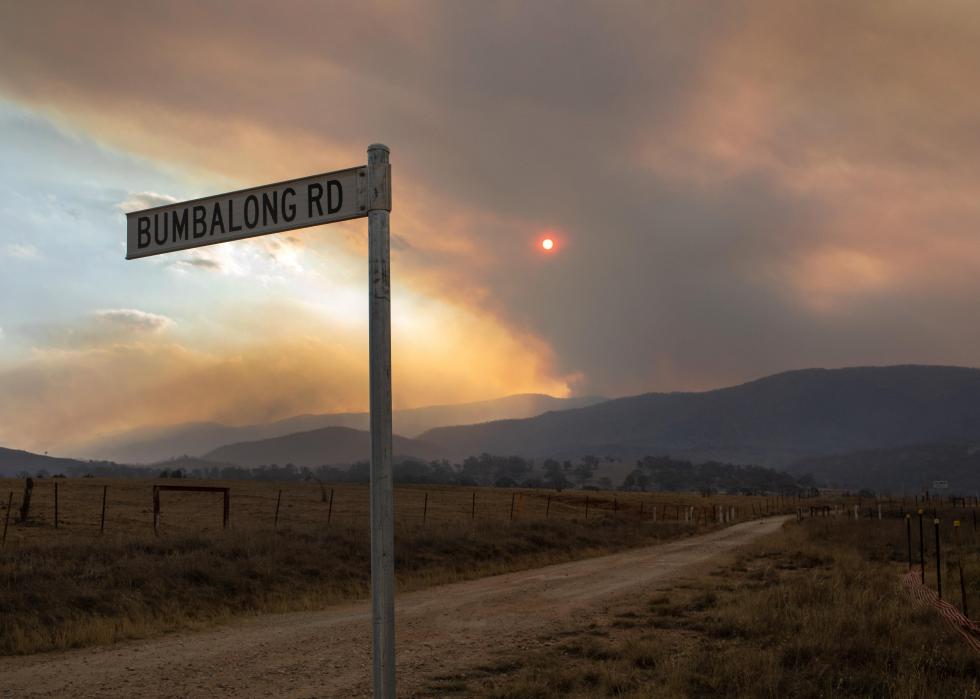
[Pictured: Bushfire smoke obscures the sun on Feb. 3, 2020 in Bumbalong, Australia.]
Economic cost to Australia could be $3.4 billion
Economists cited in Reuters estimated that the bushfire crisis could (Australia $5 billion). The fires have devastated the nation鈥檚 east coast during peak seasons for both tourism and agriculture.
For example, the dairy industry鈥攖he country鈥檚 fourth-largest rural industry鈥攈as been hit along New South Wales鈥 coast. Bushfire damage has piled onto farms already facing a three-year drought. , said that 鈥淢any roads are closed,鈥 preventing farmers from reaching help, and that the fires 鈥渉ave primarily killed the youngest in the herd."
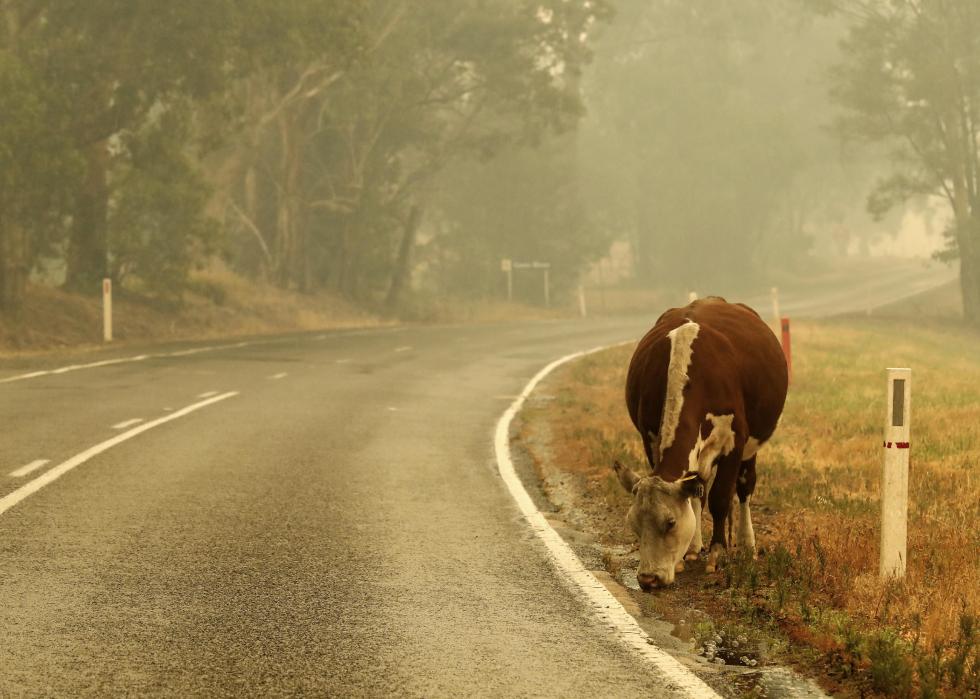
[Pictured: With fire damaged fences cattle wander on to the road on Jan. 5, 2020 outside Cann River, Australia.]
$32 million raised by comedian Celeste Barber
International support in the wake of the wildfires has largely come from celebrities. Celeste Barber, an Australian comedian, writer, and actress, through Facebook, setting a new fundraising record for the social media platform. Other famous pledgers include pop singer P!nk, Nicole Kidman, Russell Crowe, and Kaylen Ward, an Instagram model from Los Angeles who by sending nude photos to donors.
Still, as independent climate reporter , fossil fuel companies and other corporations that contributed to greenhouse gas emissions have shirked responsibility in financially supporting wildfire relief. Chevron, for example, donated $1 million to the Australian Red Cross鈥攂ut that $1 million only amounts to about 0.0067% of the company鈥檚 annual earnings, the equivalent of an average American donating $4.
[Pictured: Actor, comedian and writer Celeste Barber appears on a morning show in late 2019.]
20 of 60 New South Wales fires put out by February rain
Torrential rain poured down on Australia's East Coast in the first week of February. As of Feb. 7, the rain had extinguished 20 of 60 estimated fires in New South Wales, a region which has faced drought for the past three years. Friday, Feb. 7 was , and firefighters welcomed a well-deserved rest.
The rain came with its own troubles, however, as flash flooding caused landslides and trapped people in cars. New South Wales and Queensland recorded almost 1,000 distress calls over three days. And meanwhile, many large bushfires located further inland continue to burn.
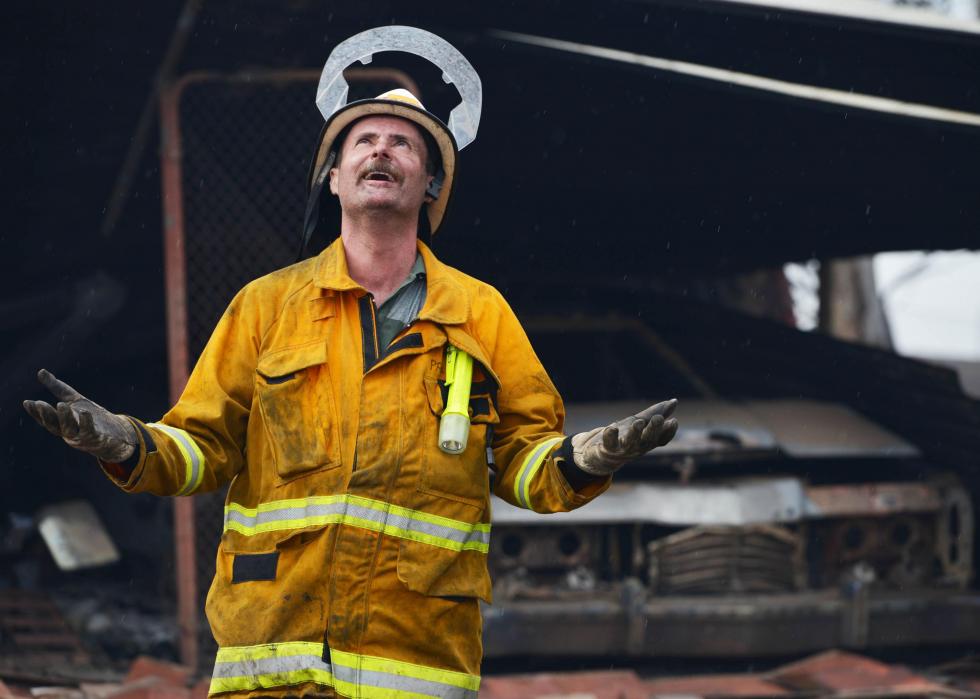
[Pictured: A Country Fire Service volunteer reacts as rain starts falling near One Tree Hill in the Adelaide Hills.]