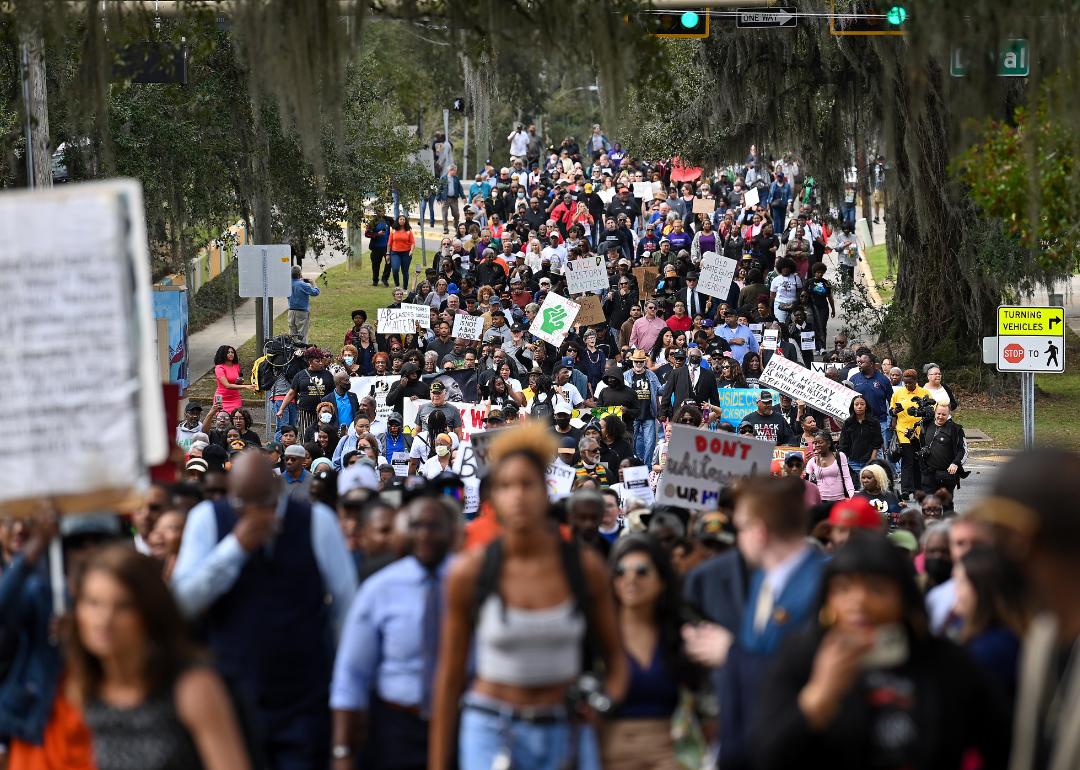
More than half of American legislatures are considering restrictive education laws. Here's what that means
More than half of American legislatures are considering restrictive education laws. Here's what that means
On Mar. 16, 2023, a federal court blocking Florida Gov. Ron DeSantis's controversial "Stop WOKE Act" from being executed in higher education settings. The decision came after the DeSantis administration requested to overturn the injunction.
The law, which went into effect in July 2022, prohibits educators and diversity trainers from discussing 鈥攊n other words, any topic that could make people feel a sense of "personal responsibility" or "guilt" for historical events on the basis of race or sex.
The law originally extended its restrictions from K-12 schools to colleges and even private businesses; however, one month after it went into effect, Florida district judge Mark Walker blocked "Stop WOKE" from going into effect for private employers. In November, he also halted its implementation in colleges, calling the legislation "positively dystopian."
DeSantis's "Stop WOKE Act" is just one example of the surge of restrictive education bills that have swept U.S. legislatures since 2021. These bills often share thematic similarities, seizing on reductive or outright incorrect terminology that has become the epicenter of culture wars over the last several years鈥攏amely, critical race theory and
What is this legislation cracking down on?
Contrary to its being used to "indoctrinate" the nation's youth, critical race theory has existed for decades. It's developed by renowned scholars, including Kimberl茅 Crenshaw, Patricia Williams, and Derrick Bell, that acknowledges the legacy of slavery and racism as inherent parts of the systems and institutions that make up modern American life. These forces go on to perpetuate racism today in legal, financial, and medical systems, contributing to stark racial disparities in health, income, incarceration, and more.
The has seen the concept applied much more generally to any teaching about race, structural racism, or white privilege. Conservatives such as Gov. DeSantis and scholar Christopher Rufo have painted educators who include teachings about systemic racism as a modern-day issue in their curricula as reverse racists seeking to "undermine the foundations of American society."
Besides a general ban on teaching about racism, "Stop WOKE" and other similar legislation also targets discussions about gender identity and sexual orientation in schools and other environments, including diversity training for companies and nonprofits. Much of this legislation, known colloquially as "Don't Say Gay" laws, even extends its reach beyond primary and secondary schools to colleges and universities. Some such laws enable parents to or allow for funds to be withheld from schools if teachers violate the policy, making cooperation with the law a financial and legal necessity.
When did the surge of legislative action begin?
A 2017 analysis of by the Southern Poverty Law Center found that teachings about enslavement, Indigenous Americans, and related topics are severely lacking in American schools. The whitewashing of slavery in history textbooks is nothing new. The has also been under-taught or left out of textbooks altogether, according to historian Donald Yacovone.
The recent deluge of legislation specifically restricting how race and sexuality are discussed in classrooms does have a more definitive origin point. In 2020, in the wake of the murders of George Floyd and Breonna Taylor and subsequent racial injustice protests, former President Trump created the , a group dedicated to promoting a "patriotic education." In promoting the commission, he called critical race theory a "toxic propaganda," and "ideological poison."
The announcement of the 1776 Commission sparked a nationwide conservative crackdown on education about racism, sexual orientation, and gender identity鈥攁nd the influence of the backlash has radiated beyond states where conservative lawmakers have taken up the cause. On Feb. 1, the College Board announced it had pared down its Advanced Placement African American Studies course, whose work has been targeted by anti-critical race theory campaigners, as well as topics like Black feminism and Black queer history.
Academics, free speech organizations like PEN America, and educators spoke out against the decision, which was seen as folding to political pressure imposed by conservative lawmakers like Gov. DeSantis. This view was later substantiated by the revelation that , objecting to much of the material that was later removed. The College Board rejected the idea that changes to the curriculum were politically motivated, stating that the alterations were made to emphasize primary historical documents more than secondary sources and analysis.
Where has this legislation been introduced?
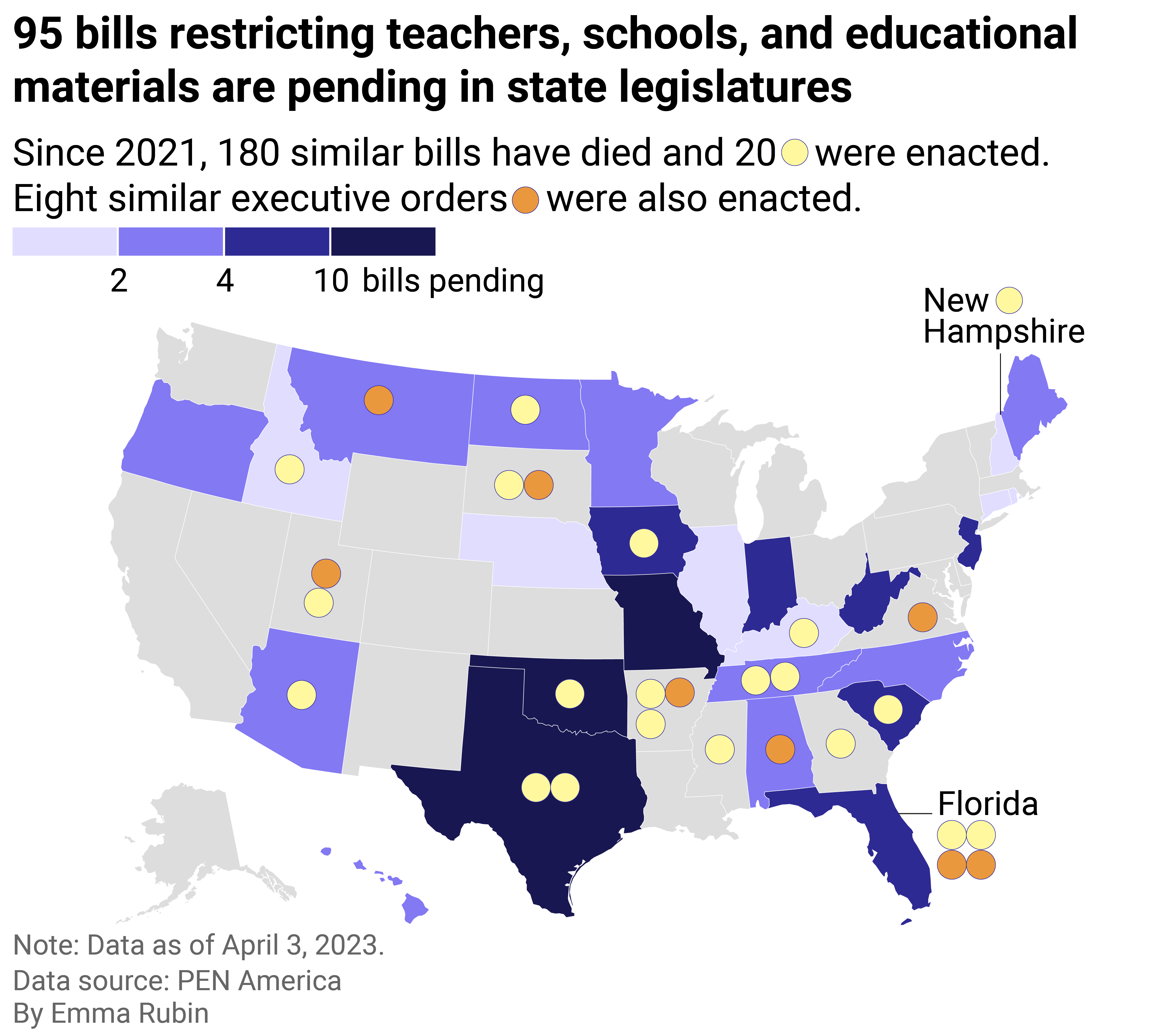
According to a , legislation that targets speech about race, gender, and sexuality in the classroom鈥攚hat the tracker refers to as "educational gag orders"鈥攊s currently pending in the legislatures of 26 states as of Apr. 3, 2023. Over 300 bills have been introduced since Jan. 2021, though only around 20 have been signed into law. Currently, restrictive education laws have been passed in 16 states.