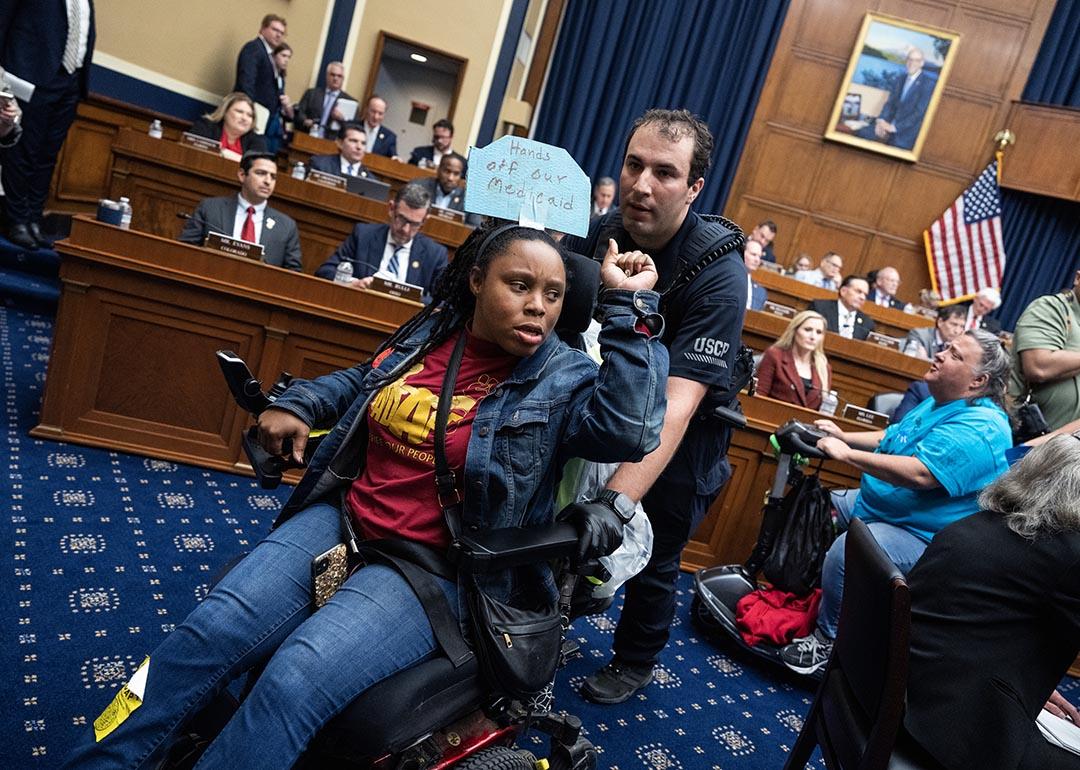
Most gun violence victims are enrolled in Medicaid. Trump鈥檚 cuts are putting them at risk.
Most gun violence victims are enrolled in Medicaid. Trump鈥檚 cuts are putting them at risk.
Health officials are intensifying their of the 鈥淥ne Big Beautiful Bill Act鈥欌�� that was signed into law by President Donald Trump last month, that the bill will have compounding effects on the healthcare sector, violence prevention, and mental health services. Gun violence victims are among those at the greatest risk, reports.
鈥淯ltimately, we know that this legislation will cost people their lives,鈥� said Dr. Kyle Fischer, the policy director for the Health Alliance for Violence Intervention, who has the effects of Medicaid expansion on gun violence victims.
The spending and tax bill will cut an estimated in healthcare costs over a decade, resulting in the loss of health insurance for up to according to an analysis by the Kaiser Family Foundation. Others are likely to find it more difficult to retain their insurance under the legislation, which is also expected to cause extensive . The cuts threaten to undo much of the made by health and advocacy organizations to make healthcare more accessible.
Perhaps most significant for shooting victims, the legislation will significantly defund Medicaid, which insures more than , nearly of whom are children. Research has found that, since the 2010 passage of the Affordable Care Act, Medicaid is the single largest insurer of people who have been shot. Other studies show that are more likely to have in states with expanded Medicaid coverage. Members of households that fall below the federal poverty line 鈥� the same group insured by Medicaid 鈥� are likely to be victims of fatal gun violence.
Ruth Zakarin, the CEO of the Massachusetts Coalition to Prevent Gun Violence and a former trauma clinician, said the bill is a major step back for survivors and their families. 鈥淎s a former Medicaid provider myself, because I was permitted to provide clinical services to the victims of violence through public funding, it feels as if we are backtracking all of the progress that we have made,鈥� said Zakarin, noting the importance of services provided by hospital-based violence intervention programs and wraparound recovery care.
鈥淔or folks to be touched by violence and not be able to get the support that they need in the aftermath of trauma is just devastating to think about,鈥� she said.
During President Joe Biden鈥檚 administration, important strides were made in understanding how federal healthcare and gun violence prevention efforts intersect, leading at least to use Medicaid funds to support community violence intervention initiatives. The Biden White House a plan that would allow state Medicaid agencies to reimburse providers that screened patients for firearm risk. Although the bill signed by Trump doesn鈥檛 directly affect community funding, the residual effects on the healthcare industry threaten the progress of recent years, health experts said, because of the significant financial loss to the American health system.
鈥淚n these last several years, the healthcare initiatives aimed at gun violence reduction are working and driving down rates of gun violence across the country in historic ways,鈥� Fischer said. 鈥淏y cutting health funding, we鈥檙e ultimately moving backwards.鈥�
The bill comes as the Trump administration is to health agencies, research institutions, and federal initiatives, putting decades of work to address a myriad of public health concerns, including , at risk. Health experts leading gun violence prevention efforts said that the bill will result in more damage.
Both suicide and homicide risks substantially increase in communities facing . Research has also shown that individuals exposed to gun violence are to suffer from severe suicidal ideation, post-traumatic stress, and depression. Conversely, studies have found that when people have access to healthcare, they are more likely to seek mental health services or trauma-response treatments, which have positive effects in more violent crime.
鈥淯ntreated trauma in itself is a risk factor for suicide, and it鈥檚 not lost on me that in this bill, we鈥檙e removing access to the health services while increasing access to guns,鈥� Zakarin said. She recalled one such case in a recent Substack about a young girl in middle school who came home to find her mother shot dead by a boyfriend whom she had recently broken up with. Following the shooting, the girl struggled to recover and received therapy through Medicaid.
鈥淲e need to stop blaming people for the trauma that they have experienced and start looking at the policies, systems, and our institutions that allow for the trauma to happen in the first place,鈥� Zakarin told The Trace.
was produced by and reviewed and distributed by 麻豆原创.