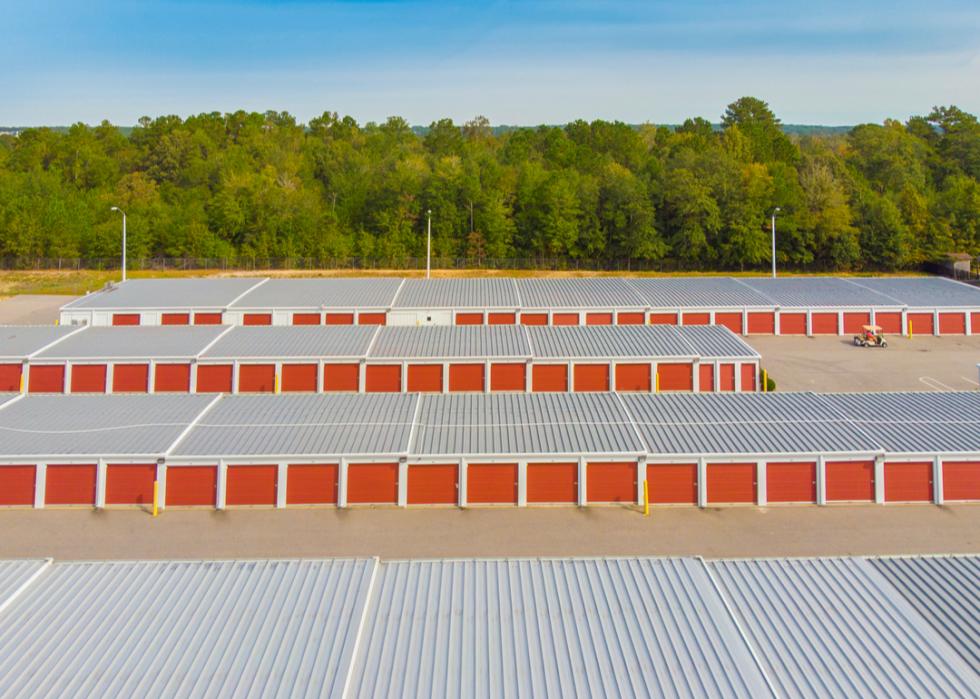
Best performing real estate sectors this year

Written by:
July 20, 2021
Volodymyr Kyrylyuk // Shutterstock

This story originally appeared on 麻豆原创 and was produced and distributed in partnership with 麻豆原创 Studio.

Best performing real estate sectors this year

Each real estate sector鈥攚hether residential, commercial, or industrial鈥攃omes with varying levels of risk and reward. With a bit of research, investing in one (or a combination of) of these sectors can yield excellent returns.

used data from the , last updated on June 4, 2021, to curate a list of today's 10 best-performing real estate sectors. The sectors are ranked by their year-to-date total return in 2021, with ties broken by market capitalization as of May 28, 2021. The implied market capitalization in this dataset is, according to Nareit, 鈥渃alculated as common shares outstanding plus operating partnership units, multiplied by share price.鈥

REITs, or real estate investment trusts, are attractive options for investors without a lot of available cash or those who don't want all their money tied up in a single property. One major benefit of REITs is the potential ongoing income, despite investors not seeing as much total appreciation. Some REITs are public non-listed or private, but the majority are traded on stock exchanges.

Equity REITs fund residential and commercial properties and make money through sales and rentals. Mortgage REITs, or mREITs, underwrite mortgages and mortgage securities, with returns coming from the interest on those purchases.

Keep reading to find out which real estate sectors are performing best, how they weathered the pandemic, and discover projections for each sector's future performance.


1 / 10
Alba_alioth // Shutterstock

#10. Industrial

- Total return in 2021: 16.7%
- Market capitalization: $152.6 billion

Businesses need bare-bones, functional structures for many areas of operations like warehousing and distribution鈥攁nd industrial REITs help provide them. Despite the coronavirus, the sector saw and overall positive results in the first quarter of 2021, plus in 2020 and 2021. Demand remains strong in this sector: The Colliers report notes that more than half the nation鈥檚 markets are seeing lower vacancy rates in Q1 2021 than the same time period in 2020.

2 / 10
Ekaterina Kondratova // Shutterstock

#9. Timber

- Total return in 2021: 16.8%
- Market capitalization: $37.8 billion

Framing lumber prices jumped a during the pandemic. Now it seems that timber prices are following suit. However, meeting challenges to keep up with demand can lead to volatility in this sector鈥攑rices are already weak in parts of the country鈥攕o experts suggest it as a long-term investment tool. Vertically integrated companies like Weyerhaeuser, that are also involved with lumber production, fare better through ebbs and flows than companies solely focused on timberland. The sector has seen positive returns throughout the pandemic.

3 / 10
Sergii Molchenko // Shutterstock

#8. Commercial financing

- Total return in 2021: 17.3%
- Market capitalization: $26.3 billion

When commercial real estate deals run into the billions, financing is a necessity. Underwriting became more conservative in the midst of the pandemic, as banks were unsure where the economy and the business sector would land. Industry consultants are still advising banks to focus on risk management. Commercial financing is in the mREIT sector; uncertainty throughout the pandemic resulted in returns of -10.73% in 2020 but returns improved in 2021.

4 / 10
Konstantin L // Shutterstock

#7. Home financing

- Total return in 2021: 17.3%
- Market capitalization: $44.7 billion

Low interest rates drive hot real estate markets鈥攁nd in January 2021, the 30-year, fixed-rate average dropped to a record-setting 2.65%. In June 2021, about half of expected rates to stay the same while 30% expected them to continue to rise. Employment numbers will be a major factor here.

Some homebuyers are already experiencing roadblocks from rising rates. This sector was one of the hardest hit among REITs in 2020, with a -22.59% return.

5 / 10
Lukasz Janyst // Shutterstock

#6. Lodging/resorts

- Total return in 2021: 17.4%
- Market capitalization: $38.4 billion

鈥攁 good indicator of trends鈥攕aw about five times as many travelers in early May 2021 as that month in 2020, but only about three-quarters of the amount for that same timeframe in 2019. The lodging/resorts sector had a -23.60% total return in 2020; government support for the industry helped businesses hold onto their properties. for another two or more years, though. Only retail was hit harder in 2020.

6 / 10
EM Karuna // Shutterstock

#5. Diversified

- Total return in 2021: 19.0%
- Market capitalization: $52.6 billion

When REITs invest in different types of properties鈥攆rom recession-proof health care properties to hotels that require a strong economy and traveling public鈥攖hey manage risk. The coronavirus definitely inspired a . Even so, returns in 2020 were negative, at -21.76% Because managers of these trusts don鈥檛 know who will survive the ongoing shifts to the economy, the trend is likely to continue for the foreseeable future.

7 / 10
Arina P Habich // Shutterstock

#4. Residential

- Total return in 2021: 24.3%
- Market capitalization: $200.9 billion

Asking prices for residential real estate reached record numbers in May 2021. The average was $380,000, more than 15% higher than the previous year. Bloomberg suggests rise due to the imbalance between supply and demand, and that deregulation is the route to opening up the housing supply. But J.P. Morgan argues that , especially in some markets. Returns in 2021 are way up from a total return in 2020 of -10.69%.

8 / 10
poloje // Shutterstock

#3. Specialty

- Total return in 2021: 26.3%
- Market capitalization: $57.7 billion

Despite the months-long closures of entertainment-focused properties owned by specialty REITs, from movie theaters to casinos, losses for this sector in 2020 held with a total return of\ -8.24%. Memorial Day weekend of 2021 saw for opening weekend box office metrics during the pandemic with "A Quiet Place II." Still, the question remains how well theaters will fare over time given the competition from streaming services and other challenges. There are 12 of these types of REITs in the Nareit directory.

9 / 10
Farid Sani // Shutterstock

#2. Self-storage

- Total return in 2021: 26.3%
- Market capitalization: $80.2 billion

The self-storage sector weathered the pandemic better than some, with a 12.91% return in 2020. That鈥檚 not entirely surprising, with so many people revamping their homes to create space for working from home and distance learning. That trend continues: CNBC forecasts an in the number of remote workers by 2025, which may require moving more of life鈥檚 non-necessities to storage. These REITs are lower-risk and often with conservative balance sheets, but can be sensitive to economic downturns.

10 / 10
Mark Winfrey // Shutterstock

#1. Retail

- Total return in 2021: 31.6%
- Market capitalization: $160.2 billion

Numbers were abysmal for retail REITs in 2020. It was the worst of any sector, at -25.18% overall, but returns jumped when retail reopened. Risk factors for these types of investments include rising interest rates and disruption from e-commerce. Triple net leases are one way to minimize risk: Tenants pay not only rent, but also property taxes, insurance, and maintenance.

This story was produced and distributed in partnership with 麻豆原创 Studio.

Trending Now