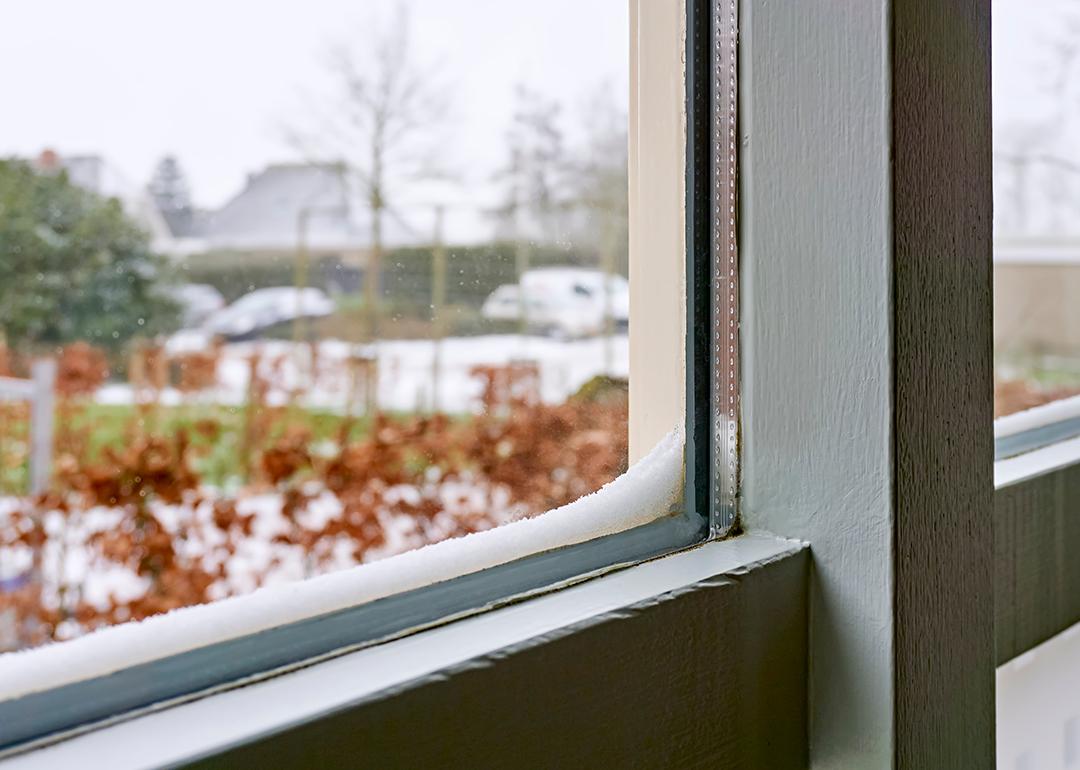
How to winterize your windows
Your windows have a greater impact on your winter heating bills than you might realize. According to the , heat loss through windows accounts for 25% to 30% of residential heating use. Consequently, winterizing your windows to seal off drafts and improve their insulation value is key to optimizing your home鈥檚 energy efficiency.
explains how to winterize your windows and help keep you and your family warm during the winter鈥攚hile saving money month after month.
Winterizing Your Windows
Things you鈥檒l need:
- Putty knife or beveled scraper
- Scrub brush
- Warm water
- Soap
- Caulking gun
- Exterior-grade caulk
- Removable weatherstrip caulk
- Window insulation kit
- Scissors
- Thermal window fashions
Step-by-Step Guide to Window Insulation
Step 1: Inspect your windows
If your windows don鈥檛 fully close and seal, they can let moisture and cold air into your home while allowing warm air to escape. Locks and latches can deteriorate over time, so open, close, latch and unlatch your windows to ensure they鈥檙e in good working order. Clean and lubricate any sticky latches and locks. Replace any broken or defective ones.
The caulking seal around the outside perimeter of your windows 鈥� where the trim meets the siding 鈥� is another essential defense against moisture and air leaks. Inspect the condition of the caulking to look for any broken, brittle or missing portions. If you find such imperfections, the caulking should be replaced.
Step 2: Caulk the outside
To replace the caulk, start by removing the old layer of caulking. Scrape it off with a putty knife or beveled scraper (like a 6-in-1 tool). Then, clean the area with a scrub brush and warm, soapy water. Allow it to dry fully before you continue.
Load a tube of exterior-grade caulking (such as 鈥渨indow-and-door caulking,鈥� silicone, siliconized sealant or polyurethane) into a caulking gun. Apply a fresh bead of caulking around the entire perimeter of the window trim. Refer to the manufacturer鈥檚 instructions for the estimated drying times.
Step 3: Weatherstrip the inside
Now that you鈥檝e sealed the outside of your windows with caulking, it鈥檚 time to add weatherstripping to seal off the gap where the sash (the movable portion of glass that slides up and down) meets the bottom of the window frame.
There are several different types of window weatherstripping available, including:
- Foam insulation tape: These are foam strips that compress inside the gap when the sash closes against the frame. Foam insulation tape can be easily cut to size with scissors, and the strips have a self-adhesive backing to secure them in place.
- Tubular rubber gasket: This type of weatherstripping works similarly to foam insulation by compressing between the sash and the frame, but it uses a hollow rubber tube instead of a solid foam strip. Tubular rubber gaskets also have self-adhesive backing for securing the strips in place.
- Felt: Felt strips are one of the most economical and oldest types of weatherstripping. They also work via compression. Some felt strips come with an adhesive backing, but they usually need to be stapled or nailed in place. Although they鈥檙e the most affordable, they generally don鈥檛 last as long as other varieties and need to be replaced every one to two years.
- V-seal: As the name implies, these are V-shaped plastic or metal strips that are placed inside gaps and spring open to seal them. They鈥檙e often available with self-adhesive backings.
Now that the bottom of the window is taken care of, seal the gaps on the sides of the sash using removable weatherstrip caulk. Load the tube of removable weatherstrip into your caulking gun and apply a bead along both sides of the sash where it contacts the window frame. At the end of winter, you can peel off the bead and open your window.
Skip the Fuss: Get a Window Insulation Kit
Window insulation kits are a popular option. They allow you to completely seal off your windows for the winter using heat-shrink plastic. To install them, place the provided double-sided tape on the outside perimeter of your window, cut the plastic to size and place it on the tape. Apply heat to the plastic with a blow dryer or heat gun until it shrinks and conforms to your window. Not only does this completely seal off the window to cover any air gaps that caulking and weatherstripping may have left behind, but it also adds supplemental insulation value to the window.
Try Thermal Window Fashions
If you鈥檇 rather cover your windows with something more visually appealing than plastic, thermal window fashions are an excellent alternative. Options include:
Thermal curtains
These are heavy, foam-lined curtains specifically designed to add insulation value to your windows. Not only are thermal curtains useful for retaining heat during winter, but they鈥檙e also great for blocking the sun and retaining cool air during summer. To optimize their efficiency, hang them as close to the window as possible and overlap the seam where the two sides of the curtains meet. Some homeowners even install Velcro strips onto the seams to hold the two sides together and ensure they stay closed.
Dual-cell blinds
Dual-cell blinds are essentially two regular, single-cell blinds layered into one, and provide much greater insulation value than their single-cell counterparts. While they鈥檙e more expensive than thermal curtains, they鈥檙e an ideal choice if you prefer the aesthetic of blinds over curtains.
Consider Storm Windows
The name 鈥渟torm window鈥� may make it sound like this window鈥檚 primary function is to protect your home from storms, but they鈥檙e actually an excellent way to cover air gaps around your entire window. Often made of plastic or acrylic, they also contribute to soundproofing and will sometimes have UV-blocking qualities to provide year-round benefits.
They can be installed inside or out, and they can be custom-made to the exact specifications of your window. Interior 鈥渨indow inserts鈥� are the easiest to install; simply press the insert into the frame.
Exterior storm windows require the extra installation steps of caulking and screwing them onto the window jamb, but they offer greater insulation value than interior inserts.
Winterize Wisely
Winterizing your windows is a great way to enhance your home鈥檚 energy efficiency. However, sometimes upgrading your windows to more energy-efficient models is the best solution. That鈥檚 especially true if you鈥檝e taken all the steps to winterize your existing windows but you鈥檙e still experiencing significant heat loss, if your windows are over 15 to 20 years old or if your windows have single-pane glass. An investment in high-efficiency windows has the potential to pay for itself in a relatively short period of time.
was produced by and reviewed and distributed by 麻豆原创.