More homebuyers are ghosting sellers: 10 cities where it's happening most
Americans are dealing with one of the slowest housing markets in history. Years of rising home prices and unpredictable mortgage rates have many would-be buyers, and even when deals are made, more are falling apart before closing.
In September, more than 53,000 deals nationwide were canceled, representing 15% of homes that went under contract that month. That鈥檚 up from 13.6% a year earlier. In other words, more buyers are 鈥済hosting鈥� sellers before closing, pushing some sellers to hold off or even altogether.
looked at where buyers are disappearing the most 鈥� and what both sides can do to keep their deal alive.
Top 10 cities where buyers are ghosting sellers the most
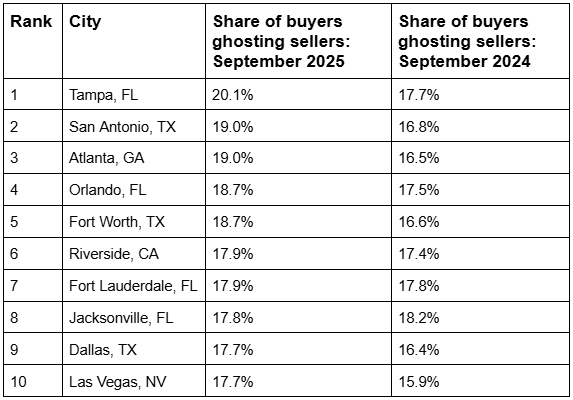
Buyers are backing off the most in the Sun Belt, especially in Florida and Texas. The region became a in 2021 and 2022 for its relative affordability and warm weather, with cities like Tampa and San Antonio leading the charge. But that boom sent prices soaring.
Now, when paired with growing , , and , more consumers are choosing to hold off altogether. Sun Belt states are also than anywhere else, prompting buyers to back out because they鈥檙e confident they will be able to find something else. is also playing a role.
Top 10 cities where buyers are ghosting sellers the least
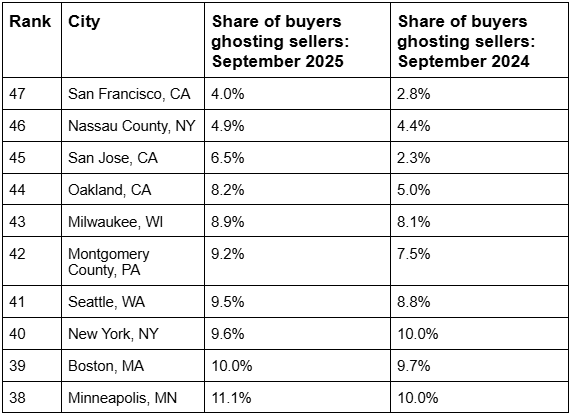
More like San Francisco and Seattle have the lowest shares of ghosting buyers.The remaining metros on this list are more affordable but among the few remaining in the U.S. With limited inventory, buyers are more willing to move forward once they鈥檝e made an offer because they don鈥檛 have many other choices.
Why are more deals falling through?
In many cases, home purchases are increasingly falling through because buyers and sellers aren鈥檛 on the same page. With neither side willing to compromise, negotiations often break down before closing 鈥� typically during the . Redfin agents said in a recent survey that more than 70% of the deals that fall through do so during the inspection.
It鈥檚 a in most of the U.S., so those who are still in the market know they have leverage. It鈥檚 common for them to be choosier and ask for repairs, price reductions, and other concessions. When sellers push back, or when inspections reveal new issues, many buyers are walking away. Buyers are also eyeing homes at lower price points, which are more likely to have inspection issues that can derail a deal.
Additionally, some sellers still think it鈥檚 2021, when homes sold , and are having a hard time adjusting to today鈥檚 very different market. Others who bought during the pandemic may also need to sell at a certain price to avoid , making them less willing to negotiate.
What sellers and buyers can do to keep deals together
Sellers
In most cases, home sellers are the ones fighting for a buyer; they should prepare to be flexible and willing to negotiate.
- Get a pre-inspection. major issues before listing to avoid surprises later.
- Be realistic and flexible. Today鈥檚 buyers expect concessions like price credits and repairs. Refusing to negotiate can sink a deal.
- Handle common issues early. Roof, plumbing, and drainage problems are frequent deal-breakers. Address them upfront.
- Price smart. Price too high and your home will likely sit unsold until you come down.
Buyers
Homebuyers are in the driver鈥檚 seat across the U.S., so they can often lead negotiations and ask for concessions. However, there are ways to guard against deals falling through and speed up the closing process.
- Get pre-approved. Strong financing signals to sellers that you鈥檙e serious and reduces the risk of fallout. is one of the best ways to do this.
- Know what to expect. Most uncover something. Don鈥檛 panic over minor fixes.
- Do your homework. Review disclosures, insurance costs, and HOA fees before making an offer.
- Use contingencies wisely. Back out only if major issues arise or repairs are unreasonable.
Methodology
This story is based on an October 2025 , which analyzed U.S. home-purchase agreement cancellations (鈥済hosting鈥�) as a percentage of all pending sales in August 2025 鈥� nationwide and across 47 of the 50 largest U.S. metros. Data is seasonal and dates back to 2017. Note that homes that fell out of contract during a given month didn鈥檛 necessarily go under contract the same month. For example, a home that fell out of contract in September could have gone under contract in August.
was produced by and reviewed and distributed by 麻豆原创.