Test your 20th century history knowledge
The 20th century was an exciting, innovative, and sometimes tragic period in modern history. It began with the first human-powered airplane taking flight and ended with global access to the worldwide web. There were incredible advances in technology, science, and aviation—Thomas Edison showcased the world's first talking motion picture, Albert Einstein developed the Theory of Relativity, and Alexander Fleming discovered penicillin. Yet it was also a violent century that saw two world wars and numerous cases of mass genocide. Adolf Hitler rose to power in the 1930s; the Khmer Rouge terrorized Cambodia in the 1970s; and the Hutu massacred millions of Rwandan Tutsis in the 1990s.
Beyond war and military coups, the century was full of newsworthy events in the world of global politics—Israel was declared a state; the Berlin Wall came down; India was partitioned. In the United States, people witnessed things like the women's suffrage movement, prohibition, the Great Depression, the ongoing fight for civil rights, the Watergate scandal, and the Iran-Contra affair. Worldwide, 20th-century headlines ranged from the sinking of the RMS Titanic to the Chernobyl disaster, the AIDS pandemic, the Hindenburg disaster, and the abolition of apartheid. All told, it was a captivating century with no shortage of events to occupy the history books.
Yet while many of these major events are well-known, there's also a slew of lesser-known facts and interesting trivia that don't get as much attention. For example, everyone knows the Berlin Wall came down in 1989, but how many people can tell you where its pieces ended up? It's common knowledge that the United States and South Vietnam fought together in the Vietnam War, but what other allies supplied forces? There also are lots of strange or offbeat stories from the century that you might not know about. Do you know, for example, what the "Repository for Germinal Choice" is? How about the Princeton Cat Experiment?
To test your 20th-century knowledge, Â鶹ԭ´´ has put together a quiz full of fun facts and trivia about the past 100 years. Read on to see how your history competency stacks up.
You may also like:
Question #1
What competitions did the Olympics feature besides athletics from 1912 to 1948?
Fine arts
Kicking off at the 1912 Summer Olympics in Stockholm, Sweden, and lasting through the 1948 Olympics in London, in the categories of literature, sculpture, painting, architecture, and music composition. A total of 151 awards were earned during this period, although few people know this. “Everyone that I've ever spoken to about it has been surprised,” Richard Stanton, author of “The Forgotten Olympic Art Competitions,”. “I first found out about it reading a history book, when I came across a little comment about Olympic art competitions, and I just said, ‘What competitions?'”
Question #2
What year did the last Japanese soldier surrender after World War II?
1974
Although Word War II ended in 1945, it continued for almost three more decades for , a Japanese soldier sent on a mission to Lubang Island in the Philippines. After Maj. Yoshimi Taniguchi told him and three other men on the island that they were not to surrender under any circumstances (“It may take three years, it may take five, but whatever happens, we'll come back for you,” the), Onoda stayed in hiding for 29 years. At one point, he allegedly found a leaflet that said, “The war ended on August 15. Come down from the mountains!” but he thought it was a hoax. The three other men eventually left, but Onoda stayed until 1974 when Taniguchi, by then a bookseller, returned to the island to personally confirm that the war was over and that Onodo could leave.
Question #3
What South African leader inspired scientists to name a nuclear particle after him?
Nelson Mandela
South African anti-apartheid leader Nelson Mandela, who was imprisoned for 27 years for his civil rights activism, inspired people throughout the world. When scientists discovered a new fragment of matter in 1973, they in honor of the leader. Unfortunately, the discovery was. In addition to the nuclear particle, Mandela has a species of spider, a prehistoric woodpecker, and hundreds of street signs and boulevards named after him.
Question #4
What did the U.S. government do to its supply of industrial alcohol during the Prohibition era to prevent people from stealing it?
Poisoned it
When alcohol was prohibited in the United States from 1920 to 1933, many desperate Americans began drinking industrial alcohol (the kind used to treat wounds) to get their fix. In an effort to the U.S government, such as kerosene, gasoline, iodine, nicotine, formaldehyde, chloroform, quinine, and acetone to make it lethal if consumed. By the time alcohol prohibition was lifted in 1933, the poisoned alcohol had killed almost 10,000 people.
Question #5
What was Adolf Hitler's nationality?
Austrian
Although many people think the Nazi leader was German, Adolf Hitler was born in Austria. He under the instruction of his history teacher, Leopold Poetsch, and moved to Munich in 1913. A year later, he joined the Bavarian Army, and renounced his Austrian citizenship nine years later. In 1932, he officially became a German citizen.
Question #6
What famous pieces of history did Neil Armstrong carry aboard Apollo 11 in 1969?
A piece of the Wright Brothers' plane
In 1969, American astronaut Neil Armstrong became the first man to set foot on the moon. During the lunar mission, he reportedly brought aboard Apollo 11 from their 1903 airplane flight at Kitty Hawk, N.C., the first ever recorded flight. The souvenirs were meant to symbolize how far aviation had come since then.
Question #7
Who challenged longtime Mexican President Porfirio Díaz in 1910, leading to his ouster and launching the Mexican Revolution?
Francisco Madero
When people think of the Mexican Revolution, it's often revolutionaries like Pancho Villa and Emiliano Zapata who come to mind. However, it was Francisco Madero, an affluent Mexican landowner, who originally in 1910. The brazen reformist saw through Díaz's rigged elections and called for revolution, prompting Villa, Zapata, and Pascual Orozco to launch a peasant uprising that would become the Mexican Revolution. Madero was, but was assassinated two years later.
Question #8
What colony was returned to China in 1997 after being ruled by Britain for more than 150 years?
Hong Kong
After 156 years of British rule, Hong Kong was handed back to China in 1997 following a 13-year transition period. The transfer of autonomy was the result of the Sino-British Joint Declaration on the Question of Hong Kong, signed by the two governments in Beijing in 1984. Under the agreement, China pledged that Hong Kong could maintain its current Western-influenced economic system while mainland China remained socialist under the.
Question #9
A piece of what famous wall currently stands in the bathroom of the Main Street Station Casino in Las Vegas?
Berlin Wall
In 1990, officials began tearing down the Berlin Wall (although people had begun chipping off pieces of it in November 1989). As the demolition continued, more than 40,000 sections of wall were recycled and used for building projects in Germany. Hundreds of others were. In addition to the piece in the Las Vegas bathroom, there are sections of the wall in the Vatican Gardens and NATO headquarters.
Question #10
What astral feature officially became a planet in 1930?
Pluto
Although Pluto was demoted to the status of "dwarf planet" in 2006, it enjoyed a 75-year run as the ninth full-sized planet from the sun from 1930 to 2005. The original designation came courtesy of, a young research assistant at the Lowell Observatory in Flagstaff, Ariz., who located the dwarf planet sitting in a ring of celestial bodies past Neptune called the Kuiper belt. The discovery, which occurred when Tombaugh was in his early 20s, came after his predecessor, Percival Lowell, spent more than 20 years unsuccessfully trying to locate the planet under a project titled "Planet X."
Question #11
What did sperm donors have to be to participate in eugenicist Robert Klark Graham's controversial “Repository for Germinal Choice” of the 1980s and ‘90s?
Geniuses
In 1980, Robert Klark Graham, an entrepreneur and controversial eugenicist who invented shatterproof plastic, launched the Repository for Germinal Choice, a to create a more intelligent human species. When it first began, only Nobel Prize recipients were allowed to donate; the bank eventually opened up the pool to anyone with an IQ of 130 or higher. The repository closed in 1999 after contributing to the births of 218 children.
Question #12
What was the nickname of the shanty towns that many displaced Americans lived in during the Great Depression?
Hoovervilles
Herbert Hoover was president during the first part of the Great Depression and many people blamed him for the poverty and homelessness Americans were experiencing. As hundreds of shanty towns popped up across the country, people began referring to them as “Hoovervilles.” The dilapidated towns weren't the only Depression-era nicknames the president inspired. “Hoover Stew” was the soup handed out at food kitchens, and “Hoover Hogs” were the rabbits some Americans ate to survive.
Question #13
What famous world leader was associated with "holy mangoes?"
Mao Zedong
In 1968, Pakistan's foreign minister visited China's Communist leader Mao Zedong and brought about 40 mangos as a gift. Zedong, however, didn't like mangos and reportedly as a thank you for a protest they'd helped stifle. At that stage in the Chinese Revolution, Zedong had acquired cult-like status and the workers decided to preserve the fruit which they immediately deemed holy. The mangoes were placed in formaldehyde, or sealed in wax, or placed on altars, or boiled in water, the latter of which the workers would After that, mangoes began appearing on T-shirts and mugs, forever associating the leader with the fruit.
Question #14
The Silent Sentinels protested in front of the U.S. White House from 1917 to 1919 in support of what?
Women's right to vote
In 1917, a began protesting outside the White House, urging President Woodrow Wilson to support legislation granting women the right to vote. They held signs bearing slogans such as “How long must women wait for liberty?” and “Mr. President, what will you do for woman suffrage?” On Jan. 9, 1918, one year into their protest, Wilson announced his support for the women's suffrage amendment; however, it would be two years later before Congress got on board and ratified the Nineteenth Amendment to the Constitution on Aug. 18, 1920.
Question #15
What country saw the deaths of more than 1 million people due to a famine in 1984?
Ethiopia
In 1984, lack of rainfall in the Northern highlands of Ethiopia ravaged the country, particularly in the Tigray province, leading to the and the displacement of another 2.5 million. The tragedy, which prompted the USA for Africa recording, with a number of artists, was further. "My overwhelming memory is of parched countryside, bare hills—and weary and weakened men,". "...Thousands were dying every week, the impact of drought compounded by the Marxist regime being in denial about the famine's severity...An aid official described it as 'Hell on Earth.' It didn't seem an exaggeration."
Question #16
Which family member of the Rev. Martin Luther King Jr. also was assassinated?
His mother
Most people know about the assassination of American Civil Rights leader the Rev. Martin Luther King Jr. in 1968 on the balcony of the Lorraine Motel in Memphis, Tenn. Fewer people, however, are aware that six years later his mother,, also was assassinated while playing the “The Lord's Prayer" on the organ at Ebenezer Baptist Church in Atlanta, Ga. She was shot by Marcus Wayne Chenault Jr., a 23-year-old African-American man who said he was who he believed were a menace to black people.
Question #17
What did Arctic explorer Peter Freuchen use to create a makeshift chisel after being buried in an avalanche in 1926?
His own feces
In a remarkable display of determination, Arctic explorer Peter Freuchen to create a shiv to free himself from a snow cave after being trapped in an avalanche. He later that had frozen while he chipped away at the ice. Freuchen described the harrowing events in his 1953 book, “Vagrant Viking.”
Question #18
What famous Communist was originally hailed as a hero by the U.S. media before becoming known as an enemy?
Fidel Castro
While the United States and Cuba spent the latter half of the 20th century viewing each other as enemies, things didn't start out that way. In fact, in the early stages of the Cuban Revolution, Fidel Castro was hailed as a hero by the U.S. media after he helped topple President Fulgencio Batista's regime. American variety show host to interview Castro and his cohorts, whom he called “a wonderful group of revolutionary youngsters.” Castro also on “Face the Nation,” “The Tonight Show,” and “Meet the Press.”
Question #19
What was cancelled on board the RMS Titanic the day the famous ship struck the iceberg?
A lifeboat drill
On the morning of April 14, 1912, a lifeboat drill had been planned aboard the RMS Titanic; however, Capt. Edward John Smith. There are conflicting accounts of why he made this decision, but the prevailing theory is that he wanted to allow passengers to attend a in the first-class dining saloon. Historians have speculated that more lives might have been saved had the drill taken place. Several years before the ship sank, Smith said: “Shipbuilding is such a perfect art nowadays that absolute disaster involving passengers is inconceivable. Whatever happens, there will be time enough before the vessel sinks to save the life of every person on board.”
Question #20
What U.S. president was inducted into the National Wrestling Hall of Fame in 1992?
Abraham Lincoln
While most discussions of Abraham Lincoln focus on the abolition of slavery, history buffs know that the 16th U.S. president also before he got into politics. Some have even claimed that as a young man he participated in more than 300 matches and only lost one, though the has noted that there's no official record for all his matches, "making it impossible to say how many he won, lost, or even participated in." Still, the U.S. president was of the National Wrestling Hall of Fame in 1992.
Question #21
What improbable piece of kitchenware has been featured in all British tanks since the end of World War II?
A tea kettle
Six days after Allied forces stormed the beaches of Normandy in 1944, the was attacked by German fighters en route to Caen when they stepped outside their tanks to brew their morning tea. The attack resulted in the loss of 14 tanks, nine half-tracks, and an assortment of weapons. Two years later, the British Medical Research Council published a and found that 37% of deaths occurred when soldiers were outside their vehicles. The discovery prompted creation of the British Army boiling vessel, which provided a built-in kettle for tanks and armored vehicles.
Question #22
What instrument did notorious gangster Al Capone play in the prison band at Alcatraz?
Banjo
Al Capone, aka “Scarface,” was a notorious Chicago gangster who served time in Alcatraz for tax evasion from 1934 to 1939. Although the crime boss had an ultra-tough image on the outside, inmates and prison guards claimed he wasn't equipped for life on the inside, particularly once he learned he wouldn't be able to bribe authorities like he had at the Atlanta Federal Penitentiary. Declaring that Alcatraz “had him licked,” he started testing good behavior instead and eventually formed the prison band, the Rock Islanders, with whom regularly on Sunday evenings.
Question #23
Who created a huge stir when she visited Australia for the first time in 1954?
Queen Elizabeth II
In February 1954, a crowd of roughly 1 million people turned out to see Queen Elizabeth II, then only 27, arrive in Sydney harbor for a, marking the first time a reigning British monarch had ever set foot in Australia. Along with her husband, the Duke of Edinburgh, the queen managed to visit 57 towns during her 58 days in the country, traveling by plane, train, ship, and automobile.
Question #24
What famous U.S. figure died on the same day as C.S. Lewis, Aldous Huxley, and Anthony Burgess?
John F. Kennedy
On Nov. 22, 1963, U.S. President John F. Kennedy was while riding in the presidential limousine with First Lady Jackie Kennedy, gripping the entire world with news of the tragedy. Yet while everyone focused on the president, on the same day three other prominent men died, all of whom were writers: was the author of the “” series, while and each wrote dystopian novels—"Brave New World” and “A Clockwork Orange,” respectively.
Question #25
What did researchers at Princeton successfully turn a cat into in 1929?
A telephone
In 1929, in an effort to study how the auditory nerve perceives sound, Princeton researchers Ernest Wever and Charles Bray of a sedated cat and attached its auditory nerve to a telephone wire that stretched into another room. From the other room, one researcher spoke into the telephone receiver while the other remained with the cat, speaking into its ear. The researchers could hear one another, which seemed to indicate that the sound had been converted into an electrical signal and transmitted. Some experts say the experiment may have, which “converts sound into electrical signals that stimulate the auditory nerve to create a sense of hearing in deaf individuals.”
Question #26
Aside from U.S. and South Vietnamese troops, what nation supplied the greatest number of anti-Communist forces during the Vietnam War?
South Korea
Although anti-communist forces in the Vietnam War are typically thought of as troops from the United States and South Vietnam, there was also a which numbered over 300,000. There were more troops, in fact, from South Korea than from Australia or New Zealand, two other countries associated with the Vietnam War. The war has been attributed in the past as having had a.
Question #27
What famous world leader of the 20th century wrote six operas?
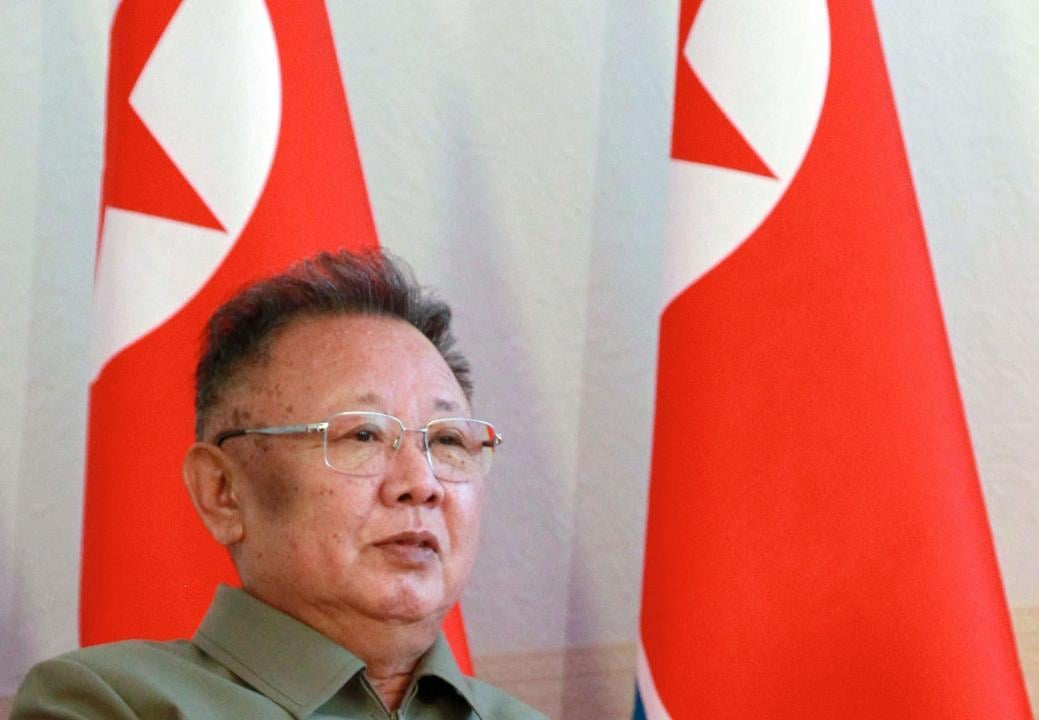
Kim Jong II
North Korean dictator Kim Jong-iI, who ruled from 1994 to 2011, was known for his cruel leadership and countless crimes against humanity,. Yet the iron-fisted leader also had an alleged soft spot for classical music, and writing a book, “The Art of Opera.” According to Charles Armstrong, director of the Center for Korean Studies at Columbia University, the leader's education involved a great deal of theater, film, and music. “He always seemed to have a strong interest in the arts,”. “He argued that culture was key to maintaining the regime and keeping people's loyalty.”
Question #28
What drug was first shipped from the Bahamas in the early 1980s?
Crack cocaine
In 1983, the Bahamas experienced a crack cocaine outbreak that was serious enough to prompt the head of the Bahamian National Drug Council to warn other countries about the spread of the new and highly addictive drug. “What we have is the world's first free-basing epidemic,". “(It) could be preceding an epidemic in the industrialized states." Although the first record of crack cocaine being shipped from the Bahamas was, it didn't become an epidemic until the mid-1980s.
Question #29
How old was the designer of the current pattern on the U.S. flag?
17 years old
In 1958, before the country had 50 states, 17-year-old high school student Robert G. Heft of Lancaster, Ohio, as part of a class project, predicting that Alaska and Hawaii would become states. After his teacher gave him as B-minus, he in an attempt to improve his grade. Two years later, President Dwight Eisenhower called him to tell him that the country would be adopting his design.
Question #30
What did American activist Margaret Sanger establish in 1916 that got her thrown in jail for 30 days?
The first U.S. birth control clinic
American activist and Planned Parenthood founder Margaret Sanger opened a facility in 1916 called the Brownsville Clinic, which for 10 cents a visit. At the time, it was virtually impossible to get accurate information anywhere else. The following year, a court ruled that she’d, which prohibited the distribution, advertisement, or sales of materials about contraception. Sanger served one month in jail before getting out and launching an appeal.