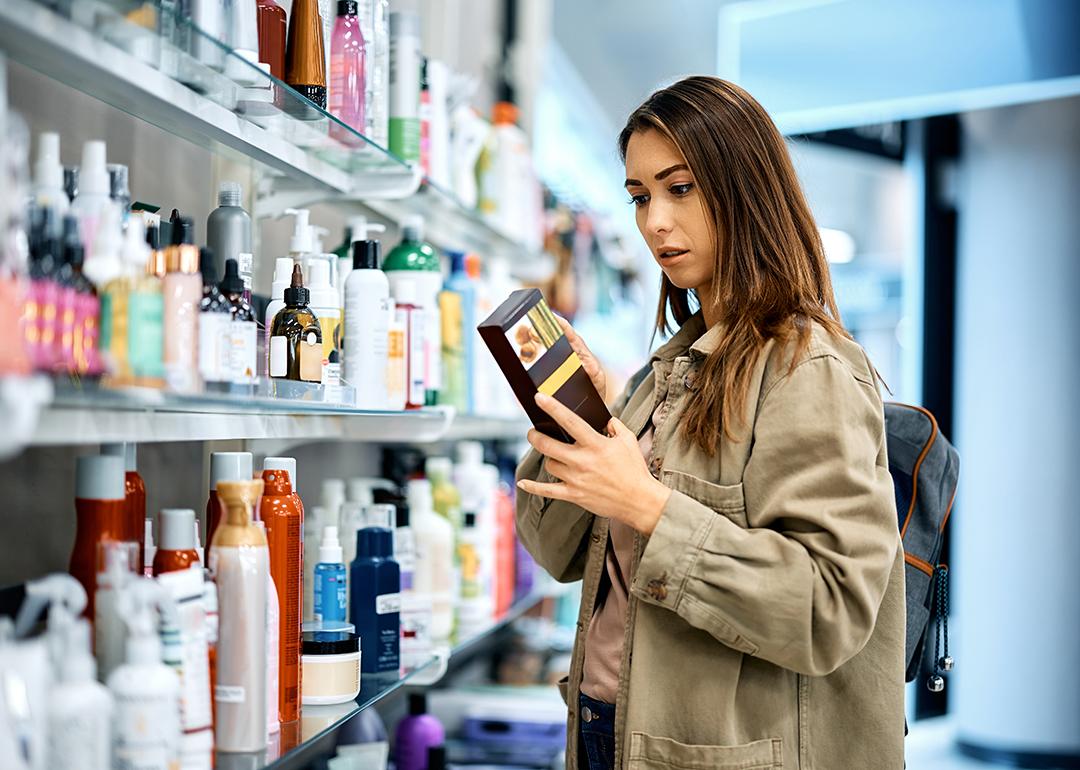
How to tell if a product is really green or non-toxic
How to tell if a product is really green or non-toxic
Have you ever bought an article of clothing because it was made with “sustainable” fabric? Or maybe you’ve purchased an “eco-friendly” cleaning product or a “green” skincare item? Who doesn’t love earth-toned packaging and an “All Natural Ingredients” callout in an eye-catching font?
You can probably guess by the use of quotation marks that words like “green” and “eco-friendly” can be problematic. Why? Because, these words, along with other environmentally friendly sounding terms, are not clearly defined by any third-party organization or governing body. And, unfortunately, that means that these words mean … well, not a whole lot.
Wishy-washy terms have resulted in making it all too easy for companies to engage in a shady marketing practice called “greenwashing,” which complicates shopping for ethically minded consumers who want to support the environment, steer clear of toxic chemicals and feel good about their purchases. And, in some cases, it means that people who are trying hard to and end up hurting rather than helping the planet.
But what does greenwashing mean? And how can you protect yourself and, by extension, the planet from greenwashing? provides answers.
What Is Greenwashing?
Also known as green sheen or green marketing, greenwashing refers to when companies make false or misleading claims about how environmentally friendly their products, services or business practices are. Taking its name from “whitewashing,” a deliberate attempt to cover up incriminating details, greenwashing can include:
- Advertising
- PR campaigns
- Rebranding
- Mission statements
- Packaging
- Partnerships
Basically, greenwashing can take any form of corporate communication (or lack of communication via withholding information that reflects poorly on a company). You've probably encountered it before, even if you didn't realize it.
Why Do Companies Do This?
The short answer is for the money, of course. From office recycling efforts to paperless banking to reusable grocery bags, “going green” has been a big part of our culture for a while now, and many companies have seen that as an opportunity to profit rather than simply to do good.
Additionally, consumers have responded. showed that 78% of people are more likely to purchase a product if it’s labeled as environmentally friendly. The same study reported that 64% of Americans will actually pay more for sustainable products (and that increases to 75% when talking specifically about Millennials.)
Of course, businesses (and the real people behind them) can make honest mistakes, and not every company that’s ever engaged in greenwashing is evil. However, businesses do have a responsibility to make sure they can substantiate any claims they make.
Want Some Greenwashing Examples?
Examples of greenwashing aren’t hard to find. For instance, a cosmetics company may add a little aloe vera or Vitamin E to its formula and label its products “natural,” even though it made no changes to the rest of the ingredients.
Or, a laundry detergent may include baking soda and display in big, bold letters on the box that it “cleans with natural enzyme action!” … but the package fails to mention that the product also contains , sodium laurel sulphate and so on.
In the mattress industry, a common greenwashing example is when mattress companies tout that . What could be more natural, right? Sadly, the soybean content is minimal (sometimes as little as 3% to 5%), and the rest of the material is typically polyurethane foam made with questionable chemicals.
Or, they might claim that there's no toxic glues and adhesives in their comfort layers. Again, it sounds great if you don't already know that glues and adhesives aren't really used in comfort layers in the first place – they're most commonly found in the .
Common Greenwashing Tactics in Marketing
Why is greenwashing so prevalent? Because, with subtle tactics, it’s easy to get away with. Like we mentioned earlier, a lot of companies simply use vague, undefined terms like “natural” or “eco-friendly,” which can be hard to prove or disprove. Here are some additional greenwashing practices to look out for:
Unsubstantiated Claims
When evaluating companies or products, it’s important to look for reputable third-party certifications and verifications that ensure adherence to stringent chemical, environmental and social standards.
Three notable certifications include the world’s leading processing standard for textiles, the , and two human health and ecosystem-focused product certification programs, and .
If a company or product is truly eco-friendly, then they’ll have verifiable evidence of such claims thanks to these certifications.
Pretend Endorsement
Related, if you see a graphic made to resemble a seal or emblem but that doesn’t have any official organization associated with it, be wary. Some to falsely suggest endorsement by legitimate organizations.
You see this a lot with terms like “100% Natural.” It aims to mislead customers into believing a product has undergone environmental or health standard evaluations when, in reality, it hasn’t. Protect yourself by verifying the certifying organization, looking for certification documents on a company's website and consulting official databases to confirm a product’s certification status.
Irrelevant Claims
Some companies highlight environmental claims that, while factually accurate, offer no real value to .
Is a company claiming to be free of a toxic chemical that isn’t typically used in that type of product anyway? Or a chemical that has been legally banned, meaning that every product in this category should be free of it? These are warning signs.
To navigate around these red flags, research a broad range of products before you buy, seek relevant certifications (see a theme here?) and always question the significance of the claims. If it seems irrelevant, and you can't find proof otherwise, it probably is!
Suggestive Images
We shop with our eyes first more than we like to realize. Websites, packaging and marketing materials that use gorgeous images of lush forests, sparkling streams and sunsets without context may be trying to send a false message in order to .
The images create a positive brand association but may not always reflect the company’s actual environmental practices. Remember to look beyond the images, seek concrete information and verify claims.
Lone “Green” Product
When a company introduces a single product marketed as “green” or environmentally friendly, it’s important to scrutinize the broader context of their operations.
What else does the company (or parent company) make? Is this so-called “green”product (or “green mattress”) manufactured in the same factory where toxic chemicals are used? Is the company making most of its profit off of products that harm the environment?
Sometimes a serves more as a marketing tool than a genuine commitment to sustainability. To avoid being misled, look at the company’s overall product line, other brands owned by their parent company and their environmental impact.
Hidden Partnerships and Investment
It’s not just about the company itself, but their partnerships and investment activities too when you're evaluating a company’s environmental claims.
Spend some time researching other companies this brand is associated with. For example, do they produce certified products but invest in endeavors that cause pollution? A company may while simultaneously engaging with or funding initiatives that contradict that.
Resources to Help You Avoid Greenwashing
The Federal Trade Commission (FTC) has that spell out how marketers should address environmental claims. It’s an excellent resource if you want to better understand what companies legally should be doing.
You can also search products on trusted databases. For instance, Environmental Working Group (EWG) is a nonprofit led by scientists, analysts, attorneys and other experts. In addition to its research and advocacy work, EWG provides that make it easy to vet everything from cosmetics and cleaning products to tap water and produce. MADE SAFE offers that’s also very reputable.
was produced by and reviewed and distributed by Â鶹ԭ´´.