6 traits of successful entrepreneurs (shared by real founders)
6 traits of successful entrepreneurs (shared by real founders)
Small businesses are an essential part of the economy, creating jobs, disrupting industries, and providing innovative goods and services to the public. That said, small business development comes with inherent risk. It takes more than a good idea and a to succeed.
Entrepreneurship comes with its share of challenges, and while not every venture succeeds, understanding what drives success can help you turn a business idea into an established company. talked with successful founders about what it takes to be an entrepreneur. Some skills, like problem solving, you can develop; others, like passion, come from within.
1. Vision
Having a clear vision of what you want to achieve helps you lay the foundation for your , your product, the problem you’re solving, and your overall brand identity.
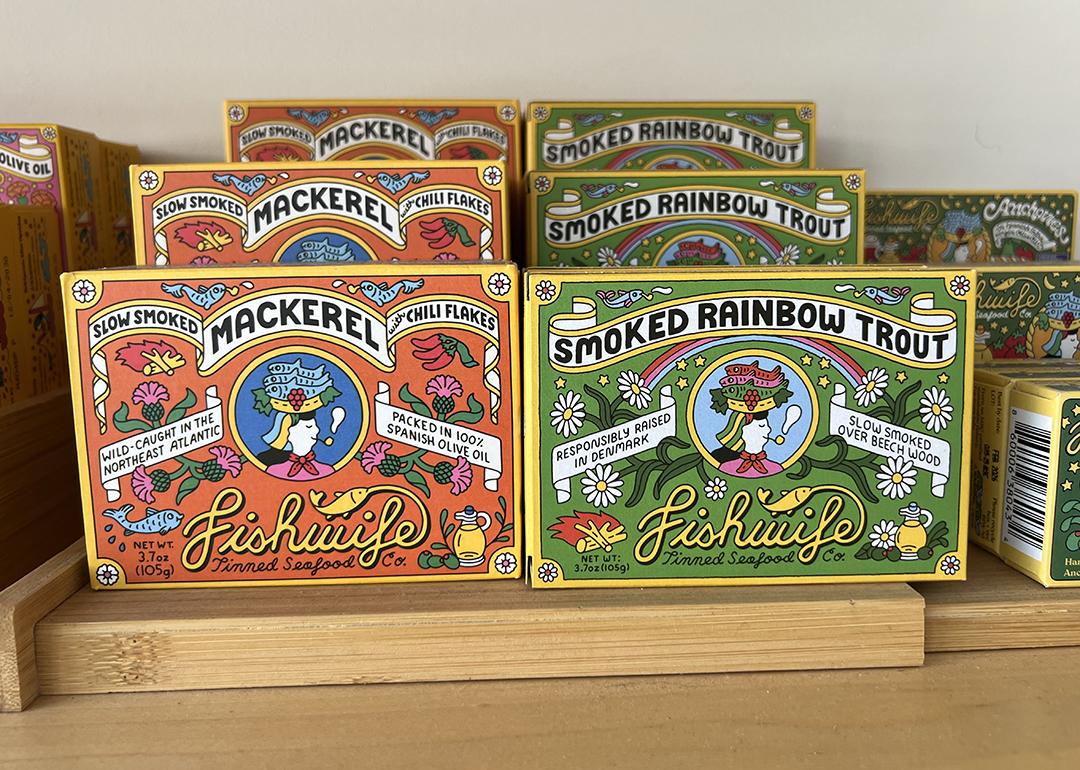
“Clarity of vision, to me, is determinative of which brands will succeed and which don’t resonate with people,” says Becca Millstein, cofounder and CEO of premium tinned seafood company Fishwife. “If you can’t articulate your vision, it will be really hard creating something that people connect with and understand.”
Putting together a vision statement can help you articulate why you’re doing what you’re doing, both to yourself and to your team, customers, and investors.
Keeping your brand vision top of mind is also equally important as you scale your business. As helmet brand Thousand grew, founder Gloria Hwang delegated parts of the business, including the product roadmap. But when she started seeing products that strayed from her initial vision, she knew she had to trust her gut and realign expectations.
“We weren’t putting out things that I was super proud of. We were making iterations on products,” . “What was really interesting about taking back over the product roadmap is I really oriented our team around how Thousand started.”
2. Resilience
Failure is a part of success. This is especially true in entrepreneurship. Every new venture involves some risk, no matter your funding and prior experience. Unexpected challenges can and will arise. Suppliers may let you down; a new product may be a flop; customers may complain; a hire may not work out; a business relationship may fall apart.
“Whether you compartmentalize or simply develop a thick skin, you need to find a way to get over things really quickly,” says Millstein. “Business owners have to deal with more conflict than most people do. The hard times and hard conversations are inevitable, so you have to get comfortable with them and not let them impact you too deeply or too personally.”
Ben Amanna, the founder of boxing apparel brand Boxraw, recounts how his own company overcame a failed partnership deal with a famous boxer. “That ordeal broke my heart,” Amanna says on “.” “I really considered this guy a friend, almost like family. It was a tough pill to swallow, but it toughened me up a hell of a lot. [I think of] the saying that business is business and not to take things personally.”
Boxraw had to get creative, but the company recovered—and in the end, the failed deal was, as Amanna says, “the best thing to ever happen to us. Off the back of that, we then got another collaboration with someone who is his rival, and it all worked out. But it was definitely hard in those moments.”
3. Passion
What helps an entrepreneur stay focused and resilient through all the challenges? Passion. When you have a deep love for your company and the work you’re doing, it helps drive your stamina for dealing with hard work, long hours, and setbacks in day-to-day operations.
“I can’t imagine working this hard and staying this driven about something I wasn’t totally passionate about,” Millstein says. “In my opinion, you have to be completely obsessed with your idea and with your company.”
For Raquel Acosta, casually taking evening classes in ceramics inspired a passion so strong that she ultimately left her job as a data scientist. Her love for the craft drove her to make what she describes as a “midlife, quite radical career change” and start her ceramics brand Glaze Me Pretty.
“I felt the urge to do something with my hands,” . “I found it fascinating that you could make a professional-looking product out of a bowl of mud. And the possibilities were endless. I love the medium.”
Hwang’s passion for helmets was born out of a personal tragedy. When a friend and mentor died in a cycling accident where he wasn’t wearing a helmet, Hwang knew she needed to create a helmet people would want to wear. The brand’s name is a reference to its mission to save 1,000 lives by encouraging helmet use. “You can literally save lives by getting people to wear helmets for the first time,” Hwang says. “And for me, that’s one of the most impactful things I see in our business.”
4. Confidence
Discussion about entrepreneurs’ confidence generally focuses on a belief in oneself, Millstein says, but she believes it’s even more essential to believe in your company’s need to exist.
“I think this is where a lot of founders stop working on their companies and startups fail: They have an idea and they enjoy it, but in their heart of hearts they’re not totally convinced that this company needs to exist,” Millstein says.
If you truly believe in your company as a business, it’s far easier to get customers, employees, investors, and other stakeholders on board.
“I knew that a premium, sustainable tinned fish company absolutely needed to exist,” Millstein says. “Like, there’s no question that’s going to happen, and I suppose I thought, why not be the one to make it happen? And then I just followed that thread.”
When seeking investors for Suri, a sustainable electric toothbrush brand, founders Gyve Safavi and Mark Rushmore received a lot of no’s. Their confidence in their idea kept them going.
“I don’t think I’ve ever believed in anything as much as I believe in this,” . “I have zero doubt it’s the right thing to do. It’s the right thing to do for the consumer. It’s the right thing to do for the planet.” The brand went on to make over $30 million in sales within two years of launching.
5. Creative problem-solving
Many entrepreneurs do their homework before . They may connect with other founders for advice, seek mentors and investors to guide them, or go back to school to obtain an MBA or other graduate degree. But no advice is one-size-fits-all, and every startup will face unique challenges not found in a textbook. Unique problems require creative solutions, often on the fly.
“Nothing can truly prepare you for what it is to run a business venture until you do it,” Millstein says. “You build your own educational curriculum as a founder.”
Millstein recalls an early challenge when she needed to be both creative and resourceful to solve problems at Fishwife. In the company’s first year, she waited for a massive shipment of smoked trout. But on the day slated for delivery, the cannery called with bad news related to COVID supply delays: Not only would the pallets of fish not be delivered that day, but they actually wouldn’t be delivered for four months.
“I realized this challenge was actually a growth opportunity to connect with our customers and bring them into our journey as a small business surviving through COVID,” Millstein says. “I got on the phone with our illustrator and we put together a graphic explaining the seasonality of the fishing season in the Pacific Northwest, how the cannery was short on staff because of the pandemic, and how that affected us as a new business. The response was incredibly positive.”
6. Self-awareness
You’ll juggle multiple responsibilities as a founder. To delegate effectively as you grow, you need a clear-eyed view of your strengths and weaknesses. Some founders are excellent engineers who can build the product, but their interpersonal skill set isn’t as strong; others may be creative and passionate with many innovative ideas, but need a partner who’s better at logistics and execution.
Understanding and embracing your entrepreneurial skills will help you lean into your strengths as a leader, identify areas where you can grow, and who possess the complementary attributes you need.
Sisters and cofounders Sadie and Abby Bowler have grown their cruelty-free personal care brand SadieB with this ethos in mind. “To build a business, you need so many different skill sets,” . “It’s so rare that any one person would have all of those skill sets. And so having the right business partners and the right team members who share your vision and share your passion for what you’re creating, but can also bring those complementary skills—that is when the magic happens and you can really build something together.”
When Laura Thompson had the idea for Three Ships, a natural skin care brand with an accessible price point, she knew she wanted to build the business with a cofounder. “I loved group projects,” . After being introduced to Connie Lo through a mutual friend, the pair instantly hit it off—because of their differences.
“I’m an introvert; she’s an extrovert. I’m a numbers person; she’s a people person,” Thompson says. “We balance each other out really, really well. And we were also interested in polar opposite ends of the business.”
The pair became cofounders and have grown Three Ships from a bootstrapped startup to a multimillion-dollar business. “I don’t think either of us would be able to run this business alone,” says Thompson.
was produced by and reviewed and distributed by Â鶹ԭ´´.