
7 things businesses that have mastered their cash flow do (and how you can start, too)
Cash flow is a top concern for businesses of all sizes, but many business owners don鈥檛 understand the nuances of how to manage their cash flow. You can position yourself to master cash flow management by following the best practices other successful business owners adhere to.
surveyed 240 business owners to learn more about how thriving business leaders manage their and rounded up the seven best strategies to make the most of every dollar your business earns.


1. Separate business and personal finances immediately
One of the first steps successful business owners take is establishing dedicated business bank accounts. As soon as you鈥檝e and received an , you can open business bank accounts to better track your business finances. According to our , 55% of business owners open an account within two months of starting their new venture.
Small business financial accounts often include a checking account, a savings account, and one or more business credit cards. Eighty-six percent of respondents to the Square survey have both business checking and savings accounts. Whether you鈥檙e preparing to launch or already have a running business, keeping your business and personal finances separate is essential for good financial hygiene.
Next steps: Open dedicated before launching to simplify tax prep, loan applications, and financial tracking.
2. Organize your bank accounts
Just like with your personal finances, it鈥檚 a good idea to put away business savings for emergencies, to , and for future investments to grow your business. While large enterprises may have dozens of accounts, small to medium-sized businesses can also have multiple accounts for different needs. Among small businesses, 74% use two to three accounts, while 25% use four or more.
Depending on your needs, you may want to divide your funds for different purposes, such as payroll and taxes. Selecting a banking partner that provides tools like folders for organization within a single account will enable you to stay organized without going overboard and opening more bank accounts than necessary.
Next steps: Create sub-accounts or savings folders for taxes, payroll, and emergency funds to improve financial clarity.
3. Prioritize savings鈥攅ven in tight months
Financially resilient businesses prioritize savings regardless of . Even the best-performing businesses see ups and downs on occasion. That鈥檚 why 97% of surveyed businesses have savings goals, which is a wise decision. These businesses allocate an average of 10% of their annual revenue to savings.
The top savings goals include:
- Inventory/supplies (86%)
- Emergency expenses (79%)
- Filling cash flow gaps (63%)
- Paying taxes (39%)
Every business is unique, so you may want to save for another set of goals. The Profit First strategy, based on the popular , suggests setting up accounts for income, profit, owner鈥檚 compensation, taxes, operating expenses, long-term savings, inventory, and equipment. Review your business鈥檚 financial needs to pick the right accounts.
Next steps: Automate transfers into dedicated savings accounts to ensure steady contributions throughout the year.
4. Leverage data to make smarter decisions
Running a business without regularly checking in on your financial data is like driving blind. Businesses that regularly review financial metrics are more financially resilient and tend to make better decisions to improve their cash flow. A monthly financial review can be very helpful, and closely looking at financial and marketing data points can help you supercharge your sales and profits. For example, conversion rate, churn rate, email open rate, and . Track what鈥檚 most relevant to your unique business.
Sixty percent of businesses use banking services to monitor cash flow, and 54% use payroll and tax software to stay compliant and track expenses. Spend less time trying to understand your finances by using a banking partner that provides a consolidated view of your cash flow with unified activity and sales reporting.
Next steps: Conduct quarterly financial reviews to identify cash flow bottlenecks and adjust strategies accordingly.
5. Invest in an integrated technology solution to automate manual tasks
Automation helps businesses stay ahead of cash flow challenges. That goes for everything from reordering inventory to automated savings. Fifty-seven percent of businesses automate savings and 71% use invoicing software to track and manage client payments. Depending on your business, you may find . Everything you automate gives you more time to focus on growing your profits.
Using integrated tools for payments, invoicing, and reporting helps save time flipping between systems and improves efficiency. When you use a single provider for a suite of business services, much of that automation is built in from the start.
Next steps: Set up invoicing software, automated payments, payroll management, and cash flow tracking tools early to streamline operations.
6. Expect鈥攁nd plan for鈥攕easonal revenue fluctuations
Many retail businesses know the will be the busiest time of year, and they鈥檒l see a slump in the summer. Accountants know they鈥檒l be busiest from the start of the year through tax season but don鈥檛 have as much to do in the fall. You can also plan for seasonal revenue fluctuations and ensure that a dip in cash flow doesn鈥檛 harm your overall business.
According to Square data:
- Revenue peaks in November, December, and January for most businesses
- 29% of retail businesses see peak revenue in November
- Savings balances are typically lowest from March to July
Next steps: Use past sales trends to predict slow periods and build a financial cushion ahead of time.
7. Secure financing strategically (and persist if denied)
The most successful businesses in the world often carry millions or even billions of dollars in debt. While high-interest loans can be damaging, strategic small business financing can help reach business goals, such as a larger inventory or capital investment. When you shop around, you can find the best deals available. If you鈥檙e turned down the first time, it鈥檚 worth looking for new funding sources that better align with your borrower profile.
Square鈥檚 recent survey shows that 82% of small businesses didn鈥檛 receive financing on their first try, and 47% were approved on their second application. Ninety-seven percent of businesses use business credit cards for financing. When used responsibly, credit and financing can fit into your cash flow management strategy.
Next steps: Improve approval odds by tracking financial metrics, maintaining good credit, and applying strategically.
Follow the lead of top-performing businesses
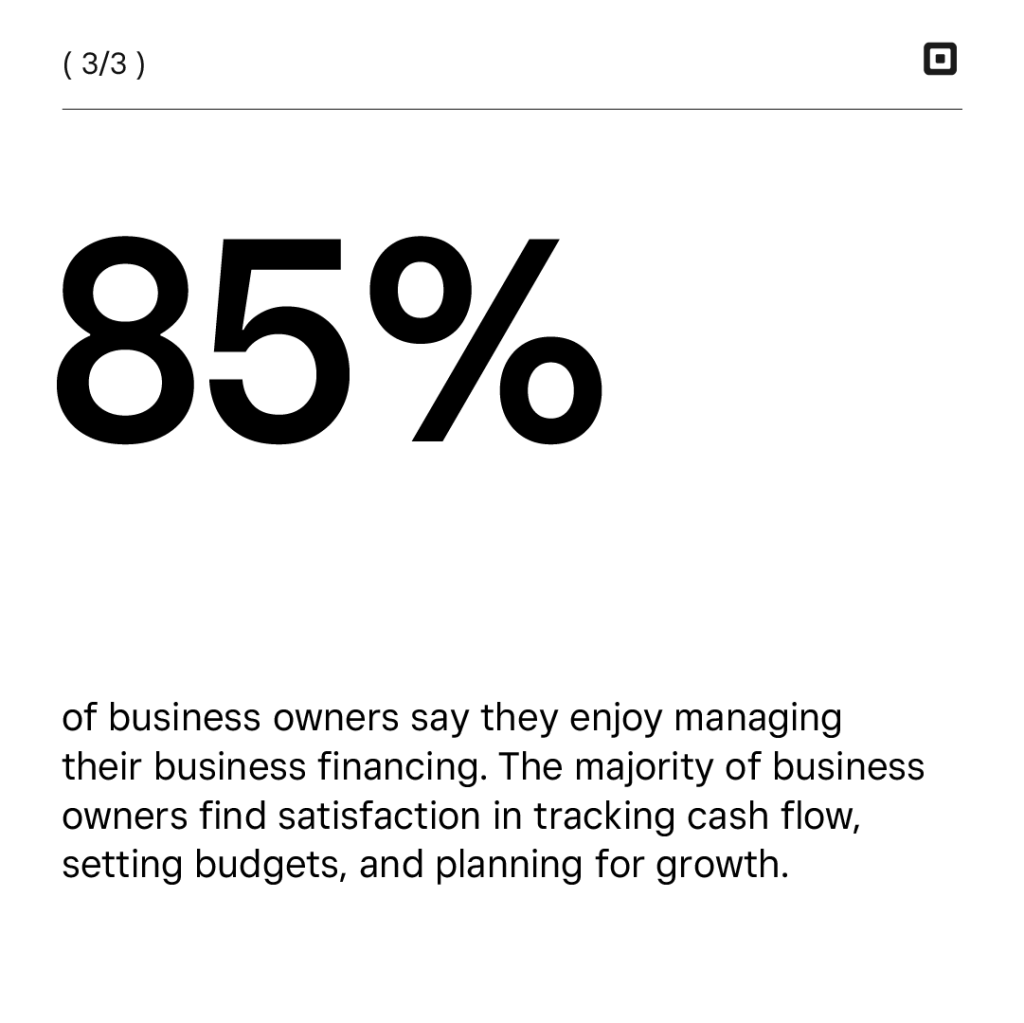
Avoid thinking of as a burden鈥攊t鈥檚 an empowering part of entrepreneurship. Eighty-five percent of business owners say they enjoy managing their business finances. When you confidently approach your business finances with a can-do attitude, you鈥檙e putting yourself in a position to master your cash flow and run a profitable business for years to come.
was produced by for its publication and reviewed and distributed by 麻豆原创.