How creators can launch businesses and reclaim their audiences
How creators can launch businesses and reclaim their audiences
In the heyday of the , stars are made in living rooms. Ordinary people prove capable of extraordinary things, turning content into cash and ideas into empires.
But while creator power is growing, the control they have over their own brands on social media is not.
Payment structures for sponsored brand content have shifted, as have algorithms and platform rules. A significant majority of creators view their monthly incomes on social platforms as unpredictable, while 78% say appeasing algorithms impacts what they create, according to a 2024 Patreon survey. As many of them wade into entrepreneurship and launch businesses of their own, this restrictive social media environment can hinder their growth.
According to research, almost a quarter of businesses that added the platform as a sales channel did so to gain full control over their online presence. Ownership matters, especially for creators who build their audiences around their deeply personal identities.
Learn how two creators, Katie Sturino and Rajiv Surendra, pursued entrepreneurship to diversify their projects and income streams—and keep doing what they love, on their own terms.
When “too real” is just right
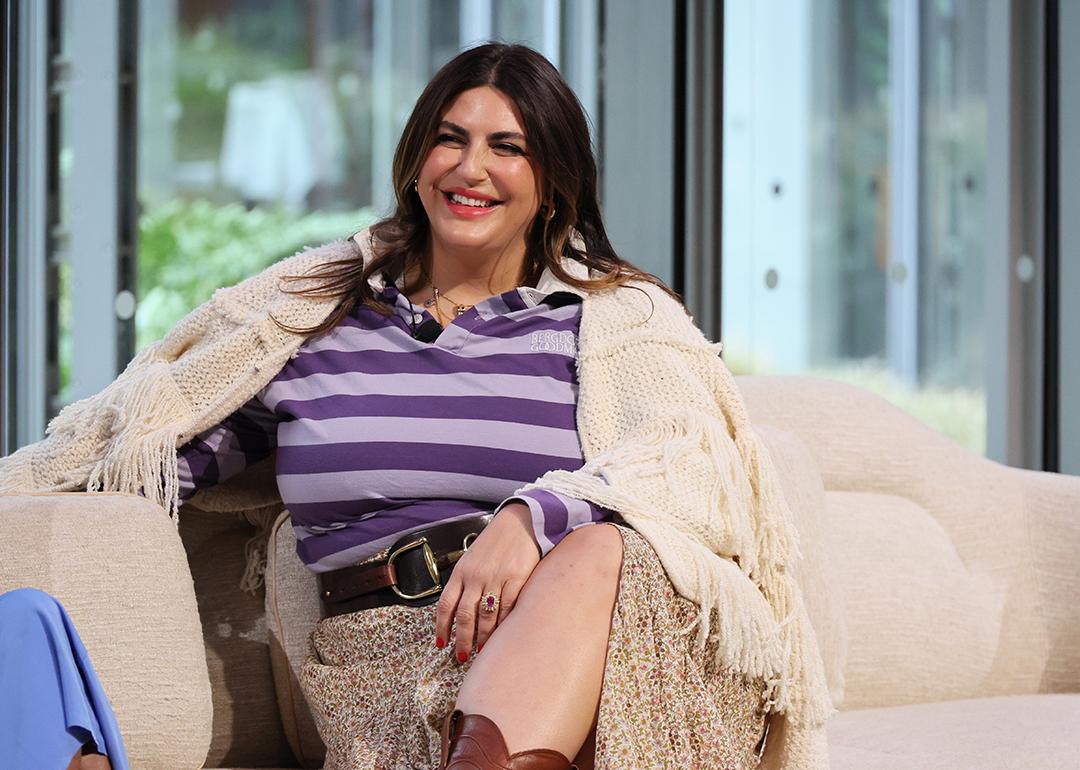
Katie Sturino started in the same way as many of today’s top creators: posting authentic content that attracted a niche audience. But she was before her time. “I was warned by people that I was too raw, too real,” she says. A decade ago, filtered images of perfectly poached eggs and sleek manicured hands reigned on Instagram. Sturino was here for real talk.
“I started my platform because I just wanted to help bigger girls find clothes,” she says. “Then I realized women of all sizes were feeling bad about their bodies.” Her content appealed to a wider audience than expected, and expanded to cover other body issues.
The internet was ready for it. In the years since Sturino launched her personal brand, creator aesthetic has taken on a more authentic quality.
“I'm very comfortable with the new landscape because it's all about being real. That's easy for me,” she says.
For Sturino, was about filling a gap she identified by listening to her audience. “I wanted to challenge the beauty industry to put out products that help with actual problems, not made up problems,” she says. Problems like chafing, sweating, and even hemorrhoids.
Megababe launched in 2017, founded by Katie, her sister Jenny, and friend Kate McPherson. At the time, Sturino had around 55,000 loyal followers on Instagram. “It's not a lot of followers to launch a gigantic beauty brand,” she says. But it presented another way to deliver value to her fans and deepen the relationship.
Go-live day was tense, with Sturino’s parents’ garage filled with product that wasn’t flying out the door. Then, after landing a spot on The Today Show, the flood of sales happened.
Megababe has since grown into a force in the beauty industry, expanding product lines and leaning into major retail partnerships. And Sturino’s personal brand has grown alongside it. She’s become a leading advocate for size inclusivity and published her first book, “Body Talk,” a guide to self-acceptance.
Still, her social content isn’t reaching everyone. “For the past two years, I've been on and off shadow banned,” she says. She’s seeing it in her own data. “Plus size bodies often get flagged as inappropriate.”
Some 60% of creators say Instagram does not always show fans their best work, according to the same Patreon survey. “It's a real balance trying to figure out how to feed it correctly while also putting out content that you want your audience to see,” Sturino says.
“Platforms change, algorithms change,” she says. her projects and platforms—she’s now on Substack and is publishing a second book—means she has more control over her message. And through Megababe’s website, Sturino isn’t at the mercy of the algorithm. She calls the shots on how and when her brand shows up.
Her success with entrepreneurship hasn’t changed Sturino’s approach to authenticity. “I think people are shocked at how hands-on I am,” she says. “It probably feels like someone else is answering my DMs. I'm still here talking to people about their armpits.”
A little dark, in a good way
Unlike Sturino, scaling an empire isn’t in Rajiv Surendra’s plans. While the world may know him best for playing the charismatic and shameless Kevin Gnapoor in “Mean Girls”, Surendra lives a decidedly quieter life these days.
In 2021, HGTV toured Surendra’s NYC apartment. The resulting video has garnered over 4 million YouTube views. Prompted by the enthusiasm for his lifestyle, he started his own YouTube channel, broadcast from that very apartment.
That channel became a window into Surendra’s world, a place where he shared his passions for art, vintage, and creating by hand. It’s a blueprint for slow living, a throwback to simplicity. Fans follow along as he collects silver antiques, canes a chair, and makes candles and soaps from scratch.
It’s the latter that opened up a new opportunity for Surendra: His fans wanted to buy his products. “I didn't even know how to make that work. I only make like twelve bars of soap a year,” he says.
Eventually, he relented, though, and launched his own . “I finally decided to say, ‘OK, but you can only buy what I have.’” Alongside soaps, Surendra sells his watercolor studies and clay pots, also made by hand.
“It was a big question mark for me whether people would be willing to pay $50 for a bar of handmade soap, but they were,” he says, “and the soap actually is the fastest-selling thing on my website.”
While his approach means the store is often out of stock (awaiting the next drop of slow-crafted goods), the move unlocked a few things for Surendra as an artist.
First, the store became a natural extension of his personal brand and YouTube channel, unbound by platform parameters. He worked with a close friend to design it after the feeling and aesthetic of his own apartment—the space that started it all. “The website feels kind of quiet, it feels a little dark in a good way,” he says. “It really feels like me.”
Having full ownership over his brand like this is a stark contrast from his days in the entertainment business. “You would not believe how restrictive these contracts are. They want to own the rights to everything and have a say in everything,” he says. “When I'm creating stuff in my apartment, no one's telling me what to do and how to do it.”
This new shop, launched in late 2024, isn’t Surendra’s first foray into entrepreneurship. He ran a calligraphy business for 10 years, producing signage and other projects for clients. It was here that he set boundaries for himself, once even turning down a massive client while he was struggling to pay rent.
“A lot of people would say it was a stupid decision,” he says. “But I knew that the goal was longevity and the only way to get there was by keeping the passion, by being excited about it.”
And he’s able to do just that with his new venture, controlling what—and how much—he makes and sells.
Selling products on his own site means he’s closer than ever to his fans, too. “Now that I'm engaging in transactions with viewers, there’s an added element of obligation,” he says. “There's this new facet to the relationship that feels more personal.”
Forging these relationships is critical in a reality where more than half of creators say it’s harder to reach their followers today than it was five years ago, according to Patreon data.
These days, Surendra is thinking a lot about compromise. While in the past he’s rejected the idea of mass producing something so personal, he’s now entertaining ways to scale. “Maybe there are people or companies that can make the soap exactly as I make it,” he says. “I am starting to think about ways of making it work, but still keeping the passion alive.”
was produced by and reviewed and distributed by Â鶹ԭ´´.