Report: Inflation and labor shortages are stressing small business owners right now
was produced by and reviewed and distributed by 麻豆原创.
Report: Inflation and labor shortages are stressing small business owners right now
Inflation, reduced consumer spending and labor shortages top small business owners' list of worries, according to a nationwide survey of 500 business owners that also asked what they're doing to address those concerns.
The goal of was to understand how business owners think about the economy and the threats to their business, and what's changed since NEXT's . The results show how small business owners think about and respond to risk.
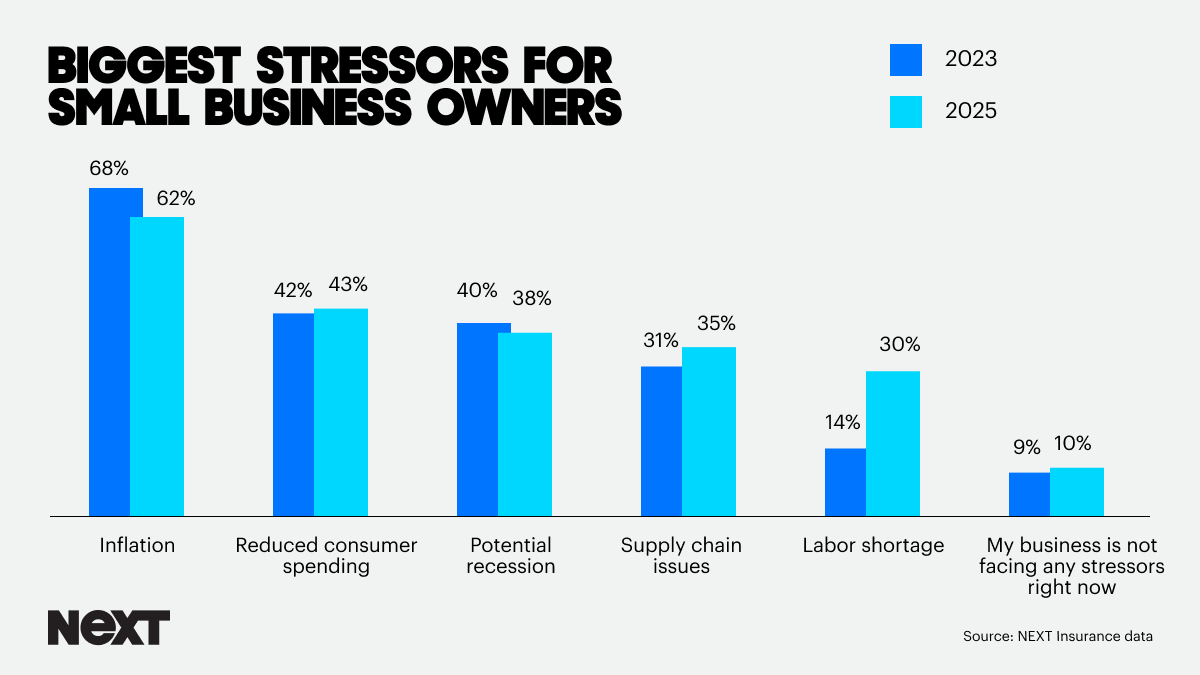
62% of small business owners say inflation is their biggest stress
The survey indicates that inflation remains the top stressor for small business owners in 2025鈥攖hough the concern has eased slightly since NEXT's last survey in 2023.
More than six in ten, 62%, say inflation is their biggest source of stress. While that number is down from 68% in 2023, it still leads their list of worries ahead of reduced consumer spending (43%), a potential recession (38%) and supply chain issues (up to 35% from 31% in 2023).
This data reflects larger trends outside NEXT's report. The fell 2.1 points in February 2025 for the fourth consecutive month, and the Uncertainty Index rose 4 points, according to a recent survey from the National Federation of Independent Business (NFIB).
Whether or not a recession is looming, small business sentiment reveals real concerns with current economic conditions.
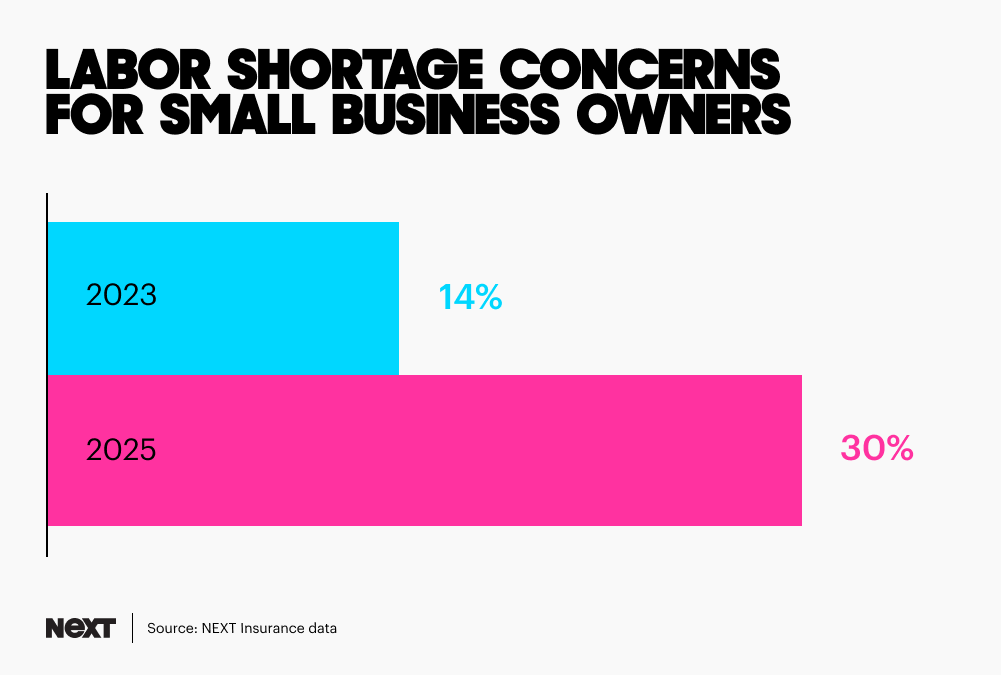
Labor shortage concerns have more than doubled in two years
While a labor shortage is low on the list of stressors for small business owners, it's one of the fastest-growing sources of stress鈥攎ore than doubling from 14% in 2023 to 30% in 2025.
Finding and retaining talent is a real and valid concern for people owning and operating a business. There are than there were pre-pandemic (February 2020), according to a March 2025 report from the U.S. Chamber of Commerce.
Every month, businesses in the U.S. create hundreds of thousands of jobs, but many of them are unfilled. Some industries feel this labor crisis more than others. For example, the retail sector and financial services show the highest levels of unfilled jobs.
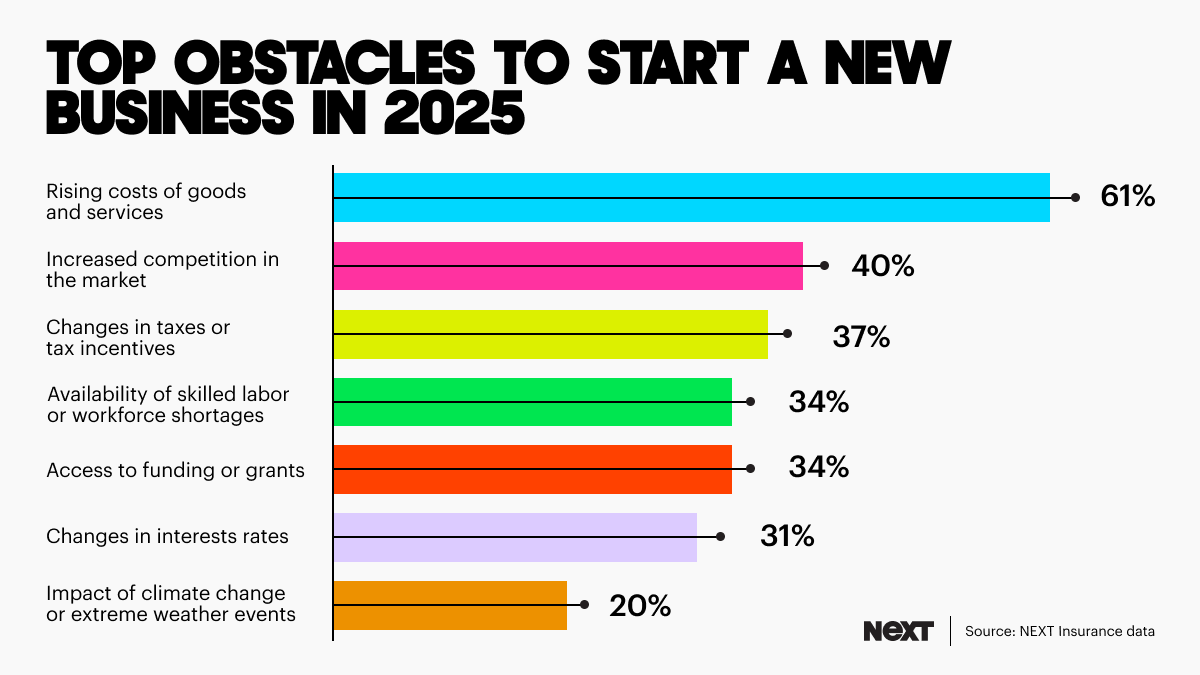
61% of startups fear the rising costs of goods and services
There were in March over January 2025, according to the U.S. Census Bureau. Based on this data point, they predict a 10.2% increase in the start of new businesses.
But despite growth in the interest of entrepreneurship, small businesses owners in NEXT's survey revealed several roadblocks that could impact someone's decision to start a business.
Economic conditions for would-be entrepreneurs top the list of barriers to launch a new business.
Survey respondents identified the rising costs of goods and services as the biggest challenge (61%), increased competition (40%), changes in taxes or tax incentives (37%), workforce shortages (34%), funding access (34%), changes in interest rates (31%) and climate change (20%) as potentially impacting the growth of small businesses in the U.S.
Not surprisingly, there's considerable overlap between the stressors for existing small business owners and what they predict will discourage new entrepreneurs from launching a business this year.
Small business outlook for 2025
Small business owners are no strangers to uncertainty. But the challenges they face in 2025 are uniquely layered: the threat of inflation, uneven consumer demand and growing labor pressure.
But small business owners aren't waiting for the economy to stabilize鈥攖hey're adjusting, adapting and taking action. 2025 is unfolding as a year that's all about making smart decisions in a tough market.