With rental registries, cities try to track housing and hold bad actors accountable
With rental registries, cities try to track housing and hold bad actors accountable
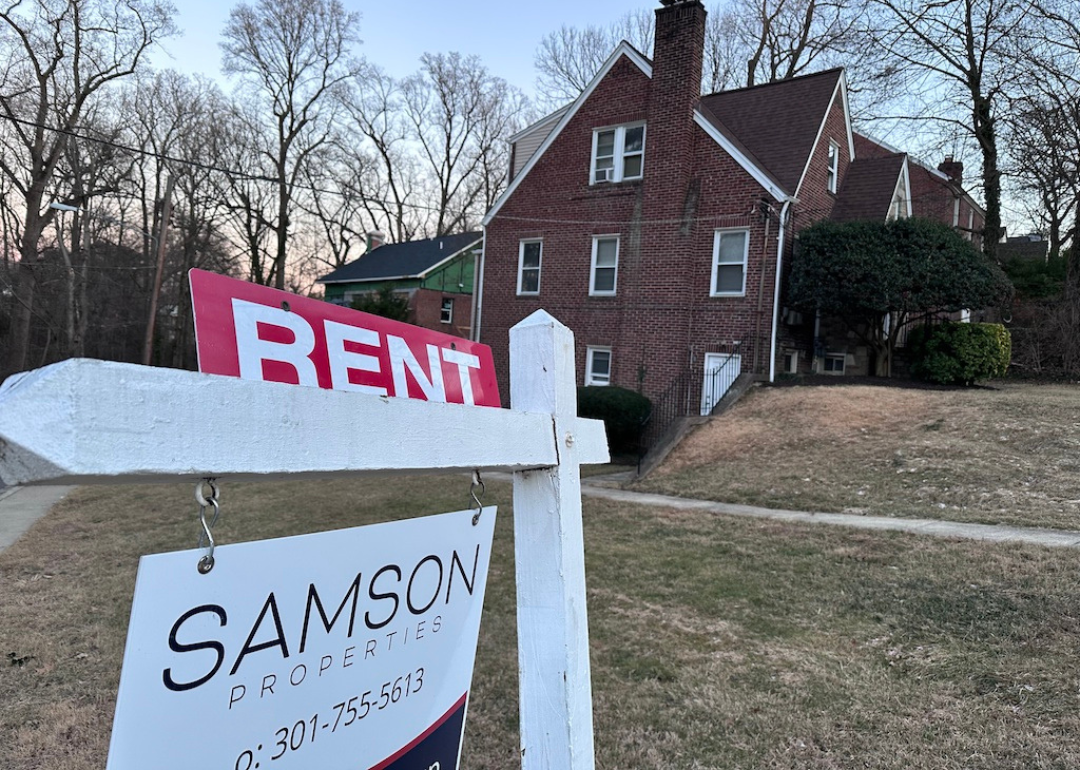
As many people struggle to afford housing and tenant populations grow in some regions, more cities are turning to official registries to answer questions about their rental housing market, reports.
Who owns this rental property? Are they up to date on code requirements, such as having working fire alarms? Are they keeping their building heated and habitable during the cold winter months?
Registries such as those in Denver, Cedar Rapids, Iowa, and Oakland, California, aim to gather as much data as they can on rentals within their city limits. The way cities use that data differs, and the teeth of their policies vary. The data can help them understand rent conditions, track corporate ownership and manage assistance programs. And the cities said they are better for having a registry.
As more people are becoming renters — — many cities lack registries to keep track of the number of rental properties and who owns them. There is also no centralized database tracking which cities or states have rental registries, and federal efforts to study or create a national registry have not advanced beyond proposals.
Rental registries are created locally, vary widely in design and purpose, and must be identified through city-by-city research, according to Reina Chano Murray, associate director at the Lincoln Institute of Land Policy’s Center for Geospatial Solutions. Some registries might focus on short-term rentals, others on long-term housing, inspections or affordability. And they differ in how data is collected, verified and shared.
“That variability makes it challenging to aggregate or standardize registries at a national level, but it’s also what makes them most useful locally. The strongest rental registries are built to solve a clear problem,” said Chano Murray.
Issues might include identifying absentee or corporate landlords, supporting rental assistance programs, understanding local rent conditions, or improving enforcement of rental housing conditions, she said.
The National League of Cities provides for city ordinances on rental registries. The organization, a research and advocacy resource for municipal leaders, advises them to seek, at minimum, information on property owners, including whether they live in or out of city limits, and a contact who will address tenants or deal with other emergencies and legal services.
Landlord and real estate interests often oppose rental registries, arguing that tracking properties and increasing regulation will discourage business development and increase costs for tenants.
But the registries have been drawing renewed attention in recent years, in part because of the rise in the number of investor-owned properties and the national squeeze on housing. CityHealth, a joint project of Kaiser Permanente and the nonprofit de Beaumont Foundation, last fall that 17 of the nation’s largest 75 cities have rental registries with inspections at least every five years.
Oakland’s rent registry, launched in 2023, requires landlords to annually report rent, tenancy and ownership information for units covered by the city’s tenant protection laws. City officials say the system — now at roughly 70% compliance — has begun to fill long-standing gaps in data on who owns what and where.
“As the dataset grows, it will help us understand rent increase trends, tenant turnover, geographic patterns and differences between small landlords and larger or corporate owners. That kind of insight wasn’t possible before,” said Allison Pretto, project manager for Oakland’s Rent Adjustment Program.
“One lesson we learned is that it helps to adopt a rent registry at the same time as tenant protection laws,” she said. “In Oakland, the ordinances came years before the registry, which created data gaps that were hard to fill retroactively.”
Landlords who fail to register risk losing the right to raise rents or proceed with evictions.
Around 2010, Cedar Rapids adopted the International Property Maintenance Code, a model code that standardizes maintenance issues, and added a requirement that rentals be registered. It was a move enabled under state law, which authorizes municipalities with populations over 15,000 to create rental inspection and registration programs, and reflected a desire to move away from “complaint-based” enforcement.
Kevin Ciabatti, the city’s building services director, told Stateline that prior to the registry, the enforcement of rental housing code violations — anything from no heat or hot water to pests or bad electrical systems — were solely based on the complaints of tenants. And tenants sometimes felt less empowered to bring up such violations for fear of retaliation.
Landlord feedback in Cedar Rapids has shaped the program’s evolution as the city’s rental landscape has changed. Over time, the city shortened the inspection cycle — from seven years to five, and now to three.
“We’ve seen a major shift toward large-scale apartment construction and fewer single-family homes,” he said. “That means more rental units entering the inspection cycle long term. Our role isn’t to regulate rents; it’s to ensure health, safety and welfare, regardless of price point.”
With properties registered and automatically inserted into the city’s inspection rotation, the city has expanded the scope of its safety checks.
Last year, Ciabatti said, the city cited nearly 2,800 inoperable smoke detectors. The city also requires inspectors to carry carbon monoxide monitors.
Many cities might not be able to conduct such inspections because they don’t know who owns what, or they might not be able to track trends of negligent safety standards.
“In at least two inspections, those monitors detected gas leaks that likely would not have been found otherwise,” Ciabatti said. “We like to think that may have saved lives.”
Adding teeth
At a basic level, cities can collect rental information through business licenses and tax filings. However, that data can be scattered and doesn’t include information about housing conditions or long-term patterns of violations. A rental registry centralizes that data, some cities told Stateline.
While some programs differ on whether to tie the registry to inspections, data collection is often at the root.
In Colorado, Denver goes a step further and requires landlords to be licensed — not just listed in a registry — with escalating fines of up to $5,000 for noncompliance.
In other cities, fines related to rental housing operations can be as low as $25 a day after an overdue period of 31-45 days in , to $500 per day for each unit in for failing to comply with habitable building requirements.
“A registry is essentially just a list. It’s someone saying, ‘Yes, I rent property,’” said Molly Duplechian, executive director of Denver’s licensing program. “From our perspective, licensing is a much stronger tool because it confirms that properties meet minimum housing standards before they can legally operate.”
Although the program is still new, Duplechian said officials are already learning where rental properties are concentrated across Denver. Early estimates suggested the city has between 50,000 and 55,000 rental properties. The registry currently has 28,400 active licenses covering roughly 204,000 individual units, with more set to be renewed in March.
There are still unlicensed rentals out there, but the program already covers most rental households, according to Denver city staff. That’s because large apartment buildings account for a high number of individual units under a smaller number of licenses.
“We didn’t have a clear picture of how many rental properties existed in Denver or how many residents were renting versus owning,” Duplechian said. “Licensing helps us begin to fill in those gaps.”
Des Moines, Iowa, also requires landlords to register their rental properties, get them inspected and obtain a rental housing certificate. Failure to have a valid certificate can result in tenants becoming “tenants at will,” making past-due rent unrecoverable and complicating eviction processes.
Opposition
Those who oppose rental registries argue that they raise costs for landlords, discourage real estate investment and create a less business-friendly housing market.
“Landlords are already facing rising costs in insurance, taxes and maintenance,” said Alexandra Alvarado, director of education at the American Apartment Owners Association. “Rental registries and licensing programs add another recurring expense, and when fees are high or inspections are routine rather than complaint-driven, small landlords feel that pressure most.”
Lobbying on such concerns raised enough alarm to defeat bills for a statewide registry in and a citywide proposal in .
Some landlord groups also point to ongoing registration fees — per property or per unit — that over time will be passed on to tenants through higher rents.
In November, the city council of Pomona, California, a proposed rental registry and permanent rent stabilization ordinance on a 4-3 vote, following strong opposition from landlord and real estate groups.
Back in Denver, licensing director Duplechian said license fees were a frequent sticking point when the program was still being fleshed out.
“That’s why licensing fees were intentionally kept very low. The most expensive license for the largest apartment complexes is $500 for four years, plus a one-time $50 application fee,” she said. “When you break that down per unit per month, it’s well under a dollar. Claims that this program drives large rent increases just don’t hold up mathematically.”
Ciabatti, the Cedar Rapids building services director, said he’s seen how landlord opposition and community division over rental registries can hurt cities in the long run. And he believes cities should find a way to meet landlords who may be wary of a registry, halfway to ensure compliance.
In a compliance with rental registries ran the gamut from “around 10 percent in Indianapolis, to upwards of 70% in Trenton, to nearly 95% for San Jose’s more limited registry.”
In 2011, when the Cedar Rapids program created a mandatory rental business training program as part of its registry, landlords initially had to attend a seven-hour, in-person course. As property owners voiced their frustrations, it was shortened over time and moved online.
Now, landlords and property managers must complete the training to register a rental property. It covers housing code requirements, landlord-tenant law, compliance with the federal Americans with Disabilities Act, and other responsibilities tied to operating rental housing.
“There was early pushback — particularly around training — but overall, landlords have come to see value in the program. Regular inspections force property owners to stay engaged with their buildings rather than only showing up when the city does,” said Ciabatti. “I’ve worked in communities that couldn’t implement programs like this due to political pushback, and housing got worse as a result.
“Cedar Rapids shows that having a registry and inspection system in place can make a real difference.”
was produced by and reviewed and distributed by Â鶹ԭ´´.