Behind the masks: Who are the people rounding up immigrants in California?
They appeared in plain clothes outside a hotel, wore camouflage as they and arrived with military gear at a .
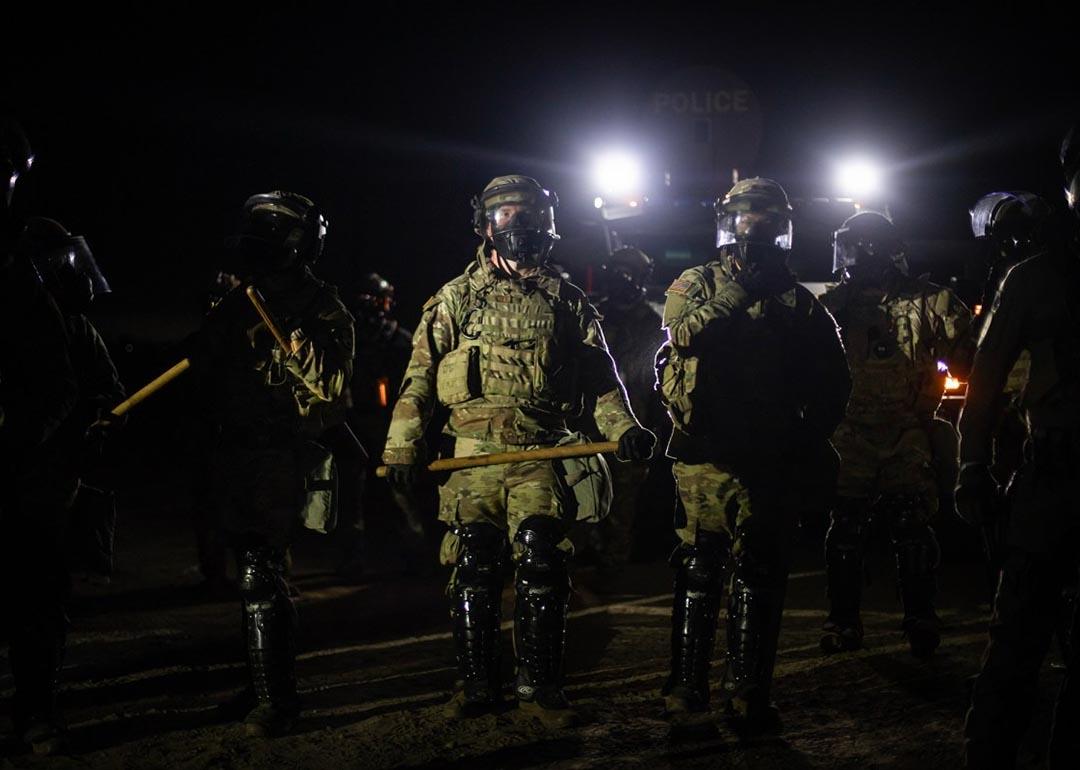
The presence of thousands of hard-to-identify federal agents is a new fact of life in Southern California this summer as the Trump administration carries out the president’s promised deportations.
Residents may assume these masked agents are officers from Immigration and Customs Enforcement (ICE). But that’s not always the case.
Many of them belong to the Border Patrol, the agency that traditionally has policed the nation’s border with Mexico. But the Trump administration sent officers from other agencies to Los Angeles, too, including the FBI and special tactical teams from the Department of Homeland Security, not widely seen until now.
examines the history of the agents and officers behind the masks and the efforts some are taking to change the rules.
Democrats in California’s Legislature have proposed measures to unmask the federal agents. Senate Bill 627, the “,” seeks to prohibit all local, state and federal officers from using masks with some exceptions. SB 805, the “,” would require that officers clearly display their name or badge number. It’s disputed whether the state can regulate federal officers, and law enforcement agencies are lobbying against the proposals.
Federal regulations that ICE and Border Patrol agents should identify themselves when arresting someone “as soon as it is practical and safe to do so.”
And the public is allowed to ask federal agents to identify themselves.
But David Levine, a professor at UC Law San Francisco said, “they can ask but it doesn’t mean they’ll get the information.”
The number of sweeps and detentions appeared to slow last week after a federal judge issued a , finding that agents stopped people based on someone’s race, language, accent, presence at a specific location or job. For ensuing stops, agents must have “reasonable suspicion” that doesn’t consider those factors “alone or in combination,” according to the judge’s order.
While ICE is a different agency from Border Patrol, both are part of the Department of Homeland Security and carry out immigration enforcement.
The difference may not always matter much, but misidentifying an agency can confuse the public, as it did with the sighting of outside Dodger Stadium in June. The agents reportedly had no visible names or badges and attempted to enter the stadium’s parking lots. The Dodgers put out a statement that “ICE agents” had been denied entry to the stadium. ICE denied it was ever there; the Department of Homeland Security then clarified that it had been Customs and Border Protection agents at the venue.
Images on social media show a constellation of federal agencies supporting immigration sweeps in Southern California. Here’s how you can identify them.
Border Patrol far from the border
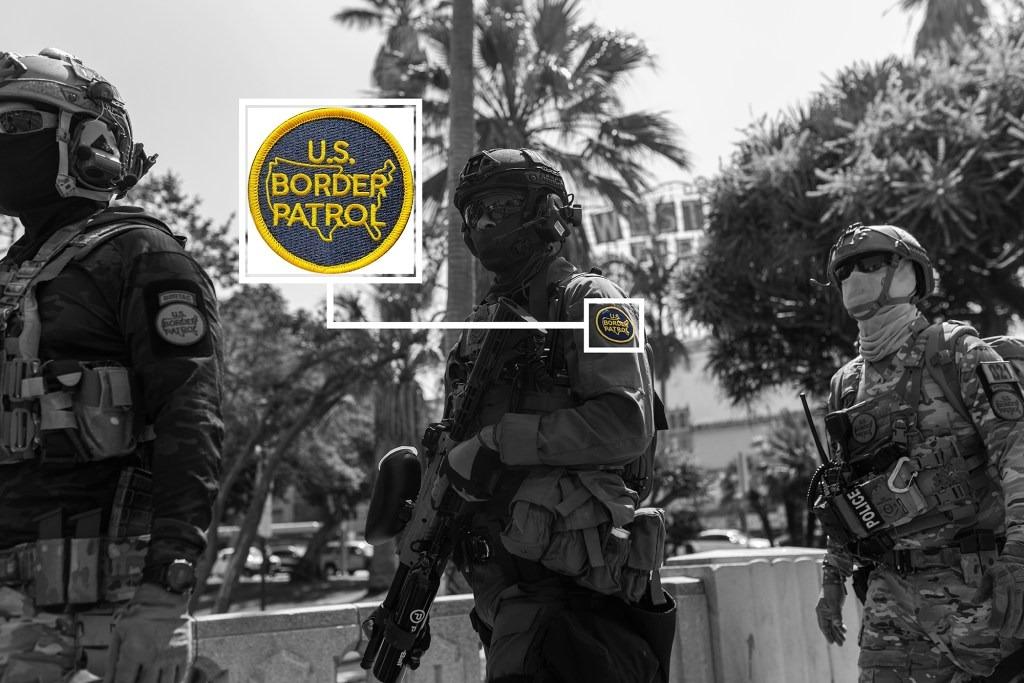
Border Patrol agents often wear green uniforms, and “Border Patrol” and “U.S. Customs and Border Protection” might be labeled on their badge, vest, shoulder, back, bucket hat or cap, and usually in yellow text over blue.
Their marked vehicles tend to be white with a green slash, reading “Border Patrol” on the side.
Some might confuse Border Patrol with Customs and Border Protection officers. Those officials wear blue and usually stay stationed at ports of entry.
You may be wondering why Border Patrol agents are conducting immigration operations deep into Los Angeles neighborhoods, rather than staying closer to the border.
Border Patrol agents can search vehicles without a warrant throughout much of the country. They’re allowed to operate 100 miles from any edge of the country and coastline, reaching roughly two-thirds of the U.S. population, according to a and documentary produced in partnership with Evident and Bellingcat.
Since its by Congress in 1924, the Border Patrol’s role has been to prevent unauthorized entry into the United States. The agency trade, narcotics, contraband and combats human trafficking.
The agency has a SWAT-like unit known as BORTAC, or Border Patrol Tactical Unit, which has also been documented in immigrant hubs such as , Los Angeles’ , and . Border Patrol sources describe the unit’s use for “high-risk” purposes.
In fatigues, the unit wears a “BORTAC” patch on the left shoulder with, at times, black undershirts.
Customs and Border Protection also its tactical Special Response Team in Los Angeles’ North Hills late June, executing a federal search warrant at a “human smuggling hub” tied to national security threats, arresting two, according to the agency.
ICE in police vests
ICE agents might wear an “ICE” patch on the front or back of their vest, usually in black-and-white, though they also can carry a badge of the same design in gold. The ICE emblem features the U.S. Department of Homeland Security eagle .
ICE agents might display “police” on their uniforms. The ACLU wants ICE to stop using the word “police” on uniforms, contending the agency is impersonating local law enforcement officers.
After 9/11, the Bush administration created the Department of Homeland Security, and Immigration and Customs Enforcement within it shortly thereafter. ICE is with enforcing trade and immigration laws, including within the interior of the country.
The Cato Institute that ICE booked over 200,000 people into detention between Oct. 1 and June 14. More than 93% of book-ins had no violent conviction, and 65% had no criminal conviction whatsoever.
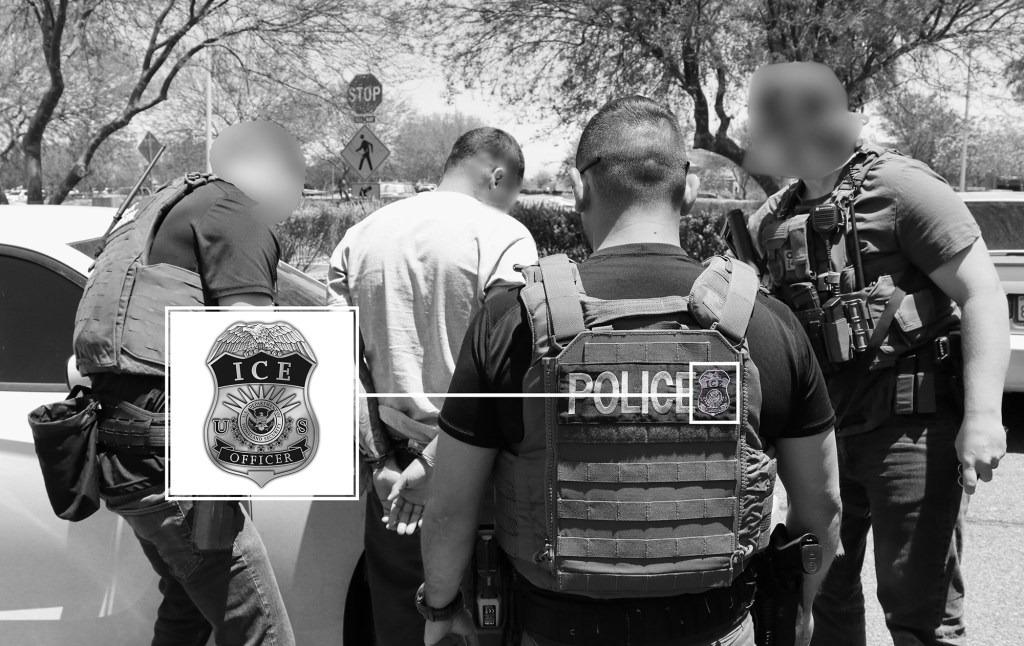
ICE itself has a few enforcement divisions. That’s why some ICE uniforms might read —part of their “Enforcement and Removal Operations” team—or for “Homeland Security Investigations.”
In 2024, ICE launched a rebrand and created the investigations unit to develop cases, and improve public outreach, including with local law enforcement, an ABC News.
According to its , HSI combats a broad array of transnational-related crime, ranging from narcotics smuggling to cybercrime, and from human trafficking to intellectual property theft.
, meanwhile, manages all aspects of the typical immigration enforcement process: identifying, arresting, , and deporting unauthorized immigrants. also says they seek to deport priority undocumented immigrants after they are released from U.S. jails and prisons. They can also assist multi-agency task forces in arresting unauthorized immigrants without any other criminal history who are “deemed a threat to public safety.”
ICE also deployed its Special Response Team (SRT), decked in military wear and weaponry, in San Diego late May. It sent a dozen or more of those officers to the near southeast Los Angeles in June, detaining two people for deportation.
Agents from those teams will often feature their logo on the shoulder and will be seen in heavy military-like uniforms. The teams are meant to engage in “high risk” situations, according to .
Rare National Guard deployment
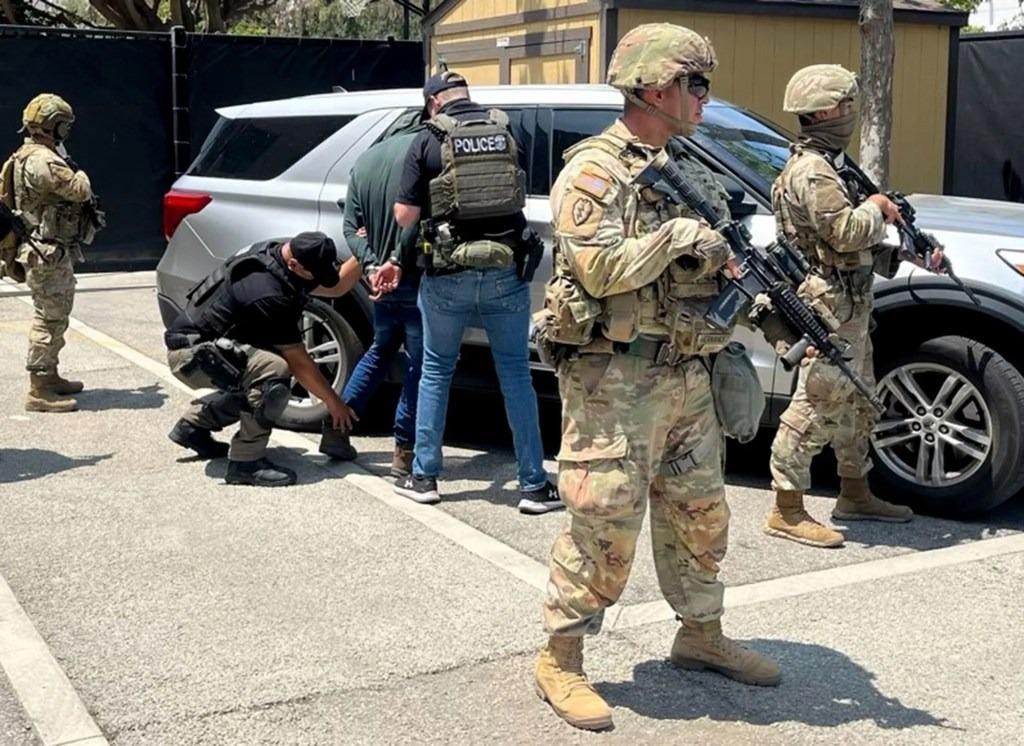
National Guard troops had been most visible outside a federal building during protests in , but have also accompanied a few immigration enforcement operations. In , National Guard soldiers accompanied federal agents raiding marijuana farms around Thermal, a desert town near Coachella, where about were arrested, according to the Drug Enforcement Administration.
On July 7, about 90 California National Guard soldiers swept through the Los Angeles immigrant hub of MacArthur Park, a defense official said, to protect immigration agents from potentially hostile crowds, . They were also on site in last week.
The National Guard troops in L.A. wear Army uniforms. Soldiers in the state units have patches on their left shoulder that show a , a , or a on top of a diamond, each in black and green color schemes. Troops will also have a full-color on the right shoulder. The patch under that, if any, can vary and may be based on a soldier’s past deployments.
Part of the U.S. military, the National Guard is able to serve both domestically and globally for state and federal duties, assisting with natural disasters, border security, civil unrest, overseas combat, counter-drug efforts and more. Soldiers largely stay in their home state and can be called on by the state governor or president.
Gov. Gavin Newsom opposed President Trump’s decision to send the troops to Los Angeles, and the assignment marked the first time that a president has deployed the National Guard since the Civil Rights era.
More federal law enforcement officers
In January, a Homeland Security memo called for Justice Department agents to carry out immigration enforcement, according to . Deputized bureaus include the Drug Enforcement Administration (DEA), the Bureau of Alcohol, Tobacco, Firearms and Explosives (ATF), the U.S. Marshals Service and the Federal Bureau of Prisons, receiving the “same authority already granted to the FBI.”
Officers’ affiliations can be seen on their vests, jackets, or at times, their shoulder patches.
Agents wearing FBI fatigues were most visible in the worksite sweep at Ambiance Apparel in LA’s Fashion District, arguably the first major operation of the current wave of raids.
On June 10, FBI Los Angeles’ X account its collaboration with an ICE operation in Ventura County. They have also in other immigration raids across the country.
A spokesperson with the Justice Department declined to comment on how it deployed agents from various agencies. In early June, the FBI KTLA that it is participating in immigration enforcement in Los Angeles and nationwide “as directed by the Attorney General,” supporting with SWAT, intelligence and more.
The ATF was also seen at the Ambiance Apparel raid. The DEA was there, too, and has since with ICE in the region.
On X, U.S. Marshals themselves as “on the front lines of immigration enforcement” in Los Angeles while showing officers interviewing a man on a bike. Marshals were also on at a Ventura County marijuana farm raid where more than 200 people were arrested.
Can California unmask federal agents?
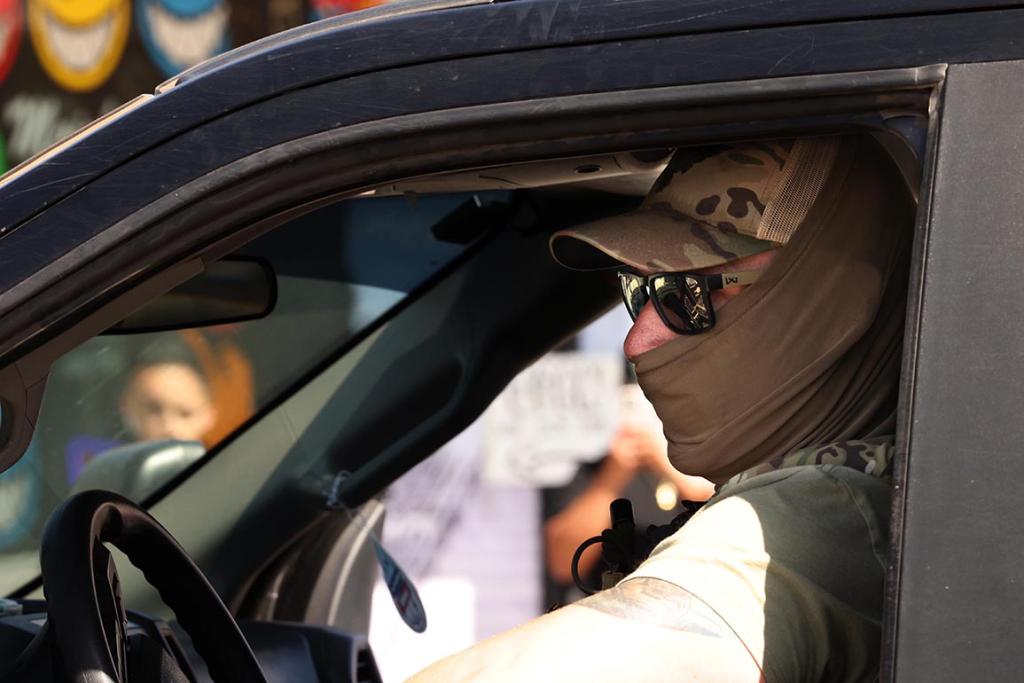
The use of masked agents without clearly identifying uniforms has confused the public, including local police, who have received reports of kidnappings.
California Attorney General Rob Bonta in March that reports of ICE impersonations were growing. Alleged federal agent impersonations have occurred in Huntington Park, , and elsewhere.
“We don’t even know who these people are. It’s so dangerous, it’s so horrific, and it’s time to put standards in place,” said Sen. Scott Wiener, a San Francisco Democrat who is backing two proposals that would compel law enforcement officers to go without masks and display identification.
The Trump administration maintains that the masks are necessary to protect officers’ identities as they carry out investigations.
“So, I’m sorry if people are offended by them wearing masks but I’m not going to let my officers and agents go out there and put their lives on the line and their family on the line because people don’t like what immigration enforcement is,” acting ICE Director Todd Lyons in a press conference early June.
And some law enforcement experts say the federal government has that authority.
“Certain legislators are giving a false sense of hope that California can legislate laws to control the practices of federal agents,” said Ed Obayashi, a longtime sheriff’s deputy in California and policy adviser to the Modoc County Sheriff’s Office.
“They cannot do that—bottom line. Plain and simple. Federal law is supreme.”
Acknowledging potential legal disputes, Wiener said he’s willing to test the “time-sensitive” bills in the courts.
“Federal employees can’t just come in and ignore all California laws,” he said. “There are laws that they have to follow.”
was produced by and reviewed and distributed by Â鶹ԭ´´.