Ending the Golden State era of solitary confinement
Ending the Golden State era of solitary confinement
was produced by , a nonpartisan, nonprofit news organization that seeks to create and sustain a sense of national urgency about the U.S. criminal justice system, and reviewed and distributed by 麻豆原创 Media.
It's that as goes California, so goes the nation. The most populous state carries outsized influence over U.S. culture and politics and is often at the leading edge of change. That has been echoed in the especially hard-fought battles over solitary confinement in the Golden State in recent years.
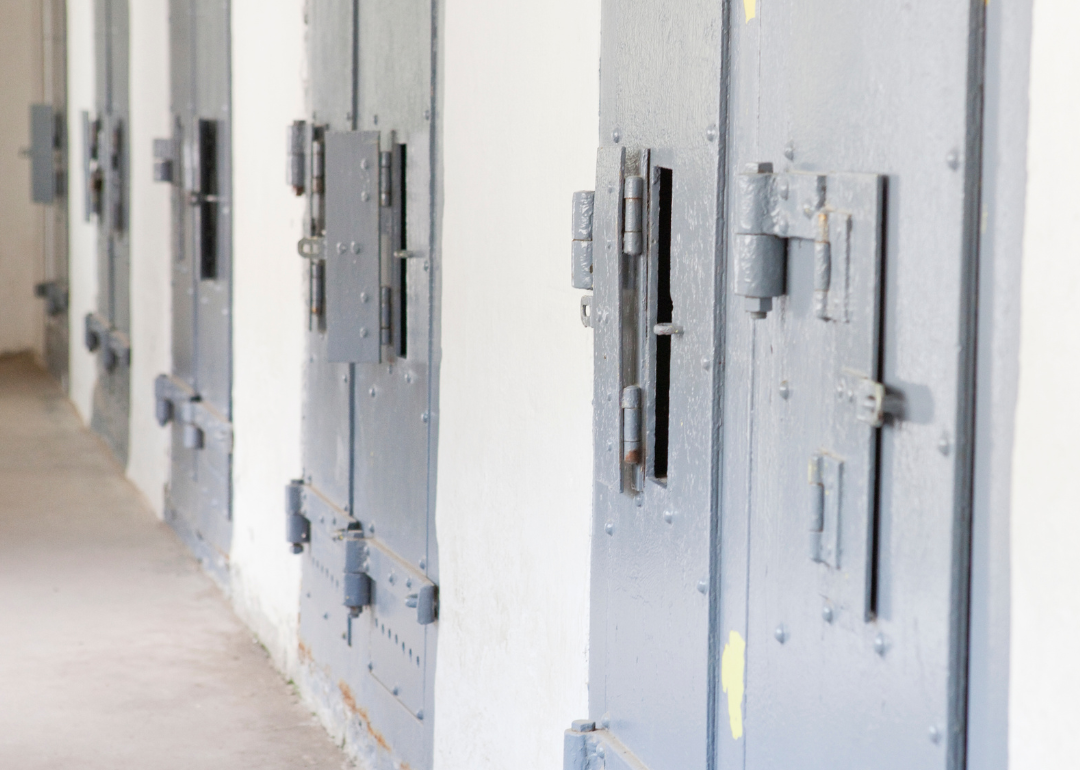
Solitary confinement can be broadly understood as locking a person in a cell with no meaningful human contact for 22 hours or more a day. The psychological havoc it wreaks on those who experience this, is well-known and uncontroversial. Writing for Al Jazeera, severe anxiety, panic, paranoia, depression, self-mutilation, and "an extraordinarily high rate of suicide," among others.
It's difficult for those of us who've never experienced solitary to truly understand what it's like. Personal accounts, like a , offer at least a glimpse. A May report from Solitary Watch, a nonprofit watchdog group, found that in mid-2019, in U.S. prisons and jails 鈥� about 6% of people held in those facilities.
looks at how the state of California could reshape how solitary confinement is used鈥攁nd misused鈥攊n the prison system, even as other states limit isolation.
The modern history of the fight in California dates back about a decade, when 30,000 people in prisons across the state joined a hunger strike to protest the use of solitary 鈥� a moment which . In 2013, people could be placed in solitary indefinitely, based on the mere suspicion of gang ties, irrespective of their conduct in the prison, and with no clear process for being released to the general population. Two years later, the state settled a lawsuit over the policy, " such as murder, extortion or assault while in prison."
While that settlement represented a significant advance in the movement against the use of solitary in the U.S. at the time, it fell well short of the international standards around the practice that were ratified by the United Nations that same year. That update to international standards compared isolation of more than 15 days to an act of torture. The as they were called, were named in honor of the former South African president who spent 27 years as a political prisoner 鈥� frequently in solitary.
In 2022, California lawmakers with the Mandela rules. The proposal would have limited solitary to no more than 15 days in a row and no more than 45 days in a six-month period. It would have also banned its use for people under the age of 26, over the age of 60, or those with disabilities. , calling it "overly broad," and promising to make reforms through the state's Department of Corrections.
As The Marshall Project alumna Keri Blakinger noted recently in the Los Angeles Times, 鈥� who would be subject to state law, but whom the governor cannot directly regulate 鈥� are left out of Newsom's plans to make changes at the state government level.
The bill, dubbed the California Mandela Act, has been but its future is uncertain. In addition, in August of this year, the placing the entire 2015 state settlement into legal jeopardy. The appellate court ruling is expected to be appealed.
Kevin McCarthy, a survivor of solitary confinement in California (not the former speaker of the U.S. House), argues the state has both " other states. If California lawmakers do manage to pass the Mandela Act, the matter won't end there 鈥� implementation takes time and pushback often remains. In 2021, New York became the into law, but last year, Gothamist found that .
Connecticut was the next state to pass a Mandela-compliant law, but in late August, the correctional officers union there by incarcerated people 鈥� both against guards and other prisoners.
Some academic research has shown the opposite. After administrative reforms in North Dakota reduced the use of solitary by nearly 75%, "both incarcerated persons and staff members reported improvements in their health and well-being, enhanced interactions with one another, and less exposure to violence," .
Jessica Sandoval, national director of Unlock the Box, an advocacy campaign against solitary confinement, said critiques like the Connecticut union's pop up "like clockwork" after reforms. She noted that it's guards who report violent incidents and who have much of the control over how those numbers look. "What we see happening and what we hear happening is that they incite violence inside and then blame it on the reform," Sandoval said.
In June, Nevada became the , but it has yet to take effect. All in all, dozens of states have seen bills, executive orders, and administrative changes since 2019, which the ACLU for the movement against solitary. A in July.
While those who typically focus on safety, there's another common use for solitary: punishment. In Alabama, Bernard Jemison that he's been placed in solitary for using a contraband cell phone to document alleged abuses within the prison. In New York, also recount being placed in solitary confinement. One called it "a means of intimidation following the rape."