How one state reduced its overdose death rate by 32% in a year
How one state reduced its overdose death rate by 32% in a year
Overdose deaths in New York state declined 32% last year, a significant drop that officials and experts attribute to the state鈥檚 efforts to expand harm reduction and addiction treatment services.
An estimated 4,567 New Yorkers died of a drug overdose in 2024, compared to 6,688 in 2023, according to from the Centers for Disease Control and Prevention. About 77% of those deaths involved an opioid like fentanyl or heroin. dug into the measures the state took to help decrease its overdose death rate.
The statewide decline mirrors a national trend, said Dr. Magdalena Cerd谩, a professor and director of the Center for Opioid Epidemiology and Policy at the Department of Population Health at NYU Grossman School of Medicine. Last year, , down from about 110,000 deaths in 2023, a reduction of almost 27%, according to the CDC.
鈥淲e鈥檙e still definitely in the middle of an overdose crisis,鈥� Cerd谩 said. 鈥淏ut the substantial decline in the past year gives me a lot of hope.鈥�
The reduction in deaths is promising but tenuous, experts say. Although overdose deaths have declined overall, , and uncertainty around federal funding related to addiction services could imperil recent progress. The Trump administration鈥檚 recently released budget plan calls for to the Substance Abuse and Mental Health Services Administration, the federal agency focused on addiction and mental health.
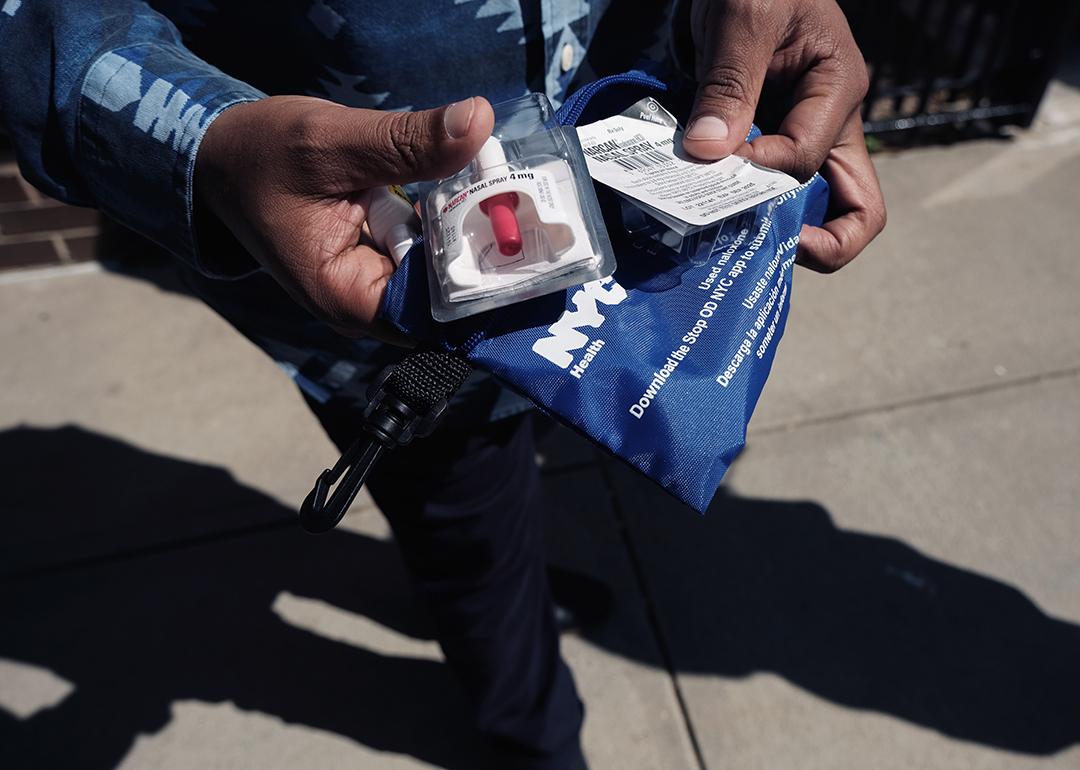
In New York, the reduction in deaths reflects a combination of forces, including wider availability of the overdose-reversing medication naloxone, expanded access to medication for opioid use disorder, and deeper investments in harm reduction services, experts say.
鈥淭here鈥檚 likely multiple reasons for this decline, but one of them is the substantial investment that states have done, and in particular, New York state has done, in terms of the provision of harm reduction services and services to treat substance use disorders,鈥� Cerd谩 said.
In , Gov. Kathy Hochul鈥檚 administration linked the decline in deaths to the state鈥檚 distribution of nearly $400 million in opioid settlement funds, which are funding efforts to expand access to medication for addiction, supportive services, and recovery programs.
鈥淭hese numbers show that our hard work and innovative approaches to establishing services are making a difference across the state,鈥� Dr. Chinazo Cunningham, the commissioner of the Office of Addiction Services and Supports, said in a statement.
Through a new online portal, the state has distributed more than 13 million fentanyl test strips and 10 million xylazine test strips 鈥� used to test drug samples 鈥� and 296,000 naloxone kits to residents for free, according to Hochul鈥檚 administration. Additionally, the state Health Department distributed more than 537,600 naloxone kits from January 2024 through April 2025.
The declines in mortality have not been evenly distributed across demographic groups. In New York City, while for the first time in four years, including among white New Yorkers, they were unchanged among Black New Yorkers and increased among Latino New Yorkers. from the city Department of Health and Mental Hygiene show that high rates of overdose mortality persist in parts of the Bronx, Upper Manhattan, and Central Brooklyn.
Addressing those disparities will require deeper investments in the impacted communities, including by reducing barriers to care and services, Cerd谩 said.
In its annual report released in November, New York鈥檚 Opioid Settlement Fund Advisory Board 鈥� a committee tasked with making recommendations for the allocation of the funding 鈥� stressed the need for racial equity in the distribution of settlement funds, in Black and Latino communities as an 鈥渙verarching concern.鈥�
Dr. Silvia Martins, a professor of epidemiology and director of the Substance Use Epidemiology Unit in the Department of Epidemiology at the Columbia University Mailman School of Public Health, raised concerns that cuts to federal programs related to addiction could slow or stop the recent overall reduction in overdose deaths.
Reduced funding for SAMHSA and looming cuts to Medicaid could curtail many Americans鈥� access to addiction prevention and treatment programs, she said. And if federal funding for addiction services dries up, opioid settlement funds won鈥檛 be able to fully close the gaps, she cautioned.
鈥淚 truly hope that the federal government realizes now is not the time to stop these efforts, because it鈥檚 trending, in most states, in the right direction,鈥� she said. 鈥淲e see that these efforts are working.鈥�
was produced by and reviewed and distributed by 麻豆原创.