Most and least trusted news sources in America
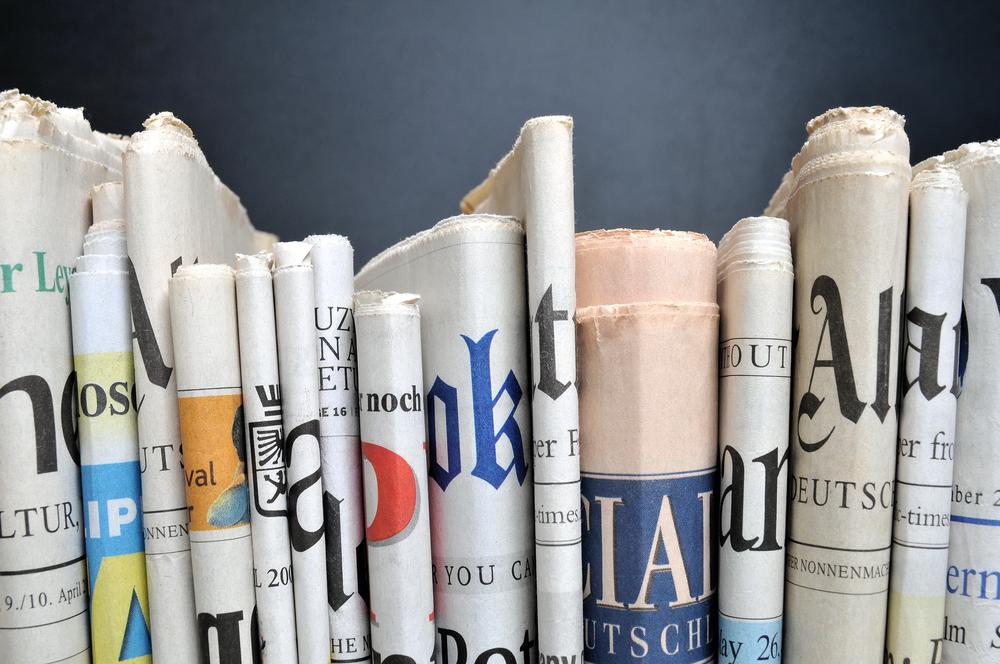
Journalism, an industry tasked with holding the powerful accountable and contextualizing current events, has had a fascinating but challenging start to the 21st century. Shifting business models, evolving newsrooms, and battles against biased alternatives have all had a major impact on how news organizations produce and deliver stories to their readers.
As Americans increasingly look beyond traditional outlets for their daily news diet and the White House relentlessly brands most media organizations as "failing" or "fake," it can be difficult to discern the best options for authoritative and objective reporting about your town or around the world.
To help evaluate the level of trust across a spectrum of news sources, The Missouri School of Journalism's surveyed 8,728 respondents across the United States on how they consume, support, and perceive their news. As part of the survey, each respondent was asked to identify three "trusted" and "not trusted" news sources, resulting in a trust ratio ranging from 0.00 to 1.00 representing the "trusted" count over total responses.
At Â鶹ԭ´´, we ranked all 39 sources by this trust ratio and explored what makes these news sources stand out for their credibility (or lack thereof), including insights for each into the history and recent events that support or challenge their trustworthiness. You'll discover which early news agency was initially founded as a pony express, which newspaper's motto became "Democracy dies in darkness" in 2017, and finally which sources earned a perfect trust ratio from respondents.
Before you get started, the research driving this story warrants three notable caveats. First, the study was administered to the online readers of 28 local news sites from around the country; it is not a perfect depiction of national sentiment. Second, given the question was a free response rather than a comprehensive assessment of all news organizations, the trust ratio may reflect severe opinions of each news source with less consideration for more moderate views. Lastly, you'll find that the categories range in specificity and are not mutually exclusive, including examples like "Trump," "Local," and the "Kansas City Star," which shows that what's considered a news source can vary depending on the respondent.
#39. Occupy Democrats
Trust Ratio: 0.00
Designed as a left-wing response to the Tea Party, Occupy Democrats creates and aggregates online content engineered to give A BuzzFeed News analysis of partisan Facebook pages showed that 20% of Occupy Democrats articles were false or misleading, with the average post getting .
#38. Buzzfeed
Trust Ratio: 0.04
Building on lessons in content virality learned through his studies at MIT and co-founding Huffington Post, Buzzfeed CEO Jonah Peretti has built a global media powerhouse with a reach of over .
While BuzzFeed’s low trust ratio could be tied to its early history of lifestyle “listicles”, the company has developed a strong news division for under the leadership of Editor-in-Chief Ben Smith. BuzzFeed News challenged journalism convention when it released the controversial ‘’ ten days before the 2017 inauguration, with Smith avidly defending the decision given the dossier’s circulation in senior government and media circles at the time.
For analysis about the journalism industry itself, BuzzFeed’s Craig Silverman covers topics ranging from Russian troll farms to rankings of the .
#37. Breitbart
Trust Ratio: 0.05
Breitbart was created in 2007 as a far-right news network and saw increased prominence during the 2016 presidential election. While founder Andrew Breitbart before passing away in 2012, the site emerged as an .
Breitbart’s executive chairman Steve Bannon became integral to the Trump campaign, transforming from advocate to campaign chief executive and eventually “White House Chief Strategist” before being ousted seven months into the new administration.
#36. Social Media
Trust Ratio: 0.05
Pew Research shows that 67% of U.S. adults report , with Facebook leading the way as a news source for 45% of Americans, followed by YouTube (18%), Twitter (11%), and Instagram (7%).
In 2012, social media’s capacity to democratize communications and news delivery was , however, as new regimes come to power throughout the Middle East there has been a as a tool for both revolution and repression.
Meanwhile in the U.S., top platforms like Facebook, Twitter, and Google have received criticism for struggling to limit the reach of fake news while maintaining in the distribution and monetization of digital news content.
#35. Trump
Trust Ratio: 0.09
Donald Trump has built a media platform focused on high-volume and unfiltered Twitter usage, circumventing traditional presidential communication channels while consistently disparaging news outlets as "fake news." Recent studies by Pew Research show that 73% of U.S. adults believe the relationship between Trump and the media is .
#34. Infowars
Trust Ratio: 0.10
Alex Jones’ Infowars and radio show have achieved notoriety for promoting erroneous conspiracy theories that . In addition to the media diet Jones provides for the radical right, Jones also peddles a to his fanbase to help fund his company.
#33. Yahoo
Trust Ratio: 0.11
Yahoo is the highest-trafficked news and media portal in the world, syndicating content from agencies like Associated Press, Reuters, and AFP while producing its own share of stories. Under CEO Marissa Mayer, Yahoo invested heavily in its original content team and brought on former Time Editor-in-Chief Martha Nelson to bolster its digital magazines.
After several embattled years leading to Yahoo’s core business operations , Verizon announced its intention to acquire the Yahoo business (excluding its sizeable Alibaba and Yahoo Japan stakes). The merger of Yahoo and AOL media properties into “Oath” was completed in June 2017, but not before revelations of an .
#32. Internet
Trust Ratio: 0.18
The broadly defined “internet” category carries a trust ratio of 18%. Pew Research shows adults’ online news consumption in the last year, while television, radio, and print sources declined or remained flat. The 65+ age demographic has seen the biggest year-over-year increase in adopting the internet as a news source, rising from 20% to 30%.
#31. Huffington Post
Trust Ratio: 0.19
The Huffington Post reinforces the theme of media companies being created in response to other news organizations. The founding team of Arianna Huffington, Andrew Breitbart, Kenneth Lerer, and Jonah Peretti created HuffPost as a liberal alternative to the Drudge Report, though Breitbart and Peretti would eventually go on to build their own media organizations at Breitbart News Network and BuzzFeed, respectively.
Huffington Post employs a combination of in-house editorial and a massive contributor network of over 100,000 unpaid contributors, with the latter receiving a balance of praise for democratizing publishing but . HuffPost was purchased by AOL in 2013 for $315 million before both were rolled up into Verizon in 2015.
#30. TheBlaze
Trust Ratio: 0.20
Conservative radio host Glenn Beck founded TheBlaze in 2010 to combat perceived biases in mainstream media outlets. Although revenue for Beck's media group grew to $90 million in 2010, by 2017 TheBlaze amid diminishing revenue, legal suits, and general management woes.
#29. Fox
Trust Ratio: 0.22
Founded in 1996 by mogul Rupert Murdoch to expand on his Australian and British media holdings, Fox News has grown from an upstart syndicator of tabloid-esque content to the most watched cable news company .
Recently, high-profile sexual harassment suits against CEO Roger Ailes and commentator Bill O’Reilly led to the ouster of both network leaders. The situation was further exacerbated when the O’Reilly had paid a $32 million settlement just weeks before signing a $25 million-per-year contract extension.
#28. Limbaugh
Trust Ratio: 0.32
Rush Limbaugh is a conservative author and radio talk show host known for his eponymous content channels. While Limbaugh rode conservative sentiment to an eight-year $400 million contract in 2008, his abrasive and offensive style (most notably his profanity-laced tirades against Sandra Fluke regarding contraception) has lead to .
#27. ABC
Trust Ratio: 0.40
ABC is the youngest of the “Big Three” commercial television broadcasting networks. Created from a radio spinoff of NBC in 1945, ABC News sought to compete with CBS and NBC through , including early content from the likes of Walt Disney, Warner Brothers, and The Flintstones. ABC was purchased by the Disney Company in 1995.
ABC’s Barbara Walters became the first female anchor of a major network in 1976 and would go on to a career of , including an unprecedented primetime interview with Fidel Castro.
#26. MSNBC
Trust Ratio: 0.40
MSNBC was initially launched as a joint venture between Microsoft and NBC News. The partnership wound down in 2012, with NBC Universal's owner Comcast acquiring Microsoft’s stake to consolidate editorial and advertising operations across their digital and broadcast divisions.
MSNBC built a large following with a liberal-leaning audience, however, a series of conservative-leaning pundit and anchor hires over the last few years has aligned with what some say is a .
#25. Drudge Report
Trust Ratio: 0.42
As an aggregator of links, the Drudge Report has been an influential online front page for breaking news since its founding in 1995. Primarily curated by Matt Drudge and Charles Hurt, the Drudge Report is generally quick to publish breaking stories like the Monica Lewinsky scandal but has been criticized for its conservative bias and the occasional lack of story verification.
#24. NBC
Trust Ratio: 0.43
NBC is the oldest major broadcast network in the United States, founded as a radio network by the Radio Corporation of America (RCA) in 1926. Famous NBC Nightly News anchors like John Chancellor, David Brinkley, Tom Brokaw, and Brian Williams dominated primetime ratings for decades, although Williams’ tenure came to an end of first-hand accounts from the Iraq War and Hurricane Katrina. Lester Holt took over the top spot at the Nightly News in 2015.
In a continuation of the , Matt Lauer, the 20-year co-host of the "Today" show, was fired .
#23. CNN
Trust Ratio: 0.43
Founded by the eccentric America’s Cup sailor and Atlanta Braves owner Ted Turner, CNN pioneered 24-hours news coverage when it launched in 1980. CNN now employs an estimated 3,000 employees globally across 38 editorial offices.
CNN’s work surrounding the 2016 elections led some critics to assert that network President Jeff Zucker is transforming political coverage into the .
#22. CBS
Trust Ratio: 0.49
CBS was founded in 1927 as the radio-focused Columbia Broadcasting System and in 1928 William S. Paley became President, marking the start of arguably the . Through dedication to high-quality programming, Paley built the so-called “Tiffany Network,” where iconic anchors like Edward R. Murrow, Walter Cronkite, and Dan Rather would go on to explain daily world events to the American Public from the desk at CBS Evening News for decades.
In November 2017, "CBS This Morning" co-host Charlie Rose following allegations of sexual misconduct.
#21. Atlantic
Trust Ratio: 0.61
The Atlantic was founded in Boston in 1857 to provide arts and cultural commentary. Parent company Atlantic Media also includes the Washington-focused National Journal and mobile-first publication Quartz, whose work with and are redefining how readers consume content today.
#20. USA Today
Trust Ratio: 0.66
When USA Today was launched in 1980, it paired snappy reporting with a photo and graphics-rich layout that stood out . USA Today is now one of the largest national dailies in the U.S. and the flagship newsroom for Gannett, a top U.S. newspaper chain with over a hundred national, regional, and local properties like the Detroit Free Press, Arizona Republic, and Cincinnati.com.
#19. New York Times
Trust Ratio: 0.76
The New York Times has won more Pulitzer Prizes () than any other news organization since its founding in 1851. With a newsroom of 1,350, the New York Times offers a wide range of coverage for readers, highlighting their motto of “All the news that's fit to print.”
Throughout Trump’s ascent to the White House, The New York Times has to break exclusive and comprehensive coverage of the administration.
#18. Kansas City Star
Trust Ratio: 0.77
The Kansas City Star was founded in 1880 and is owned by The McClatchy Company, owner and operator of newspapers in 29 markets across America including the Miami Herald, Idaho Statesmen, and Charlotte Observer. Ernest Hemingway’s first job in journalism was as a cub reporter for The Star, where he developed that would define his early literary works.
#17. Seattle Times
Trust Ratio: 0.77
The Seattle Times is now in its fifth-generation of ownership by the Blethen family, making it one of the largest remaining family-owned newspapers in the United States. The Times has won ten Pulitzer prizes since its founding in 1896.
#16. Time
Trust Ratio: 0.81
Founded by Henry R. Luce and Briton Hadden in 1923, Time redefined journalism by synthesizing and editorializing current events in a descriptive new style that stood out from 20th-century newspaper reporting. Additional titles like Fortune, Sports Illustrated, and the photojournalism magazine Life soon became a staple of American households. Time Inc. now manages over 100 brands ranging from Food & Wine to People to Yachting World.
In November 2017, Time Inc. agreed to a sale to Meredith Corporation, a Midwest-based based media group known for titles like Family Circle and Better Homes and Gardens. The deal is expected to close in 2018 and is particularly notable given the by the conservative billionaire brothers Charles and David Koch.
#15. Washington Post
Trust Ratio: 0.85
"Democracy Dies in Darkness" was gravely added to the Post's masthead in February 2017. While the origin of the slogan than just the recent election cycle, the sentiment reveals the earnest intention of Executive Editor Marty Baron and owner Jeff Bezos to produce impactful reporting that mixes Washington, national, and global scope.
The Washington Post has won 47 Pulitzers since its founding in 1877, receiving particularly notable praise for Bob Woodward and Carl Bernstein's resilient Watergate investigation that would eventually lead to President Richard Nixon's resignation.
#14. Denver Post
Trust Ratio: 0.86
The Denver Post is one of the largest properties within Digital First Media’s portfolio of 65 daily newspapers, with an average weekday circulation of over 250,000. In 2013, The Denver Post launched The Cannabist to cater to the area’s vibrant marijuana culture.
#13. Associated Press
Trust Ratio: 0.87
Founded in 1846 as a pony express news cooperative to ferry dispatches from the Mexican-American War, the Associated Press is often referred to as the “marine corp of journalist” for being the first in and last out during historical events ranging from the to .
AP operates as an independent, not-for-profit cooperative, owned and funded entirely by its member news organizations that syndicate AP content. With 2,000 stories produced each day across 263 locations throughout the globe, AP content reaches roughly half the world’s population every day.
#12. Politico
Trust Ratio: 0.87
Politico was founded by John Harris, Jim VandeHei, and Robert Allbritton before the 2008 presidential election cycle to create a fast-paced magazine for Washington’s political insiders; designed to “win-the-morning” with its relentless scoops of various sizes. Harris and VandeHei swiftly courted to deliver on their vision of creating the “ESPN of politics” and has since expanded its ambition to placing reporters in .
In 2016, VandeHei and left Politico to start , a visually-compelling, short-form news site as the product of ‘The Economist mated with Twitter.’
#11. Local
Trust Ratio: 0.89
Local news faces increased challenges in reporting critical stories in the face of staffing cuts, diminished advertising and subscription revenue, and shifting ownership structures, well-summarized by Last Week Tonight’s .
The consolidation and corporatization of newspaper ownership have further triggered concerns around editorial bias and the potential for “” in local areas.
#10. Dallas Morning News
Trust Ratio: 0.92
The Dallas Morning News was founded in 1885. Despite its largely Republican audience in the Dallas-Fort Worth area, the paper's editorial board endorsed Hillary Clinton in the 2016 election, marking the paper's first endorsement of a Democrat .
#9. Los Angeles Times
Trust Ratio: 0.92
The LA Times provides coverage for both the nation’s second-largest metro and the U.S. at large, with recent notable reporting on the and .
The LA Times is owned by Tronc, whose portfolio includes the Chicago Tribune, The Baltimore Sun, and most recently the New York Daily News. Cost-cutting and leadership changes by Tronc ownership have lead to a recent .
#8. Wall Street Journal
Trust Ratio: 0.93
The Wall Street Journal has been a staple of workers in the finance industry since its founding in 1889. Its original financial scope has expanded to include significant national and global coverage across its bureau. Dow Jones, publisher of the Journal, by Murdoch’s News Corp in 2007 for $5.6 billion.
Editor-in-Chief Gerard Baker has received some criticism saying WSJ’s , with the newsroom leader asserting he’s pursuing objective coverage in a media landscape that .
#7. Guardian
Trust Ratio: 0.94
The Guardian is one of four British news organizations to make the top ten in terms of trust. With a rich history of reporting since its founding in 1821 as the Manchester Guardian, The Guardian’s exclusive reporting on and the scandal that rocked British journalism merit comparison to Washington Post’s Watergate series.
#6. PBS
Trust Ratio: 0.95
Founded in 1970, the Public Broadcasting Service is a non-profit programming distributor known for shows like Barney & Friends, Frontline, PBS Newshour, and Downton Abbey.
Trump established an early desire to cut funding to the Corporation for Public Broadcasting, which provides funding to both PBS and local public broadcasting stations, over the longevity of this type of programming, particularly in rural areas across the United States.
#5. NPR
Trust Ratio: 0.96
Founded a year after the Public Broadcasting Service, National Public Radio serves as a radio counterpart to PBS, syndicating content to over 900 member stations across the country. Similar to PBS, NPR has faced risk of funding losses due to proposed cuts under Trump's budget plans.
#4. BBC
Trust Ratio: 0.98
The British Broadcasting Corporation was created in 1922 under Royal Charter to create programming for the public benefit without the commercial pressures of private news organizations. BBC has grown to be the largest broadcasting organization in the world with over 21,000 employees worldwide across its Public Service Broadcasting and BBC Worldwide divisions.
BBC World Service to expand from 28 languages to 40, adding coverage ranging from Punjabi to Nigerian Pidgin, with the goal of reaching an audience of half a billion by 2022.
#3. Reuters
Trust Ratio: 0.98
Founded in 1851 by Paul Julius Reuter, Reuters famously employed telegraph lines and messenger pigeons in its early days to deliver stock market quotes. The speedy distribution of financial news has remained a hallmark of Reuters through today, with governments, companies, and media organizations receiving market data and general news content through real-time terminals, digital newswires, and television programming.
#1 (tie). Public Television
Trust Ratio: 1.00
The public television category garnered the highest possible ratio in the study, with exclusively “trusted” responses. Public broadcasting has long been a target of conservative politicians due to claims of liberal bias. The fate of public service programming will be closely linked to the current administration's’ budgetary actions regarding the Corporation for Public Broadcasting.
#1 (tie). Economist
Trust Ratio: 1.00
The Economist earns the top position for its 175-year legacy of infusing insightful long-form stories with commentary and explanatory reporting of weekly events. With nearly all articles published anonymously, The Economist’s stories aim to speak in a collective voice that blends editorial collaboration and authorial independence from journalistic typecasting.
For more insights into the most trusted news source, “” offers readers a fascinating look into the editorial processes and decision-making that go into producing the magazine.