The nationwide movement turning guns into garden tools
The first time Mike Martin held an AK-47 was after the 2012 shooting at Sandy Hook Elementary in Connecticut, which claimed the lives of 20 children and six adults. The shooting shocked a friend of a friend, a lawyer, into questioning why he owned an AK-47 in the first place. “He decided to destroy that one,” Martin recalls.
As a Mennonite youth and young adult pastor, Martin had long contemplated the idea of interpreting the “swords to ploughshares” ideal from the Book of Isaiah in a modern context.
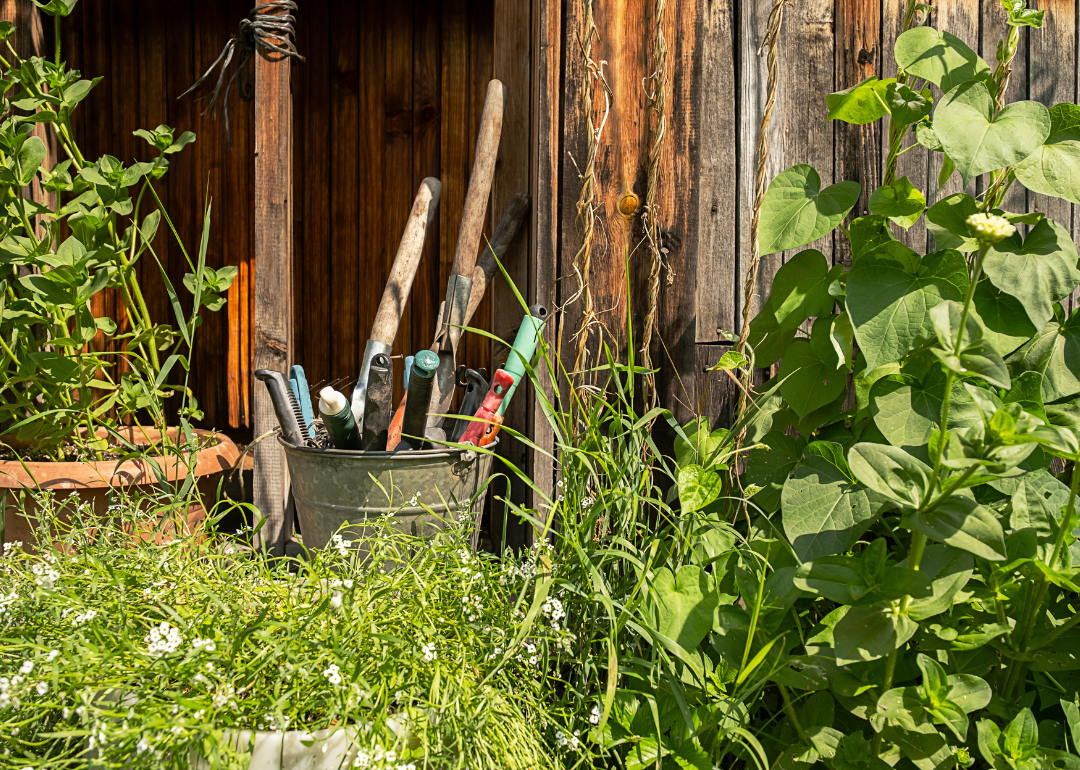
“My faith tradition is rooted in peace and non-violence,” he says. Together with his father and the lawyer, Martin took the AK-47 to a nearby blacksmith in Colorado Springs, dismantled it and forged the metal into a shovel and a rake. “There’s this thing about turning guns into garden tools,” Martin reflects in the book “Beating Guns.” “You have to add some heat — a little more than 2,000 degrees of controlled flame.”
This moment sparked the beginning of RAWtools (War spelled backwards), a nonprofit Martin now runs full-time, and a movement spanning four states with affiliates in Buffalo, NY; Philadelphia, PA; and Asheville, North Carolina, reports. Since its humble beginnings 14 years ago, RAWtools has destroyed and repurposed more than 6,000 guns, forging them into garden tools and art. Martin now carries the trigger of the first Kalashnikovs he destroyed on a keyring, while books about gun violence and art collages made from weapon parts line his walls.
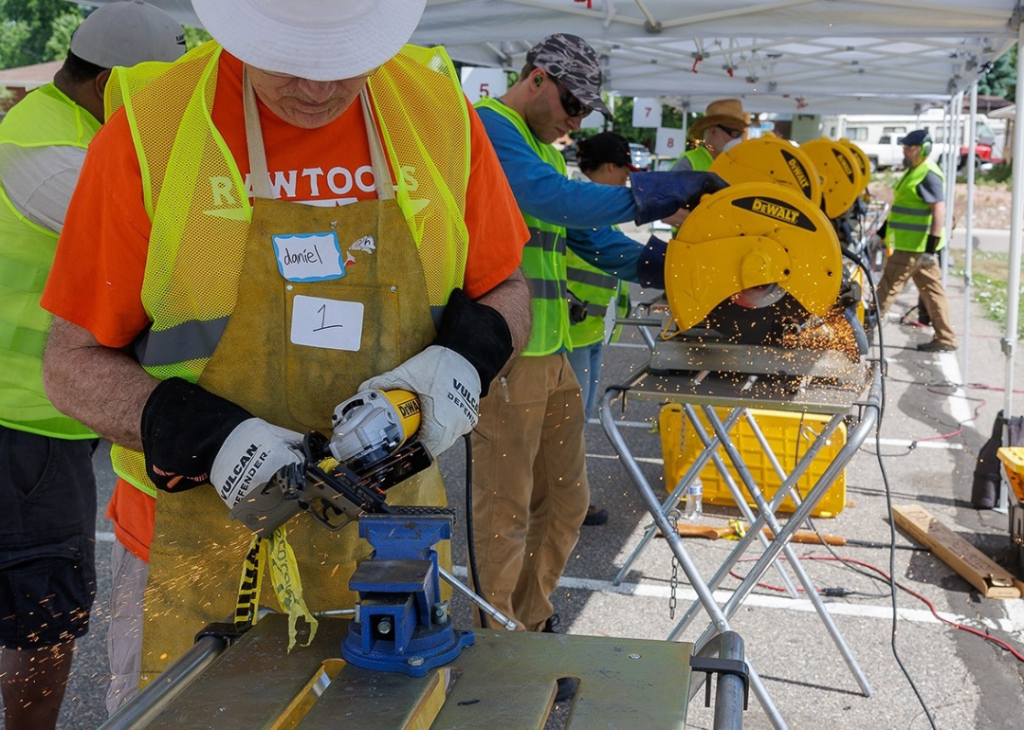
For Martin, the physical act of destroying a gun can be healing, but often it’s just the beginning of a bigger conversation. “The dominant culture often tells us that we can’t escape the violence, so we should therefore join the violence,” he says. “Instead, this counter-story of turning swords into plows insists that violence is the problem, not the solution.”
Anybody can fill out a form on the , or respond to the buyback program “Guns to Gardens,” and arrange to donate their gun in exchange for a grocery card. A national network of hundreds of volunteers, blacksmiths, woodworkers and artists will even pick up firearms from donors’ homes. “Sometimes people have 30 or 40 guns that they inherited, and they don’t want to bring all of that into a public space, or they might feel unsafe transporting a gun,” Martin says.
Donors often want to be involved in transforming the weapon into a force for good. “We’ve had veterans, police chiefs, grandmothers and little kids take part in the action,” Martin recalls. Hunters, too, have been “some of the best allies,” he adds. “Gun owners don’t want gun violence either.”
His work is not about demonizing gun owners, but “about saving lives and working with everyone who is committed to that.” RAWtools regularly holds events, especially in front of churches and synagogues, not only to collect and transform guns, but to start conversations, “listening and hearing from local folks impacted by gun violence.” Families who donate heirloom firearms can have them turned into multiple tools — keepsakes that honor the family member without perpetuating the weapon’s violent potential. “The hard thing about transforming a life, like transforming metal, is that it requires work, sweat, heat and constant attention,” Martin says.
At least once a month, someone who has lost a loved one to suicide reaches out to RAWtools. Suicide by gun is responsible for more than half (58%) of all gun deaths in the U.S., . In 2024, gun suicides reached a of almost 27,600 deaths. Often, survivors are forced to retrieve the firearm from police themselves — sometimes in states where law prohibits police from destroying confiscated guns. “The family might ask the police to put it in their own trunk and then we take it out for them, so they don’t have to handle it at all,” Martin says. “We’re very mindful of practices that bring healing and minimize any triggering.”
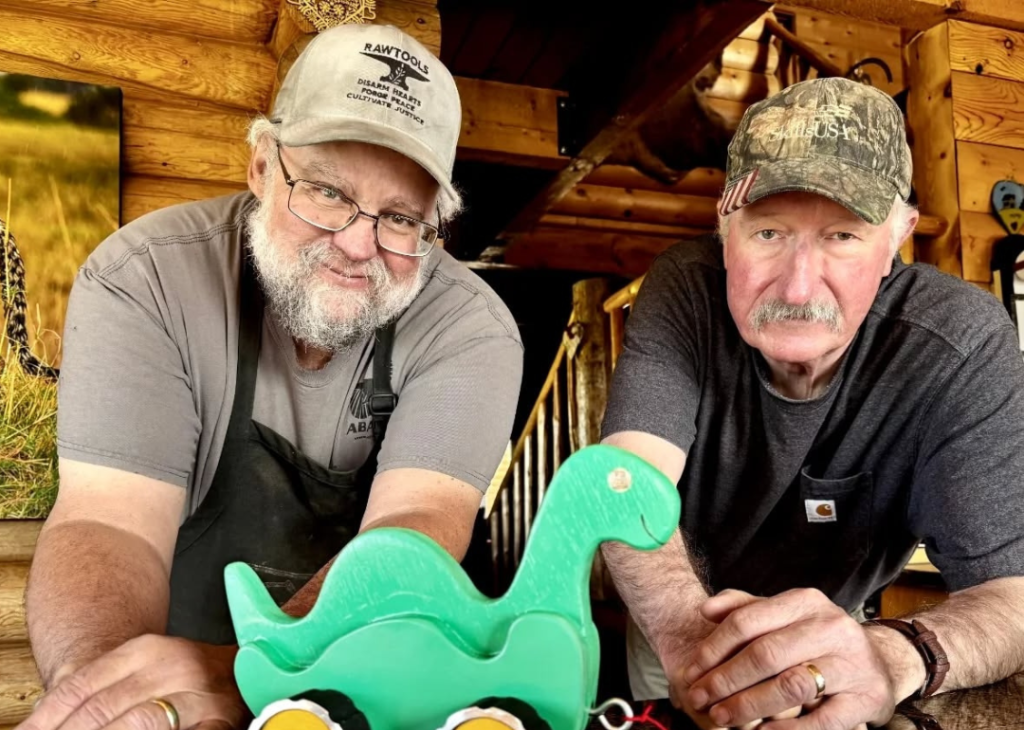
When the weapon is destroyed, Martin often notices a palpable relief in survivors. “You see a release of tension in their bodies and better breathing, and they might open up and tell their story,” Martin says. Some request that the metal be forged into something meaningful, and RAWtools may host a ceremony to honor the loss. A mobile blacksmith setup similar to what a farrier might use going to farms to work on horseshoes allows RAWtools to meet people where they are. For instance, a client who had lost two family members to suicide by firearm wanted to be part of the destruction. RAWtools forged the weapons into a shovel that was used at a community ceremony for planting trees in honor of people lost to suicide in the region.
Martin lost his own mother to suicide when he was 15 years old. While no firearm was involved, guns in the home delayed paramedics from entering. Martin’s dad had hunting rifles and other weapons. Martin doesn’t know if his mother could have been saved if the first responders had reached her sooner, but “I share that story because I want people to see what kind of lengths people will go to make it okay to own guns.”
Today, all his father’s guns are garden tools, and his father is one of RAWtools’ strongest supporters.
Unlike other buyback programs, giving up a gun is not the end goal for RAWtools, but a starting point. Martin and his crew offer de-escalation courses in schools and communities. His wife Hannah Rose, still a Mennonite pastor, recently published a children’s book called “Sparking Peace,” which introduces kids to the concept of transforming conflict through acts of peace. Martin sees the book as “an entryway for adults, caregivers and parents to have a conversation with kids about gun violence.”
At a recent event in Buffalo, the couple read from the book and invited a local mother who had lost family to gun violence and started a community garden as a space for healing. Together, the group went to the anvil Martin and his wife had brought with them, and people had an opportunity to be part of making garden tools from discarded weapons.
After the 2022 mass shooting at Club Q, a gay bar in Colorado Springs, community members donated firearms they had inherited for the healing of the queer community. Martin led a group of LGBTQ youths in creating art and tools from the pieces.
Martin finds the practice healing for himself, too. “Many times I just get angry after a shooting or some piece of legislation,” he admits. “That stuff really gets under my skin, and sometimes it’s helpful to just go to the anvil and hit on the hot metal.”
The U.S. still has more guns than people — , and it’s easier to buy a gun than to get rid of one. “Sometimes it can feel really overwhelming,” Martin admits. Critics might question the impact of removing a handful of guns when a new one is manufactured every three seconds. His answer: Every firearm taken out of circulation reduces risk, and every event is a chance for healing.
He sees particular power in faith communities taking a stand. “It not only signals that the community is a safe space to donate firearms, but also a safe space to talk about this.” In rural areas, where some equate safety with gun ownership, he begins with shared values. “We all want to feel safe,” he says, before exploring how community can provide that safety better than “the rugged American ideal of individualism.”
Martin also uses these events as an opportunity to talk about all the things that fall apart when someone gets to the point where suicide feels like the only option left. “Usually there’s something at work, something relational, something financial, or a medical diagnosis, or all of those at once. We’re really vulnerable folks and that can be any of us.”
On rare occasions, hecklers disturb his events. Martin defuses tensions by connecting on common ground — often through the topic of suicide prevention. Martin recounts an event where a gun supporter yelled that Christians needed their weapons to prepare for the end of times, but quieted down when the mother of a son who had died by suicide recounted how difficult it was to pick up the firearm her son had used. “People are still willing to listen,” Martin acknowledges.
Martin is well aware of solutions that have proven to lower gun violence, including background checks. But his organization largely stays clear of political activism and focuses on survivor and community support. The nonprofit’s mission is not about legislation or politics but about shifting culture — one weapon, one heart, one community at a time. “The act of destruction is also an act of creation,” Martin says. “We’re not just changing metal, we’re changing people.”
If you or someone you know needs help, and you are in the U.S., call the Suicide and Crisis Lifeline at 988 or visit 988lifeline.org
was produced by and reviewed and distributed by Â鶹ԭ´´.