What it takes to keep Black-led farms alive
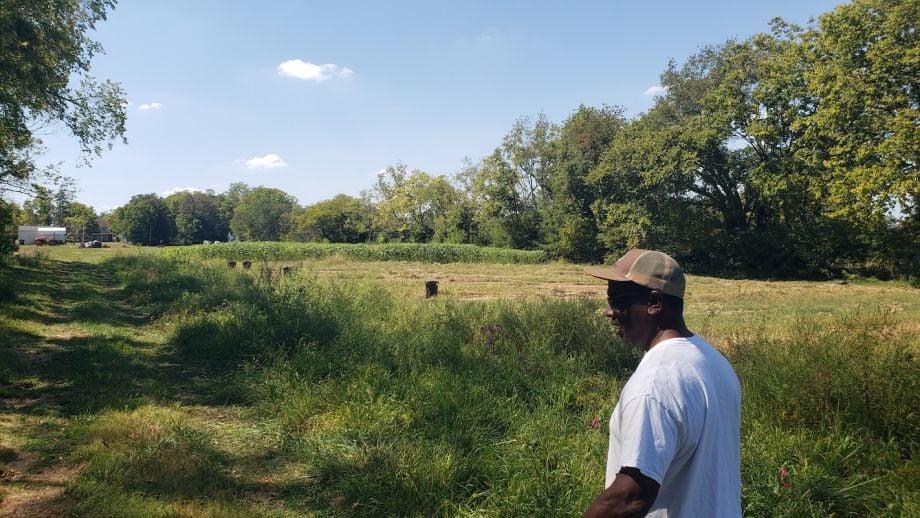
Near the eastern edge of Fayette County, Kentucky, sits the Coleman Crest Farm in the rural Black of Uttingertown. That’s where Jim Coleman works the land his great-grandfather tilled as an enslaved person — until he secured his freedom by fighting in the Civil War and returning to purchase the farm more than 130 years ago.
Now, Coleman is continuing his family’s farming legacy, but not because it’s easy work.
“Yesterday, I was pulling up mulch,” Coleman told , in between administrative calls. “I had harvested hard the day before. Did a little bit of harvesting [yesterday], invoiced it, packaged it, put it in the case, put it in my truck, drove to my customer, and delivered.”
Coleman’s 13-acre plot is one of the few in the county — and in Kentucky — that’s still Black-owned and operated. And among all farmers, the sheer volume of farmland has fallen, .
“The average age of farmers is 58 years old. They’re burnt out. They’re debt-ridden. Their kids don’t want it,” Coleman says. “And you got a developer knocking on your door saying, ‘Listen, I’ve got $50,000 an acre.’”
He explains the first thing such a farmer might think: “$50,000? I could sell this thing, or maybe a portion of it. Pay off my debts and get a life.”
USDA programs intended to level the playing field have been slashed under the Trump administration in 2025. That includes the “socially disadvantaged” designation in the which directed resources to farmers who historically faced lending discrimination. ruled that the consequences of racial discrimination had been “sufficiently addressed.”
Meanwhile, Black farm ownership in Kentucky has shrunk dramatically over the last century — from about 650 Black farm owners compared with roughly 100,000 white farm owners, according to the 2022 . That proportion lies far below the national average of 1.4%. The total number of Black producers nationally also decreased by 4% between 2017 and 2022.
Facing the threat of urban development and the loss of federal support, how can Black producers’ farms and legacies survive and thrive in Kentucky?
Local regulations, such as Lexington-Fayette County’s Purchase of Development Rights program, have the potential to help, but some Black leaders say this support is not yet reaching those who need it most. In the meantime, Black-led organizations like Black Soil are serving as a resource and partner to Kentucky’s Black farmers.
Purchasing development rights
Like many states, Kentucky has developed government programs to help offer farmers financial benefits while preserving their land’s farmland status; however, the Commonwealth’s programs are less robust than .
The Kentucky Department of Agriculture preserves about 200 farms through the Purchase of Agricultural Conservation Easement Corporation, which only accepts donated land. And nonprofits like the Bluegrass Land Conservancy, also based in Lexington, offer tax deductions to landowners who join their network.
Lexington-Fayette is one of a few municipalities nationwide that offers an alternative: direct purchase of these development rights.
The city-county government adopted its Purchase of Development Rights (PDR) program 25 years ago, modeled after similar easement programs, such as those of the Bluegrass Land Conservancy. Only tracts of land 20 acres or larger have been eligible until this year, when the office kick-started its Small Farm Conservation program. The new subset of PDR allows 10- to 19-acre farms to enter easements.
“We thought, ‘Oh, maybe we’ll get five or 10 applications.’ And we got 37,” says Beth Overman, the director of Lexington’s PDR office. That was after spreading news about the small farm program through word of mouth as a test run.
The city and office then process and score those applications. As of late 2025, more than 33,000 acres of land are under PDR easements, nearing their 50,000-acre goal. Their next application period opens later in the year, and officials plan to get the word out through council members and mail advertisements.
The new rules open up an opportunity. Black farmers, nationwide, tend to own and see lower revenue. They now have the option to sell the development rights of their 10-plus-acre farms. They receive that value in cash, useful for purchasing new equipment or staying afloat while keeping ownership of their farm. Developers then can’t buy it out for industrialization, helping the farmland stay in their families and communities.
“With a small farm program, once word is out and people know it’s there, then that minority farmer who maybe has five acres or zero acres — knowing that they could put the farm into the small farm program and get a little cash back, may help them think, ‘I could maybe take this jump and … try to start my own farm,’” Overman says.
Lexington’s PDR program is a one-person office, and Overman says the lack of manpower and resources affects what they can do.
“Maybe that’s a place we could get to someday — it could help people take the plunge to buy a farm if they knew,” Overman added.
The pieces are all there, ready to be put together. On paper, it works.
In reality, the founder of Lexington-based nonprofit agribusiness Black Soil says this potential has gone unrealized for the region’s most vulnerable producers: farmers in Black rural hamlets.
“[The PDR program] needs to do a lot more outreach in educating folks in the rural hamlets — technical assistance, as well as the outreach to let people know,” says Ashley C. Smith, who came to agriculture as an adult and launched Black Soil in 2017. Her organization supports Kentucky Black farmers and runs fresh food markets in Lexington, connecting residents experiencing food insecurity to produce and meat from Black farmers at below-market rates.
In her time running the organization, she has worked extensively with urban Black farmers in the city’s denser neighborhoods, as well as rural growers in areas like Utteringtown and beyond state lines.
Smith argues that information about local agricultural programs like PDR isn’t disseminated effectively, a consequence of systemic racism throughout the industry.
“Black Soil acts as a mirror. If we are able to find this many Black farmers in our region — farmers, culinary artists, industry professionals — [then] there’s an active choice to not see people.”
Coleman sits on the Rural Land Management Board, which oversees the PDR program. That means his own farm is ineligible. But he agrees the program isn’t reaching those who need it most.
“No one in that room knows about the PDR program,” Coleman says. “PDRs are very transformative, and I think the right way to go. [It can’t help] if you don’t know.”
Support from Black Soil
The Cleav Family Market isn’t eligible for Purchase of Development Rights either because it’s not in Fayette County. The family farm straddles the Central Time Zone border in rural Bonnieville — about an hour south of metropolitan Louisville and just under two hours from Lexington.
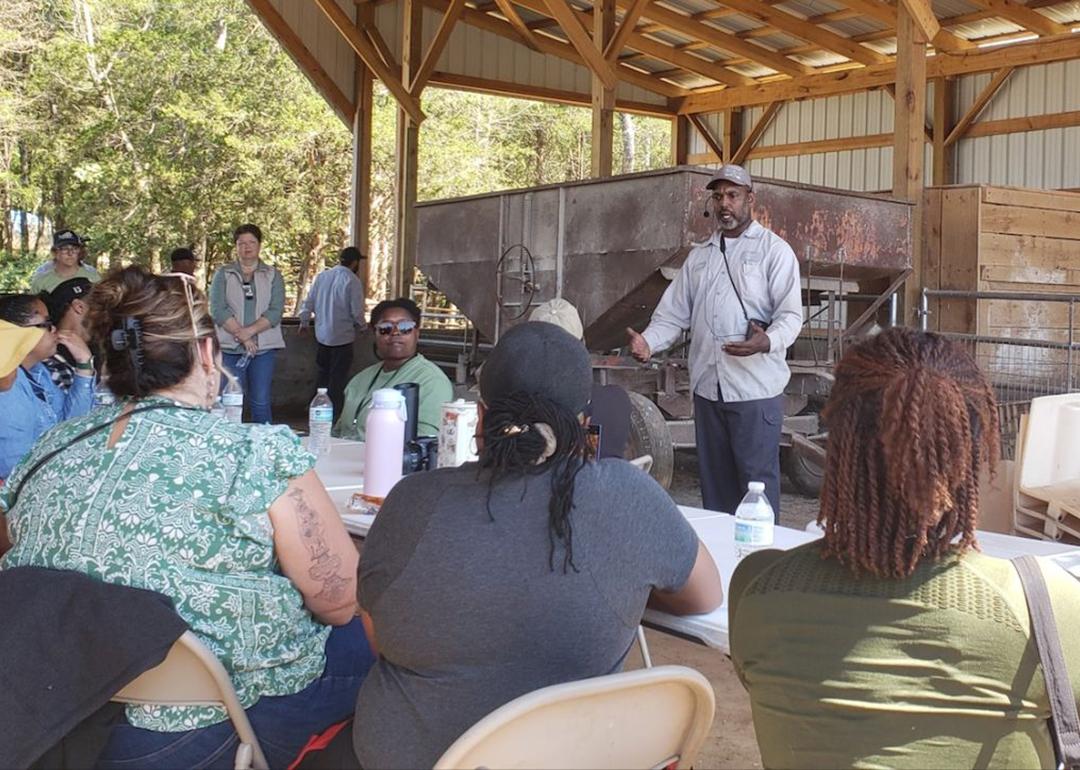
“What I want y’all to get from this is you can start today,” farmer Travis Cleaver says, motioning to the chicken coop behind him.
The sun beat down on dozens of professional and aspiring growers as his fellow farm employees explained how each broiler chicken needs one more square foot every week they grow.
“These are scrap materials we found around the barn and scraped together. As you get better, you buy better.”
The Cleav Family Market was one of multiple destinations in the State of the Soil conference, hosted by Black Soil. Guests traveled from states away to hear from industry professionals, tour farms across central Kentucky and network with agriculturalists of all walks. Local Black growers and chefs produced most of the food, too.
“Instead of rallying all farmers and digging into folks who want to farm, people were trying to work to ostracize and undermine and minimize. But thankfully, those farmers were resilient and they stuck together,” Smith says.
Cleaver walked attendees through the fine details of crop and livestock production. Their leafy greens use drip tape instead of pipe, and the white plastic covering the soil helps regulate its temperature in the hot months.
His father bought the farm in 1980, continuing the legacy that Travis’ great-grandfather had begun. Now, they operate it together with knowledge gained through generations of farming communities. For rural Black farmers especially, Cleaver says it’s already hard enough to get the land. His job, now, is to be a good steward.
“I know the sacrifice that my parents [made] to get this in a time when it wasn’t easy to get it. Whether it be interest rates, whether it be injustices, whether it be lack of wages, lack of know-how.”
Black Soil invests funds into Black-owned farming operations, helps growers find grants, and then places their produce and meat on local shelves. The Cleav Family Market’s seasonal produce appears in Black Soil’s Lexington markets, bolstering access to fresh food for urban residents and offering revenue to Cleav Family Market. It’s part of of empowering Black-owned farms in the face of and continued oppression and exclusion.
“We always say we’re a ladder … they’re standing on our shoulders, or we’re standing on their shoulders. And together, we can keep this thing where it’s all over the state,” Cleaver says. “Just getting good food to good people.”
Black Soil’s Smith says their work to create a structured support for Black farmers came with plenty of opposition. It included what she says were unnecessary appeals, losses in data, and industry professionals treating Black farmers’ produce as ‘dirty.’
“We had to create our own sidewalk. We really had to pour the concrete, get in there and smooth it out, and say, ‘Okay, now we’re gonna walk right here.’ We had to sidestep people because they kept standing in our way,” Smith says. “I can only imagine the heaping feeling upon farmers, whose products are being indirectly insulted … [from] agribusiness, designed to help the farmers that they aren’t helping.”
Black Soil is also one of Coleman Crest Farm’s primary collaborators. Coleman says the organization’s help has been invaluable because its mission was built with the needs of Black farmers at the forefront.
“It helps to give us the revenue to get the credibility. But then, you build in the infrastructure, and now you can market to big customers like wholesalers, Walmart, Whole Foods, and others — because they’re looking for it. They just don’t know where to get it,” Coleman says.
Coleman says information access is especially a struggle for rural and Black folks alike. When first installing his own farm’s irrigation system years ago, he dismissed the idea of reaching out for government assistance, thinking it would take too long with little payout. That lack of knowledge kept him from saving 50% of the costs.
“If you’ve got cable TV in your house, then you can have access to the internet. But then the next [question] is: Are you comfortable using the computer? And do you know how to search?” he says. “It’s not a lack of programs; it’s a lack of awareness of where these programs exist.”
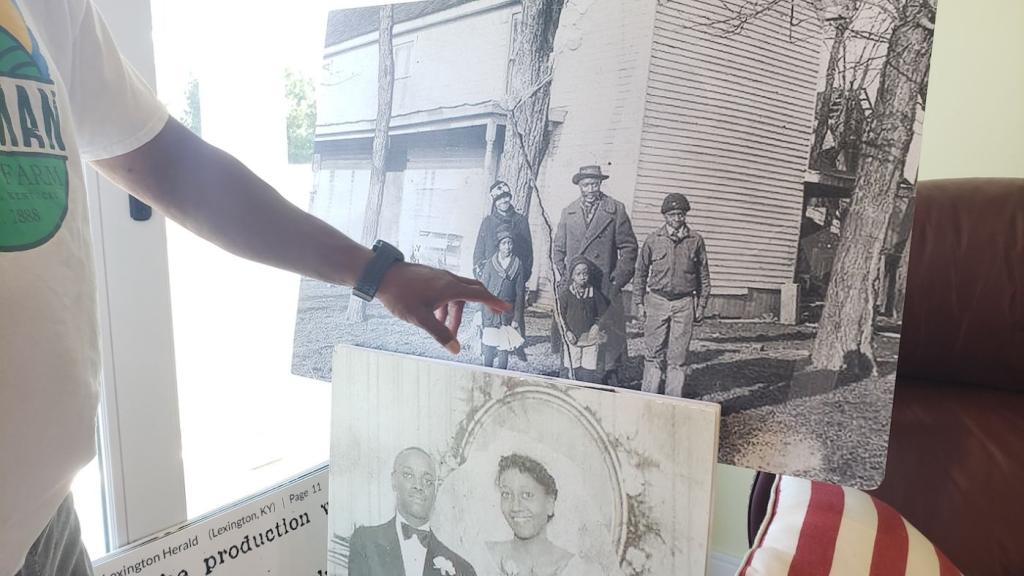
Coleman does not have children to inherit his land. The fate of its legacy is uncertain. Currently, he plans for nearby universities to use it for agriculture education.
His ancestors, who tended this land before him, are buried and memorialized near the treeline. He may not be buried on this land, but no matter its future, these markers signify centuries of trauma, perseverance, and grit.
He says homegrown nonprofits like Black Soil are paving a clear path forward, and hopefully, dedicated conservation programs like PDR will soon play a hand.
“The future’s bright for those of us who are gonna produce a locally grown product where we can sell it directly — or as closely as possible to the end consumer,” Coleman says.
This story was produced as part of Next City’s joint with Kentucky’s .
This story was produced through our , which is made possible with support from the Knight Foundation.
was produced by and reviewed and distributed by Â鶹ԭ´´.