American exceptionalism at the World Cup: Why many soccer fans in the US will be cheering on another team (probably Mexico)
American exceptionalism at the World Cup: Why many soccer fans in the US will be cheering on another team (probably Mexico)
Soccer fans have their eyes turned to Qatar as gets underway. But in the U.S., the question of which team will be cheered on from afar isn't entirely straightforward.
You see, one of the anomalies of being a "typical" soccer fan in the United States is that, you are not, in fact, a "typical" soccer fan.
For many teams' supporters, the World Cup becomes an event to affirm one's national identity. This is true, as cultural critic notes, even among fans who are not jingoistic or nationalistic in any other environment.
Indeed, the nationalist fervor that can boil over into xenophobic inter-national violence. As renowned soccer historian noted in reference to English soccer crowds in the late 20th century, their "essential xenophobia" revealed a "rabid insular nationalism that was just a few notches more extreme than the foreign policy of the most Europhobic government since the Second World War."
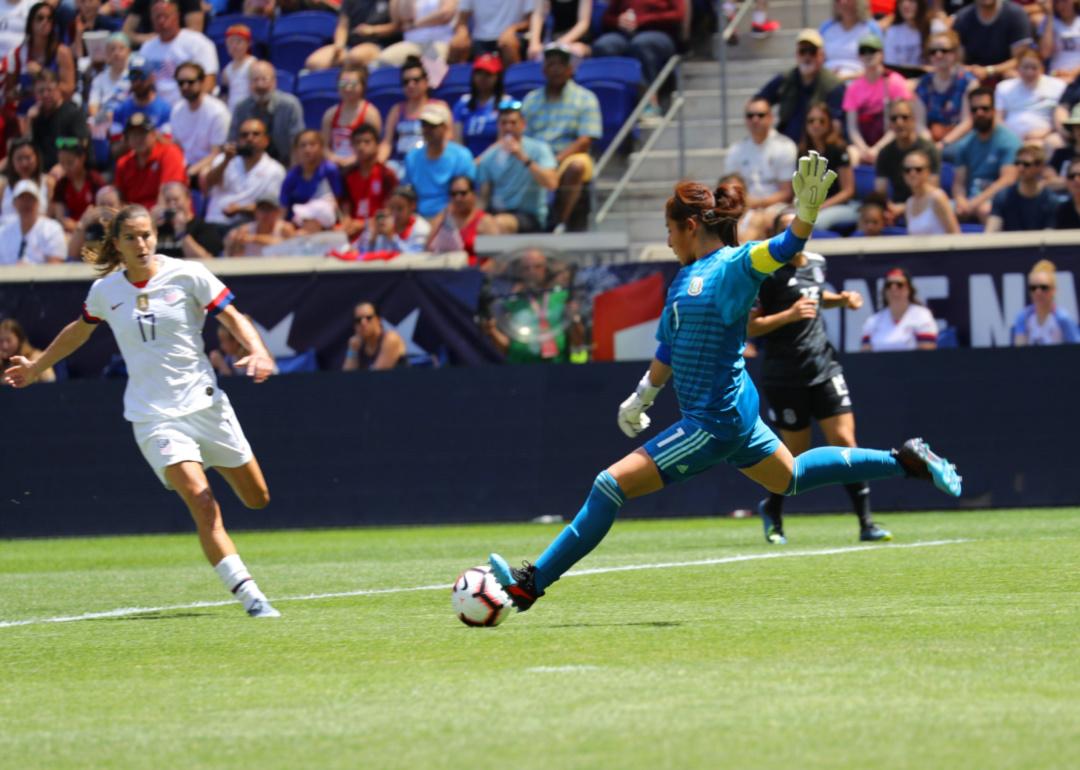
For Americans, though, the experience can be very different. Factors ranging from the , , and perhaps more importantly (especially to Americans of Mexican heritage) an attachment to countries deemed to be more traditional "soccer nations" mean that we Americans can find ourselves oddly divided over the nation we support in the global game.
Where is Uncle Sam in the global game?
Soccer has over the last few decades in terms of its domestic league and growing support base.
Yet, outside of our national teams—the U.S. Women's National Soccer Team and its male counterparts, the USMNT—Americans are than in their own domestic league, Major League Soccer.
Indeed, into the most popular clubs for Americans found that FC Barcelona topped the list, followed by Real Madrid, both from the Spanish La Liga. The next four teams—Manchester United, Liverpool, Chelsea, and Arsenal—all play in the English Premier League.
You have to go to find an MLS team, LA Galaxy. They and Atlanta United are the only two American clubs in a list of the top 20 most popular teams, as seen by Americans.
What this means is that soccer fans in the U.S. are, in the case of the men's game, likely following players whose national identities are somewhere on the globe outside the U.S., given the on Europe's biggest teams.
The growth of Mexico's Liga MX
This whole "national identity thing" gets even messier when you dig deeper into what soccer games are actually the most watched in the U.S.
The MLS and European leagues have loyal followers in the U.S. Reviewing Thanksgiving sports-watching in 2020, reporter that the 12 most popular EPL and MLS games during the period had television audiences of 203,000-744,000 viewers.
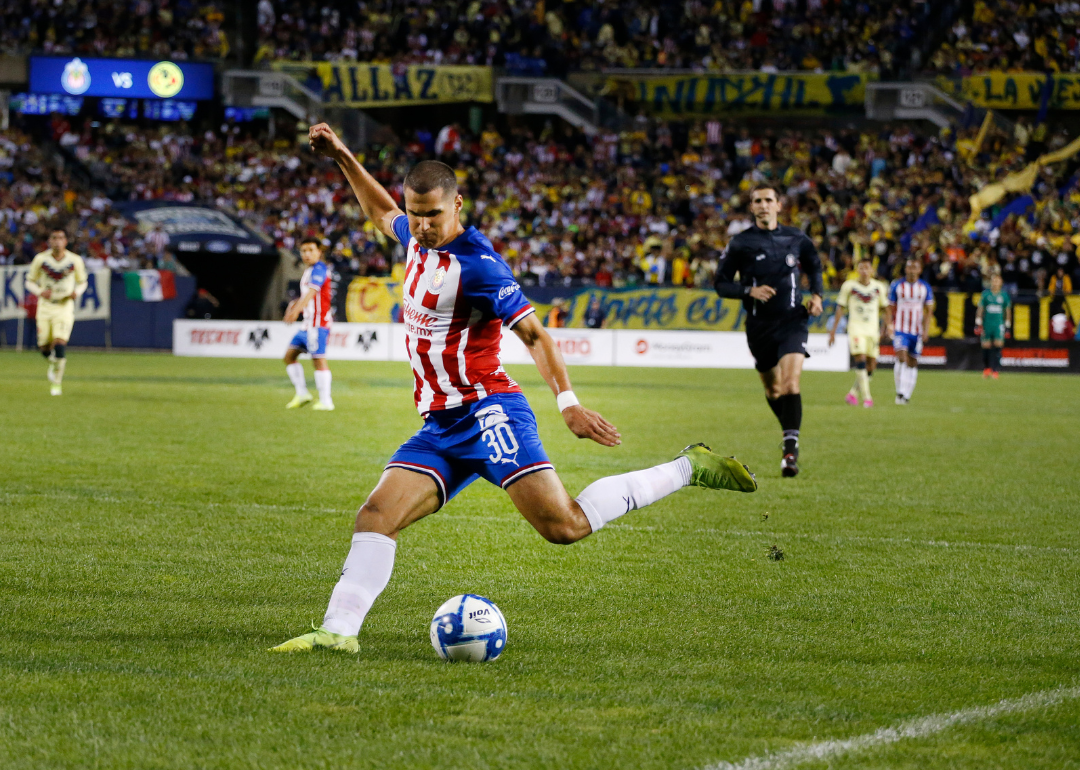
But those figures are dwarfed, Fleming noted, by the biggest overseas soccer match watched over the period: Chivas v. Club América. Mexico's , as the game is known, drew a total of 2.5 million viewers watching on Univision's TUDN, the self-proclaimed ""
And this wasn't a fluke. Data shows that Mexico's top league, Liga MX, has a total U.S. viewership in the U.S. . From 2016-2018, it grew by 46%, .
What does it mean for American soccer identity at the World Cup that a majority of U.S. soccer fans prefer the Mexican league over the domestic league? And how does this translate into support, in particular, for the U.S. men's national team?
The —American exceptionalism of a different sort—has led to for the National Women's Soccer League and a and "American" players.
Yet it is fair to say that hardcore support for both the U.S. men's and women's national teams among people living in America trails behind that of Mexico.
As sports writer in an article earlier this year, with 60 million fans in the U.S., Mexico is "the most popular soccer team in the U.S."
those of both the U.S. men's and women's teams in the United States. This was , when the U.S. women's team won the World Cup and their jerseys .
Such is the popularity of the Mexican national team, especially in large West Coast cities, that it can play in front of a "home crowd" on foreign territory: perhaps the only national team that can claim to do so.
Games against the U.S. are now scheduled in the Midwest and South—in places including Cincinnati and Columbus, Ohio, and Nashville, Tennessee—to account for the imbalance in home support for the teams above and below the border.
Can you have an 'other' team?
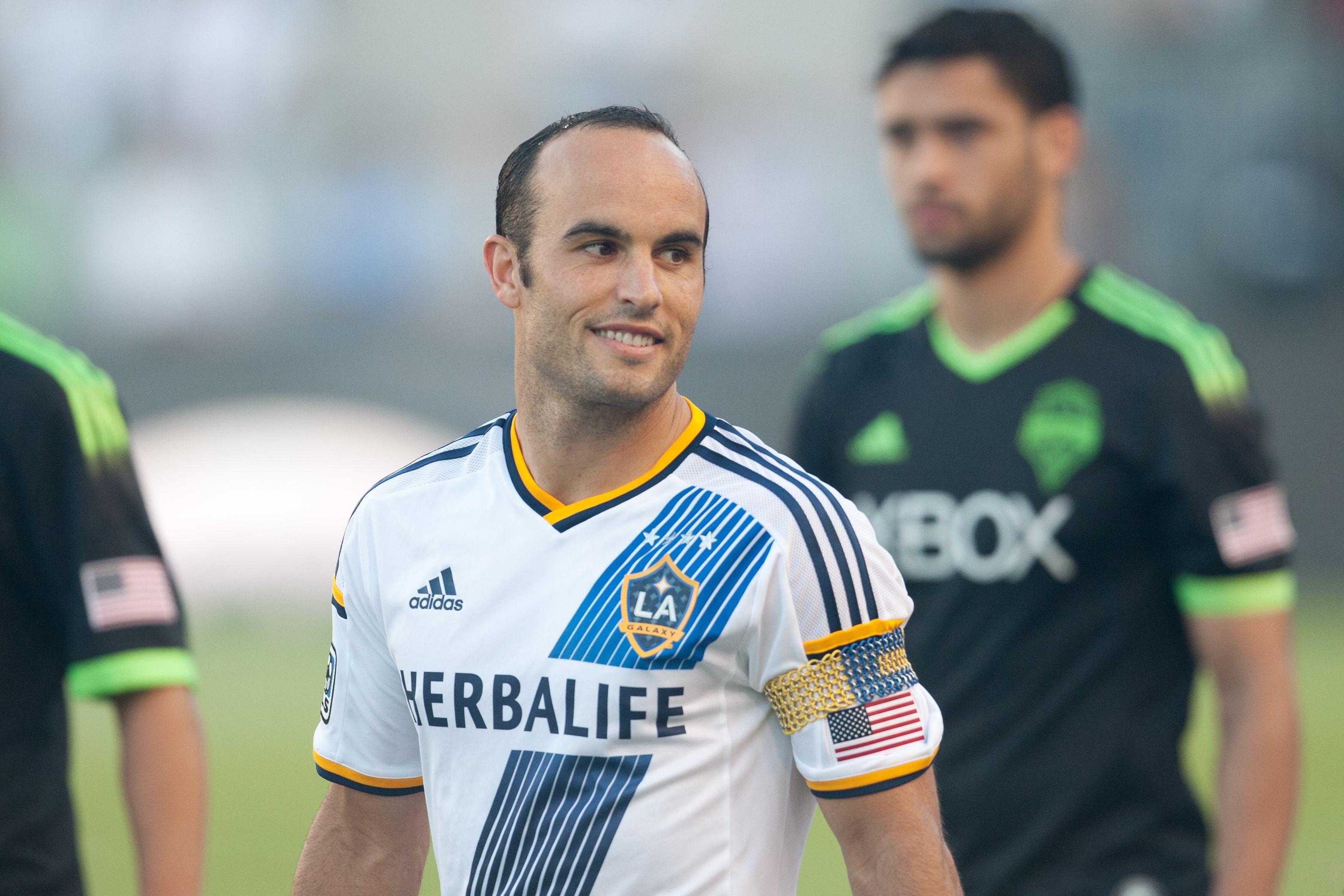
Not all U.S.-based soccer fans are comfortable with the idea of Mexico being considered a "home nation." In 2018, after the held in Russia, former U.S. national team star Landon Donovan took part in the ", aimed at marketing the sport in the U.S. despite the national team's absence.
"USA fans," Donovan , "our team may not be in Russia, but our neighbors to the south are. So join me and their proud #sponsor @WellsFargo to cheer on our other team, Mexico."
The response was mixed. "Nah man!!! Mexico is not 'my team.' Mexico is a rival …," Cobi Jones. Others in what dissolved into a messy online debate.
Donovan's support of the Mexican team in the 2018 World Cup was seen by some as a cynical marketing move to keep U.S. fans tuned into the World Cup. And it should be noted that the Mexican and U.S. soccer federations were at the time —Soccer United Marketing—for all games played in the U.S.
Nonetheless, the debate that the "other team" campaign provoked opens up interesting questions concerning nationalism and patriotism.
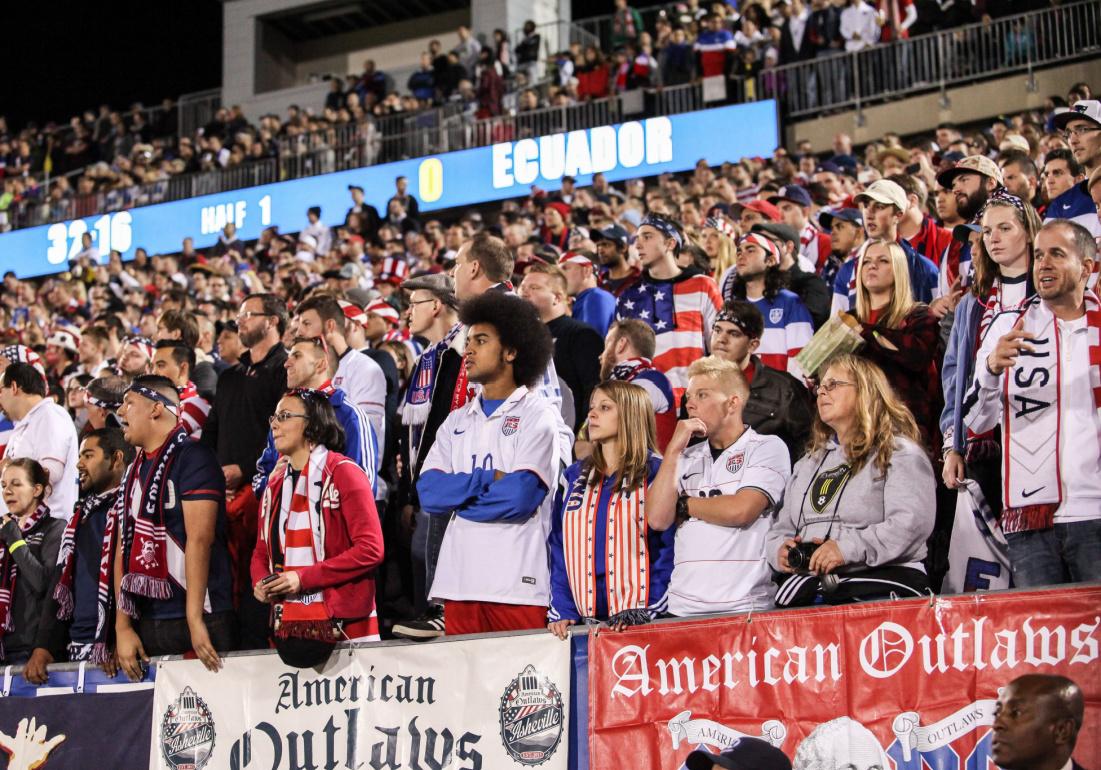
A nation of two halves?
Multiple soccer scholars including and have suggested that a country's soccer team can represent the nation's values. As such, it might be telling that a large segment of people living in the U.S. embrace another team.
Given the complexity of the U.S. soccer fan base – one with a large contingent loyal to either the Mexican team or elite players at European teams – and with the competition for attention from other professional sports, it's perhaps not surprising that supporter loyalty in U.S. is more divided than in other countries.
In a country that holds dear the notion that "," what does it say that, in soccer at least, "Out of Many, We are Two."
This story originally appeared on and has been independently reviewed to meet journalistic standards.