
ChatGPT isn't alone—5 ways AI already impacts gambling and sports betting
This story originally appeared on AskGamblers and was produced and distributed in partnership with Â鶹Դ´ Studio.
ChatGPT isn't alone—5 ways AI already impacts gambling and sports betting
In an industry driven by odds and predictions, the use cases of artificial intelligence in gambling and sports betting are immense.
Brick-and-mortar casinos are using with online platforms to keep up in the race to evolve their business amid the proliferation of artificial intelligence. Data from the shows some states that haven't legalized mobile sports betting report declining revenue year-on-year, falling behind the rest of the industry.
Initially, it was unclear if AI could be used in gameplay to outperform humans in games like poker that lionize such intrinsic human attributes as intuition and body language, but that changed in 2017. Research published in that year showed AI software could win a game of heads-up no-limit poker against professional poker players. Despite its promise, the gambling and sports betting industry's expanding use of AI from marketing to hasn't been immune to either.
examined research papers, news articles, and industry commentary to distill the top five impacts of AI on the betting industry, along with its pros and cons.

#1. Gambling responsibly
Working to curb the prevalence of gambling disorders that affect 5.7 million Americans, AI technology enables online gambling and sports betting providers to track potentially addictive behavior.
AI can constantly to . The gambling software platform, Slotegrator, claims AI can by identifying players that increasingly spend time betting, reverse their money withdrawals, or appear to be "loss chasing" (continuing to gamble to try to make back their money in lost games and bets).
Still, with or without AI, Americans have found a way to gamble outside the law. Nearly half of Americans played online slots or table games in in 2022. While each state with legal gambling has its own regulatory body to oversee and penalize the industry for violations like misleading advertising promotions, like instances where marketers offer players "free" or "risk-free" bets, these are still being offered to susceptible gamblers.
These types of bets have been proven to have a , and in the case of violations in Ohio, they required users to before placing the "free" or "risk-free" bet.
#2. Personalized experience
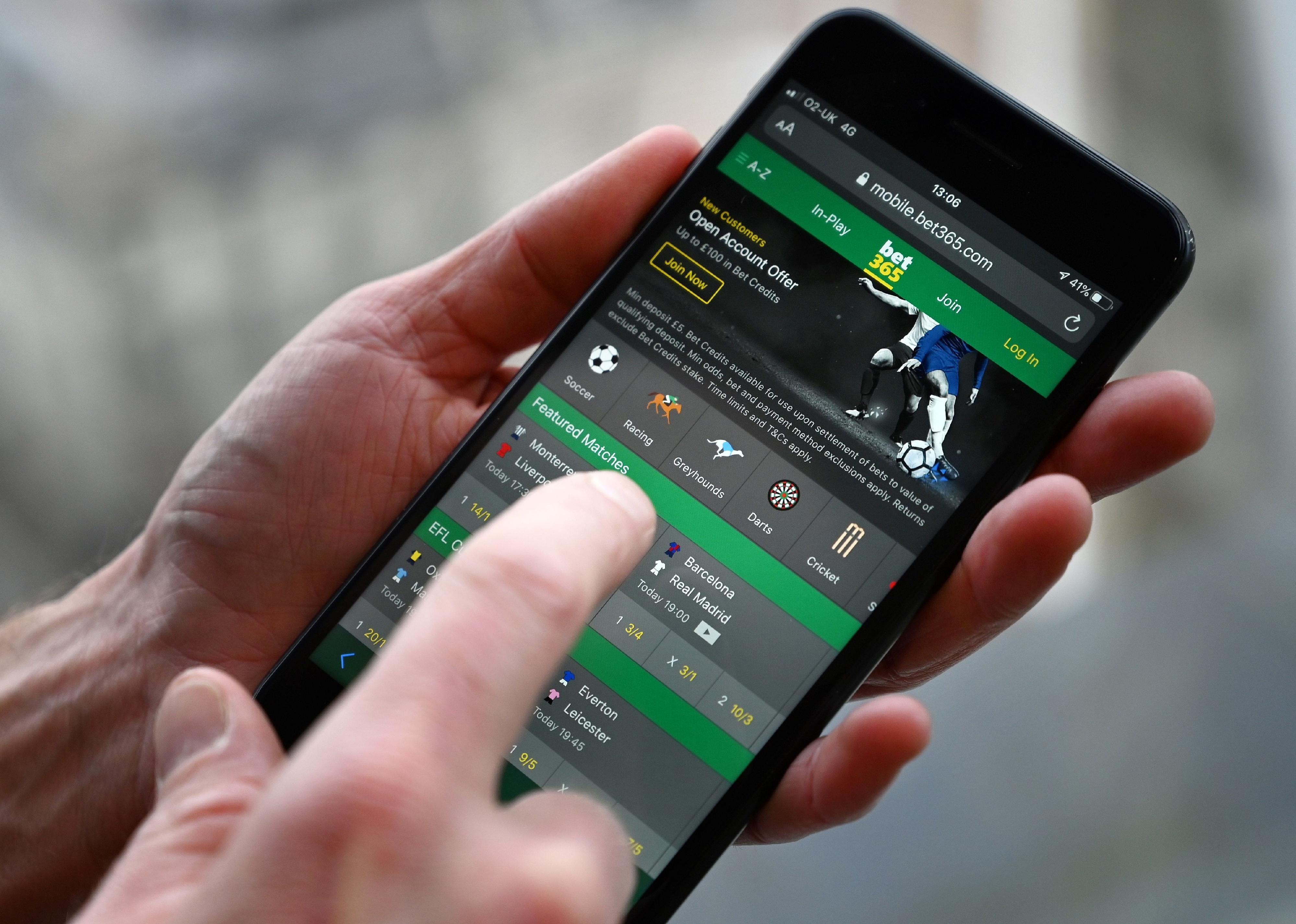
Online gambling and sports betting companies are using AI algorithms to predict better and serve up games and experiences tailored to user preferences—keeping players engaged with varying levels of difficulty or narratives or providing many options (just like ).
Generative AI can even assist fantasy sports betters with to fill the rosters of their dream teams or, in the future, create like crypto trends or celebrity life events.
Despite these potential upsides, AI is still in its infancy. Personalized content created through the technology can be , flat-out , buggy, or even like memory corruption without flagging the issues to the user.

#3. Customized marketing strategies
AI is an unequivocal boon to the industry's marketers. AI and machine learning can customize marketing strategies for gambling sites by optimizing search results to automatically generate landing pages that incorporate valuable keywords. More users can be reached by marketing on relevant, popular websites, which AI can help identify more easily.
Companies can also better manage, or exploit, their customer's changing needs over time using AI, perhaps notifying fans about predictions or odds at specific points of a game or letting them review highlights in the case of sports betting. Retailers can take advantage of dynamic pricing and incentives to encourage users to keep playing, using AI's ability to segment the market and provide customized strategies for marketing.

#4. Fraud and misuse detection
With a surge of activity in online betting—mixed with and the threat of a recession—the financial risks of cybersecurity, fraud, and money laundering increase.
Software developers, however, are poised to meet these challenges using AI and machine learning with funding backing up solutions that identify and combat schemes .
Innovations in software can reportedly with 99.8% accuracy by monitoring game interactions to detect anomalies. Researchers have successfully trained machine-learning algorithms in multiplayer online games.
Despite these advances in AI to detect hackers and scammers, it's challenging to keep up with increasingly sophisticated online threats that continually evolve to avoid detection. TransUnion reported a in the gambling industry, comparing quarterly data year-over-year in 2022. Later that year, multiple online gambling sites also like "credential stuffing," where hackers used a database of compromised login information to access sites.

#5. Internal management for betting companies
AI algorithms can be programmed to plump up the bottom line of betting companies in myriad ways—from automating customer service to —and efficiently managing cash flow to turn a profit.
And luckily, despite the concerns of , according to a Forbes Advisor survey, a 2020 World Economic Forum report predicted that would be created to support the development and implementation of AI and machine learning modeling. However, only time will tell how the proliferation of AI will truly impact the future of work.
Story editing by Carren Jao. Copy editing by Kristen Wegrzyn. Photo selection by Clarese Moller.