This story originally appeared on Curated and was produced and distributed in partnership with Â鶹ԭ´´ Studio.
The fascinating history of different ski styles
Traversing or gliding across snow has been a common sport for millennia. Fragments of skis—primitive but unmistakably similar to the skis of today—found in the north of Russia to 6,000 B.C.
Theorized to be used as a means to cross swaths of frozen land and hunt, skiing eventually transformed from a tool of survival to an activity done for fun. While people have long sailed down the Alps on skis, the advent of film and television sent skiing global. Skiing and big-mountain explorations were captured by filmmakers like “Ski Bum” Warren Miller, while James Bond regularly escaped foes on the slopes. The sport became popular in many places around the world with the climate and terrain to support it—and even in places where it doesn’t, as is the case with .
Skiing became the sport we know today in Norway thanks to the country’s history with skiing that made its way into military training and eventually competitions, personified by Sondre Norheim. Norheim crafted his own skis and in the late 1860s and 1870s. Skiing spread in popularity across Europe and debuted in the first Winter Olympics in 1924 in Chamonix, France, with Nordic and jumping events.
Skiing in the Olympics has since grown into five main ski events: alpine, cross-country, jumping, freestyle, and a combined event consisting of both jumping and cross-country racing. Mogul, ski cross, halfpipe, and slopestyle are newer additions to the freestyle event.
Skiers like Olympian Bode Miller became household names. Athletes Sarah Burke and Shane McConkey captured the hearts of fans across the globe before untimely deaths. Others jumped from success on the slopes to parallel careers as entrepreneurs, including heli-skiing mountaineers Doug Coombs and Dean Cummings, and those who started their own ski companies, including Tanner Hall and the late JP Auclair, who founded Armada. Those and more skiing athletes have continued to evolve the sport. The X Games include new, 21st-century events like slopestyle and ski superpipe, and hosts informal competitions in urban skiing.
Meanwhile, mere mortals who have viewed these superheroes are curious about how best to explore on snow, and what gear to get. breaks down seven types of skiing, along with the type of equipment you’ll need, notable figures, and a basic history of that type of skiing. Continue reading to learn more about options you might want to try.
Alpine/downhill skiing
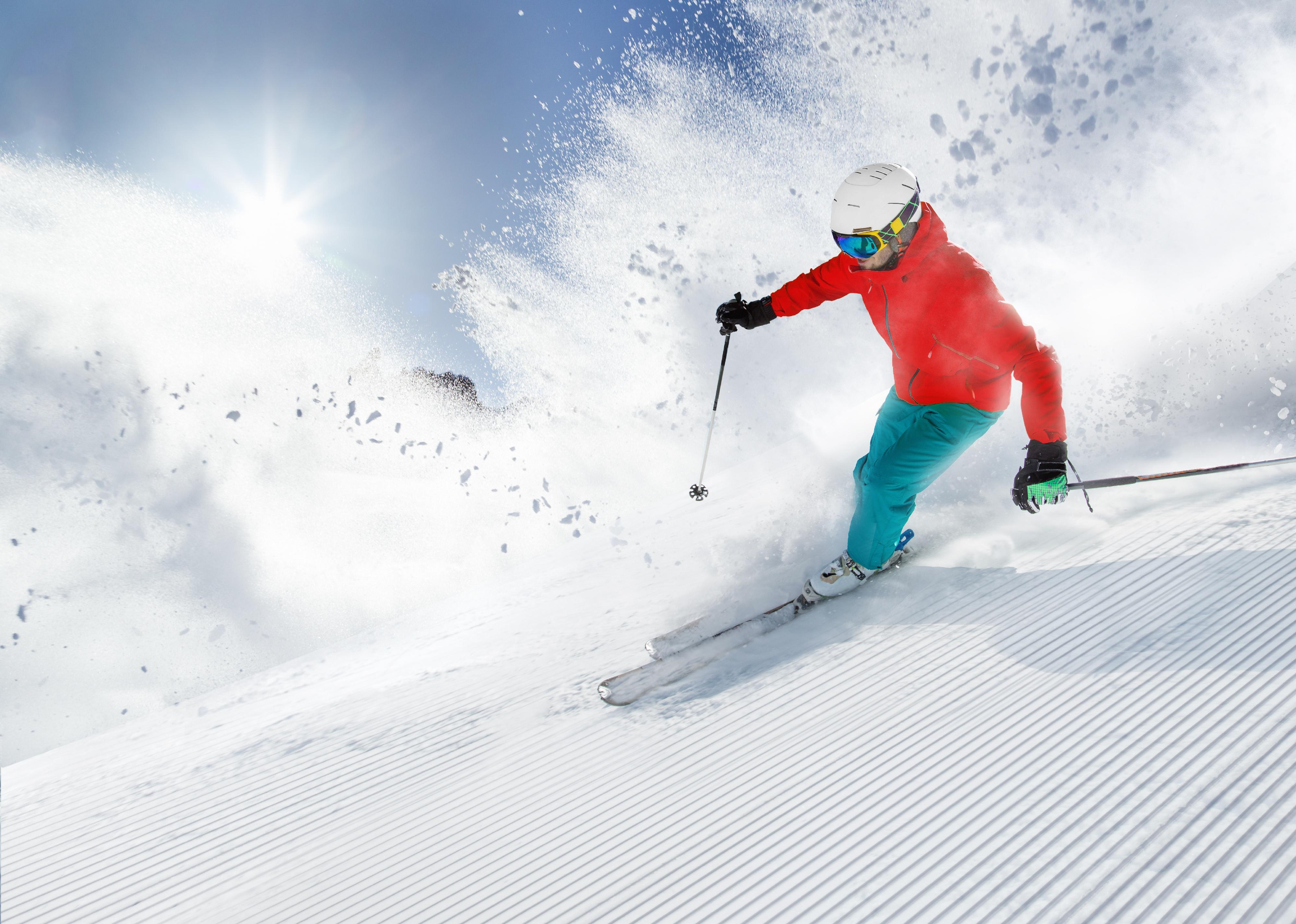
Those who know skiing primarily via the Olympics are probably most familiar with the competitive side of alpine, aka downhill, skiing. But the everyday skier isn’t necessarily focused on speed. Accessing terrain—via , gondolas, rope tows, and magic carpets—is one of the aspects that sets this type of skiing apart from those that require human power to ascend the mountain before gliding back to the base.
Different options of skis allow skiers to choose the perfect ski to manage the surface they’re gliding across on a given day. Width, stiffness, and dimensions are altered to make skis that handle different conditions. Carving skis—often used in the American northeast or generally in icy conditions—are thinner, with edges set at different angles to facilitate carving into the ice while skiing.
Skiers in the Western states—with consistent natural snowfall or “deep pow”—make more use of wider skis that are excellent for fresh powder. Those who want one ski to handle everything turn to all-mountain skis. Because there are so many subtypes within this discipline, there’s a style that fits every personality and every degree of fitness or thrill-seeking tendencies. Downhill bindings are also different from those used in other disciplines: The heel is locked down to the binding through the boot.
Mikaela Shiffrin now holds in the downhill discipline than any other American skier, and Sweden’s still holds the record for most World Cup wins overall.
Telemark/free-heel skiing
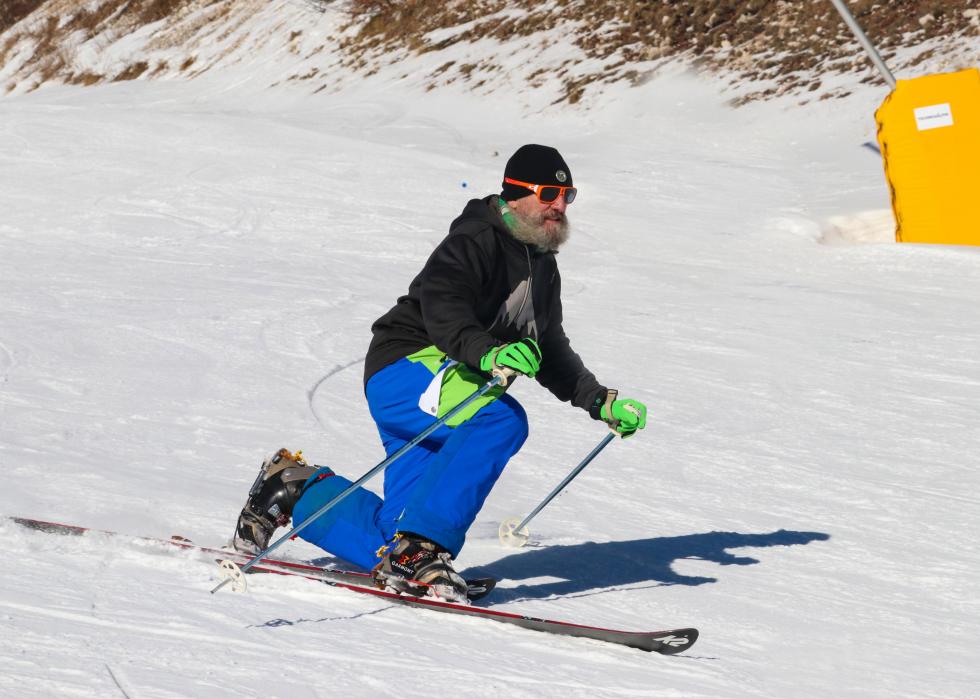
Telemark is an old-school kind of skiing that’s becoming a bit of a lost art. It’s mainly seen in downhill skiing in-bounds, though one uses a similar technique and bindings for backcountry and freeskiing. Telemark bindings have a free-heel boot, which is useful for lunging and carving.
One notable record in the sport is that of Rainer Hertrich, a snowcat operator who for eight years, logging 100 million vertical feet. Some skiers in this discipline share Hertrich’s drive —and others just like the freedom and options the sport gives them.
While such telemark skiers are becoming a rare breed, those who practice it are a voracious community who are currently pushing to bring telemarking into the , which could restore its popularity.
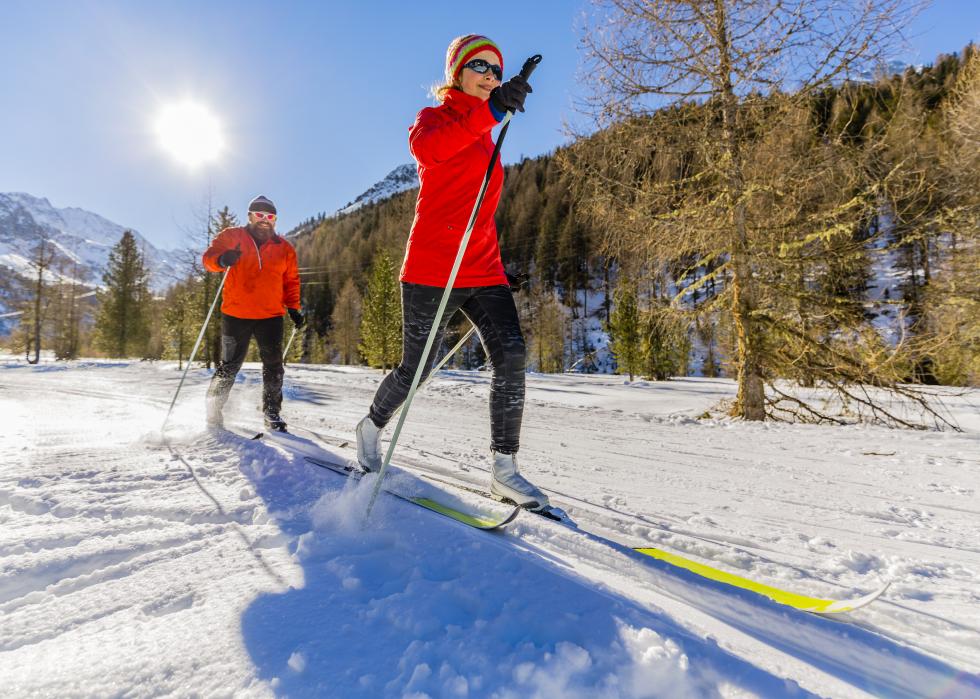
Cross-country/Nordic skiing
The first Winter Olympics, in 1924 at Chamonix, included a “” event that included both cross-country and jumping, as well as a separate jumping event.
Cross-country skis are long and light, perfect for transporting oneself a maximum distance with minimal effort—important, given that these skiers get no help traversing the mountain. And like telemark skis, the heel is free. Classic cross-country involves gliding in a parallel motion, on either tracks or off-piste, while skate cross-country involves pushing off diagonally in a movement similar to ice skating, on tracks designed specifically for this discipline.
Because this sport can take skiers into the depths of the wilderness, it’s appealing to those seeking the peace inherent in that environment. Other participants use cross-country skiing as cross-training for other sports, including competitive cycling.
Backcountry skiing (also known as alpine touring)
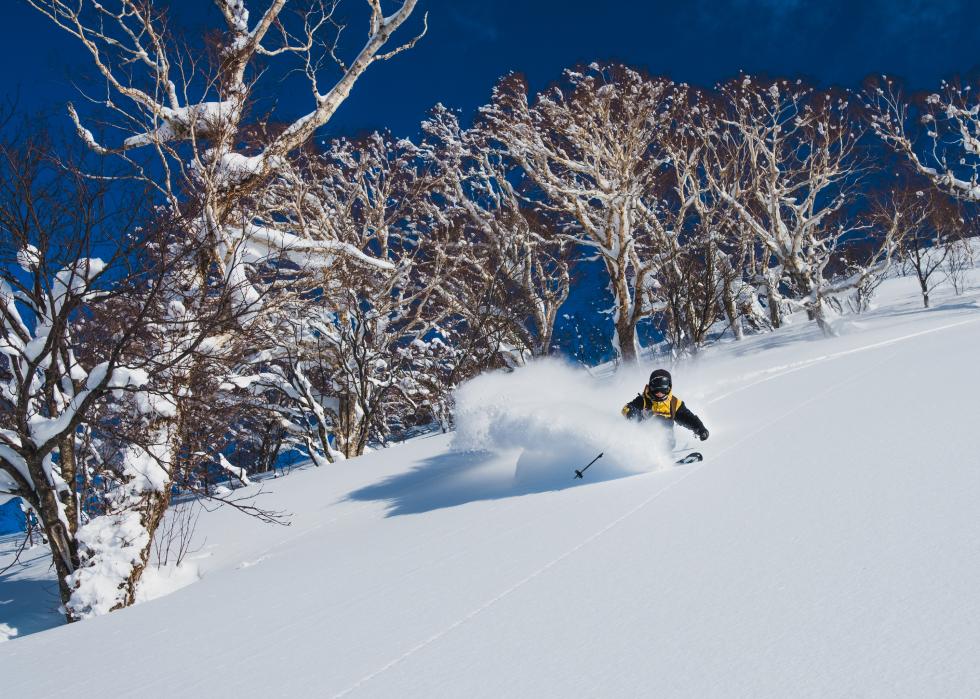
Exploring the backcountry gives you access to untracked (or at least less-tracked) powder and terrain in off-piste areas, but you typically have to “earn your turns” by “skinning” up the mountain. Specialized lighter-weight alpine touring (AT) bindings will be especially helpful when climbing up the mountain.
Alpine touring boots help with allowing greater foot mobility and strength in instances where you’re skinning uphill. Then, of course, there’s the need for a lot of aerobic capacity and lower-body strength. Those with bigger budgets and less desire for an uphill workout can also get to virgin snow via or . This type of skiing attracts adventurers as well as those who love the calm of the wilderness.
What’s most important to bring with you on backcountry excursions is knowledge, certification, and respect for the dangers of out-of-bounds skiing. The risk of backcountry skiing is heightened for those who are not trained in avalanche safety. The COVID-19 pandemic resulted in more people than usual flocking to the slopes in the 2020–21 winter season, many of them inexperienced. This resulted in the season for most deaths due to avalanches in the U.S., with 36 lives lost.
Before contemplating a backcountry adventure, it’s advisable to complete an , and learn how to use a beacon, a probe, and a shovel.
A beacon is an electronic device that communicates with other beacons for the purpose of alerting those nearby to someone stuck under deep snow. A probe is used to pinpoint the horizontal location of a person buried following an avalanche. Additionally, it can be used as a measuring device that gauges the depth of snow. Before you go backcountry skiing, tracking avalanche conditions for the day is a must. There are several apps for exactly this. Finally, backcountry skiing should never be undertaken alone. It’s also a good idea to gain plenty of practice in controlled environments and to bring a first aid kit and food and water.
There’s also sidecountry skiing, on terrain that is outside of the ski area boundary and usually less-traversed because of the advanced skills and/or hiking or skinning required to get there. Ultimately, sidecountry skiers are at a higher risk as there is no ski patrol or avalanche mitigation in the sidecountry. Sidecountry skiing is often where people get hurt because it is more easily accessible, lulling inexperienced skiers into a false sense of security.
Ski mountaineering
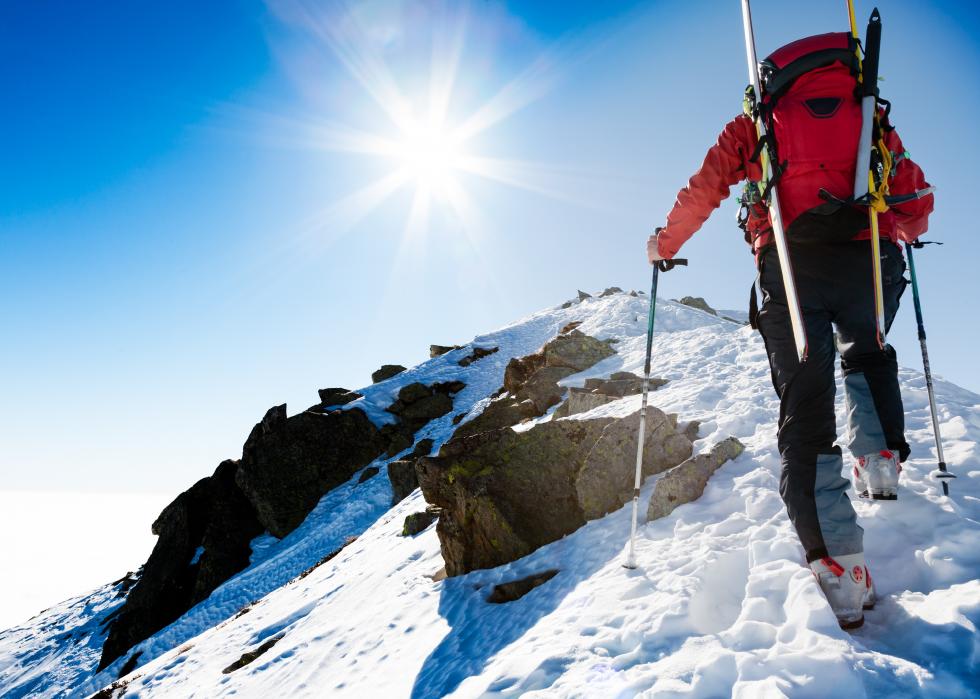
One step beyond backcountry skiing is mountaineering, which may involve traversing the mountain by foot at times while carrying your skis, as well as additional gear, including crampons, rope, and an ice axe.
This sport attracts the adventurous and those who possess—or want to develop—multiple skillsets for exploring the mountain. Knowledgeable ski guides can help those getting into mountaineering with introductions to difficult terrains and best practices for enjoying this more extreme form of skiing safely. Like any enterprise that takes skiers to isolated or rough terrains, it’s smart to go with friends or form small groups that retain the independence of ski mountaineering adventures while providing safety in numbers. and building endurance to high altitudes are helpful for making the most of mountaineering.
Freestyle skiing
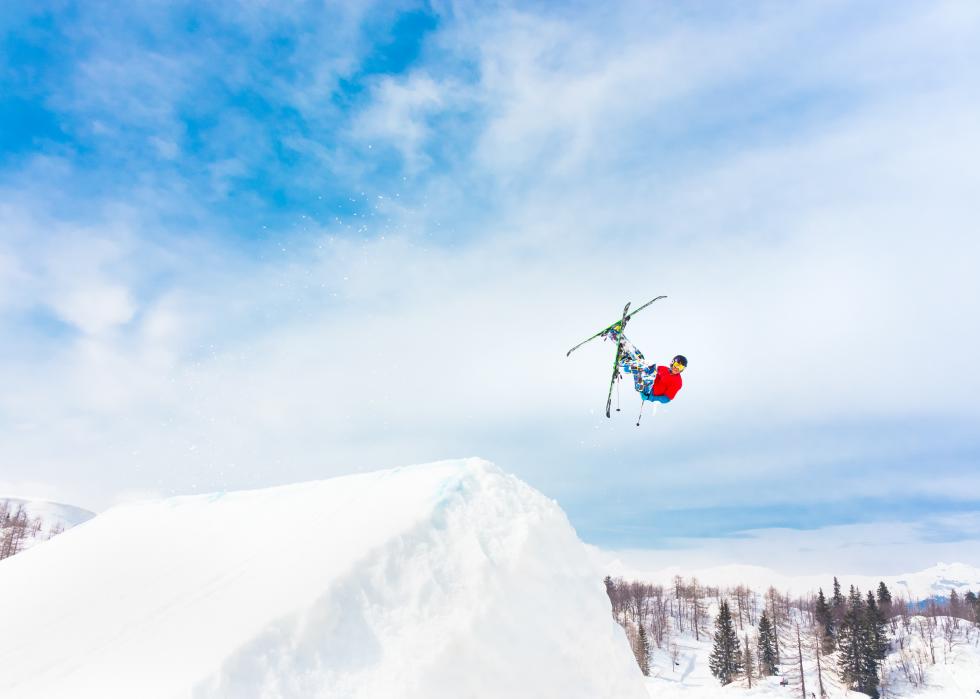
“Go big or go home” is one of the common refrains in freeskiing, where athletes seek out cliffs to jump and chutes. Even non-skiers love to see the feats of athletes in the films created by industry icons including Warren Miller and Teton Gravity Research.
Freestyle skiing, aka freeskiing, started as a reaction against the more-regimented discipline of ski racing and evolved over the years due to new options in terrain and gear. In addition to defined downhill runs, freestyle skiers look for resort-built and naturally occurring . Terrain parks built specifically for the sport include jumps, boxes, and rails.
Wayne Wong is one of the godfathers of the sport, and today’s freeskiers are chasing some of the same thrills. Mogul skiing was added to the Olympics in 1992, with ski cross added in 2010 and halfpipe and slopestyle added in 2014, but events like the X Games and other international competitions capture as much attention.
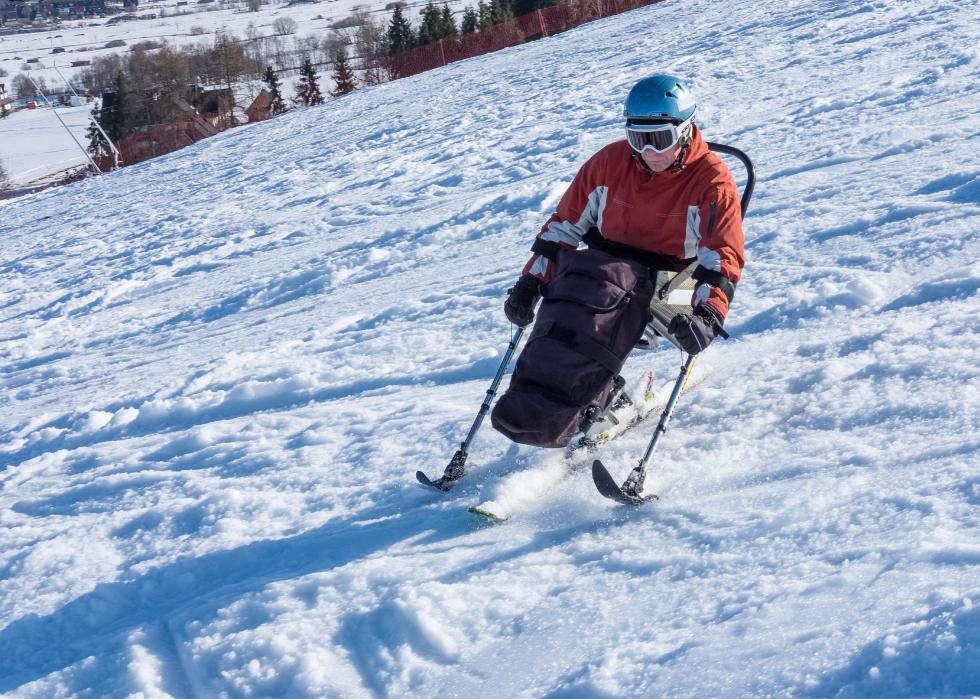
Adaptive skiing
Disability isn’t a word in the world of adaptive skiing. Technology that’s been tweaked to help with mobility challenges, and/or partners for those without sight, allow almost anyone who’s seeking the joy of gliding on snow to do so. Finances don’t have to be a show-stopper either, as there are organizations like Washington state’s that rent or share sit-skis and other adaptive gear, as well as training and the chance to be part of a community, including racing.
Top adaptive skiers participate in the Paralympics, which encompass the alpine and Nordic skiing disciplines. Paralympic skiing competitions include athletes with physical disabilities like amputation, blindness/visual impairment, spinal cord injury/wheelchair-users, and cerebral palsy/brain injury/stroke.