7 hidden ways your phone tracks you without permission
7 hidden ways your phone tracks you without permission
Most people know their phone uses GPS and cookies to follow their movements online. What鈥檚 less obvious is the quiet, passive tracking that happens every day without you tapping 鈥淎llow.鈥� From motion sensors that map your daily routine to Bluetooth beacons logging who you鈥檝e been near, modern smartphones carry a suite of tools that can gather far more than a location pin on a map.
The Federal Trade Commission has already fined companies for . At the same time, Google鈥檚 2025 policy shift opened the door for cross-device tracking across phones, smart TVs, and even gaming consoles, according to . has put together this guide to help you understand these hidden methods and how to limit them, so you can regain control of your digital footprint.
1. Accelerometer activity recognition
Your phone鈥檚 accelerometer detects movement for features like step counting, but research shows it can reveal much more, such as daily routines and even PIN entries. For example, the 鈥淭ouchSignatures鈥� study demonstrated that motion and orientation sensor data accessible via . Another research paper showed that small tilts affecting the ambient-light sensor could leak information, enabling the correct PIN (from a set of 50 possibilities) to be guessed within ten tries about , a huge improvement over the .
Limit it: Monitor battery usage for apps running sensors in the background. Android research explores and use network-monitoring tools like NetGuard to detect suspicious data transmission.
2. Wi-Fi network triangulation
Even with Wi鈥慒i turned off, some phones continue scanning for nearby networks. Wi鈥慒i triangulation and indoor positioning systems, which rely on databases of access point locations, can provide indoor accuracy much better than GPS in such environments, .
Limit it: Disable Wi-Fi scanning in location services and turn off Bluetooth scanning to avoid being passively identified via nearby networks and beacons.
3. Photo and file metadata
Images often carry , such as GPS coordinates, device model, and timestamps. This information can reveal where and when a picture was taken.
Limit it: Turn off in your camera settings, and remove metadata before sharing.
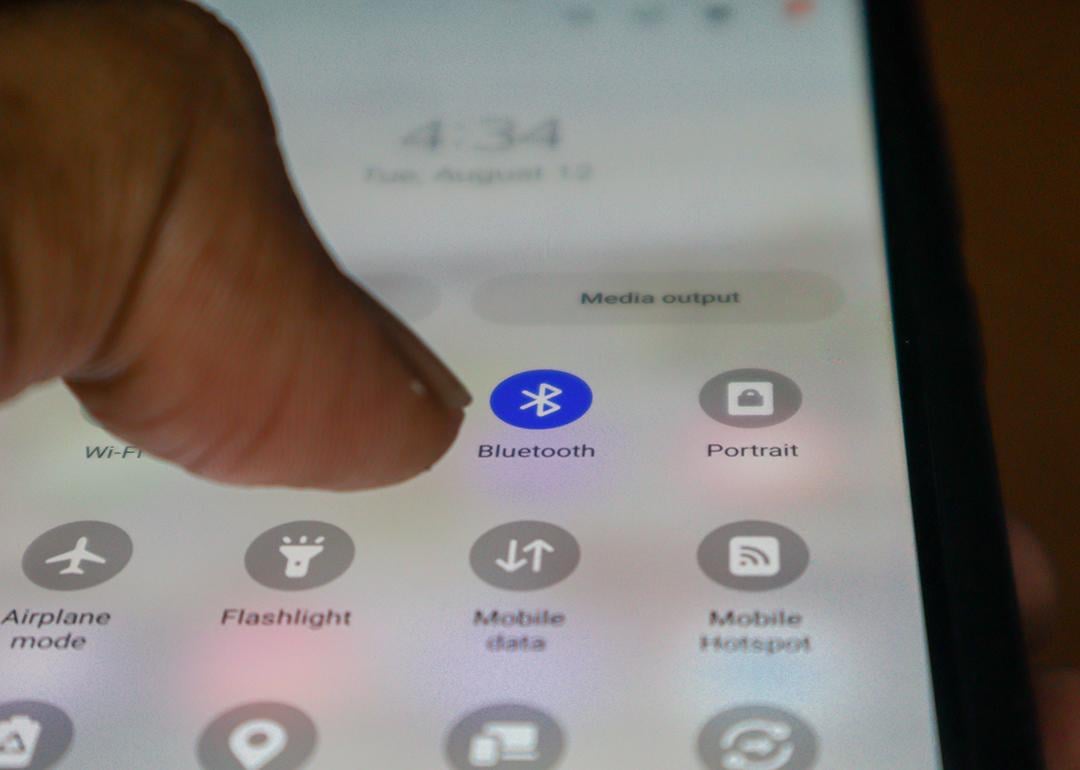
4. Bluetooth proximity sensing
Bluetooth beacons and signals can be used to track proximity, even with no pairing. These systems are used by retailers and event organizers to map movements and interactions. If you ever receive calls or messages from unknown numbers after attending events or visiting public places, a can help you identify who鈥檚 trying to reach you.
Limit it: Simply turn Bluetooth off when not in use, and restrict Bluetooth access in app permissions.
5. App permissions
Some apps request access or permission for contacts, microphone, and/or location, which enables constant collection. Organizations like recommend auditing permissions regularly and uninstalling unused apps.
6. Gyroscope and magnetometer exploitation
Sensors like the gyroscope and magnetometer, though not usually permission-restricted, can still be used by hackers in side-channel attacks; for instance, this includes inferring what apps are running or even capturing fragments of conversations. Research on motion鈥慴ased keystroke inference () confirms this risk.
Limit it: You can't fully disable these sensors, so minimize app installs and use browsers or tools that limit sensor access by default.
7. Digital fingerprinting
By combining device-specific details like screen resolution, fonts, software versions, and accelerometer calibration errors, companies can build persistent device fingerprints that follow you across browsing sessions. A research paper demonstrated that accelerometer-based fingerprinting via JavaScript is .
Limit it: Use browsers like or with anti-fingerprinting features, and add privacy extensions like
Final thoughts
Tracking technologies are becoming more discreet and pervasive. While it's nearly impossible to be invisible online, being aware of these techniques and consistently tightening your settings can significantly reduce the data collected. Privacy isn't a one-time fix but an ongoing habit.
was produced by and reviewed and distributed by 麻豆原创.