From snowplows to school buses: 10 ways cities are getting smarter
From snowplows to school buses: 10 ways cities are getting smarter
The term “smart city” used to evoke shiny infrastructure projects—sensors bolted to streetlights, standalone apps, and dashboards that mostly reported activity, including maps and charts that looked impressive in a control room but weren’t connected to dispatch, work orders, routing, or how crews made decisions in the field. What’s changing now is quieter, but more consequential. It’s operational, and residents are starting to feel it in the basics: plowed streets, passable roads, reliable trash service, faster restoration after storms, and safer buses.
The reason is straightforward: cities already run on moving assets. Snowplows, garbage trucks, bucket trucks, ambulances, buses, and heavy equipment are the front line of public services. When those fleets and assets are connected—through GPS, telematics, cameras, and automated reporting—cities can shift from “we think it happened” to “here’s what happened,” without pulling supervisors into hours of manual reconstruction or wasting taxpayer dollars.
that when cities use connected technologies to create real-time operational visibility, the payoff shows up in outcomes residents actually feel: 8%-10% fewer fatalities, 20%-35% faster emergency response, 10%-15% lower greenhouse gas emissions, and a 10%-20% reduction in unrecycled solid waste per capita. In many cities, smart mobility tools can also shave 15–30 minutes off the daily commute, meaning fewer cars stuck idling on the road and cleaner air overall. Improvements like these raise service quality, reduce costs and strengthen public confidence that city services are working.
That’s why connected fleet technology is becoming one of the most practical forms of smart city technology. It doesn’t require rebuilding roads or installing brand-new citywide infrastructure. Instead, it turns vehicles and equipment cities already own into a real-time system for dispatch, documentation, and accountability. Public-sector outlets have increasingly pointed to these tools as a straightforward way to improve service delivery and reduce waste, even for fleets as unglamorous as garbage trucks.
highlights 10 ways cities are using connected fleet technology to improve public services.
1. Real-Time Snow Plow Tracking
Snow response rarely fails because a city doesn’t have enough plows. It fails because conditions change faster than the plan. Drifting closes a priority corridor, an untreated hill turns into a hazard, and the city can’t confidently answer the simplest resident question: “Has my street been done yet?” Real-time tracking turns snow operations from a static route sheet into a live system that can be managed as the storm evolves—and, in many cases, shared publicly so residents can see progress street by street after a storm.
In Grand Rapids, Michigan, local reporting so they can see where trucks are moving during storms, improving both internal coordination and transparency into post-storm operations.
2. Pothole Detection
Potholes don’t show up one at a time—they spike after freezing–thaw cycles and heavy wind and rain seasons, when crews are already stretched thin. In many places, the discovery process is still complaint-driven: Residents hit a hole, report it, and wait. If vehicles can automatically flag repeated “hard hits” at the same location, road repair becomes prioritized based on where the damage is actually impacting drivers most.
Jackson, Tennessee, that included piloting AI detection to automatically log pothole locations after winter weather. Local TV coverage later and how teams were deployed across districts.
3. Improved Trash Pickup and Service Delivery
Few services generate as many disputes as trash and recycling—often with limited evidence either way. When the only record is a route plan and a phone call, supervisors lose time reconstructing what happened, and crews get pulled off service to investigate.
Digital verification changes that dynamic by making routes and service activity confirmable, so disagreements get resolved faster and operations stay focused on pickup, not paperwork.
In Poughkeepsie, New York, the city’s program has been described as using fleet visibility and video to improve operations, including a reported reduction in accidents and faster clarity when incidents occur.
4. Emergency Response Optimization (EMS and Fire)
During a major incident, the challenge isn’t getting one department moving—it’s getting multiple departments moving in sync. Fire, EMS, police, utilities, and public works may all be responding at once, and the operational picture can change minute by minute. That’s where real-time visibility matters: It replaces static snapshots with a live view of where critical vehicles and assets actually are, so leaders can stage resources, redeploy units, and avoid delay when time is the constraint.
With cities often juggling a patchwork of tools— including radio GPS, modem GPS, and Apple AirTags—consolidating into a single real-time system can help emergency teams better coordinate response.
5. Faster Power Restoration
Storm response is as much a dispatch-and-logistics challenge as it is a repair challenge. Utilities need to coordinate crews quickly while reducing preventable incidents in hazardous conditions—long shifts, low visibility, and constant reprioritization. Real-time crew and vehicle visibility turns restoration into a coordinated logistics operation rather than a chain of phone calls and guesswork.
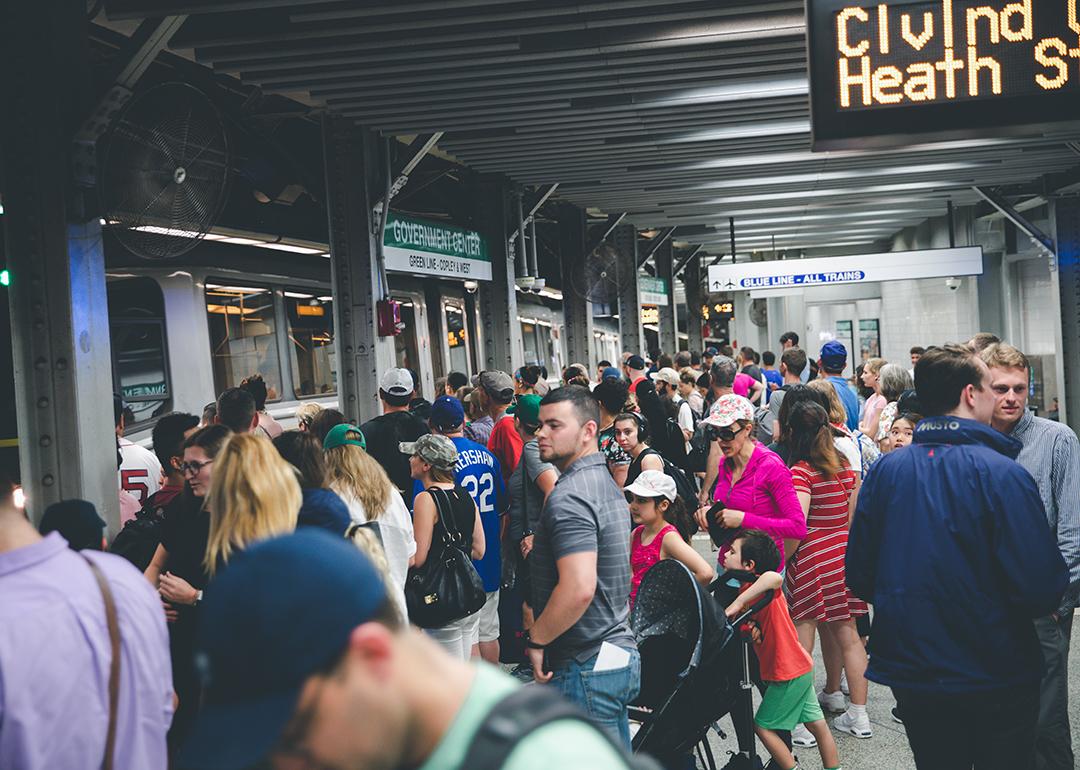
6. Public Transportation That’s More Predictable (and Safer)
For riders, the “smart city” version of public transportation isn’t a flashy app—it’s a bus that arrives when the schedule says it will. The hardest part of delivering that reliability is that transit is dynamic: Congestion shifts, dwell times vary, and one delay can ripple into missed connections across an entire route. Without real-time visibility, agencies struggle to answer the most basic rider question—”Where is my bus?”—and to intervene early enough to prevent minor delays from becoming system-wide disruption.
By deploying real-time vehicle gateways and open APIs, the transit systems can benefit from second-by-second tracking—even in underground tunnels where GPS signals typically fail–that enables them to make more accurate arrival predictions, solve the problem of ghost buses . and streamline maintenance by allowing teams to remotely diagnose engine faults. When cities eliminate data blind spots, they can create a more reliable, efficient, and rider-focused transit network.
7. School Bus Safety and Parent Peace of Mind
School transportation is one of the most visible public operations, because the “customers” are kids and the audience is every parent. For a parent, a bus being late is time spent wondering where their child is. This lights up the phone lines, and teams have to focus on call responses rather than the important task of keeping the children safe on the road.
But running safe service at scale requires more than annual training—it requires consistent, day-to-day reinforcement of behaviors like speed control, smooth braking, and seat belt compliance. When districts can measure those behaviors and review incidents quickly via GPS units and camera technology, safety becomes something they can manage continuously rather than react to after something goes wrong.
8. Preventing Equipment Theft
A stolen excavator or trailer isn’t just a property loss—it can stall roadwork, delay storm cleanup, and disrupt schedules across an entire department. Recovery also depends heavily on the first hours; if the search is broad and slow, the odds drop quickly. Real-time asset location data including GPS and video evidence narrows the hunt immediately and helps agencies act while the trail is still fresh.
9. Air Quality and ‘Idle’ Reduction
Idling is the kind of inefficiency that hides in plain sight: It happens in small increments across thousands of stops, shifts, and routes, quietly driving up fuel use, emissions, and wear. Most cities don’t have a way to see it consistently, which makes it hard to change without blunt rules that frustrate crews. When idling is measurable by vehicle and context via telematics, cities can help reduce idle time, vehicle downtime and fuel consumption without disrupting service.
This is also where many cities start building the data foundation for electrification.
10. Automated Reporting
After hurricanes and severe storms, the work doesn’t end when debris is cleared and lights come back on—finance and operations teams still have to document what happened. Reimbursement often hinges on details that are easy to lose in the chaos: where crews were deployed, how far they traveled, and how long they worked. Automated reporting turns that documentation into a byproduct of operations, rather than a monthslong reconstruction effort.
For agencies without maintenance facilities, the paper trail is often the first point of failure. Relying on drivers to collect, store, and submit physical documents is a massive administrative burden that wastes time and money.
What’s next for smart cities?
Across all 10 examples, the “smart” part isn’t a futuristic gadget. It’s operational clarity: knowing what’s happening in the field, being able to redirect work quickly, and having defensible records when residents, regulators, or auditors ask what occurred. That’s why connected fleet and field operations have become one of the most practical foundations for smart cities—they improve service reliability without requiring cities to rebuild the physical world to become more digital.
Next, that same foundation is likely to be used in three ways cities are already moving toward:
- Predictive operations: using patterns in vehicle data and maintenance signals to prevent breakdowns, schedule work earlier, and keep critical services running with fewer surprises.
- Resilience and recovery at scale: not just responding faster to storms and emergencies but producing documentation automatically so reimbursement, audits, and after-action reviews aren’t a monthslong reconstruction effort.
- Targeted electrification and sustainability: as cities expand EV adoption, using real-time operations data to answer practical questions—what routes can electrify first, where charging is needed, and how to keep service levels stable during the transition.
was produced by and reviewed and distributed by Â鶹ԭ´´.