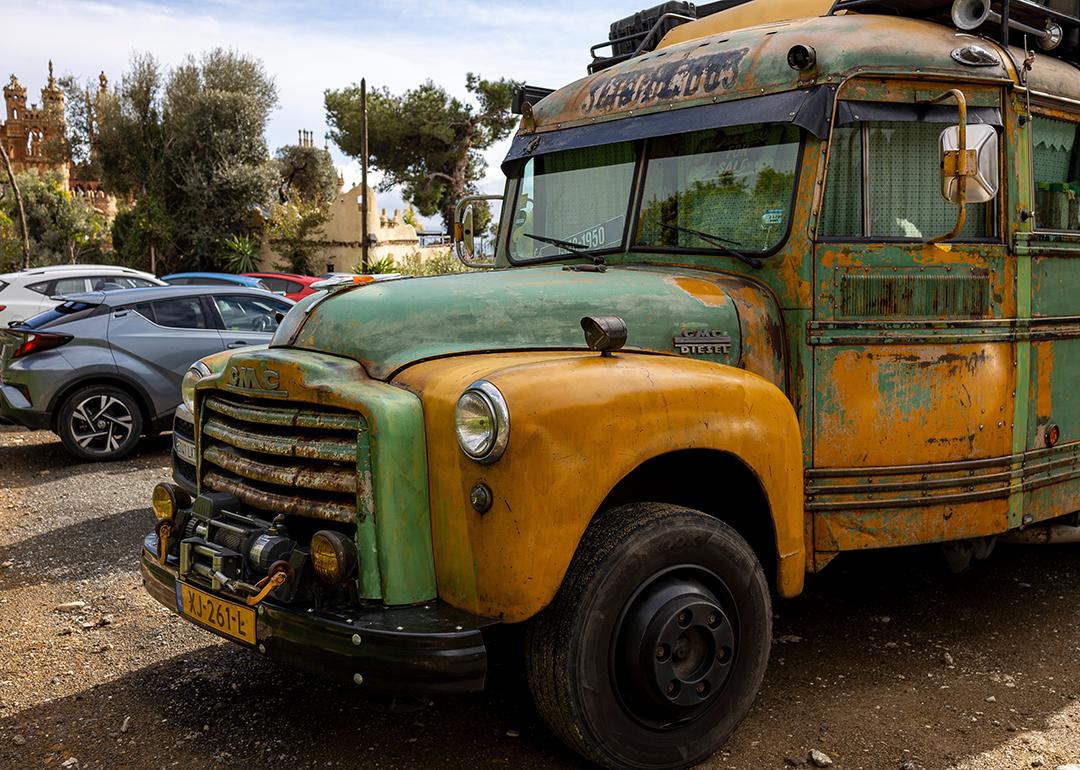
The ultimate end-of-the-world vehicle might be a retired transit bus
The ultimate end-of-the-world vehicle might be a retired transit bus
When the apocalypse hits, the real survivors won’t be the ones with bunkers full of Spam. They’ll be the people driving something that still smells faintly of hand sanitizer and high school detentions: the humble, retired transit bus.
Forget the shiny $150,000 Sprinter van with the Instagrammable espresso machine bolted inside. Cute for a weekend in Joshua Tree, sure. But when society collapses, that Sprinter is a rolling coffin—tiny, overpriced, and one axle away from becoming modern art in the desert.
Transit buses, on the other hand, are the cockroaches of the road. Big, blunt, and built to last long after your homeowners association stops sending violation letters. They don’t care about trends or resale value. They care about one thing: moving bodies from Point A to Point B until either the diesel runs out or the world does. Which makes them, oddly enough, the most practical “bug-out” vehicles you could ever hope to find. digs into the transit bus and why it just may be a favorite for the end of the world.
Why a Transit Bus Beats Your Neighbor’s RV
RVs are designed to impress your in-laws at a KOA campground, not to endure the collapse of civilization. They rattle themselves apart on the first dirt road, their slide-outs jam, and their showers are smaller than a $19 Walmart storage tub.
Vans? Too small. Pickup trucks? Great for hauling plywood, but not so great for housing your in-laws and three months of food rations.
A transit bus is different. These things were engineered for punishment: sixteen hours a day, six days a week, hauling passengers over potholes, curbs, and whatever mysterious fluids accumulate on city streets. The average transit bus is designed for a 12-to-20-year service life and . Try saying that about your neighbor’s RV.
That big aluminum box gives you:
- Space for food, water, gear, and enough ammo to keep the zombies guessing.
- Flat floors that make bunk beds, solar setups, and storage far easier than squeezing into a Sprinter.
- Diesel engines that—when maintained—can run on everything from biodiesel to vegetable oil if things get desperate.
In short: If the apocalypse is a marathon, you don’t want a show pony. You want a mule. A big, stubborn mule painted in faded municipal beige.
The Blank Canvas Factor
The beauty of a retired transit bus is its simplicity: It’s just a big box on wheels. What you do with that box is up to you.
The prepper crowd welds on steel plates, installs external fuel tanks, and hides gun safes under the seats. The homesteader types drop in wood stoves, solar arrays, and rooftop gardens. A few even build out hydroponic greenhouses inside the bus, turning mass transit into literal sustenance.
It’s Mad Max meets Martha Stewart. One person’s rolling bunker is another person’s mobile tiny home with quartz countertops. Either way, the bus doesn’t judge.
Apocalypse Doesn’t Have to Mean Grungy
There’s a myth that survival living has to be ugly. Tarp roofs, rust, and buckets for toilets. But the truth is, apocalypse chic is whatever you make it.
In fact, some bus conversions are nicer than most Manhattan apartments. Tile showers, full kitchens, rooftop decks. There’s a growing online community of bus owners who’ve essentially built rolling mansions—except their mortgage is a fraction of the average one-bedroom rent in Brooklyn.
So while your neighbor is bartering for clean water out of a leaky van, you could be sipping coffee poured from your Chemex while sitting on a rooftop deck built onto a 40-foot Gillig Phantom. It may be the end of the world, yes—but no one said you can’t do it with taste.
The Price of Peace of Mind
After all of that, you might be saying, “But yeah, I don’t have big money.” Well, here’s the shocker: You can buy a used transit bus for under $40,000. Search around and you’ll find dozens of models that once served city routes, now waiting for a second life. Compared to an underground bunker or even a modest RV, that’s a bargain.
Think about it: a steel-framed, diesel-powered, 40-foot vehicle designed to survive decades of abuse—priced $10,000 less than the cost of a new . And unlike a bunker, you can drive it away when the trouble starts.
Plenty of families have already done it. Some convert their buses into mobile homesteads, Just think. You can spend considerably less than the turning an old transit bus into a solar-powered escape vehicle with storage for six months of food. It’s the insurance policy that doesn’t expire. Do it right, and a solid bus costs less than an annual Starbucks habit.
Culture, Symbol, Myth
There’s something about buses that just feels eternal. They’re workhorses, symbols of grit, reliability, and collective endurance. You’ve ridden them to school, to work, maybe even to protests or parades. They’re stitched into the fabric of everyday life.
That’s why when Hollywood imagines the apocalypse, the vehicle of choice is often a bus. Consider Mad Max’s battered rigs or Sandra Bullock driving in “Speed”—buses carry a certain mythic weight. They’re the vehicles that don’t stop—until they do, and then the world feels like it might end.
It’s no surprise that in prepper culture, buses are gaining ground. They’re equal parts practical tool and cultural icon, a mix of utility and symbolism that makes them irresistible to anyone imagining the end of days.
The Last Stop
So, when the end comes, you don’t want to be sitting in a Tesla with a dead battery and nowhere to plug in. You want something that once carried 60 strangers through a snowstorm while half of them ate nachos.
You want a bus.
At the end of the world, you don’t need autopilot. You need a clutch, a steel cage, and a 100-gallon diesel tank filled with whatever seed oil grease you siphon from an abandoned Denny’s.
The bus was always the answer. We just didn’t know the question would be the apocalypse.
was produced by and reviewed and distributed by Â鶹ԭ´´.