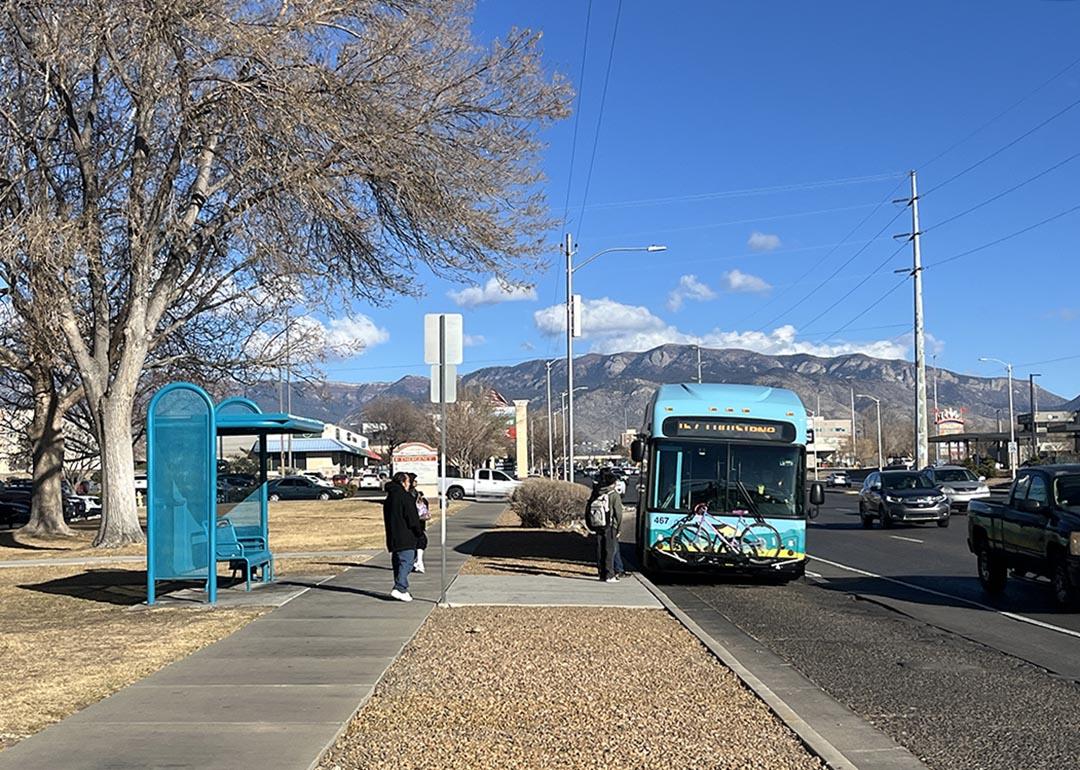
What free transit looks like in Albuquerque, nearly two years after the city eliminated fares
Sabina Wohlmuth’s days used to include long, hot walks across the city of Albuquerque, sometimes two or three miles at a time. Wohlmuth relies on the bus, but when she was short on cash, she walked instead of paying the fare.
“It was only a dollar for a one-way trip, but still, if you’re homeless and you’re poor, that’s a lot of money,” Wohlmuth says.
Wohlmuth now takes the bus every day to her job at McDonald’s, to the store, and to the sober living facility where she stays. And each of those bus trips cost Wohlmuth zero dollars.
Albuquerque made zero-fare transit permanent , becoming one of the largest U.S. cities to implement zero-fare transit. About a year and a half later, transit officials and advocates say the zero-fare program is working as intended, by serving the city’s lowest-income residents. As some other mid-sized cities walk back their plans to make transit free, in Albuquerque the program is sticking around.
“This is a public service, and the people that we serve really rely on it,” says Leslie Keener, director of the City of Albuquerque’s transit department. “I think it’s a way to really just open up access and create mobility so that people have the opportunity to have some upward movement.”
Mobility for survival
Nearly 90% of Albuquerque’s bus riders have household incomes of less than $35,000 per year, and a similar percentage don’t have access to a vehicle, reports. Making it easier for the city’s lowest-income residents to get around is part of what Christopher Ramirez calls “the first purpose of public transit.”
“Transit equity is giving the people that are most in need the resources, and then build out” other aspects of public transit, such as routes and frequency, says Ramirez, the co-founder and executive director of Together for Brothers. In 2017, the community organization conducted a community health impact assessment that led to a focus on transit equity advocacy. Starting in 2019, the community organization has led a coalition to push for free transit in Albuquerque.
Many bus riders in Albuquerque are experiencing homelessness and rely on the bus to get to medical appointments, social service providers, work, and to visit friends and family.
Charles Battiste says he takes the bus every day. On a Wednesday in February, Battiste was riding the bus west on Central Avenue, the city’s main thoroughfare, from a methadone treatment program to a hotel where he’d recently secured temporary housing on the other side of town.
Q, a 32-year-old who has been unhoused since they were 18, also rode the bus down Central Avenue that day in the opposite direction, to pick up some medicine for a cough at a hospital. Like Battiste, Q relies on the bus daily.
“Transportation comes up frequently as one of the top barriers for our clients and those we serve in accessing health care, jobs, housing, all of the things that we know are the structural solutions to homelessness,” says Rachel Biggs, chief strategy officer at Albuquerque Health Care for the Homeless.
“We know people in Albuquerque are stretched really thin, even the folks that aren’t already living and experiencing homelessness. The numbers of people living in poverty and that need transportation support just continue to grow, and we have a lot of transit-dependent residents.”
Biggs says her organization previously spent about $50,000 a year purchasing bus passes for clients so they could make appointments, look for housing, and get to work. This created a “really cumbersome system” that involved clients shuttling from the city’s shelter on the far west side of town to Health Care for the Homeless’s office early in the morning to pick up a free daily bus pass, then “turning around and getting back on the bus” to reach their destinations for the day. Monthly passes were less feasible because of the frequency that people experiencing homelessness lost their passes amid encampment sweeps, Biggs says.
“Especially when you’re experiencing homelessness, time is a very valuable resource. So to be able to get around town and not have to go through all the hoop-jumping, so that you can now hop on and hop off, it does increase access to all the services and all the things that someone would need to end their homelessness,” Biggs says.
For other Albuquerque residents, free public transit serves as a lifeline, a vital mobility option when money is tight or other transportation falls through. One 67-year-old woman found herself on the bus after her car was repossessed due to difficulties making ends meet recently. “It’s nice to have something that’s free, when you’ve always driven, you’ve always paid insurance, and you pay for almost everything,” she says.
Erica Grier, who works as a part-time caregiver and uses a Section 8 voucher to afford housing, uses the bus every day. She estimates she previously spent at least $20 a month on the bus, money that’s now back in her pocket to pay for groceries and other monthly expenses. “It’s a good service that the city provides, just like how the library is free,” she says.
Keener says the city has seen ridership shift since the pandemic launched a new era of remote work and Albuquerque launched free transit: fewer commuters, and more people experiencing homelessness who can now more easily use the bus to reach their destinations or who are using it as shelter from the elements.
Recovering ridership
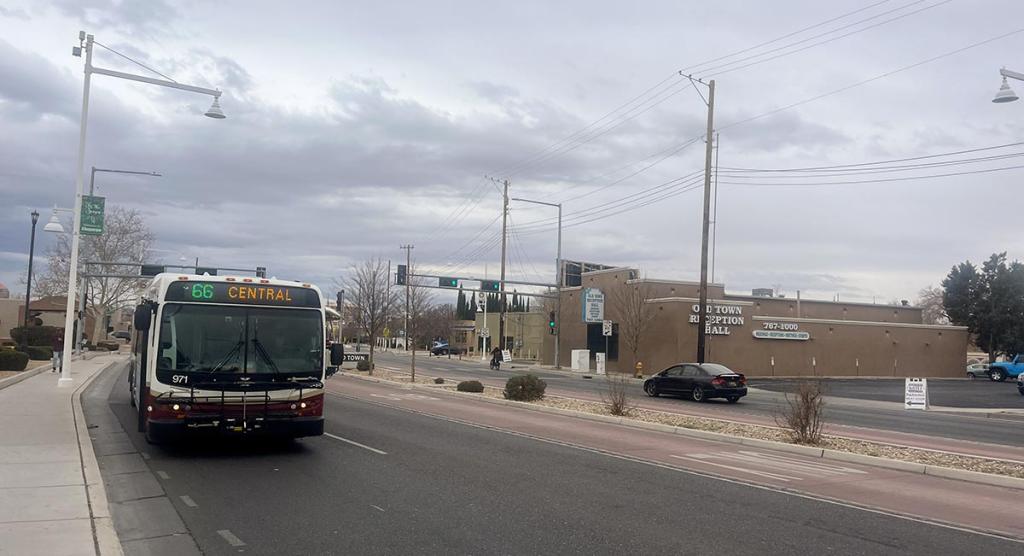
Ridership has steadily increased since Albuquerque first piloted zero fares in 2022, with overall ridership up 20% in the past three years. credit the zero fare program with helping ABQ Ride’s ridership numbers creep back up toward pre-pandemic figures.
Like Albuquerque, Kansas City, Missouri made headlines when it became the first major U.S. city to go fare-free in 2020. But five years later, the Kansas City Council in an attempt to stave off major service cuts amid a budget shortfall.
But for now at least, it seems like Albuquerque’s free fares are sticking around.
Fare revenue previously “wasn’t much of anything,” according to Keener, and brought in about $3 million in revenue before the cost of collecting fare was deducted. That represented a drop in the bucket for the transit agency’s $67 million annual budget, comprised of about $23 million from the city’s transportation infrastructure tax and about $8 million from the county and other regional government entities. The rest of the budget is subsidized from the city’s General Fund to the tune of about $30 million each year.
The city’s recently approved budget for fiscal year 2026 kept this subsidy, and the city “stands behind its Zero Fares system,” according to Keener, who added that the agency’s focus right now is on expanding routes and increasing service frequency. ABQ Ride served seven million riders in 2024, which is about 78% of the agency’s pre-pandemic ridership numbers — but ABQ Ride is also operating at only 64% of its pre-pandemic service, with reduced frequency on many routes and some headways of up to an hour.
ABQ Ride is in the process of implementing a revamped that aims to bring the agency back to about 95% of pre-pandemic service, according to Keener, since returning to 100% of service levels wouldn’t be financially feasible. The proposed recovery network includes to offset costs of increasing frequency and evening and weekend service. The reconfiguring is expected to increase the number of residents within a half-mile of a route with frequent service.
Ramirez views expanding frequency as the next step after making buses free.
According to Ramirez, ABQ Ride has long tried to do “a lot with a little,” with the recovery plan raising questions of whether the agency should focus on having as many routes as possible or improving service in high-passenger areas. “We need more frequency in the places that need it most,” he says.
“The bus should be for everybody. It should be to connect people who need it most to get where they need to go,” he says. “It’s people getting to schools, it’s people getting to work, it’s people getting outdoors, it’s people getting food, it’s people getting to healthcare.”
This story was supported with grant funding from .
was produced by and reviewed and distributed by Â鶹ԭ´´.