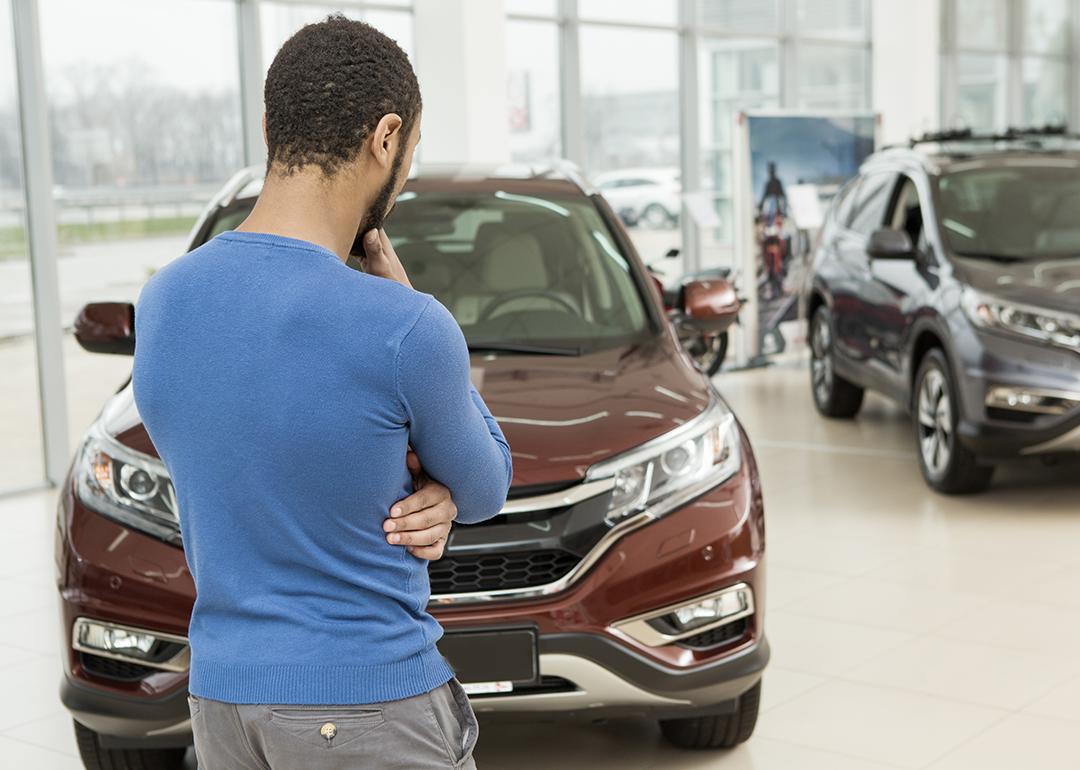
A year can make a big difference: Vehicle generations and why they matter for used car shoppers
A year can make a big difference: Vehicle generations and why they matter for used car shoppers
Understanding how cars change over time can help you get the car and features you want.
As you shop for your next car, you may notice that certain models change a lot in certain years. They may have a restyled exterior and interior, new engines, and offer new . Those big changes are hallmarks of a new vehicle generation. explains that knowing what generations are, why they exist, and how they work can help you get the car and features you want when you鈥檙e shopping for a used car.
Article Summary:
- Vehicle generations signify major redesigns, introducing new looks, engines, and technologies, often resulting in a more evolved vehicle.
- Recognizing these generational changes, which typically last five to 10 years, can help you choose between features and styles from different years.
- Exterior and interior changes often indicate a new generation, bringing potential changes to the vehicle鈥檚 structure and safety improvements.
- A previous generation vehicle may offer desired features at a lower price; newer models aren鈥檛 always the best choice for everyone.
- Refreshes, which occur midway through a generation, add new features without altering the car鈥檚 core structure, unlike complete redesigns.
What is a Vehicle Generation?
A vehicle generation is a way of talking about major redesigns. We鈥檝e all seen it: One year your favorite car looks one way, and the very next year (and for a few years after) it suddenly has a new look inside and out, new engines, and you hear 鈥渁ll new鈥� in ads.
You might also find that the automaker has introduced new technologies and even increased the size to make more room for passengers and cargo. What you can鈥檛 see is how automakers change the underlying structure of the vehicle, helping improve . What鈥檚 important is that this kind of generational redesign is more than superficial鈥攊t usually evolves the vehicle in a meaningful way.
The launch of a new model kicks off a vehicle鈥檚 first generation. For example, the Honda Civic launched in 1973, and the first generation lasted through 1978. The Civic was redesigned for 1979, launching the larger and more feature-laden second generation that lasted through 1983. Fast-forward to now, and you get to the 11th-generation Civic, which debuted for the 2022 model year.
Vehicle generations are marked by a span of model years, so you could also describe the 10th-generation Honda Civic as the 2016-2021 Honda Civic. Generations usually last five to 10 years, and it鈥檚 common for manufacturers to refresh a vehicle about midway through that cycle.
How Can You Tell When There鈥檚 a New Generation?
There are a couple of telltale signs. The first is exterior styling. As you look at a particular nameplate, you might notice that, as the years progress, you see a radical change in the styling. Most of the time, this is an indication of a generational change, and when you see it, there鈥檚 a good chance there鈥檚 a lot more change under the skin as well.
Another is to look at the vehicle鈥檚 interior. Generational changes allow manufacturers to overhaul a vehicle鈥檚 interior styling to incorporate new technology and new styling trends, such as larger touchscreens and the replacement of physical gauges with digital ones. If a make and model you鈥檙e familiar with has undergone a generational shift, can help you get a feel for what鈥檚 changed.
Should you buy the older or newer generation?
Identifying the model years for a generation and can help you decide whether you should buy the newer or older vehicle. At the beginning of your shopping journey, a little extra research could save you time and money down the road.
- Identify a few vehicles that interest you.
Be sure to get the year, along with the make and model. - Find out what generation your vehicles are in.
Searching for the make and model on Wikipedia can also help; just make sure you鈥檙e looking at the U.S. version of the car. - See what other years are in the same generation that you鈥檙e looking for.
You might find that a slightly older vehicle is in the same generation and offers the same features for a little less money. - Compare older and newer generations.
If the older generation car doesn鈥檛 have the features you want, a newer one might. On the other hand, you might find that an older-generation car has everything you need, at a lower price.
Not every generation introduces radical changes. As a shopper, it鈥檚 easy to think that the newest generation will be the best one to purchase, but depending on what was changed and what your needs are, that may not be the case.
If you do your research, you might find that a previous-generation vehicle offers the same technology features and receives similar or equal safety ratings. While an older car may have a smaller or lower-resolution touchscreen, it may still have the features you want like smartphone connectivity, in-car Wi-Fi, or satellite radio. In other words, if you look for the features you want rather than a particular model year, you might be pleasantly surprised to find an older, low- vehicle that is a more budget-friendly way fit your needs.
Sometimes a feature you want may only be available in older generations. For example, in recent years manual transmissions have fallen out of favor for buyers, and many manufacturers are dropping them altogether as an option. Selecting a higher from an older generation can also be a way to find the features you want at a price point that works for you.
In addition, in the quest for better fuel economy, larger V6 and V8 engines are being replaced with smaller turbocharged four-cylinder engines. For example, if you want a Honda Accord with a V6, you鈥檇 have to look at cars made in 2017 or earlier since Honda switched to an all four-cylinder lineup with the introduction of the 10th-generation Accord in 2018. You also might like the styling of the older generation, an important consideration for a car you鈥檙e likely to own for years.
The newer generation of a vehicle will usually carry higher prices on the used market, although some highly desirable older-generation vehicles might continue to command a premium due to their scarcity or popularity with enthusiasts.
What鈥檚 the difference between a redesign and a refresh?
Usually about halfway through a generation, automakers will update the existing car with a few tweaks to keep it competitive before the next generation comes out. These refreshes are different than a redesign because usually the underlying structure of the vehicle doesn鈥檛 change. Instead, you might see slightly different designs to the front and rear bumpers, the headlights and taillights might get a tweak, and you might find a new technology feature or two. Otherwise, the car is usually the same as it was when that generation debuted. Think of it like this: A new generation rebakes the whole cake, while a refresh just adds a bit more frosting.
As always, when shopping for a vehicle, it鈥檚 important to know your must-haves and your budget. You may find that a previous-generation vehicle has everything you need for less money than the newest generation. On the other hand, you might find that your must-have feature is only available on the most recent generation of the vehicle you desire. To help you decide on the right vehicle for you, look for the model years when redesigns and refreshes occurred and research what鈥檚 changed and what hasn鈥檛.
was produced by and reviewed and distributed by 麻豆原创.