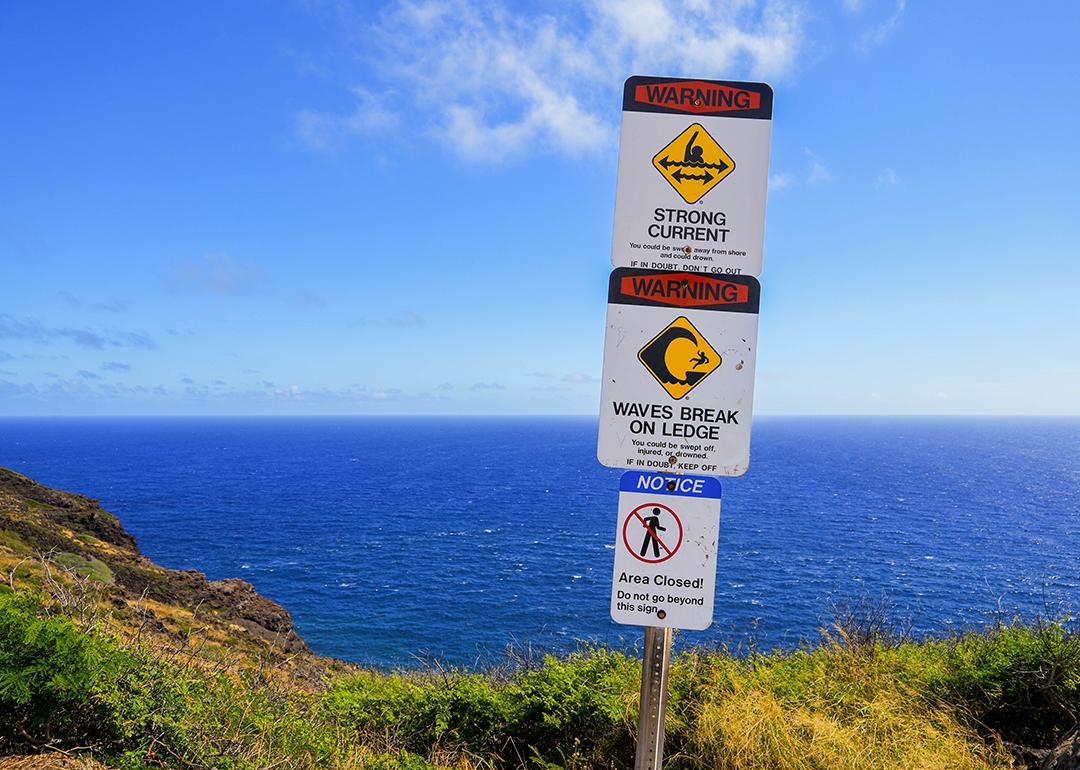
10 states where tourist injuries frequently lead to hospital visits
10 states where tourist injuries frequently lead to hospital visits
On a hot week in late May, rescue teams at Grand Canyon National Park launched due to hauling overheated or injured hikers out of the abyss and, in several cases, straight to nearby hospitals.
Episodes like this are not unusual in some of the visited parts of the United States. Hospital emergency departments handle more than , including roughly 43.5 million injury-related visits. Many of those patients are residents, but in high-tourism states, a notable share are people on vacation.
, a Honolulu-based personal injury law firm, provides this analysis to highlight 10 states where visitor volume and environmental or recreational risks frequently intersect, increasing the possibility that a vacation can turn into a hospital visit.
1. Hawai鈥榠
Hawai鈥榠鈥檚 setting, tropical surf, volcanic landscapes, and winding coastal roads make it both a dream destination and, for some visitors, a high-risk environment. The state recorded about , still below 2019鈥檚 record but enough to keep beaches, trails, and roads busy.
Peer-reviewed research highlights the frequency with which these visitors appear in hospital trauma data. One statewide analysis of visitor injuries in Hawai鈥榠 found that over a five-year period, , with falls, water-related activities, and motor-vehicle crashes the most common causes. Visitors made up only about 12.6% of the population on a typical day but accounted for 44.2% of admissions for water-related injuries.
in particular often involves head and spinal injuries, which can require intensive care and long hospital stays far from home. Local health officials have repeatedly called for stronger visitor education on ocean safety, hiking hazards, and moped or scooter risks.
2. Florida
Florida markets itself as a year-round playground鈥攁nd visitors respond. The state welcomed about , a record that was surpassed again in 2024 when visitation climbed to roughly 143 million. Theme parks, water parks, beaches, and boating make unintentional injuries a persistent undercurrent in that economy.
State and local reporting on theme park incidents, drawing on required quarterly disclosures by major operators, documents , ranging from broken bones and lacerations to heart episodes that send visitors to hospitals.
On the coasts, boating accidents continue to be a major factor in emergency medical responses. According to the , the state recorded 735 boating accidents in 2022 (16 fewer than in 2021), but fatalities increased. Sixty-five people died in those incidents, five more than the previous year. Falling overboard has been the most common type of fatal accident statewide since 2003, and drowning remains the leading cause of death. Among those who drowned, 81% were not wearing a life jacket.
3. Colorado
Colorado鈥檚 tourism economy had a record year, with , spending more than $28 billion. In the 2023-2024 ski season, , with victims ranging in age from 14 to 78. These fatalities reflect everything from high-speed collisions to falls on advanced terrain.
Those figures do not distinguish residents from tourists, but resort-area hospitals and ambulance services largely serve visitors staying in nearby lodging. Adding summer mountain biking, rafting, and hiking to the mix keeps EDs busy long after the lifts stop spinning.
4. Alaska
Alaska鈥檚 visitor experience is built around glaciers, mountains, and open water, and so are many of its most serious tourist injuries. A recent visitor volume report found that the state hosted roughly , with cruise passengers accounting for about 65% of the total. In Juneau alone, came ashore between April and October 2023, a 28% jump from the previous peak year.
Local news outlets have documented multiple fatal falls involving cruise passengers on popular trails above the capital city in the 2024-2025 season. In one incident, a after falling from a mountainside near the Mount Roberts tram, with both ultimately requiring complex rescue and medical care.
on vessel-based injuries has also found that Alaska鈥檚 nonresident patients can differ markedly from residents in the types and severity of injuries they sustain at sea, underscoring how unfamiliar conditions and remoteness shape outcomes for visitors.
5. Nevada
Southern Nevada鈥檚 tourism engine is tightly concentrated. Las Vegas drew about , the highest total since 2019鈥檚 42.5 million. With that many people cycling through hotel corridors, casino floors, shows, and desert highways, a steady trickle of injuries is inevitable.
Local health officials have noted that environmental conditions can sharply influence the volume and type of medical emergencies across the region. In July 2023, , with prolonged stretches of triple-digit heat that led to a marked rise in heat-related health cases, particularly in Southern Nevada. During extreme-heat periods like that, hospitals often report more patients suffering from dehydration, heat exhaustion, heat stroke, and cardiac complications triggered by high temperatures.
6. Utah
Utah鈥檚 鈥淢ighty Five鈥� national parks (Zion, Bryce Canyon, Arches, Canyonlands, and Capitol Reef) have seen booming visitation, and with it a steady stream of technical rescues and medical calls. In summer 2025, on the same day, including a group of teenagers, where at least three were airlifted for hospital care.
News reports and National Park Service incident summaries describe and , all involving visitors. These cases illustrate how quickly high-elevation hikes and cliff-edge viewpoints can turn deadly for travelers unused to exposure, altitude, or desert heat.
7. Arizona
Arizona鈥檚 signature attraction, Grand Canyon National Park, is also one of its most intensive users of medical helicopters. Over a single week in late May 2025, park officials reported , responding to heat illness, dehydration, falls, and other emergencies along canyon trails and the Colorado River.
The canyon鈥檚 extreme topography and temperature swings are a particular challenge for visitors who underestimate how fast conditions can deteriorate. Rangers regularly treat hikers for heat stroke, hyponatremia (dangerously low sodium from over-hydration), and orthopedic injuries that require hospital evaluation.
8. California
California鈥檚 tourism economy forecasts show roughly in 2023-2024. These visitors disperse across theme parks, surf beaches, mountain trails, and rural highways.
Along the coast, powerful surf and steep, rocky shorelines can be especially unforgiving for tourists. In November 2025, after both were swept into the ocean at Garrapata State Park in Big Sur. It is an area known for scenic overlooks but also for strong waves and slippery rocks.
9. New York
New York City alone welcomed about 62.2 million visitors in 2023, according to the city鈥檚 tourism agency, bringing total visitation back to more than 93% of pre-COVID-19 pandemic levels. That density of people helps explain why pedestrian crashes and other urban accidents regularly involve tourists. A recent and left her husband hospitalized with a skull fracture.
10. South Carolina
In recent years in South Carolina, a tied to one drowning helped push Myrtle Beach to abandon the practice and focus lifeguards solely on water safety. This is a case that led to lawsuits over a 鈥渄ual-role鈥� lifeguarding model on some public beaches, where guards were expected to both monitor swimmers and rent out equipment to visitors.
For tourists, that means a state working to improve safety after hard lessons. But heavy surf, rip currents, and crowded beaches still combine with visitors鈥� unfamiliarity with local waters to send swimmers and rescuers alike to nearby emergency departments each summer.
What it means for travelers
Across these 10 states, the specific dangers differ, but the pattern is consistent. Places that attract large numbers of visitors and center their economies on high-risk recreation also generate a steady stream of tourist hospitalizations.
show that most injuries are nonfatal and treated on a 鈥渢reat-and-release鈥� basis in emergency departments. But severe cases can leave travelers hospitalized for days or weeks, managing not just recovery but also insurance challenges and unexpected costs away from home.
For health systems and policymakers in tourism-dependent states, the findings reinforce a familiar challenge: balancing economic benefits with safety investments.
For visitors, the stakes are more personal. The same landscapes and attractions that draw millions of people each year are also where a misstep, a missed warning, or a moment of bad luck can turn a holiday into an extended stay on a hospital ward.
was produced by and reviewed and distributed by 麻豆原创.