Germany鈥檚 most fascinating winter foods, and the off-the-beaten-path Christmas markets that still serve them
As the birthplace of centuries-old holiday customs, Germany today hosts between 2,500 and 3,000 Christmas markets every year and attracts millions of visitors from around the world. Most Americans fly in for the big, headline markets in Berlin, Munich, or Frankfurt, eagerly crowding around outdoor stalls to savor the usual lineup of pretzels, bratwurst, and 鈥淕l眉hwein,鈥� the hot mulled wine served in mugs throughout the season.
But those major markets showcase only a sliver of the country鈥檚 holiday culinary traditions. In smaller heritage cities, winter foods differ vastly from one region to the next. A surprising number of regional foods stayed in the same historic cities where they originated, and their backstories reflect unique trade-route histories and customs that developed over hundreds of years.
For instance, the city of , located on the Baltic Coast and part of former East Germany, once received banana shipments from Cuba that arrived past their prime, so citizens began frying the fruit, a holiday habit from East Germany鈥檚 time as the German Democratic Republic (GDR) that still exists today. built its name on marzipan during its years as a major Hanseatic merchant hub, and locals still make it the same way. holds onto Printen, a ginger-free gingerbread recipe that dates back centuries, and bakeries continue to craft them for local customers and tourists alike.
Ahead, the 17 lays out the foods that still show up in some of Germany鈥檚 most historically significant but lesser-known heritage cities, so travelers know where to go and what to taste when they arrive.
Printen, a spiced, gingerless gingerbread
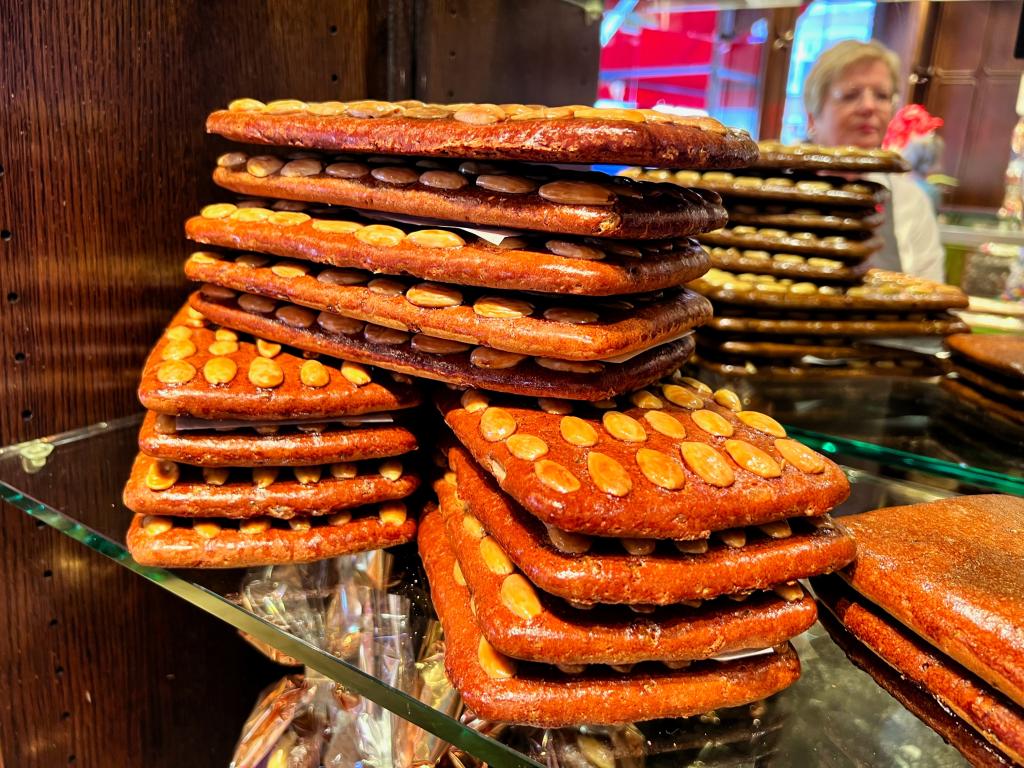
sits near Germany鈥檚 borders with Belgium and the Netherlands, a region that once easily imported sweeteners like sugar and honey. But in the 1800s, the Napoleonic Wars stifled supply chains, and locals improvised to make their sweets with beet sugar. Bakers soon added cinnamon, cloves, coriander and orange zest to create Printen, a ginger-free gingerbread cookie that became a local trademark. It鈥檚 called 鈥減rinten鈥� because designs are stamped into the top to make an imprint. You can find it throughout the . It鈥檚 excellent dipped into a warm drink.
Hutzelbrot, a dense winter bread made with dried fruits
is a large Bavarian city in southern Germany that once thrived on long-distance trade. Dried fruit (especially pears) was widely used to survive the winter, leading to Hutzelbrot, a fruit-studded loaf that remains a holiday staple. Bakery stalls at the sell this authentic treat, which can also be shipped and sent to friends far away.
Gummy Bears and eggnogs鈥� boozy cousin, Eierpunsch
sits along the Rhine River in western Germany and has a long candy-making tradition tied to the , where the in 1922. Here, you can find flavors and shapes you鈥檝e never seen. To warm up in Beethoven鈥檚 hometown, you can sip Eierpunsch at the Bonn Christmas Market. The creamy egg liqueur known as 鈥淓ierlik枚r鈥� is the main ingredient of this beverage, which comes served heated, and if you say 鈥淎ber bitte mit Sahne,鈥� the vendor will top it 鈥渕it Sahne鈥�; that鈥檚 German for 鈥渨ith whipped cream.鈥�
Erfurter Schittchen, one of Germany鈥檚 earliest holiday fruit breads
sits in central Germany and once stood at the intersection of important medieval trade routes. Those routes supported some of the country鈥檚 earliest baking guilds, which produced Stollen cake, or 鈥淪chittchen鈥� as it鈥檚 known to Erfurt locals. The centuries-old fruit bread made with nuts, spices, and dried fruit has been a traditional Christmas treat for centuries. The Erfurt variety is considered the earliest stollen recorded in Germany, with references dating back to 1329.
The , with the impressive cathedral backdrop on Domplatz, includes several stalls that still sell Schittchen each December. Additionally, this very local treat can be found at traditional bakeries in town.
Black Forest Ham, a smoked ham from the Black Forest region
borders the Black Forest in southwest Germany, an area known for smoking meat over wood to preserve it through the winter. The region鈥檚 famous Schwarzw盲lder Schinken, smoked ham, known worldwide, is available at the , often served in a hard-crust roll.
Studentenku脽, a chocolate born from secret romance
Located on the Neckar River in Southwest Germany, is best known for the arresting Renaissance castle ruins visible from the , which stretches through the historic city center and its many bustling squares. As Germany鈥檚 oldest university town, the city also embraces its reputation as a place for romance. Since 1863, the historic Chocolaterie Kn枚sel has hosted huddles of students gathering to socialize, often exchanging shy, hopeful glances at their objects of affection. Because dating rules were strict back then, the students created a secret courting system, writing love notes on paper and then slipping them into their crush鈥檚 wrapped chocolates. Chocolatier Fridolin Kn枚sel created a treat just for this purpose, a dark chocolate-covered praline on a wafer he called 鈥淪tudentku脽,鈥� which means 鈥渟tudent kiss.鈥�
Winzer-Gl眉hwein, mulled winemaker鈥檚 wine crafted with Riesling or other white varietals
sits where two major rivers, the Rhine and Moselle, meet, right in the heart of white-wine country. Locals there heat Riesling with spices for a lighter version of mulled wine. Winemaker-run stalls at the sell it by the mug for individuals or a thermos for groups. Speaking of mugs, at any Historic Highlights Christmas Market, visitors can buy commemorative 鈥淕l眉hwein-Tassen鈥� (wine cups) in a variety of shapes, with designs that change every year.
Gl眉hwein, German for 鈥渕ulled wine,鈥� is served at all Christmas Markets across Germany, but in these heritage towns, try local winemakers鈥� wine known as 鈥淲inzer-Gl眉hwein.鈥� It鈥檚 offered as red, white or ros茅 and made from Riesling, Silvaner or other varietals.
Marzipan, almond-and-sugar confections shaped into holiday-themed loaves, candies and drinks

is a northern port city on the Baltic Sea and was a key player in the Hanseatic League, which traded almonds and sugar across Europe. The university town became synonymous with marzipan, and many lovingly decorated stalls at the sell it in some form, from candies to hot drinks.
Local beer and Vereinsgeb盲ck, pastries prepared by local volunteer groups
, located in northwest Germany, has strong civic traditions reflected in its six Christmas markets and over 250 stalls. At one of them, local clubs and community groups rotate through the food stalls, selling their homemade waffles, cakes, or schnapps. This setup gives the market a unique local feel you won鈥檛 find elsewhere. Try the locally brewed beer, too.
Gr眉nkohl mit Kassler or Mettwurst, kale stew with smoked pork
In nearby , visitors admire the living music box at its Christmas Market and a traditional carousel, which is over 100 years old, in front of the Town Hall of the Peace of Westphalia. In winter, locals favor hearty dishes like 鈥淕ruenkohl鈥� (kale stew) paired with 鈥淜assler鈥� (smoked ham) and 鈥淜ohl鈥� (cabbage) or 鈥淢ettwurst鈥� (meat sausage). This classic meal is served at the and in restaurants.
Quarkb盲llchen, small fried dough balls made with soft cheese.
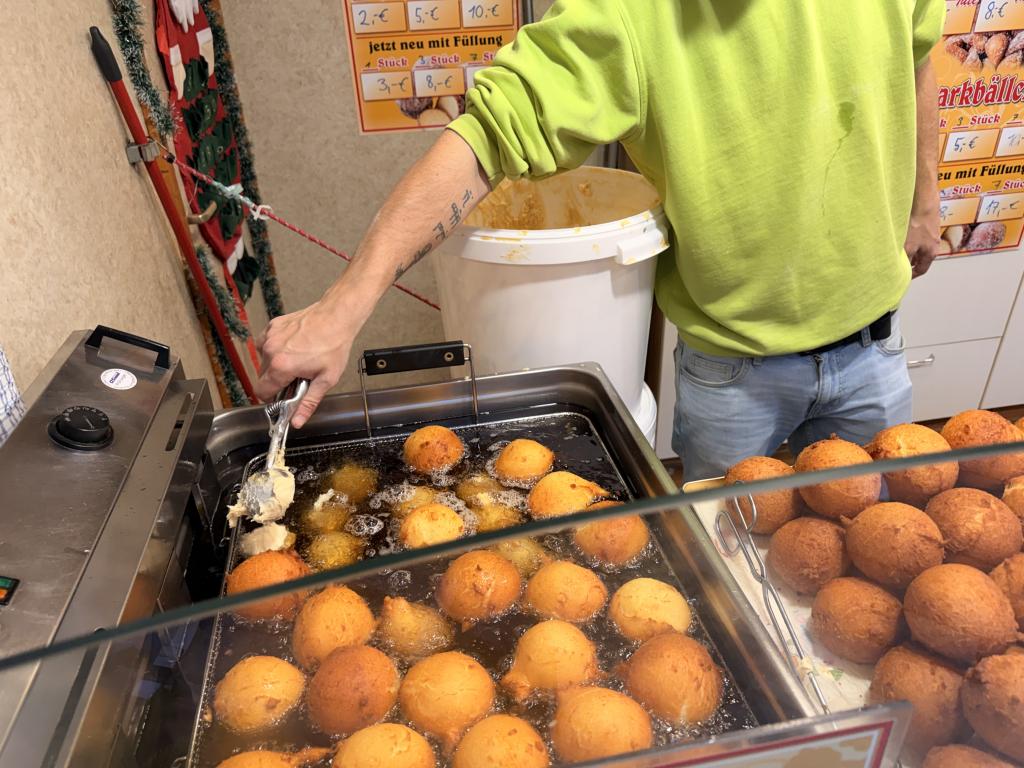
sits just outside Berlin and is well worth the 30-minute regional train ride. There, the streets feel a little like a storybook, showcasing proud Rococo architecture, a historic Dutch quarter, and pastel storefronts. Food in Potsdam fits right into this sense of simple joy. Locals have a long tradition of warm, doughy treats that are perfect for nibbling on while you meander through sparkly wooden stalls. Quarkb盲llchen鈥攚arm, light dough balls鈥攁re a perfect example. You鈥檒l find them at the near the Old Market Square. Look for the hot, round German cream cheese balls dusted in sugar or, better yet, smell them bubbling in the fryer.
Knacker 鈥榤it allem,鈥� a one-of-a-kind sausage served with all the fixings
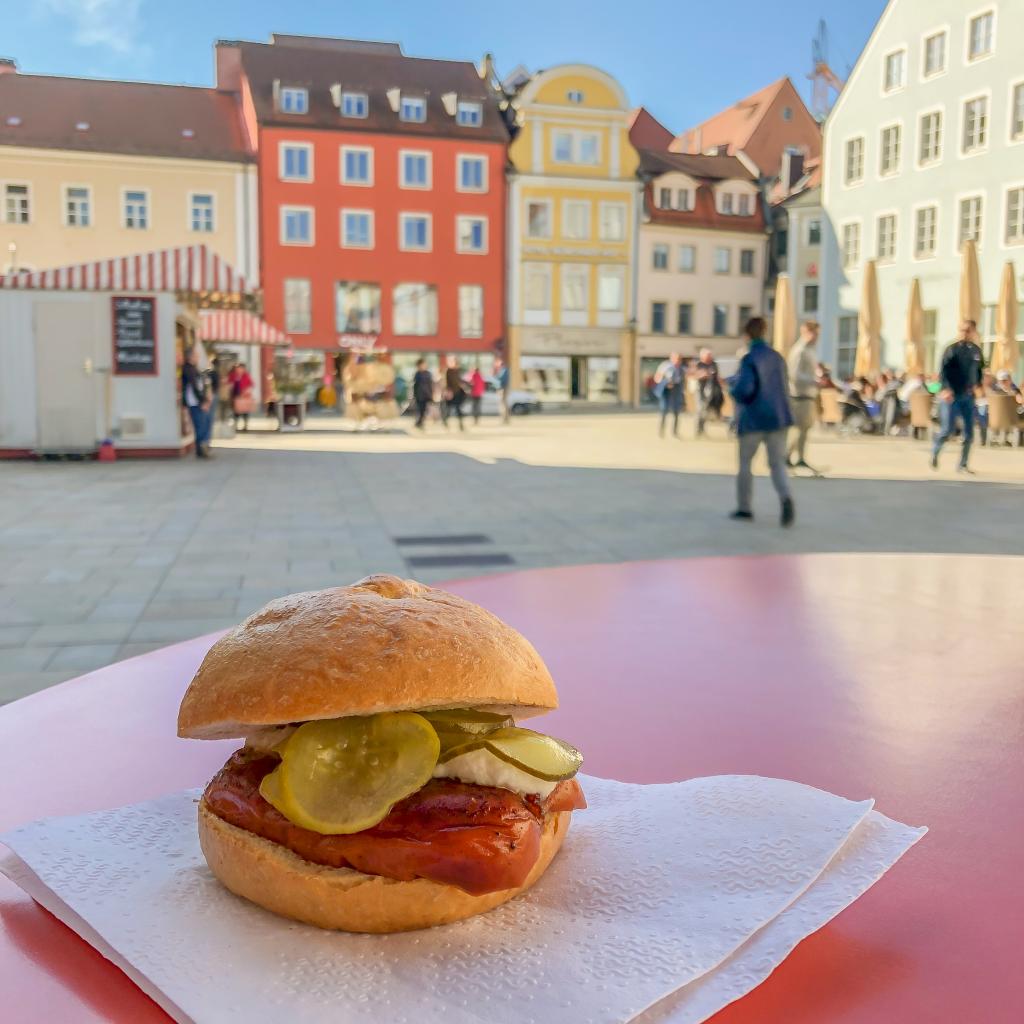
, along the Danube River in eastern Bavaria, has a centuries-old history of sausage-making. The Knacker remains one of its favorites. across the Regensburg Old Town sell it 鈥渕it allem,鈥� meaning loaded with a unique combination of toppings such as sweet mustard, spicy horseradish, and pickles.
Backbanane, a fried banana that originated from old shipping routes

is a port city on Germany鈥檚 northern coast, and from 1949 to 1990 it was part of the GDR, with Cuba as its ally. Bananas would arrive from Cuba in the mid-20th century, but many were too ripe to sell. So vendors fried them instead. Today, Backbanane remains a signature treat at the 鈥檚 food area, known as the Schlemmermeile.
Gl眉hviez, hot mulled apple cider in Trier
Germany鈥檚 oldest city dating back to the Roman empire, is near Luxembourg and sits in an apple- and wine-growing region on the Moselle river. Instead of relying solely on grape wine for Gl眉hwein, locals heat a special spiced apple cider from Trier known as 鈥淕l眉hviez鈥� at the . Trier is also the only stop on this list that crowns a to serve as the ambassador for the traditional drink, a tradition that began 11 years ago during the Christmas market season. She鈥檒l gladly cheer with you.
All the chocolate you can savor
In December, , a university town on the Neckar, hosts Germany鈥檚 . For a whole week, artisans turn the historic city center, with its half-timbered houses, into a cocoa-scented marketplace. Chocolatiers pour cups of fresh, velvety drinking chocolate and sell handmade pralines. The official 罢眉产颈苍驳别苍 Christmas Market, popular among locals, is held right after, but only for one weekend, as local artisans and organizations mainly stock it.
Riesling from a 500-year-old mountain and kids-baked Pl盲tzchen at a dedicated Children鈥檚 Christmas Market
, a historic spa city west of Frankfurt, has long attracted travelers鈥攁nd their culinary influences鈥攆rom across Europe. At the city鈥檚 鈥�,鈥� you鈥檒l find locals drinking Neroberger Riesling, white wine from the 500-year-old vineyard Neroberg on top of a 245-meter hill with a panoramic view that pairs naturally with Wiesbaden鈥檚 well-known pineapple tart, another staple of the winter stalls.
And if you have little ones, take them to the children鈥檚 version of the Christmas Market, where they can participate in a children鈥檚 baking workshop known as 鈥淜inderbackstube.鈥� There, they鈥檒l have the chance to bake and decorate Pl盲tzchen, the buttery German cookies baked only during the holiday season.
Heinerle, a chocolate, hyper-local Advent sweet
sits in the Franconian wine region of Bavaria, an area known for vineyards, locally brewed Hofbr盲u beer, and sweet treats. Heinerle, a traditional Franconian chocolate-wafer treat, remains part of the city鈥檚 Advent season and can be found at the and traditional local bakeries.
For a tasty tongue twister in the local dialect, visitors can try 鈥淲枚rdsburcher Winzerbratwoarscht鈥� im Kipf (a specialty vintner鈥檚 bratwurst in a local roll) at the Herzle Weihnachtsmetzgerei, a Christmas market butcher shop, which, surprisingly, also offers a variety of vegetarian and vegan dishes.
Visiting Germany in winter
If your idea of German Christmas food starts with pretzels and ends with wurst, these smaller markets show a much wider range. Many of the dishes sold here were developed locally and still reflect the city that made them. The markets aren鈥檛 put on for tourists, but rather by locals for locals, with visitors welcome to join in on the festive celebrations.
The most practical way to navigate these novelties is simple: Try foods you haven鈥檛 seen before, ask vendors where the recipes come from, and notice what residents are buying. You鈥檒l leave with a better understanding of how different regions eat during the holidays and why these traditions continue today.
was produced by and reviewed and distributed by 麻豆原创.