How scientists accidentally built one of Australia’s top wine regions
When most Americans think of Australian wine, they picture bold, old-vine reds from the Barossa Valley or green bottles labeled “Shiraz” lined up in grocery store aisles. Few would guess that one of the country’s most celebrated wine regions actually grew out of a science experiment in , the nation’s inland capital about three hours’ drive or less than a one-hour flight from Sydney. looks into how it became a top wine region in Australia.
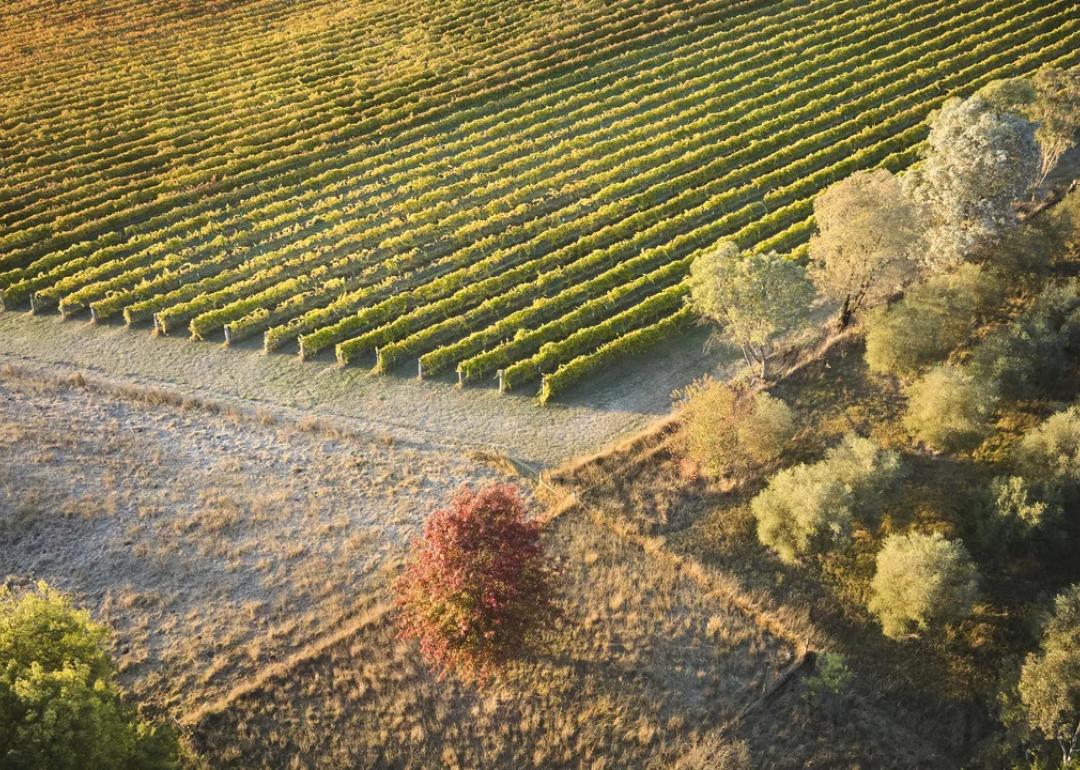
In the early 1970s, a handful of researchers planted vines outside Canberra to test the area’s unusual climate. Biochemist John Kirk, entomologist Edgar Riek, and insect ecologist Ken Helm all worked at the Commonwealth Scientific and Industrial Research Organisation (CSIRO), Australia’s national science agency, and shared an interest in food and wine. From that experiment, the Canberra District Wine region is now home to 140 vineyards and over 50 wineries within a 35-minute drive of the city center, accessible via tour companies like and , a hop-on-hop-off service that provides transport to new tastings every hour.
Science meets sunshine
“We noticed that [Canberra] had more sunshine than any other capital city except Perth,” Helm, founder of , said. “It has warm, dry days, lovely cool nights, low disease pressure, and plenty of sunshine, so the three of us basically said, ‘let’s try and grow some grapes.’”
That decision came with a bit of irony. When Canberra was first designated as Australia’s capital in 1913, Helm said the city’s founders declared it would be run by “men of temperance” and enacted Prohibition. From 1914 to 1927, Canberra was the only place in the country where .
Helm’s heritage, however, didn’t quite fit that vision. His family came from Germany’s Rhineland, where wine is as much a part of the landscape as the rivers and hillsides. His great-great-grandfather emigrated to Australia in the 1850s and helped build Rutherglen, Victoria, into one of the country’s most fertile wine regions. By the time Ken arrived in Canberra as a scientist a century later, winemaking knowledge was already in his blood.
‘Bateman’s Breath’ and a disappearing lake
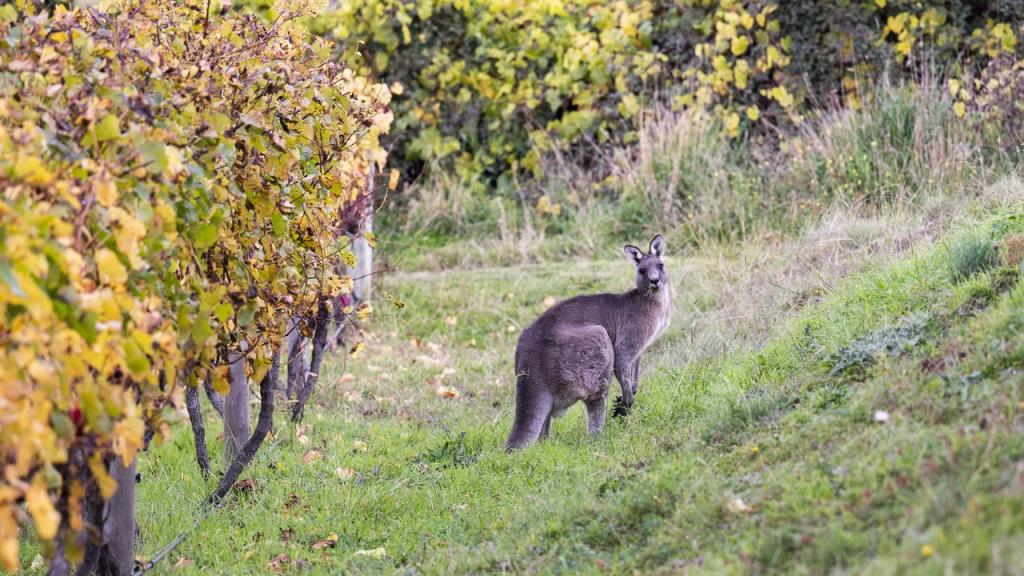
Able to see what others had overlooked, the scientists struck fruity gold in 1971 when they planted the first vines. Canberra’s inland elevation meant grapes ripened slowly without many of the rot or mildew problems that plague wetter regions. And at night, the temperature dropped sharply, which gave the vines a chance to rest.
“Between six and eight o’clock at night we get what we call the ‘sea breeze,’” Helm said. “There’s a town on the coast called Batemans Bay, so [the wind] got the nickname of ‘Bateman’s Breath.’ You can smell the salt at times when it comes in, and the temperature may be close to 100 degrees and it’ll drop down to 60 in an hour or so. Sometimes it gets so cold we have to go inside.”
That nightly cooldown turned out to be one of Canberra’s distinguishing factors, along with a more elusive one: Lake George. Just north of the city, the shallow lake helps regulate temperatures, yet locals call it the “disappearing lake” because it sometimes dries out and then reappears. As Emma Shaw, a Canberra winemaker and educator who runs explained, “It’s not really a traditional lake … it kind of disappears into this subsurface artesian water and, occasionally, it’ll pop back up…what it really provides for the vineyards around the shores of the lake is just a moderating influence.”
From backyard rows to a bona fide wine region
Such climate quirks were too promising to ignore. In 1974, Helm, Riek and Kirk gathered with a few other growers at Riek’s home and formally founded the Canberra District Vignerons Association. What started as 20 vines and a few leafy, experimental rows soon turned into a patchwork of vineyards across and the greater Lake George region around Canberra that, today, tourists visit. Locals thought they were reckless for planting grapes in such a cool region, but as Helm likes to say, the fruit quality was so good it almost made the winemaking easy.
The first bottles to reach the market appeared in 1976, when John Kirk released what his son Tim Kirk calls the crew’s “very humble beginnings” on an “unsuspecting public.”
The blend was a Riesling with a touch of Sauvignon Blanc, followed soon by a red Cabernet/Shiraz blend. For a city that once cleared shelves of wine during Prohibition, these first bottles began a new era that has attracted worldwide recognition 30 years later.
“All of those guys—Ken and Dad [John] and Edgar—were the very early pioneers who were all working in science,” Kirk said. “I hold them in such high regard because of the entrepreneurial gumption that they showed … they’re the ones that were brave enough to take the plunge and start planting grapes and trying to have a go at making wine in a, in some ways, less hospitable environment.”
From that leap of faith grew a handful of wineries that today give the Canberra District its identity, including , the Kirk-family vineyard whose name means “meadow of the church” in its ancient Celtic dialect. Tim Kirk explained that the word comes from his father’s homeland in County Clare, Ireland, where the original Clonakilla farm still stands.
Clonakilla is now best known for its Shiraz co-fermented with Viognier, a blend inspired by France’s Côtes du Rhône region that has become one of Canberra’s signatures. It’s also the only Canberra winery that distributes in the U.S.—wine lovers can order the Shiraz-Viognier online or look for it on the shelves of their local wine shop.
A Chardonnay that changed everything
Emma Shaw, a former government employee who manages production at in addition to running Canberra Cellar Door, says it was actually an encounter with local Chardonnay that prompted her to leave her office job and leap into winemaking. Collector itself is a tiny village about 40 minutes north of Canberra, just beyond Lake George’s shallow, mysterious waters and dusty, eucalyptus-lined roads. To most visitors, it looks like a blink-and-you’ll-miss-it stop on the Federal Highway between Canberra and Sydney, but its vineyards have earned an outsized reputation among tourists and wine-lovers.
“I went to Collector and tasted through the whole lineup,” Shaw recalled. “Every single one I liked. And then I tried the , and I just thought, ‘this is exactly what I want in a Chardonnay.’ Everything was balanced—it had power and presence and intensity, but nothing was too much. I just wanted more of it.”
Wine without pretense
For Shaw, Canberra wines speak clearly, without needing pretense. She believes people, too, should express frank, liberated opinions about wine—without all the pressure to know the “right” vocabulary.
“Wine is part agriculture, part science, part art. It’s history, it's travel, it's culture, it's food. It’s just this amazing area of life to explore,” said Shaw. It can be intimidating, she admits. “There’s always something new to explore, and that’s what makes it great. But if you’ve got a few fundamentals, you’ve got ‘hooks’ to hang your hat on, so to speak.”
That sense of permission is what she now models at her tastings at Canberra Cellar Door. She says she loves introducing visitors to Canberra wines, such as Rieslings that she says smell of white florals and tart green apple, or Shiraz that carries rose petals, pepper, and the subtle lift of anise in its swirls.
For Kirk, the words to describe his vocation come slower, more reverent but just as passionate. Clonakilla is in a rural township just north of Canberra, where tourists can cycle through neat rows of vines stretched across gentle, sloping hills. Kirk says most days during the growing season, he walks those rows, picking grapes straight from the vine and tasting them to decide when the fruit is ready to harvest.
“All those complex realities—the soil, the slopes, the wind, the sun, all captured in liquid form,” he said, “I get to smell it, to taste the texture, the waves of flavor in a beautiful glass of wine. Isn’t that miraculous?”
was produced by and reviewed and distributed by Â鶹ԭ´´.