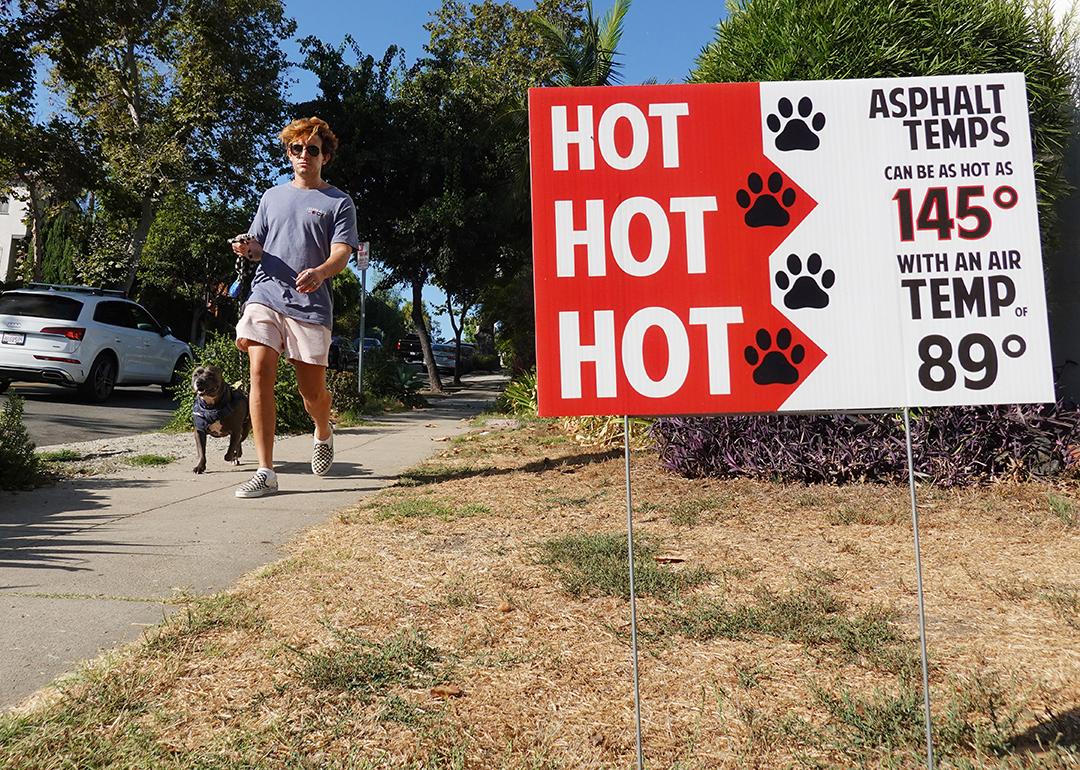
Extreme heat is becoming more common in the U.S. Here’s how to stay safe.
Extreme heat is becoming more common in the U.S. Here’s how to stay safe.
Summer brings heat waves — and the risk of heat-related illnesses.
Extreme heat is the of weather-related mortality in the United States, posing a significant threat to public health. Periods of unusually hot weather are especially dangerous for elderly people and those with chronic conditions. But anyone working or exercising outside, or those without access to cool shelters, can be vulnerable to health effects during heat waves.
And it’s only getting hotter. With climate change, extreme heat events are expected to become . Globally, nearly half of the world’s population experienced at least 30 extra days of extreme heat between May 2024 and May 2025, a result of human-driven climate change, according to a from scientists at Climate Central, Red Cross Red Crescent Climate Centre, and World Weather Attribution.
shares what to know about extreme heat and how to stay safe this summer.
What is extreme heat, and how deadly is it?
Extreme heat is generally considered to be a prolonged period of hot, and sometimes humid, weather that is unusual for a certain location and time of year.
But there is no standard nationwide definition of extreme heat across the United States, given the country’s highly varied climates, said Dr. Jaime Madrigano, an associate professor of American health in the Department of Environmental Health and Engineering at the Johns Hopkins Bloomberg School of Public Health.
“We have a big country, and it’s not uniform,” she said.
As a result, there are varying thresholds for heat advisories, as well as differences in how heat-related mortality is recorded, she said.
The Centers for Disease Control and Prevention reports that more than from extreme heat every year across the country. But the full scope of mortality is likely much higher, because heat-related deaths can occur even without temperatures reaching extreme levels. A JAMA published last year recorded 2,325 heat-related deaths in the United States in 2023, the highest annual total — and a 117% increase — since 1999.
In New York City alone, an estimated 580 people, on average, die prematurely each summer due to hot weather, typically when heat aggravates underlying illness, according to . The city’s 2024 Heat-Related Mortality Report noted that heat-exacerbated deaths have increased over the past decade because of summers that are hotter overall, with more “non-extreme hot days” of temperatures between 82°F and the city’s extreme heat threshold of 95°F.
What are heat-related illnesses?
Extreme heat can have a wide range of effects on our bodies. Heat cramps — muscle cramps and spasms that occur after intense exercise and sweating in high heat — can be the first sign of heat-related illness. , which occurs when the body loses water and salt, is characterized by dizziness, thirst, heavy sweating, nausea, and weakness, and can lead to heatstroke.
The most common heat-related illnesses that Dr. Christopher Tedeschi, an associate professor of emergency medicine at Columbia University Medical Center, sees in the summer are respiratory or cardiac illnesses exacerbated by intense heat.
“It doesn’t need to be in the middle of a heat wave,” he said. “Someone with asthma or emphysema, in the setting of a day where the heat index is high, certainly is more at risk of having an exacerbation of their chronic illness.”
Heatstroke is more rare, but requires an emergency response, he said. That condition occurs when a person’s body temperature rises rapidly — to — and cannot cool down. Symptoms of heatstroke include confusion and slurred speech, loss of consciousness, hot skin, seizures, and very high body temperature. Heatstroke can lead to permanent disability or death.
The condition can occur in older people who can’t easily cool their bodies down, Tedeschi said, but also in younger people who exert themselves on hot days, like an athlete who collapses during preseason training. In those cases, ER teams will work to quickly cool people down, including by immersing them in ice water.
“When people have heatstroke, cooling them quickly is really the key to reducing their mortality,” he said.
Who is most vulnerable to extreme heat?
People who are particularly vulnerable to heat-related illness include those with asthma or heart disease, pregnant women, those 65 years or older, infants, young children, those working or exercising outside, and those who are unhoused, .
Socioeconomic status and access to green spaces can significantly shape one’s vulnerability to extreme heat, and some cities have made efforts to map out areas where those factors are particularly pronounced. ’s heat vulnerability index details which for death during and after extreme heat, based on factors like daytime summer surface temperature, access to air conditioning, median income, and the availability of green space. offers a similar tool that identifies heat vulnerability on a block-by-block basis, as well as identifying local pools, libraries, parks, and health centers.
Madrigano, the Johns Hopkins expert, is researching heat vulnerability in New Orleans. The city’s hot, humid weather and high poverty rate make it particularly susceptible to heat-related morbidity and mortality, she said, pointing to factors like whether residents can afford to keep their air conditioning running.
“From a public health perspective, we know the most effective strategy for keeping people safe during extreme heat is air conditioning,” she said.
In some states, new tools aim to help residents and officials identify who is most at risk during heat waves. In California, the newly released offers daily rankings of forecast heat impacts in ZIP codes across the state. New York state recently , which combines weather forecasting with data on heat-related emergency department visits and emergency medical services calls.
How can I protect myself against extreme heat?
There are ways to mitigate health impacts during periods of hot weather.
“At the end of the day, it’s about protecting yourself from heat, taking frequent breaks, staying hydrated, staying in cool areas if you can, adjusting your work hours, if you can, to avoid those hottest parts of the day,” Tedeschi said.
When venturing outside, wear loose, lightweight, light-colored clothing and sunscreen, and try to stay in the shade if possible, the CDC advises. During periods of elevated temperatures, never leave children or pets in cars.
Other standard recommendations include staying in air-conditioned indoor locations. People who lack air conditioning at home are advised to seek out cool public spaces like libraries. The National Center for Healthy Housing offers a list of each state’s .
What does a warming climate mean for cities and hospitals?
Some states and cities have rolled out heat response and climate mitigation plans, ranging from heat and health forecasts to initiatives to . But a federal effort to develop heat mitigation strategies across the country was recently by the Trump administration.
Meanwhile, cities continue to heat up. , compared to 1970, there are now almost two more weeks of extreme heat per year. And New York City is projected to see the number of days each year with temperatures higher than 90 degrees rise from 17 to as many as 54 by the 2030s — and as many as 108 by the 2080s.
The warming climate also poses challenges for health systems. In a 2022 article, researchers noted that New York City can expect the number of heat waves to increase from an average of two per year to seven per year by 2050, and urged hospital systems to create response plans.
Tedeschi, the New York City emergency room physician, worries about what increasingly long and intense heat waves will mean for the patients he cares for — and health systems. A heat wave can become a “mass casualty event” if multiple patients arrive with heatstroke, which requires a robust team response, he said.
“I expect we’ll see more patients in the ER with heat-exacerbated illness over the next few years,” he said.
was produced by and reviewed and distributed by Â鶹ԭ´´.