Fastest-warming cities in the U.S.
Human-caused climate change can trace its origins to the industrial revolution, but most warming has occurred since the occurrence of the first Earth Day in 1970, according to Climate Central. This warming happens at different rates in different places, but . So far, Earth has warmed 1.8 degrees Fahrenheit (1 degree Celsius) since the late 1800s, with the United States warming between 1.3 and 1.9 degrees Fahrenheit. Out of 242 U.S. cities that Climate Central examined in its "American Warming" report, only six showed either no change or cooler average temperatures since 1970.
To determine the fastest-warming cities in the country, Â鶹ԭ´´ consulted this , a nonprofit news organization that compiles research and helps other news outlets report on climate change. In this study, Climate Central ranked 49 states and 242 metro areas according to their average warming between 1970 and 2018, with data derived from the The top 50 metro areas are listed here, with the average state temperature changes included for context.
Scientists attribute warming to greenhouse gases fed into the atmosphere by the burning of fossil fuels. These heat-trapping gases mix with atmospheric factors and local geography to . For example, University of Montana study published in 2015 found that , keeping an area cooler than it would be otherwise.
In cities, an urban heat island effect helps make the city hotter than surrounding areas. Buildings and pavement made of dark, impervious materials like asphalt and brick absorb heat during the day, keeping the city warm longer—known as . Cities also have less plant life than surrounding areas, and miss out on the cooling properties of greenery. The number of people and vehicles in the city further adds to the heat, than nearby suburban and rural regions. But, in some cases, why one area is warmer than another.
If the country does nothing to curb the warming trend, cities will continue to get hotter, threatening the health of residents. Some regions will become , providing a longer summer season for disease-carrying insects. Cities will see more heat waves, and possibly more heat-related illnesses and deaths, according to research from Desert Research Institute, Nevada State College, and Universidad de Las Americas Puebla, among other studies.
Read on to see which cities are warming fastest, and what—if anything—officials are doing about it.
You may also like:
#50. Piedmont Triad, NC
- Temperature change 1970-2018: 3.08° F
- Average temperature change in the state: 2.11° F (#14 slowest-warming state)
The cities of Greensboro, Winston-Salem, and High Point make up this region in central North Carolina. In the Piedmont Triad, urban areas are growing, likely expanding the heat island effects. The Piedmont Triad Regional Council has a plan for climate adaptation, and has published a . This is vital for residents, as the region is home to North Carolina's largest elderly population, which, along with infants, is more vulnerable to heat-related illnesses.
[Pictured: Winston-Salem, N.C.—One of the three major parts that consist of the Piedmont Triad.]
#49. Louisville, KY
- Temperature change 1970-2018: 3.09° F
- Average temperature change in the state: 2.31° F (#23 slowest-warming state)
Louisville residents have already experienced more days per year topping 90 degrees and the three wettest years on record in the past decade, The minimum yearly temperature has jumped by 5.5 degrees since 1990. Kentucky's largest city has taken some steps to address climate change,
#48. Birmingham area, AL
- Temperature change 1970-2018: 3.10° F
- Average temperature change in the state: 1.97° F (#6 slowest-warming state)
This urban heat island hasn't done much to address the effects of climate change, despite seeing longer and more extreme heat waves than the rest of the United States. The reports that state leaders are not addressing climate change, either. The Alabama Department of Conservation and Natural Resources' Coastal Comprehensive Plan hints at building resilience to climate change's effects, but the state lacks a plan directly tackling the challenge.
#47. Grand Rapids area, MI
- Temperature change 1970-2018: 3.10° F
- Average temperature change in the state: 2.69° F (#19 fastest-warming state)
In April 2013, residents of Grand Rapids caught a glimpse of what their future might hold. That year, the and surrounding areas, which an August 2016 report by the Environmental Protection Agency says shows that the city is vulnerable to significant floods. The same year, residents endured Experts predict that these events will become more common as greenhouse gases are fed into the atmosphere and the climate continues to change.
Grand Rapids is one of over 400 U.S. cities confronting its role in climate change by, upholding the United Nations’ Paris Agreement to keep global warming below 1.5 degrees Celsius. Grand Rapids also has taken other measures to mitigate warming. To reduce the urban heat island effect, the As of April 2019, the city just needed 5.4% more cover to meet its goal.
#46. Atlanta, GA
- Temperature change 1970-2018: 3.12° F
- Average temperature change in the state: 1.89° F (#2 slowest-warming state)
This year, Atlanta has experienced (well above its typical 37 days a year). By 2050, with no action on climate change, the Union of Concerned Scientists says this would constitute a cool year. In a business-as-usual greenhouse gas emissions scenario, per year with a heat index, or "feels like" temperature, above 90 degrees.
While the city is willing to work on climate change, state politics might get in the way. This past March, the Atlanta City Council , but the utility Georgia Power has frustrated the council's goals to shift the city toward renewable energy. Georgia Power representatives have said that because of state regulations, their priority must be cost for customers, and unless renewables become cheaper, they'll continue to rely on natural gas.
#45. Atlantic City, NJ
- Temperature change 1970-2018: 3.12° F
- Average temperature change in the state: 3.00° F (#6 fastest-warming state)
Atlantic City is . According to the , New Jersey’s state climatologist David Robinson attributes the state’s higher sea levels and Atlantic City’s sunny-day floods () to the rise in temperature. The to better prepare for these events and to prevent them, such as by . New Jersey is also a member of the U.S. Climate alliance, a coalition of states committed to meeting the Paris Agreement goals.
#44. Prescott, AZ
- Temperature change 1970-2018: 3.14° F
- Average temperature change in the state: 3.23° F (#3 fastest-warming state)
Prescott is in one of the fastest-warming states, and one of four Arizona cities that made this list. Located in the Bradshaw Mountains, Prescott typically experiences . Prescott is warming slower than the rest of the state, that elevates its temperatures above those of more rural surroundings.
#43. Wichita Area, KS
- Temperature change 1970-2018: 3.16° F
- Average temperature change in the state: 2.09° F (#13 slowest-warming state)
In Wichita, a , threatening public health. , . Wichita's urban heat island effect has led to each year compared to rural areas, on average (since 1973). However, it doesn’t appear that Wichita or the state has assessed its or adopted a plan to adapt to these changes.
#42. Fargo, ND
- Temperature change 1970-2018: 3.21° F
- Average temperature change in the state: 1.97° F (#5 slowest-warming state)
Fargo residents with seasonal allergies may already be noticing the heat. Since 1995, the city's mosquito season has also increased: the season is now compared with 40 days on average each year from 1980 to 1989.
With the "Green Fargo" initiative, local government is taking steps toward creating a more environmentally friendly city. To reduce emissions, city officials have added to the current fleet and are using blended biodiesel fuel. The Department of Solid Waste now uses wind and solar power, and harnesses the methane gas from decomposing garbage to create electricity.
#41. Mankato, MN
- Temperature change 1970-2018: 3.22° F
- Average temperature change in the state: 2.67° F (#20 fastest-warming state)
As a city, the urban heat island effect is likely contributing to Mankato's faster warming than the rest of Minnesota. While the local government has sustainability initiatives, including efforts to that could reduce the city's emissions, these initiatives aren't specifically focused on combating climate change.
#40. Salt Lake City, UT
- Temperature change 1970-2018: 3.23° F
- Average temperature change in the state: 3.02° F (#5 fastest-warming state)
In efforts to curb the warming trend, are to use renewable electricity for half of city operations by 2020 (and 100% of operations by 2030) and a 50% reduction in community greenhouse gas emissions by 2030 (and an 80% reduction by 2040). To achieve these goals, the city is working with its utility, . The city has built three net-zero energy municipal buildings, which use as much energy as they produce.
#39. Toledo, OH
- Temperature change 1970-2018: 3.24° F
- Average temperature change in the state: 2.40° F (#24 slowest-warming state)
A port city on the western shore of Lake Erie, This heat has affected the lake, too, blocking ice formation. As time goes on, Toledo will also experience more heat wave days, possibly more than 20 per year compared with the state average of .
To address these threats, the county's Toledo Lucas County Sustainability Commission has a plan to ; increase biking, walking, and public transportation options; encourage purchase of local food; and increase the amount of renewable energy businesses and government use.
#38. Concord, NH
- Temperature change 1970-2018: 3.24° F
- Average temperature change in the state: 2.69° F (#18 fastest-warming state)
In Concord, summers are getting muggier and the mosquito season is getting longer, now at , compared with 56 days per year during the 1980s. The City of Concord is working to , with a goal in place toward cutting emissions and transitioning to total renewable energy by 2050.
#37. La Crosse-Eau Claire, WI
- Temperature change 1970-2018: 3.25° F
- Average temperature change in the state: 2.74° F (#16 fastest-warming state)
As the average temperature has risen, —from 73 to 107 days—since the 1980s. To fight further warming in the region, Eau Claire pledged to become carbon neutral and use . La Crosse soon followed, committing to the same goals. The Eau Claire City Council has also outlined measures to mitigate the effects of greenhouse gas emissions in its , including planting trees, improving energy efficiency in buildings, and remodeling buildings to align with green standards.
#36. Topeka, KS
- Temperature change 1970-2018: 3.10° F
- Average temperature change in the state: 2.69° F (#19 fastest-warming state)
In April 2013, residents of Grand Rapids caught a glimpse of what their future might hold. That year, the and surrounding areas, which an August 2016 report by the Environmental Protection Agency says shows that the city is vulnerable to significant floods. The same year, residents endured Experts predict that these events will become more common as greenhouse gases are fed into the atmosphere and the climate continues to change.
Grand Rapids is one of over 400 U.S. cities confronting its role in climate change by, upholding the United Nations' Paris Agreement to keep global warming below 1.5 degrees Celsius. Grand Rapids also has taken other measures to mitigate warming. To reduce the urban heat island effect, the As of April 2019, the city just needed 5.4% more cover to meet its goal.
#35. Raleigh-Durham, NC
- Temperature change 1970-2018: 3.26° F
- Average temperature change in the state: 2.11° F (#14 slowest-warming state)
Raleigh is already seeing increases in heat waves above the national average. Since 1970, , annually. By 2050, the heat index could reach 105 degrees, 70 days each year. To reduce the city's impact on warming, the Raleigh City Council adopted a goal to . The city already has made progress: since 2012, the city government reports, the city has reduced municipal emissions by 19%. Durham has committed to transitioning to , with net zero carbon emissions.
#34. Bryan-College Station, TX
- Temperature change 1970-2018: 3.31° F
- Average temperature change in the state: 2.77° F (#14 fastest-warming state)
Over the past 50 years, fall temperatures have followed an increasing trend in Texas' Brazos Valley. during the fall season each year. This region is just one of seven Texas metropolitan areas to make this list. Climate Central gives Texas a for its climate change preparedness. The state does not have a climate change vulnerability assessment or , and its Emergency Management Plan doesn't cover responses to extreme heat.
#33. Anchorage, AK
- Temperature change 1970-2018: 3.33° F
- Average temperature change in the state: 4.22° F (#1 fastest-warming state)
Anchorage winters are six degrees warmer on average than they were in the 1940s. In Alaska, uncomfortable heat waves aren't as much of a concern, although, this past summer, for the first time on record. Some of the biggest concerns in the fastest-warming state are how , melting glaciers and permafrost. Anchorage setting a goal of an
#32. Presque Isle, ME
- Temperature change 1970-2018: 3.35° F
- Average temperature change in the state: 2.63° F (#21 fastest-warming state)
Presque Isle is located in northeast of Maine, close to the Canadian border. Maine has taken some actions toward combating climate change, and reports it is on track to meet its goal of reducing emissions to . However, it's not clear if the state will continue to .
#31. New Orleans, LA
- Temperature change 1970-2018: 3.39° F
- Average temperature change in the state: 2.21° F (#19 slowest-warming state)
thanks to global warming and the urban heat island effect. Now, about 35 days each year top dangerously hot levels in Louisiana, but by 2050, that number could reach 115. For elderly and young children, the rising temperatures present a serious health risk. These climate trends offer mosquitoes the opportunity to stick around longer each year,
Among New Orleans' plans to address climate change are a . To help meet this target, the city is installing solar power on city properties, improving public transit fuel efficiency, and building a bike-share system.
#30. Dallas-Ft. Worth, TX
- Temperature change 1970-2018: 3.39° F
- Average temperature change in the state: 2.77° F (#14 fastest-warming state)
According to a study from the , concrete and residential buildings cover over one-third of Dallas, . Dallas is developing a climate action plan and has joined other U.S. cities in Fort Worth, on the other hand, does not appear to have a formal plan to address the effects of climate change.
#29. Huntsville, AL
- Temperature change 1970-2018: 3.41° F
- Average temperature change in the state: 1.97° F (#6 slowest-warming state)
Like Birmingham and the state at large, . Also like Birmingham, and stays warmer, longer, than other Alabama regions.
#28. Wheeling, WV
- Temperature change 1970-2018: 3.41° F
- Average temperature change in the state: 2.28° F (#22 slowest-warming state)
Although the city is warming faster than the rest of the state, Wheeling's government . In 30 years, West Virginia will experience about , an increase from an average of less than five. The state also has not formulated any plans to address the .
#27. Columbus, OH
- Temperature change 1970-2018: 3.44° F
- Average temperature change in the state: 2.40° F (#24 slowest-warming state)
Data from NOAA projects that Columbus will see about , compared with the current average of just 10 annually. At the same time, the number of days below freezing will decrease. The city also has a strong heat island effect, Columbus averages 4.4 degrees warmer than rural areas during the summer, but up to 24 degrees.
The city is working to build resiliency with its , and the mayor has committed To address extreme heat, the plan proposes , implementing educational initiatives about health risks, generally taking steps to reduce the heat island effect, and providing air conditioner distribution programs for vulnerable populations.
#26. Albuquerque-Santa Fe, NM
- Temperature change 1970-2018: 3.46° F
- Average temperature change in the state: 3.32° F (#2 fastest-warming state)
for the biggest difference between urban and rural temperatures. This urban heat island can get up 22 degrees hotter than rural surroundings, averaging 5.9 degrees warmer in summer with 25 more days above 90 degrees each year. Both to meet goals set by the Paris Agreement.
#25. Peoria, IL
- Temperature change 1970-2018: 3.50° F
- Average temperature change in the state: 2.77° F (#14 fastest-warming state)
, and a growing population straining the water supply does nothing to help. Dry conditions coupled with warming temperatures make Austin's greenbelts (protected woodlands within city bounds) perfect fodder for urban wildfires.
Experts predict that generally, wildfires will become more common thanks to increases in temperatures and dryness. The city is keenly and has agreed to meet Paris Agreement targets. Some of the city's goals include . Austin reports that it has .
#24. Detroit, MI
- Temperature change 1970-2018: 3.50° F
- Average temperature change in the state: 2.77° F (#14 fastest-warming state)
, and a growing population straining the water supply does nothing to help. Dry conditions coupled with warming temperatures make Austin's greenbelts (protected woodlands within city bounds) perfect fodder for urban wildfires.
Experts predict that generally, wildfires will become more common thanks to increases in temperatures and dryness. The city is keenly and has agreed to meet Paris Agreement targets. Some of the city's goals include . Austin reports that it has .
#23. Yuma-El Centro, AZ
- Temperature change 1970-2018: 3.49° F
- Average temperature change in the state: 3.23° F (#3 fastest-warming state)
In the southwestern corner of Arizona, Yuma and El Centro are hot, dry desert cities, receiving just about 3 inches of precipitation each year. than the rest of the world, on average, which could be contributing to the cities' faster temperature increase.
Although neither city appears to have a formal climate change adaptation strategy, this year Yuma adopted a plan to increase tree canopy coverage in the city. The plan doesn't list fighting climate change as a main goal, but does point out that planting more trees can cut energy needs by shading buildings, reducing ground-level pollution, and reducing temperatures by transpiration.
#22. Austin, TX
- Temperature change 1970-2018: 3.50° F
- Average temperature change in the state: 2.77° F (#14 fastest-warming state)
, and a growing population straining the water supply does nothing to help. Dry conditions coupled with warming temperatures make Austin's greenbelts (protected woodlands within city bounds) perfect fodder for urban wildfires.
Experts predict that generally, wildfires will become more common thanks to increases in temperatures and dryness. The city is keenly and has agreed to meet Paris Agreement targets. Some of the city's goals include and net zero greenhouse gas emissions by 2050. Austin reports that it has and will publish revisions based on that progress in 2020.
#21. Albany, NY
- Temperature change 1970-2018: 3.51° F
- Average temperature change in the state: 2.78° F (#13 fastest-warming state)
In the past 20 years, Albany has had five times as many record warm days than cold: Albany's urban heat island effect is intense, with summer days averaging 3.8 degrees hotter than rural surroundings, . To fight against the warming climate, the city also has joined the Compact of Mayors to meet Paris Agreement goals.
#20. Medford, OR
- Temperature change 1970-2018: 3.51° F
- Average temperature change in the state: 2.12° F (#16 slowest-warming state)
Southern Oregon cities such as Medford are which reduce the snowpack that during spring and summer as it melts. As the climate continues to change, , which could erode slopes and cause landslides, in addition to negatively impacting industries that rely on snow.
#19. Houston, TX
- Temperature change 1970-2018: 3.58° F
- Average temperature change in the state: 2.77° F (#14 fastest-warming state)
If greenhouse gas emissions continue to pollute the atmosphere at current rates, , on average, with a heat index above 105 degrees, compared to just 10 currently.
To cut down on heat-trapping greenhouse gases, the mayor of Houston has committed to the Paris Agreement. , and used solar and wind for about 90% of city energy consumption in 2017. This past year, Houston has been finalizing its full , which it hopes to start implementing by spring 2020.
#18. Odessa, TX
- Temperature change 1970-2018: 3.59° F
- Average temperature change in the state: 2.77° F (#14 fastest-warming state)
Located in the Permian Basin, . Perhaps unsurprisingly since its economy relies on fossil fuels, Odessa does not appear to have taken any action to fight climate change or warming temperatures in the city.
[Pictured: Stonehenge Replica (70% of Original Size) on the Campus of the University of Texas of the Permian Basin, Odessa, Texas.]
#17. Fresno, CA
- Temperature change 1970-2018: 3.66° F
- Average temperature change in the state: 2.72° F (#17 fastest-warming state)
Fresno is the largest city in California's San Joaquin Valley, and averages over a month of At the end of the century, the valley's economy, which now relies on agriculture, will need to make major changes. As the heat rises, that already plague the state will worsen. Farmers will need to cut back on irrigation practices, possibly growing different crops to make up for the lack of water. A California law requires the state to , but Fresno has gone further than the 2020 goal. It plans to reduce emissions to 80% below 1990 levels by 2050.
#16. Duluth, MN
- Temperature change 1970-2018: 3.67° F
- Average temperature change in the state: 2.67° F (#20 fastest-warming state)
Duluth is feeling the effects of warming not so much in heatwaves, but in warmer winters. By warmer, Minnesota climatologists mean fewer winter days Because Duluth is a cooler city, community leaders have started branding the city as a climate refuge. Its attraction to climate refugees could also spur economic growth for the city, although some have voiced concerns that this approach could .
In the meantime, Duluth is working to minimize the city's impact on climate change. Duluth's mayor joined over 400 other U.S. mayors to uphold targets set by the Paris Agreement, to keep global warming under 1.5 degrees Celsius.
#15. Milwaukee, WI
- Temperature change 1970-2018: 3.70° F
- Average temperature change in the state: 2.74° F (#16 fastest-warming state)
Milwaukee is an than its rural surroundings. On average, summer days are 1.4 degrees hotter than rural areas. The rising temperatures are bringing increased ozone levels, threatening residents' health. Like La Crosse and Eau Claire, Milwaukee has pledged to uphold the goals of the Paris Agreement, aiming to go carbon neutral by 2050. focused on achieving this goal.
#14. Minneapolis-St. Paul, MN
- Temperature change 1970-2018: 3.72° F
- Average temperature change in the state: 2.67° F (#20 fastest-warming state)
The urban heat island effect keeps these twin cities warmer than neighboring communities. Minneapolis is on average 4.3 degrees, but up to 22 degrees, during the summer months, the ninth-largest difference in the country.
Both Saint Paul and Minneapolis are working to reduce their carbon footprints. is still in draft stages, but focuses on reducing emissions from the city's biggest greenhouse gas contributors: building heating and transportation. Minneapolis has had a plan in place for several years, and is working to implement relevant policies. Both Minneapolis and Saint Paul have committed to meeting Paris Agreement targets.
#13. Boise, ID
- Temperature change 1970-2018: 3.84° F
- Average temperature change in the state: 2.62° F (#22 fastest-warming state)
as fast as the rest of the country. This will , which keeps Boise 3.1 degrees warmer than rural areas on average during the summer, but this difference can reach 23 degrees. According to Boise's Climate Adaptive Assessment, by 2050 Boise will go from experiencing 16 to about 66 days with a . Boise is currently developing a plan to mitigate impacts on climate change for release in 2020.
Earlier this year, the city launched its , a collection of efforts to reduce Boise's carbon footprint, including committing to total clean electricity use throughout the city by 2035. Boise is also working toward the Paris Agreement's emission-reduction goals.
#12. St. Louis, MO
- Temperature change 1970-2018: 3.85° F
- Average temperature change in the state: 1.91° F (#4 slowest-warming state)
Since 1980, has grown from 100 to 131 days, following the trends of increased temperatures and humidity in the city. By 2050, the city will see about two months’ worth of dangerous heat each year. During the summer, St. Louis is about 4 degrees warmer than rural areas because of the urban heat island effect.
In 2018, St. Louis received a grant to participate in . Through this initiative, St. Louis aims to improve building performance and make progress on implementing solar energy and vehicle electrification by December of 2020. St. Louis's mayor also has pledged to adopt and uphold the goals of the Paris Agreement.
#11. Ft. Smith, AR
- Temperature change 1970-2018: 3.92° F
- Average temperature change in the state: 1.98° F (#7 slowest-warming state)
Fort Smith residents are experiencing the effects of a warming climate via flooding. In May 2019, the , rising to its highest level ever observed. Although scientists cannot directly credit climate change with any single storm, the warming atmosphere is able to hold more water vapor, which will make heavy precipitation events more common.
Fort Smith does not appear to have any plans to assess its vulnerability to the effects of a warming climate or adaption strategies.
#10. Las Cruces, NM
- Temperature change 1970-2018: 4.01° F
- Average temperature change in the state: 3.32° F (#2 fastest-warming state)
Like the rest of the top 10 cities, Las Cruces has warmed by over 4 degrees Fahrenheit since 1970. In addition to rising temperatures and more heat-wave days, Las Cruces will likely experience more consecutive hot and dry days and fewer cold nights as the climate changes. Las Cruces is not without resources. New Mexico State University in Las Cruces is a U.S. Department of Agriculture hub formed to . The city has also agreed to meet the goals set forth in the Paris Agreement.
#9. McAllen, TX
- Temperature change 1970-2018: 4.03° F
- Average temperature change in the state: 2.77° F (#14 fastest-warming state)
McAllen takes the second spot for fastest-warming city in Texas. By 2050, ; about 179 days a year will reach dangerous temperatures, with a heat index of over 105 degrees. McAllen sits in the Rio Grande Valley, an already hot region that is getting drier and hotter. As this trend continues, the , worsening drought risk. City officials, however, don't talk about climate change much and McAllen does not appear to have a plan for addressing the issue.
#8. Erie, PA
- Temperature change 1970-2018: 4.06° F
- Average temperature change in the state: 2.45° F (#25 fastest-warming state)
In Erie, people are noticing more , which, coupled with increasingly warm summers, have accommodated disease-carrying insects. The past few summers have brought an above-average number of Lyme disease cases, and mosquitoes have been hanging around longer. To reduce emissions and keep warming to a minimum, Erie is committed to upholding the Paris Agreement.
#7. Helena, MT
- Temperature change 1970-2018: 4.11° F
- Average temperature change in the state: 2.48° F (#24 fastest-warming state)
Located in central Montana, Helena has already warmed over 4 degrees Fahrenheit since 1970. Climate trends show since 1950. According to the 2017 Montana Climate Assessment, if emissions continue as usual, Helena and the rest of the state could see average daily maximum temperatures increase by 10 degrees.
#6. Chattanooga, TN
- Temperature change 1970-2018: 4.11° F
- Average temperature change in the state: 2.17° F (#18 slowest-warming state)
By 2080, according to a study published in Nature Communications in February 2019, with , on average, and much wetter To keep Chattanooga's future climate possibilities a bit further north, the city's mayor has signed on to the Compact of Mayors.
#5. Burlington, VT
- Temperature change 1970-2018: 4.13° F
- Average temperature change in the state: 2.85° F (#8 fastest-warming state)
By 2050, Burlington will experience about , compared to around 10 on average now. Although this initial warming has been , it could mean that in a few decades, farmers will need to change the crops they rely on and fight more crop-infecting diseases. Warming may harm the ski industry as well, with a shift from snowy to rainy winters in a few decades.
The city has made some progress on its climate action plan, ; installing new charging stations to encourage use of electric cars; installing meters to help building owners monitor energy use and efficiency; setting guidelines to reduce energy use in new constructions; and developing a commuting program for city staff that promotes emission-free or less impactful commutes. Burlington also has pledged to meet the targets set by the Paris Agreement.
#4. Phoenix, AZ
- Temperature change 1970-2018: 4.35° F
- Average temperature change in the state: 3.23° F (#3 fastest-warming state)
Residents feel the warming of their desert city most keenly at night— on average, nighttime temperatures have The urban heat island effect helps bring about such increases. Phoenix already has a hot, dry climate, and it will likely see . By that time, and especially vulnerable to heat-related illnesses.
Phoenix has been working to meet over the past decade. In 2015, the city met its goal of lowering greenhouse gas emissions to 15% below 2005 levels in city operations. Phoenix is also one of the 407 U.S. cities committed to meeting Paris Agreement goals. The city has been , working toward 25% tree canopy cover for the city by 2030. To address the urban heat island effect, Phoenix has also replaced 52,000 square feet of public building roofing with "cool roofs" that reflect instead of absorb heat.
#3. Tucson, AZ
- Temperature change 1970-2018: 4.48° F
- Average temperature change in the state: 3.23° F (#3 fastest-warming state)
Since the first Earth Day, Tucson's annual average temperature has warmed by 4.48 degrees. Several factors help make Tucson one of the fastest-warming U.S. cities. For one, it sits in the middle of a . As another city filled with impervious surfaces in an already warm region, Tucson also suffers from the urban heat island effect. Like Phoenix, Tucson is working to minimize this effect. The city government encourages planting shade trees, installation of shade structures, and using of building materials that don’t retain heat the way concrete does.
#2. El Paso, TX
- Temperature change 1970-2018: 4.74° F
- Average temperature change in the state: 2.77° F (#14 fastest-warming state)
Over the past 100 years, El Paso has experienced a trend toward more triple-digit temperature days each year. El Paso appears to have taken some steps toward curbing this trend. According to the El Paso Livable Sustainability Plan, the city has encouraged community interests in urban farming, which it hopes could help mitigate the city's heat island effect. El Paso also has plans to make changes in future infrastructure projects to minimize heat island effects. Despite being the second-fastest warming city, El Paso does not appear to have any greenhouse gas emission reduction goals.
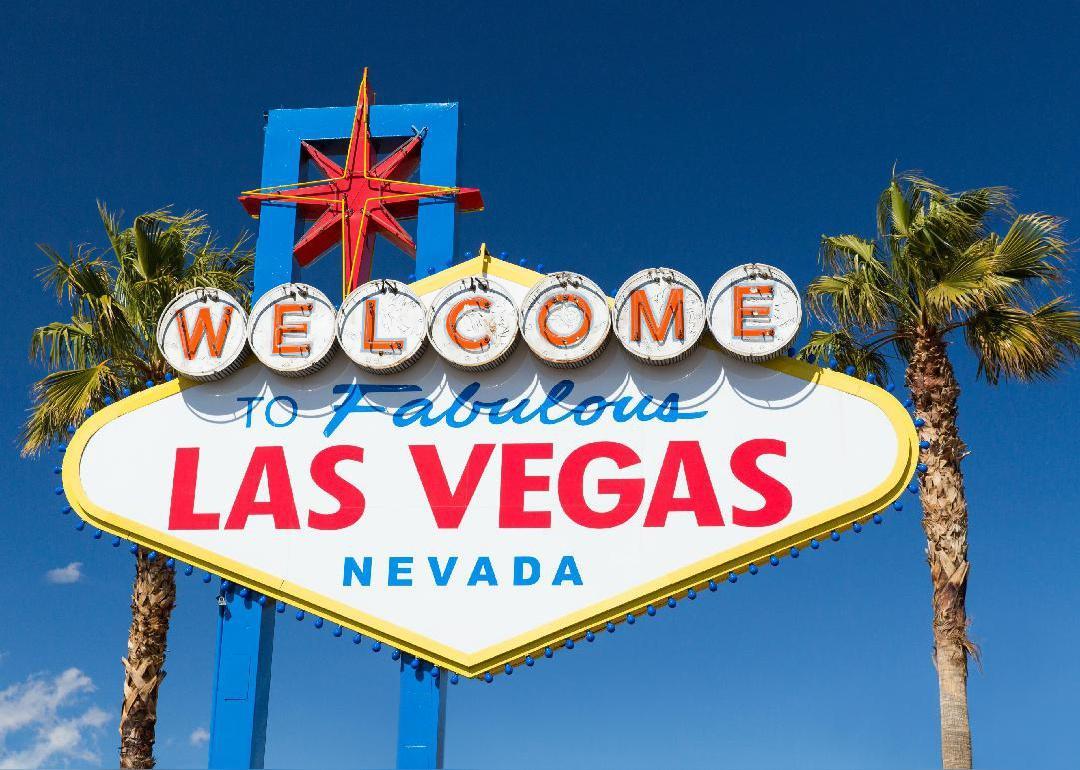
#1. Las Vegas, NV
- Temperature change 1970-2018: 5.76° F
- Average temperature change in the state: 2.76° F (#15 fastest-warming state)
Not only is Las Vegas the fastest-warming U.S. city, but it also has the . On average, summer days in Las Vegas are 7.3 degrees hotter than rural areas, but up to 24 degrees, and Las Vegas has 22 more days each year, on average, above 90 degrees compared with rural areas. The earlier this year in the International Journal of Environmental Science and Technology showing an association between the increase in number and severity of heat waves between 2007 and 2016 and an increase in the number of heat-related deaths during the same period.
The heat in Las Vegas has already reached unbearable levels for some. To try and slow the heating trend, the city government in 2016 . The large resorts are also trying to use more renewable electricity: MGM has installed solar panels on top of Mandalay Bay Convention Center and other properties are powered by the Mojave Desert solar array.
You may also like: