Food is a huge source of methane emissions. Fixing that is no easy feat.
was produced by and reviewed and distributed by 麻豆原创.
Food is a huge source of methane emissions. Fixing that is no easy feat.
An international team of researchers found that global emissions of methane, a potent greenhouse gas, rose faster than ever in the three years ending in 2022. In a from the Global Carbon Project, dozens of scientists reviewed many different emitters of methane and found that two-thirds of methane emissions came from human activity in 2020, while the rest came from natural sources like wetlands.
The way we eat and the way we dispose of food play a huge role in humanity's growing methane problem, shares. The report zooms in on roughly two decades of data: one from 2000 to 2009 and another from 2010 to 2019. (It also includes an analysis of emissions in 2020 and beyond where data was available.) The authors found that agriculture and waste鈥攊ncluding landfills and wastewater management鈥攚ere responsible for releasing almost double the methane emissions into the atmosphere as fossil fuel production and use from 2010 to 2019.
The trend is hardly surprising to experts tracking global greenhouse gas emissions. This is the Global Carbon Project's fourth report tracking the sources and sinks of methane emissions. In the last global methane budget, published in 2020, agriculture and waste also contributed roughly twice the methane emissions as the methane that leaked into the air during the extraction of oil, gas, and coal. But the findings come at a time when to slashing their methane emissions by 30% by 2030, indicating the amount of work left to do to reach this climate goal has grown. That's both a problem and a potential opportunity, said one report author.
The figures detailed in the report, especially from the agricultural sector, are not "fixed numbers," said Peter Raymond, a professor of ecosystem ecology at the Yale School of the Environment and one of the dozens of scientists who contributed to the methane budget report.
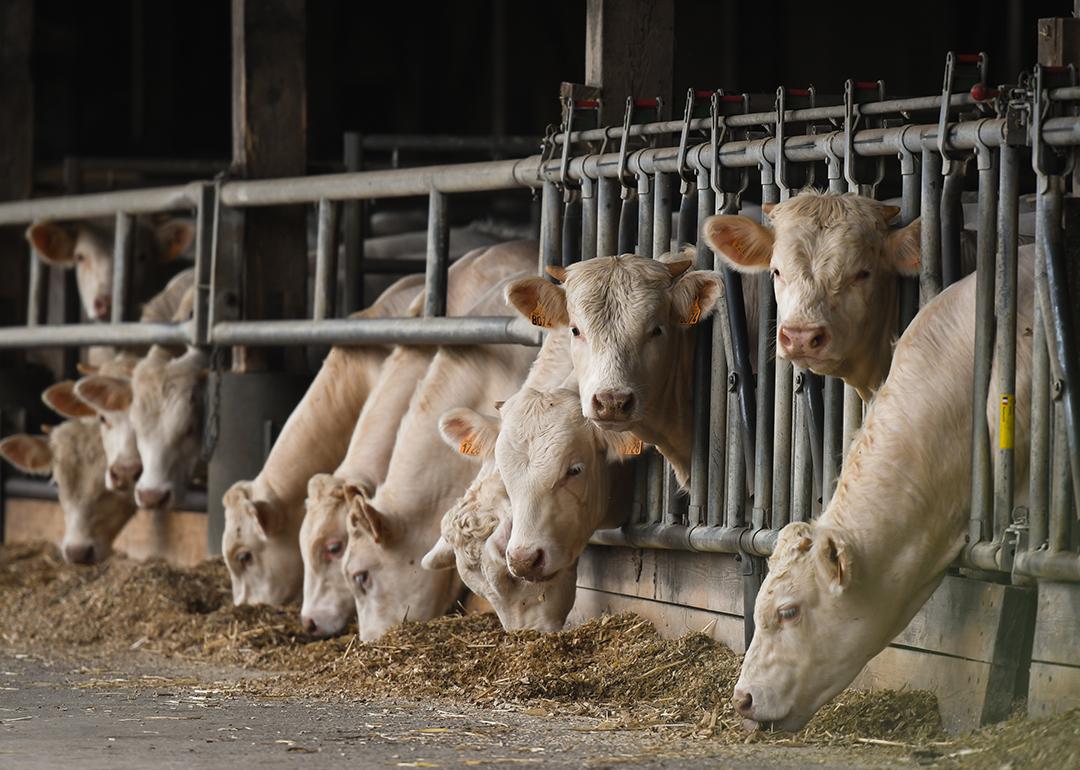
Agricultural production uses up , which represents plenty of room for intervention. Animal agriculture is an especially big contributor to global methane emissions: The largest source of methane emissions within the agricultural sector is livestock. Ruminants like cattle and sheep release methane into the atmosphere when they burp. This source of methane is technically known as enteric fermentation.
Cutting meat consumption鈥攑articularly red meat, particularly in high-income countries鈥攔epresents an opportunity to lower methane emissions. "There's a place for shifting our diets," said Richard Waite, director of agriculture initiatives at the World Resources Institute.
For regions that "consume more meat than the global average," said Waite, "shifting away from meat, especially toward plant-based foods," presents a real opportunity to cut back methane emissions.
Raymond noted that other climate solutions are emerging that target enteric fermentation; these include , which can reduce cattle's methane production.
The other two major sources of methane from agriculture are manure management and rice production. In those areas, too, there are a number of potential solutions that would reduce methane emissions, such as separating animal waste by liquids and solids and finding alternatives to flooding rice paddies.
Raymond pointed out that governments are especially interested in solutions to reduce methane emissions because "it's also seen as a possible way to buy time" while governments and the private sector undertake the monumental task of replacing fossil fuels with renewables. CO2 represents in the atmosphere by concentration, and it's responsible for trapped in the atmosphere. That, he said, makes carbon "a much bigger nut to crack."
Methane spends a lot less time in the atmosphere than carbon dioxide; about 20 years after it's released, most of it will have decayed, while carbon dioxide lingers in the atmosphere for hundreds of years. But methane also generates heat much more readily than carbon dioxide鈥攁bout 80 times more in its first 20 years in the atmosphere鈥攎eaning it contributes significantly toward global warming in the short term. It is good news鈥攕ort of鈥攂ecause by the same token, any reductions in methane emissions will have more of an impact on the climate right away.
The fact that researchers have found that a majority of methane emissions stem from human activities is "a blessing and a curse," said James Gerber, a senior scientist focused on agriculture and land use at Project Drawdown, a climate solutions nonprofit. "It's sobering that so much of that is the fault of humans," he said. But "we can actually do something about it if we're a big part of the problem."
The differences between the agriculture and the energy sector really illustrate the challenges of decarbonizing food systems. The greatest source of human-made greenhouse gas emissions is , and within that, the burning of fossil fuels like oil, gas, and coal to create electricity. Therefore, the path to decarbonization is obvious: Shift away from fossil fuels to renewable energy.
For consumers, that transition will almost happen in the background; once necessary changes are made to power grids, "you flip a switch, and the adoption is automatic," said Mario Herrero, a professor at Cornell University's agricultural science school. With agriculture, decarbonization will likely require the adoption of technological solutions by farmers, as well as dietary shifts by consumers. These kinds of behavioral changes are tricky; Herrero points out that policy incentives might be needed to get farmers on board with new practices. "The adoption of novel technologies in the livestock sector has been around 20% over 15 years," said Herrero. "So it takes forever."
Still, when it comes to food, change is possible, said Waite. "Food is something that we can all talk about," he said. "We're all familiar with it. We all make our own decisions about it three times a day or more." Systems-level change is required to make a difference at a global scale鈥攂ut that can start at the consumer level, said Waite.
Our food systems also play an important role in potentially reducing emissions from landfills. The methane budget report found that waste was responsible for nearly a fifth of global methane emissions in 2020. And while not all of that comes from food waste, a good portion of it does. For example, in the U.S., , according to the Environmental Protection Agency.
The role that waste systems play in methane emissions is getting more attention, says Emily Broad Leib, who heads the Food Law and Policy Clinic at Harvard Law School. "I think there's growing awareness that this is something we need to address if we really want to make an impact on methane emissions," she said.
Certain countries have made significant strides in diverting food waste to make compost, like South Korea, which has by making organic waste in landfills illegal. In France, has led to . But agriculture and waste鈥攚hich in some way, represent the beginning and end of our food systems鈥攁re still major emitters of methane in the Global South, according to the methane budget report.
The imperative, then, is scaling and translating solutions to work in even more environments. "There is a known playbook that's emerging around the policy tools that can get food out of landfills," said Broad Leib. "And we need to be rolling those out more quickly."