How telecom networks adapt when disasters strike remote regions
When natural disasters strike remote regions, connectivity can mean the difference between tragedy and survival. In areas defined by rugged terrain, vast distances, or geographic isolation, restoring and maintaining communication becomes especially complex.
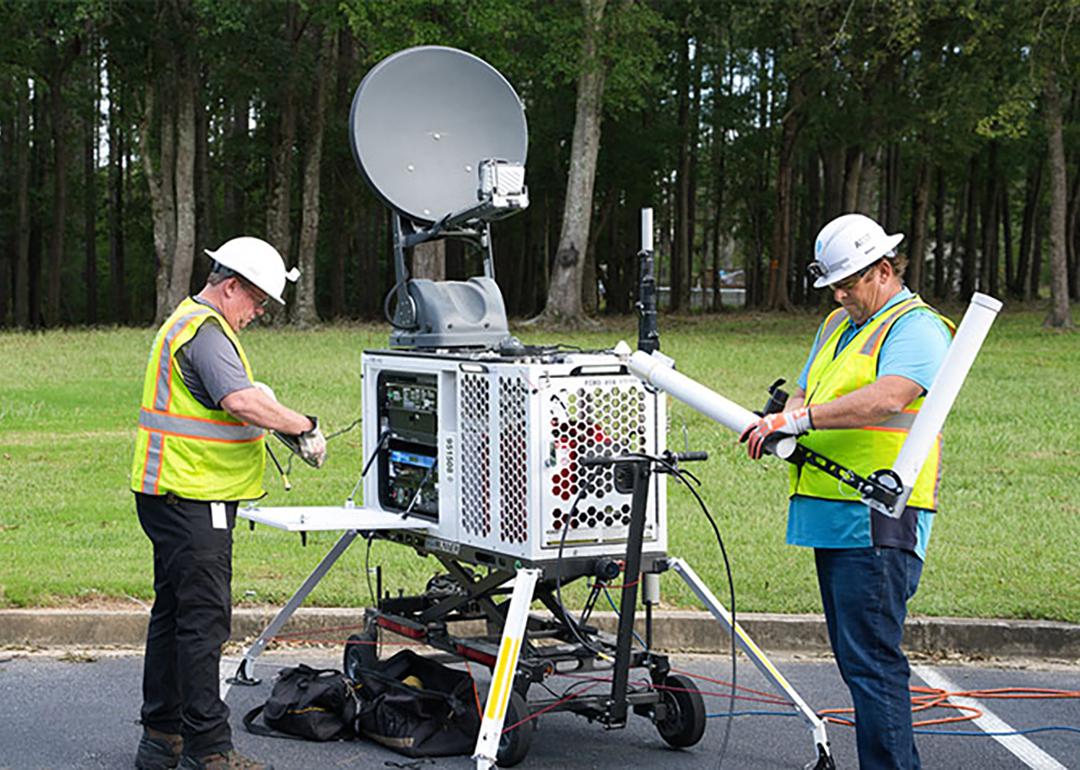
That reality is evident on Hawai鈥榠鈥檚 Big Island, where crews worked to contain . To support emergency response in the area, portable satellite assets were used to reconnect or reinforce wireless coverage and ensure that responders can communicate even if traditional infrastructure was disrupted. These portable systems, capable of operating independently of power grids or fiber connections, have become an essential part of modern disaster recovery efforts across the United States.
As extreme weather and wildfires continue to test the nation鈥檚 emergency networks, new technologies are helping build more adaptive, resilient systems capable of delivering communication when and where it鈥檚 needed most. outlines how the telecommunications industry is working to improve connectivity in remote areas, including Hawai鈥榠 and Alaska.
Climate change and the increase in extreme weather events
Climate change refers to a long-term shift in temperature patterns and weather events. Since the 1800s, . In recent years, the number of extreme weather events has grown at a rapid rate.
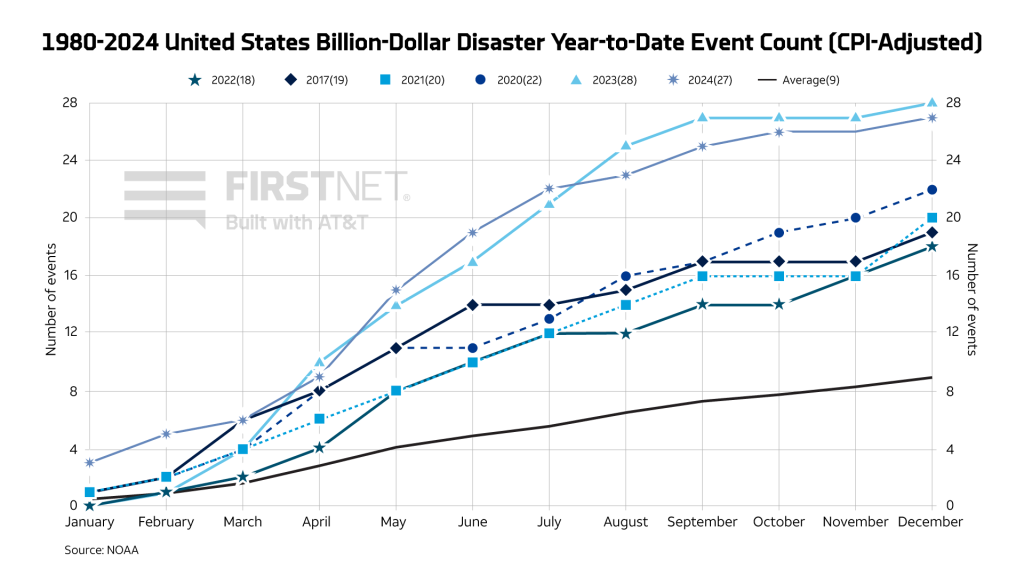
According to the National Centers for Environmental Information, a branch of the National Oceanic and Atmospheric Administration (NOAA), there were between 1980 and 2024, causing nearly $3 trillion in damage. In 2024 alone, there were 27 natural disasters with losses exceeding $1 billion each.
The that over the last ten years (2015-2024), the U.S. has been impacted by 190 separate billion-dollar disasters that have killed more than 6,300 people and caused approximately $1.4 trillion in damage. This does not even take into account more recent disasters in 2025, including the Southern California wildfires and the central Texas floods.
There鈥檚 no question that the world鈥檚 climate is changing and natural disasters are impacting people all over the world. In the United States, remote areas are particularly at risk.
Disaster response challenges in Alaska and Hawai鈥榠
When disaster strikes in Alaska or Hawai鈥榠, restoring communication is often as challenging as containing the crisis itself. Vast distances, rugged terrain, and isolation from the U.S. mainland make both states uniquely vulnerable when storms disrupt power and network systems.
Reliable internet and mobile access not only keep families informed and connected but also enable rescue teams to map damage, deploy resources efficiently, and save lives. When storms hit places like Alaska and Hawai鈥榠, communicating with those on the ground, delivering emergency supplies or evacuating residents becomes complex.
Connectivity challenges in Alaska
Alaska presents a unique set of challenges during natural disasters, including earthquakes, landslides, and typhoons. Despite its reputation as a cold, snow-filled state, Alaska also experiences an extended wildfire season each year, and the fires are worsening. From 2005 to 2024, burned in Alaska, more than any other two decades before.
Alaska鈥檚 sparse population and limited emergency resources mean that local responders are often stretched thin. This forces communities to rely on coordination across great distances, something that鈥檚 impossible without strong, resilient connectivity.
Alaska鈥檚 location presents unique challenges for telecom and internet service. Many residents rely on undersea fiber optic cables or satellite-based services. However, in BroadbandNow鈥檚 annual , 2025, Alaska came in dead last in the list of states with affordable broadband access. This is a major safety concern during a disaster.
As recently as October 2025, the western coast of Alaska was , a devastating storm that almost entirely wiped out the remote villages of Kipnuk and Kwigillingok. These villages lacked the infrastructure to shelter residents, and hundreds of people needed to be airlifted to Anchorage.
鈥淎s a retired U.S. Air Force colonel with significant domestic operations experience, I have a unique understanding of public safety鈥檚 challenges and operations,鈥� says Chris Stratmann, associate director of AT&T鈥檇 FirstNet Response Operations Group (ROG) 鈥淧ortable and satellite-based systems are a critical part of maintaining coverage when traditional infrastructure is damaged, out of power or simply inaccessible 鈥� it鈥檚 all part of helping first responders and the communities they serve stay connected when it matters most.鈥�
Connectivity challenges in Hawai鈥榠
Hawai鈥榠 is renowned for its exceptional beauty, but it is also one of the island groups in the world. Nearly 2,400 miles from mainland United States, Hawai鈥榠鈥檚 vast rural area and island isolation mean that local responders are often stretched thin, and need dependable, resilient connectivity in the event of a natural disaster.
In August 2023, a wildfire swept through Maui, killing more than 100 people and completely destroying the historic village of Lahaina. Adding to the challenges of a thinly spread fire department, a lack of supplies and high winds, utility poles and cellular networks went down, leaving some residents and tourists without connectivity during the fire. While police, fire departments and public safety officials were at least able to communicate, some everyday citizens were unable to receive or send calls or texts.
The during the Maui wildfire is a stark example of what can happen when first responders and residents are unable to communicate during an emergency.
How the telecom industry is responding to connectivity challenges
The need for reliable communication services in the wake of natural disasters has never been more important, and the industry is responding to this need. In the early morning hours of July 4, 2025, heavy rains caused a catastrophic flash flood along the Guadalupe River in Texas Hill Country, killing at least 135 people. In the aftermath of the storm, it was critical for residents to be able to reach emergency personnel.
"When disaster strikes, like during the Texas floods, telecommunications teams with contracts work alongside emergency responders to restore service and provide temporary coverage in hard-hit areas and support search and rescue operations,鈥� says Jeff McKnight, assistant VP of Network Disaster Recovery at AT&T. "Deploying mobile and satellite technologies that operate independently of damaged infrastructure is essential to keeping first responders connected in those critical first hours.鈥�
Innovation across the telecommunications sector is driving new ways to maintain connectivity amid an increasingly volatile climate, including:
- The use of deployable mobile communication units to disaster sites: mobile cell sites on trailers or cells on wheels (COWs), which can be brought in to restore coverage quickly; truck-mounted satellite-linked units also known as satellite cells on light trucks (SatCOLTs), which provide cellular service even when terrestrial networks are unavailable; portable power generators, often trailer-mounted to support equipment off the grid; and ground-based satellite towers, which connect directly to satellites to maintain communication when traditional cellular infrastructure is disrupted.
- Federal alert systems: advanced-warning systems that allow government agencies, including the Federal Emergency Management Agency (FEMA), the National Weather Service (NWS) and NOAA, to reach people quickly when there is a dangerous storm approaching or other urgent notices. These systems include:
- Network platforms dedicated to first responders: provide firefighters, law enforcement, paramedics, and rescue teams with priority access to the connectivity they need for efficient and effective coordination and communication during emergency responses.
- Low-earth orbit (LEO) technology: are not only a tool for backhaul communications during a disaster, but also for bridging the digital divide in remote areas.
- Learning from past events: the Maui wildfires exposed serious communication flaws in Hawai鈥榠 that impacted emergency response. , an organization for survivors, has a mission to: 鈥渆nsure communication networks are redundant and reliable during emergencies. The project includes a series of facility upgrades and new installations that will provide increased coordination and communication between and among County departments, first responders, non-governmental organizations, and the public. The projects will expand radio and cellular capacity, close gaps in existing communication channels, increase public warning and information sharing, and improve overall emergency response capabilities as a result.鈥�
The future of connectivity in Alaska, Hawai鈥榠 and remote areas
The experiences of Alaska and Hawai鈥榠 offer a glimpse into the future of disaster resilience. By improving infrastructure, using satellite technology, and deploying mobile units, responders in Alaska and Hawai鈥榠 are helping define a model for how communication networks can work in extreme conditions. These innovations are reshaping how crews respond to emergencies; not just in the most isolated states, but for all regions facing increasingly severe weather threats.
was produced by and reviewed and distributed by 麻豆原创.