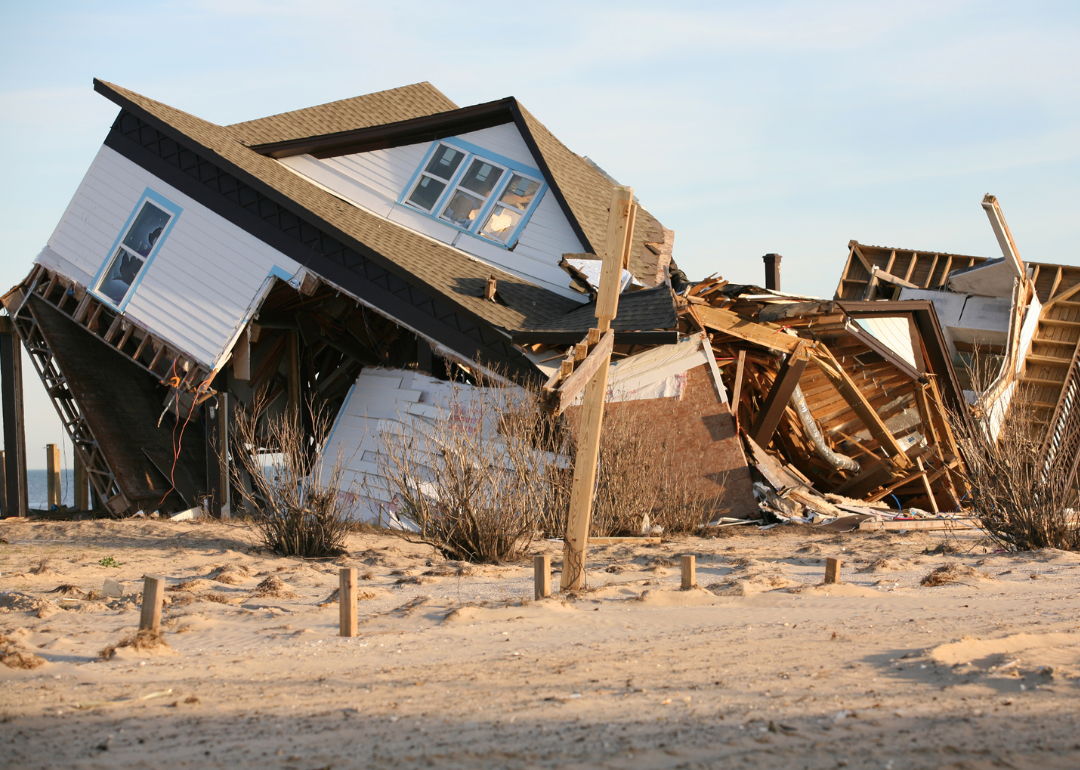
What to do after a hurricane
The worst has happened: A hurricane struck your community, forcing you and your loved ones to flee to safety. Once the imminent danger has passed, you'll likely be left with a lot of questions鈥攏amely, what's next? How do you even begin to recover from the devastating impact of a natural disaster?
Whether the hurricane decimated your town or the community escaped largely unscathed, following these steps will keep you safe after a hurricane. 麻豆原创 compiled expert advice from organizations such as the Red Cross and the Federal Emergency Management Agency to come up with this list of things you need to do after a hurricane. Take these steps to return to your home, assess the damage and begin to rebuild while staying safe. Remember: Even after the weather report clears, the negative effects of a hurricane can still linger.
1. Keep listening for updates from local authorities
Even after the hurricane or tropical storm has passed, you鈥檒l want to stay tuned into the latest weather report. to stay ahead of all the latest developments.
2. Check in with family and friends in the area
Strong winds can knock out cell towers and phone lines, making it difficult to call your loved ones after a hurricane. Typically, telecommunications companies after an emergency to provide service, at least temporarily. Even so, you should refrain from making too many calls to reduce network congestion: Others might still be trying to call 911. Instead, use texting or social media to connect with your friends and family.
3. If you evacuated, don't go home unitl the authorities say it's safe
Once a hurricane passes, your first instinct might be to go home as soon as possible. It鈥檚 natural to be anxious about your home, neighborhood, and community. Still, for local authorities to let you know that it鈥檚 safe before you go home.
4. Be careful of downed trees, power lines, floodwater, and other debris
Roads can be full of danger after a hurricane or tropical storm. Be wary of floodwater: Since it鈥檚 extremely difficult to tell how deep the waters are, . Floodwater can also be like raw sewage, industrial chemicals, and bacteria, so avoid personal contact with it at all costs. If you see any downed power lines, steer clear and call 911 right away. Other large debris such as uprooted trees or flipped cars can be reported to local authorities.
5. Avoid using matches
Surging floodwaters can break gas lines or dislodge seals, causing dangerous gas leaks. When you return to your home for the first time, use a flashlight rather than a candle to light your way. That way, if there is a gas leak, you won't accidentally cause an explosion. , turn off the main valve and call your gas company, police department and fire department immediately.
6. Don't drink or cook with tap water
Hurricanes and tropical storms can also contaminate the tap water with the same harmful bacteria found in floodwater. until local authorities give the OK.
7. When it's safe, inspect your home
As soon as you are able to return to your home, check for any damage. Walk through the house room by room, . That way, you鈥檒l be prepared to file any necessary insurance claims and begin repairs.
8. Report any losses as soon as possible
If your home has been damaged in the storm, you should notify your insurance company as soon as possible. Provide a general description of the damage, as well as any photographs you took of the losses.
9. Prevent further damage to your property
Even if the worst of the storm has passed, lingering weather can still prove problematic. Once it鈥檚 safe to return to your property, take steps to prevent even more damage. If falling trees punctured your roof, cover any holes with a tarp to keep out rainwater. If your windows have been blown out, tape plastic sheeting over the opening. Since most insurance doesn鈥檛 cover damage sustained after the storm, this step could be crucial.
10. Have your home inspected
Ensure that your home is safe to inhabit before starting any cleanup or repairs. to check the building's structural integrity, an electrician to check your wiring, a plumber to check the water lines and the gas company to check for any gas line breaks.
11. Wear protective gear for cleanup
Even if your home didn鈥檛 sustain much damage, you鈥檒l likely have to clean up a lot of debris on your property. And since that debris might have been contaminated by floodwater, you don鈥檛 want to use your bare hands. wearing safety gear such as heavy work gloves, waterproof boots, goggles and hard hats during disaster cleanup.
12. Throw away anything that's wet
Start the process of cleaning up by airing out your home and throwing out any wet items that won鈥檛 dry quickly, like mattresses, couches, and books. If mold has already started to grow, clean it up with a . Drywall and insulation that has been soaked by floodwater has got to go, too.
13. Take care of yourself
Experts also say you should as you recover from a hurricane: Emotions often run high after a disaster, so physical tasks can tire you out more quickly than usual.
14. Prepare for future storms
As you begin to rebuild, consider updating your home to better prepare yourself for the next storm. Strengthening your garage doors, installing storm shutters, removing damaged trees and other storm preparation measures can help . Follow as you rebuild.
15. Consider purchasing insurance, if you don't have it already
Insuring your home for hurricane damage can be a little tricky. Homeowners insurance but often does cover damage from high winds. Flood insurance will cover water damage, however. If you don't have it already, you might want to consider buying flood insurance from an insurer that participates in the .