Biggest countries in the world
When embarking on a cross-country road trip, it's not hard to experience long stretches of loneliness, where it feels as though not another soul exists for miles in any direction. At the same time, boarding a rush-hour metro in New York City, London, or Tokyo, might be enough to induce a longing for a wide-open road with not a fellow passenger in sight.
The world has a funny way of feeling extremely crowded at times and awfully empty at others, and this may have something to do with the fact that more than half the world's 7.8-billion-person population is concentrated within a compact collection of urban hubs. Indeed, 56.2% of the world's population lives in urban areas, according to the Central Intelligence Agency's World Factbook.
In advance of World Population Day—coming up on July 11—Â鶹ԭ´´ took a look at the 100 most populous countries in the world to find out what they had in common and what in their demographics differed. Using data from the Central Intelligence Agency's World Factbook, has listed the world's largest countries according to population estimates from 2020. For each country listed, information on population is provided using the metrics of population growth rate, urban population, net migration rate, birth and death rates, and the population's median age—all data as of 2020, the most recent available figures.
The results show a world that is expanding rapidly in some areas while contracting significantly in others. Trends as diverse as access to family planning and contraceptives or economic mobility and work-life balance contributed to slowdowns in population growth in some countries, while the cessation of conflicts and increases in health care quality stimulated growth in other areas. Countries were ranked out of 195 total that are recognized by either the United States or the United Nations.
According to the Factbook, net migration rate "includes the figure for the difference between the number of persons entering and leaving a country during the year per 1,000 persons (based on midyear population)." And also per the Factbook, urban population "describes the percentage of the total population living in urban areas, as defined by the country." Rate of urbanization describes the "projected average rate of change of the size of the urban population over the given period of time."
Read on to see which countries hold the majority of the world's population.
Intro written by .
Research note: The CIA's 2020 population estimates come from a variety of sources, including countries' government records and population censuses. Population estimates can vary from source to source as organizations calculate them differently based on migration, mortality, and fertility rates.
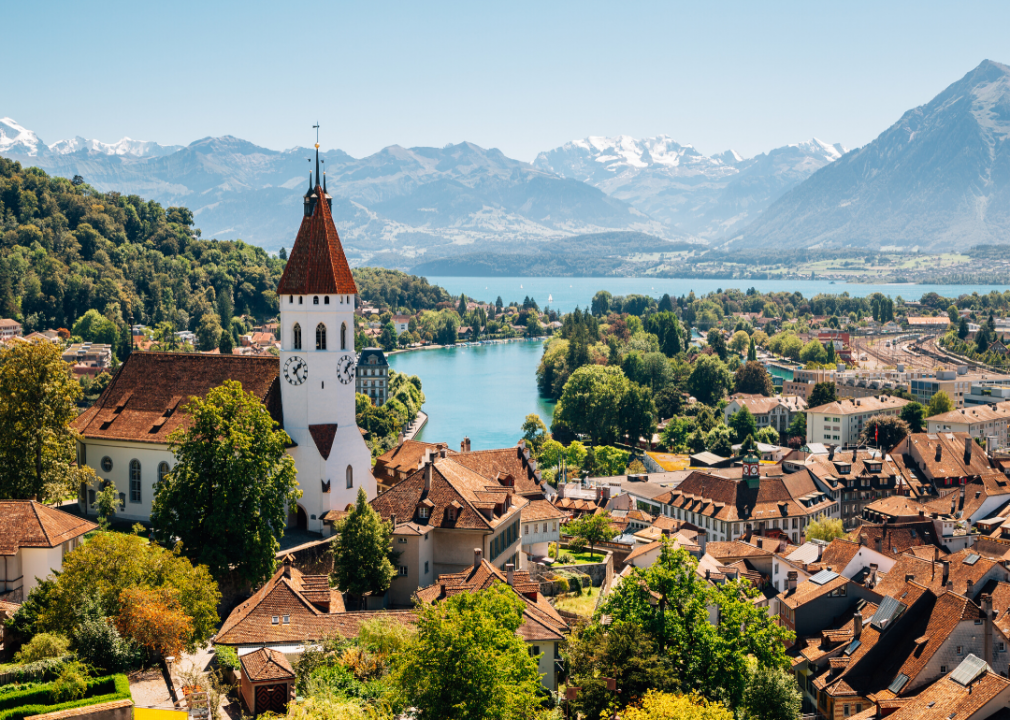
#100. Switzerland
- Population: 8,403,994 (+0.7% average population growth)
- Net migration rate per 1,000 people: +4.6%
- Urban population: 73.9% of total population (+0.9% annual rate of change)
- Birth rate per 1,000 people: 10.5 (median life expectancy at birth: 82.8 years)
- Death rate per 1,000 people: 8.5
- Median age: 42.7 years
Famed for its neutrality, Switzerland has long been an attractive option for those looking for a safe country to call home. In recent years, refugees from conflicts across the globe have come to call Switzerland home, with during some of the most tumultuous recent years of conflict in the Middle East and North Africa.
#99. Togo
- Population: 8,608,444 (+2.6% average population growth)
- Net migration rate per 1,000 people: 0.0%
- Urban population: 42.8% of total population (+3.8% annual rate of change)
- Birth rate per 1,000 people: 32.0 (median life expectancy at birth: 66.6 years)
- Death rate per 1,000 people: 6.5
- Median age: 20.0 years
Togo’s current population growth can largely be attributed to high fertility rates. A lack of access to family planning has contributed not only to population growth but also to high poverty rates, as families struggle to feed all of their children and resources stretch thin.
#98. Israel
- Population: 8,675,475 (+1.5% average population growth)
- Net migration rate per 1,000 people: +2.1%
- Urban population: 92.6% of total population (+1.6% annual rate of change)
- Birth rate per 1,000 people: 17.6 (median life expectancy at birth: 83.0 years)
- Death rate per 1,000 people: 5.3
- Median age: 30.4 years
Approximately lives in Israel, which contributes to much of its population and migration. Israel also has a very high number of births versus death rates compared to other developed countries, which is a significant factor in its population growth.
#97. Austria
- Population: 8,859,449 (+0.4% average population growth)
- Net migration rate per 1,000 people: +3.6%
- Urban population: 58.7% of total population (+0.6% annual rate of change)
- Birth rate per 1,000 people: 9.5 (median life expectancy at birth: 81.9 years)
- Death rate per 1,000 people: 9.8
- Median age: 44.5 years
Statisticians forecast that a primary driver that will continue Austria’s population growth is migration. The of Austria has increased significantly over the past decade and is only expected to increase, including refugees fleeing from war and poverty as they did in the 2015 refugee and migrant crisis.
#96. Tajikistan
- Population: 8,873,669 (+1.5% average population growth)
- Net migration rate per 1,000 people: -1.1%
- Urban population: 27.5% of total population (+2.6% annual rate of change)
- Birth rate per 1,000 people: 21.8 (median life expectancy at birth: 69.0 years)
- Death rate per 1,000 people: 5.8
- Median age: 25.3 years
Although Tajikistan has experienced significant growth in the 21st century, a unique feature of this growth is that it has . Urban and rural population increases have occurred at roughly the same rate, reflecting in part the lack of perceived desirability and economic opportunity of the country’s cities compared to its rural areas.
#95. Honduras
- Population: 9,235,340 (+1.3% average population growth)
- Net migration rate per 1,000 people: -1.4%
- Urban population: 58.4% of total population (+2.8% annual rate of change)
- Birth rate per 1,000 people: 18.5 (median life expectancy at birth: 74.6 years)
- Death rate per 1,000 people: 4.7
- Median age: 24.4 years
Population trends are worrying observers of Honduras, as they look at a younger population that will need to draw on social services. Health care and other public resources are already not sufficient to cover need, meaning that as the country’s young population ages, this issue will cause .
#94. Belarus
- Population: 9,477,918 (-0.3% average population growth)
- Net migration rate per 1,000 people: +0.7%
- Urban population: 79.5% of total population (+0.4% annual rate of change)
- Birth rate per 1,000 people: 9.5 (median life expectancy at birth: 73.8 years)
- Death rate per 1,000 people: 13.1
- Median age: 40.9 years
A hallmark of Belarus’s population trends is its rapid aging. Depopulation has already forced the raising the retirement age and increasing benefits for childbearers in order to encourage population growth.
#93. Hungary
- Population: 9,771,827 (-0.3% average population growth)
- Net migration rate per 1,000 people: +1.3%
- Urban population: 71.9% of total population (+0.1% annual rate of change)
- Birth rate per 1,000 people: 8.8 (median life expectancy at birth: 76.7 years)
- Death rate per 1,000 people: 12.9
- Median age: 43.6 years
Low birth rates and emigration are responsible for much of Hungary’s population decline. The government has to counter the decline, including interest-free loans for married couples and home purchase subsidies.
#92. United Arab Emirates
- Population: 9,992,083 (+1.5% average population growth)
- Net migration rate per 1,000 people: +7.6%
- Urban population: 87% of total population (+1.7% annual rate of change)
- Birth rate per 1,000 people: 9.5 (median life expectancy at birth: 79.0 years)
- Death rate per 1,000 people: 2.0
- Median age: 38.4 years
The United Arab Emirates has the highest population growth rate in the Arab world. The country benefits from a of expatriates from elsewhere in the world who come to the country to work, and the good health services keep mortality rates lower than birth rates.
#91. Sweden
- Population: 10,202,491 (+0.8% average population growth)
- Net migration rate per 1,000 people: +5.2%
- Urban population: 88% of total population (+1.1% annual rate of change)
- Birth rate per 1,000 people: 12.1 (median life expectancy at birth: 82.4 years)
- Death rate per 1,000 people: 9.4
- Median age: 41.1 years
Over the last decade, Sweden’s population has swelled in part because of a wave of immigrants from Syria, Iraq, and North Africa. The country became one of the preferred destinations of such refugees, although that number dipped were put in place in 2016.
#90. Azerbaijan
- Population: 10,205,810 (+0.8% average population growth)
- Net migration rate per 1,000 people: 0.0%
- Urban population: 56.4% of total population (+1.6% annual rate of change)
- Birth rate per 1,000 people: 14.5 (median life expectancy at birth: 73.6 years)
- Death rate per 1,000 people: 7.0
- Median age: 32.6 years
One of the most important trends impacting Azerbaijan’s population is the decline in mortality rates among working-age men. This has created , and is a reflection in strides the country has made to improve health care.
#89. Portugal
- Population: 10,302,674 (-0.3% average population growth)
- Net migration rate per 1,000 people: +0.3%
- Urban population: 66.3% of total population (+0.5% annual rate of change)
- Birth rate per 1,000 people: 8.1 (median life expectancy at birth: 81.1 years)
- Death rate per 1,000 people: 10.8
- Median age: 44.6 years
Two of the most important factors that have stagnated Portugal’s population growth in recent years are the low birth rate and the aging of the population. High unemployment and a reduction in the over the past decade have made starting a new family much more difficult for many couples.
#88. Dominican Republic
- Population: 10,499,707 (+1.0% average population growth)
- Net migration rate per 1,000 people: -2.7%
- Urban population: 82.5% of total population (+2.1% annual rate of change)
- Birth rate per 1,000 people: 18.5 (median life expectancy at birth: 72.0 years)
- Death rate per 1,000 people: 6.3
- Median age: 27.9 years
Birth and death rates are both higher in the Dominican Republic than the regional average in the West Indies. But growth has been tempered by the fact that many Dominicans have emigrated since the 1960s, with more than one having left the country.
#87. South Sudan
- Population: 10,561,244 (+2.7% average population growth)
- Net migration rate per 1,000 people: +0.2%
- Urban population: 20.2% of total population (+4.1% annual rate of change)
- Birth rate per 1,000 people: 38.8 (median life expectancy at birth: 55.5 years)
- Death rate per 1,000 people: 11.4
- Median age: 18.6 years
South Sudan faces growth. The country’s infrastructure, including health care, has been badly damaged by war, which has also had the effect of slowing the birth rate, in a sign that the challenges of runaway growth may be tempered in the coming years.
#86. Greece
- Population: 10,607,051 (-0.3% average population growth)
- Net migration rate per 1,000 people: +0.9%
- Urban population: 79.7% of total population (+0.2% annual rate of change)
- Birth rate per 1,000 people: 7.8 (median life expectancy at birth: 81.1 years)
- Death rate per 1,000 people: 12.0
- Median age: 45.3 years
One of the most unique factors impacting the low Greek population growth is so-called “brain drain.” As the Greek economy has been battered since the financial crisis of 2008, many Greeks have migrated to other countries in search of more .
#85. Czech Republic
- Population: 10,702,498 (+0.1% average population growth)
- Net migration rate per 1,000 people: +2.3%
- Urban population: 74.1% of total population (+0.2% annual rate of change)
- Birth rate per 1,000 people: 8.9 (median life expectancy at birth: 79.3 years)
- Death rate per 1,000 people: 10.7
- Median age: 43.3 years
A significant factor impacting the relatively low average population growth in the Czech Republic is the aging population. The is 10 years older than it was in 1980, and the country also has one of the lowest fertility rates in the world.
#84. Jordan
- Population: 10,820,644 (+1.4% average population growth)
- Net migration rate per 1,000 people: -11.3%
- Urban population: 91.4% of total population (+2.4% annual rate of change)
- Birth rate per 1,000 people: 23.0 (median life expectancy at birth: 75.5 years)
- Death rate per 1,000 people: 3.4
- Median age: 23.5 years
Jordan’s population is growing rapidly, driven in part by a rapid influx of people into its capital city. The population more than doubled between 2004 and 2015, driven in large part by refugees, many of whom and were fleeing that country’s civil war.
#83. Cuba
- Population: 11,059,062 (-0.3% average population growth)
- Net migration rate per 1,000 people: -3.7%
- Urban population: 77.2% of total population (+0.1% annual rate of change)
- Birth rate per 1,000 people: 10.4 (median life expectancy at birth: 79.2 years)
- Death rate per 1,000 people: 9.1
- Median age: 42.1 years
A significant factor impacting Cuba’s population in the 21st century has been an outflow of Cubans moving to the U.S. Between 2000 and 2017, the number of Cubans living in the U.S. has .
#82. Haiti
- Population: 11,067,777 (+1.3% average population growth)
- Net migration rate per 1,000 people: -1.9%
- Urban population: 57.1% of total population (+2.9% annual rate of change)
- Birth rate per 1,000 people: 21.7 (median life expectancy at birth: 65.3 years)
- Death rate per 1,000 people: 7.4
- Median age: 24.1 years
Haiti is one of the most overpopulated countries on Earth. The country’s high birth rate has contributed to poverty in the country, as more resources are needed to care for more children.
#81. Bolivia
- Population: 11,639,909 (+1.4% average population growth)
- Net migration rate per 1,000 people: -0.3%
- Urban population: 70.1% of total population (+2.0% annual rate of change)
- Birth rate per 1,000 people: 20.8 (median life expectancy at birth: 70.4 years)
- Death rate per 1,000 people: 6.3
- Median age: 25.3 years
Both Bolivia’s birth and fertility rates are falling, which is contributing to population growth decline. However, the country’s population 50 years, which means that it is not in significant danger of steep population decline.
#80. Belgium
- Population: 11,720,716 (+0.6% average population growth)
- Net migration rate per 1,000 people: +4.8%
- Urban population: 98.1% of total population (+0.6% annual rate of change)
- Birth rate per 1,000 people: 11.1 (median life expectancy at birth: 81.4 years)
- Death rate per 1,000 people: 9.8
- Median age: 41.6 years
Belgium’s population is growing at a low and steady rate. However, the average age in the country is relatively high at almost 42, and of the country nearing retirement age could portend difficult pension obligations in the future.
#79. Tunisia
- Population: 11,721,177 (+0.9% average population growth)
- Net migration rate per 1,000 people: -1.4%
- Urban population: 69.6% of total population (+1.5% annual rate of change)
- Birth rate per 1,000 people: 15.9 (median life expectancy at birth: 76.3 years)
- Death rate per 1,000 people: 6.4
- Median age: 32.7 years
Experts suggest that Tunisia’s population is expected to grow until around 2058, after which point it will plateau. This phenomenon is in part because the fertility rate is just above the population replacement rate, and the country sees negative net migration .
#78. Somalia
- Population: 11,757,124 (+2.2% average population growth)
- Net migration rate per 1,000 people: -3.8%
- Urban population: 46.1% of total population (+4.2% annual rate of change)
- Birth rate per 1,000 people: 38.7 (median life expectancy at birth: 54.0 years)
- Death rate per 1,000 people: 12.4
- Median age: 18.5 years
Somalia’s high fertility rate and the large population of women of reproductive age maintain a high birth rate in the country year after year. The fertility rate is one of the highest in the world, with each woman typically giving birth to nearly six children on average.
#77. Burundi
- Population: 11,865,821 (+2.9% average population growth)
- Net migration rate per 1,000 people: -0.8%
- Urban population: 13.7% of total population (+5.7% annual rate of change)
- Birth rate per 1,000 people: 36.5 (median life expectancy at birth: 66.7 years)
- Death rate per 1,000 people: 6.2
- Median age: 17.7 years
One factor that plays into the population rate in Burundi is the country’s high death rate from AIDS. The crisis has contributed to lower population growth than would otherwise be expected, despite a high fertility rate and a low median age.
#76. Guinea
- Population: 12,527,440 (+2.8% average population growth)
- Net migration rate per 1,000 people: 0.0%
- Urban population: 36.5% of total population (+3.5% annual rate of change)
- Birth rate per 1,000 people: 36.1 (median life expectancy at birth: 63.2 years)
- Death rate per 1,000 people: 8.4
- Median age: 19.1 years
Guinea’s population growth tracks ominously with the high rate of poverty in the country. The average population growth makes it difficult for the country to provide for its citizens, seeing a strain on resources amid .
#75. Rwanda
- Population: 12,712,431 (+2.0% average population growth)
- Net migration rate per 1,000 people: -3.3%
- Urban population: 17.4% of total population (+2.9% annual rate of change)
- Birth rate per 1,000 people: 27.9 (median life expectancy at birth: 65.1 years)
- Death rate per 1,000 people: 6.1
- Median age: 19.7 years
Rwanda has a very high fertility rate and a high density of its population. There are more people in the country than arable land, which has contributed to making it one of the most densely populated , with no signs of such competition for scarce resources abating.
#74. Benin
- Population: 12,864,634 (+3.4% average population growth)
- Net migration rate per 1,000 people: +0.3%
- Urban population: 48.4% of total population (+3.9% annual rate of change)
- Birth rate per 1,000 people: 42.1 (median life expectancy at birth: 61.4 years)
- Death rate per 1,000 people: 8.4
- Median age: 17.0 years
One of the most significant factors in Benin’s growth is its high fertility rate. One cause of this high rate is Benin’s lack of contraceptive use—many women do not have access to contraception, which has helped keep the fertility rate stubbornly high.
#73. Zimbabwe
- Population: 14,546,314 (+1.9% average population growth)
- Net migration rate per 1,000 people: -5.0%
- Urban population: 32.2% of total population (+2.2% annual rate of change)
- Birth rate per 1,000 people: 33.6 (median life expectancy at birth: 62.3 years)
- Death rate per 1,000 people: 9.3
- Median age: 20.5 years
Despite net negative migration, Zimbabwe’s population continues to grow. High fertility is a primary cause of such growth, which also contributes to keeping the population young, with an .
#72. Senegal
- Population: 15,736,368 (+2.3% average population growth)
- Net migration rate per 1,000 people: -1.3%
- Urban population: 48.1% of total population (+3.7% annual rate of change)
- Birth rate per 1,000 people: 31.8 (median life expectancy at birth: 63.2 years)
- Death rate per 1,000 people: 7.6
- Median age: 19.4 years
Contraceptives are still considered taboo in Senegal. This has meant that Senegal has a high fertility rate of almost five children per woman, which means that even with net negative migration, population growth has .
#71. Chad
- Population: 16,877,357 (+3.2% average population growth)
- Net migration rate per 1,000 people: -0.1%
- Urban population: 23.5% of total population (+3.9% annual rate of change)
- Birth rate per 1,000 people: 41.7 (median life expectancy at birth: 58.3 years)
- Death rate per 1,000 people: 10.0
- Median age: 16.1 years
Chad has one of the highest fertility rates in the world with an average of nearly seven children per mother. A full two thirds of the country’s people are below the age of 25, which increases fertility all the more.
#70. Ecuador
- Population: 16,904,867 (+1.2% average population growth)
- Net migration rate per 1,000 people: 0.0%
- Urban population: 64.2% of total population (+1.7% annual rate of change)
- Birth rate per 1,000 people: 17.0 (median life expectancy at birth: 77.5 years)
- Death rate per 1,000 people: 5.2
- Median age: 28.8 years
Ecuador is Latin America’s top destination for refugees. The country neighbors Colombia, which has been beset by drug violence and represents 98% of Ecuador’s refugee population.
#69. Cambodia
- Population: 16,926,984 (+1.4% average population growth)
- Net migration rate per 1,000 people: -0.3%
- Urban population: 24.2% of total population (+3.3% annual rate of change)
- Birth rate per 1,000 people: 21.3 (median life expectancy at birth: 65.9 years)
- Death rate per 1,000 people: 7.3
- Median age: 26.4 years
Cambodia’s population rose 14% over the course of just 11 years earlier this century, its latest census shows. A significant number of —1.23 million—and were not counted in the census.
#68. Guatemala
- Population: 17,153,288 (+1.7% average population growth)
- Net migration rate per 1,000 people: -1.7%
- Urban population: 51.8% of total population (+2.7% annual rate of change)
- Birth rate per 1,000 people: 23.3 (median life expectancy at birth: 72.4 years)
- Death rate per 1,000 people: 4.9
- Median age: 23.2 years
Guatemala’s population growth is not evenly distributed. Public health efforts, including contraception, have caused the fertility rate to decline in some urban areas, but this has not been the case in more rural regions, which has kept the growth rate higher than it would otherwise be.
#67. Netherlands
- Population: 17,280,397 (+0.4% average population growth)
- Net migration rate per 1,000 people: +1.9%
- Urban population: 92.2% of total population (+0.7% annual rate of change)
- Birth rate per 1,000 people: 11.0 (median life expectancy at birth: 81.7 years)
- Death rate per 1,000 people: 9.2
- Median age: 42.8 years
Holland is one of the most densely populated countries in the world. With much of the country covered by water, most of the population crowds into several big cities, which are also populated by foreigners from all over the world who .
#66. Zambia
- Population: 17,426,623 (+2.9% average population growth)
- Net migration rate per 1,000 people: 0.0%
- Urban population: 44.6% of total population (+4.2% annual rate of change)
- Birth rate per 1,000 people: 40.4 (median life expectancy at birth: 53.6 years)
- Death rate per 1,000 people: 11.6
- Median age: 16.9 years
Zambia has one of the highest fertility rates in the world. This phenomenon is caused by the lack of access to family planning, along with low education rates and employment opportunities for girls and women.
#65. Chile
- Population: 18,186,770 (+0.7% average population growth)
- Net migration rate per 1,000 people: +0.3%
- Urban population: 87.7% of total population (+0.9% annual rate of change)
- Birth rate per 1,000 people: 13.1 (median life expectancy at birth: 79.4 years)
- Death rate per 1,000 people: 6.5
- Median age: 35.5 years
Chile’s population growth comes in part from migration from other Latin American countries. Compared to countries in the region such as Peru and Colombia, Chile has a relatively stable political situation, and it is therefore attractive to migrants from other regions.
#64. Kazakhstan
- Population: 19,091,949 (+0.9% average population growth)
- Net migration rate per 1,000 people: +0.4%
- Urban population: 57.7% of total population (+1.3% annual rate of change)
- Birth rate per 1,000 people: 16.4 (median life expectancy at birth: 72.0 years)
- Death rate per 1,000 people: 8.2
- Median age: 31.6 years
The ethnic makeup of Kazakhstan has changed substantially since the country gained independence in 1991. At the time, ethnic Kazakhs were a minority, but repatriation efforts have reversed that in the years since, with ethnic Kazakhs now constituting a significant majority of the country.
#63. Syria
- Population: 19,398,448 (+4.3% average population growth)
- Net migration rate per 1,000 people: +27.1%
- Urban population: 55.5% of total population (+1.4% annual rate of change)
- Birth rate per 1,000 people: 23.8 (median life expectancy at birth: 73.7 years)
- Death rate per 1,000 people: 4.5
- Median age: 23.5 years
Syria’s population 2011 and 2018, as over 5 million Syrians fled the country to escape its civil war. Since 2018, the country has found slightly more stability, and growth has begun to climb again.
#62. Mali
- Population: 19,553,397 (+3.0% average population growth)
- Net migration rate per 1,000 people: -3.9%
- Urban population: 43.9% of total population (+4.9% annual rate of change)
- Birth rate per 1,000 people: 42.2 (median life expectancy at birth: 61.6 years)
- Death rate per 1,000 people: 9.0
- Median age: 16.0 years
Mali has one of the highest fertility rates in the world. Each woman has an average of almost six children, in part because of a lack of access to family planning and contraception.
#61. Burkina Faso
- Population: 20,835,401 (+2.7% average population growth)
- Net migration rate per 1,000 people: -0.6%
- Urban population: 30.6% of total population (+5.0% annual rate of change)
- Birth rate per 1,000 people: 35.1 (median life expectancy at birth: 62.7 years)
- Death rate per 1,000 people: 8.2
- Median age: 17.9 years
High population growth in Burkina Faso intersects with other ominous data sets. The country experiences pervasive drought and food insecurity, which is only exacerbated by significant population growth.
#60. Malawi
- Population: 21,196,629 (+3.3% average population growth)
- Net migration rate per 1,000 people: 0.0%
- Urban population: 17.4% of total population (+4.2% annual rate of change)
- Birth rate per 1,000 people: 40.1 (median life expectancy at birth: 63.2 years)
- Death rate per 1,000 people: 7.2
- Median age: 16.8 years
Fertility is one of the primary drivers of Malawi’s very high population growth rate. Almost half of the country’s population is , which is forecast to continue the accelerated rate of growth.
#59. Romania
- Population: 21,302,893 (-0.4% average population growth)
- Net migration rate per 1,000 people: -0.2%
- Urban population: 54.2% of total population (-0.4% annual rate of change)
- Birth rate per 1,000 people: 8.5 (median life expectancy at birth: 76.0 years)
- Death rate per 1,000 people: 12.0
- Median age: 42.5 years
The number of deaths in Romania is exceeding the number of births, which is contributing to the country’s slowing population rate. Further, a “brain drain” means many young educated Romanians leave home for more economic opportunity in other countries, .
#58. Niger
- Population: 22,772,361 (+3.7% average population growth)
- Net migration rate per 1,000 people: -0.7%
- Urban population: 16.6% of total population (+4.3% annual rate of change)
- Birth rate per 1,000 people: 47.5 (median life expectancy at birth: 59.3 years)
- Death rate per 1,000 people: 10.2
- Median age: 14.8 years
Niger has the highest fertility rate in the world. The country averages almost seven children per family and is unlikely to level off, as large families are seen as desirable in the country.
#57. Sri Lanka
- Population: 22,889,201 (+0.7% average population growth)
- Net migration rate per 1,000 people: -1.3%
- Urban population: 18.7% of total population (+0.9% annual rate of change)
- Birth rate per 1,000 people: 14.2 (median life expectancy at birth: 77.5 years)
- Death rate per 1,000 people: 6.5
- Median age: 33.7 years
Sri Lanka’s modest current population growth may be caused in part by increased stability in the country over more than the past decade. that had persisted for decades was largely put to rest in 2009, bringing a degree of peace for Sri Lankans to begin families.
#56. Taiwan
- Population: 23,603,049 (+0.1% average population growth)
- Net migration rate per 1,000 people: +0.8%
- Urban population: 78.9% of total population (+0.8% annual rate of change)
- Birth rate per 1,000 people: 8.0 (median life expectancy at birth: 80.6 years)
- Death rate per 1,000 people: 7.9
- Median age: 42.3 years
One reason Taiwan has a relatively low population growth rate is the low fertility rate. 2.1 births per woman would be necessary to replace the current population, but the fertility rate now is only .
#55. Australia
- Population: 25,466,459 (+1.4% average population growth)
- Net migration rate per 1,000 people: +8.1%
- Urban population: 86.2% of total population (+1.4% annual rate of change)
- Birth rate per 1,000 people: 12.4 (median life expectancy at birth: 82.7 years)
- Death rate per 1,000 people: 6.9
- Median age: 37.5 years
Australia has recently experienced record-setting population growth. Migration policies have made Australia a more , and advances in health care have lowered the death rate.
#54. North Korea
- Population: 25,643,466 (+0.5% average population growth)
- Net migration rate per 1,000 people: 0.0%
- Urban population: 62.4% of total population (+0.8% annual rate of change)
- Birth rate per 1,000 people: 14.5 (median life expectancy at birth: 71.6 years)
- Death rate per 1,000 people: 9.4
- Median age: 34.6 years
It is difficult to collect reliable data about the population of the secretive country of North Korea. A famine, for instance, that was estimated to have claimed 1 million lives, was not reflected in the .
#53. Madagascar
- Population: 26,955,737 (+2.4% average population growth)
- Net migration rate per 1,000 people: 0.0%
- Urban population: 38.5% of total population (+4.5% annual rate of change)
- Birth rate per 1,000 people: 29.9 (median life expectancy at birth: 67.3 years)
- Death rate per 1,000 people: 6.2
- Median age: 20.3 years
A high fertility rate is driving Madagascar’s population growth and putting the country under stress. It to support even its current population, with everything from health care to food resources significantly stressed.
#52. Côte d'Ivoire
- Population: 27,481,086 (+2.3% average population growth)
- Net migration rate per 1,000 people: +1.2%
- Urban population: 51.7% of total population (+3.4% annual rate of change)
- Birth rate per 1,000 people: 29.1 (median life expectancy at birth: 61.3 years)
- Death rate per 1,000 people: 7.9
- Median age: 20.3 years
Some 60% of Cote d’Ivoire’s population is under 25, and contraceptive use is under 20%. These factors make it difficult to contain the country’s population growth.
#51. Cameroon
- Population: 27,744,989 (+2.8% average population growth)
- Net migration rate per 1,000 people: -0.3%
- Urban population: 57.6% of total population (+3.6% annual rate of change)
- Birth rate per 1,000 people: 36.3 (median life expectancy at birth: 62.3 years)
- Death rate per 1,000 people: 8.1
- Median age: 18.5 years
Despite a low average life expectancy because of poverty, Cameroon has a high population growth rate. This trend is in part caused by high fertility rates in the country and lack of contraceptive use.
#50. Venezuela
- Population: 28,644,603 (-0.2% average population growth)
- Net migration rate per 1,000 people: -3.4%
- Urban population: 88.3% of total population (+1.3% annual rate of change)
- Birth rate per 1,000 people: 17.9 (median life expectancy at birth: 71.0 years)
- Death rate per 1,000 people: 7.5
- Median age: 30.0 years
Venezuela’s plummeting population comes in part from the poverty gripping the country. The dire conditions in the country include a , which has created an outflow of people to other countries in Latin America and beyond.
#49. Ghana
- Population: 29,340,248 (+2.2% average population growth)
- Net migration rate per 1,000 people: -1.6%
- Urban population: 57.3% of total population (+3.3% annual rate of change)
- Birth rate per 1,000 people: 29.6 (median life expectancy at birth: 68.2 years)
- Death rate per 1,000 people: 6.6
- Median age: 21.4 years
Although Ghana’s population is growing, it faces significant problems from an AIDS pandemic that has led to everything from higher infant mortality to lower life expectancy over the past several decades.
#48. Yemen
- Population: 29,884,405 (+2.0% average population growth)
- Net migration rate per 1,000 people: -0.2%
- Urban population: 37.9% of total population (+4.1% annual rate of change)
- Birth rate per 1,000 people: 25.8 (median life expectancy at birth: 66.9 years)
- Death rate per 1,000 people: 5.6
- Median age: 19.8 years
Population growth in Yemen has persisted despite an entrenched civil war that has gripped the country for years. Despite violence and an outflow of refugees, a high fertility rate keeps the population growing.
#47. Mozambique
- Population: 30,098,197 (+2.6% average population growth)
- Net migration rate per 1,000 people: -1.7%
- Urban population: 37.1% of total population (+4.4% annual rate of change)
- Birth rate per 1,000 people: 38.6 (median life expectancy at birth: 55.9 years)
- Death rate per 1,000 people: 11.0
- Median age: 17.0 years
Based on current projections, Mozambique is set to nearly quadruple its population in the next 80 years. This is due in large part to its , which are characterized by a low average age of first pregnancy and low use of contraceptives.
#46. Nepal
- Population: 30,327,877 (+1.0% average population growth)
- Net migration rate per 1,000 people: -3.1%
- Urban population: 20.6% of total population (+3.2% annual rate of change)
- Birth rate per 1,000 people: 18.1 (median life expectancy at birth: 71.8 years)
- Death rate per 1,000 people: 5.7
- Median age: 25.3 years
Nepal’s population growth has fallen in recent years. The country has experienced a significant decline in its fertility rate, with fewer than two children per woman recorded now, in 2000.
#45. Uzbekistan
- Population: 30,565,411 (+0.9% average population growth)
- Net migration rate per 1,000 people: -1.9%
- Urban population: 50.4% of total population (+1.3% annual rate of change)
- Birth rate per 1,000 people: 16.1 (median life expectancy at birth: 74.8 years)
- Death rate per 1,000 people: 5.4
- Median age: 30.1 years
Uzbekistan has made significant strides in recent years in limiting its fertility rate. In the 1980s, the country had a rate of well over , which is now down to 2.43.
#44. Peru
- Population: 31,914,989 (+0.9% average population growth)
- Net migration rate per 1,000 people: -1.8%
- Urban population: 78.3% of total population (+1.4% annual rate of change)
- Birth rate per 1,000 people: 17.0 (median life expectancy at birth: 74.7 years)
- Death rate per 1,000 people: 6.2
- Median age: 29.1 years
Immigrants to Peru have long contributed to its population growth. Contract laborers coming from China and Japan have long played a significant role in the country’s population growth, particularly in the coastal plantation areas.
#43. Angola
- Population: 32,522,339 (+3.4% average population growth)
- Net migration rate per 1,000 people: -0.2%
- Urban population: 66.8% of total population (+4.3% annual rate of change)
- Birth rate per 1,000 people: 42.7 (median life expectancy at birth: 61.3 years)
- Death rate per 1,000 people: 8.5
- Median age: 15.9 years
Part of Angola’s growing population over the past decade has been the repatriation of Angolans who left the country during the civil war. Over half a million Angolans left during that conflict, which ended in 2002, and most have returned.
#42. Malaysia
- Population: 32,652,083 (+1.3% average population growth)
- Net migration rate per 1,000 people: -0.3%
- Urban population: 77.2% of total population (+2.1% annual rate of change)
- Birth rate per 1,000 people: 18.3 (median life expectancy at birth: 75.9 years)
- Death rate per 1,000 people: 5.3
- Median age: 29.2 years
Malaysia has experienced a decline in its fertility rate in recent years. The country’s government has said that net migration out of the country in its slowing rate of growth.
#41. Saudi Arabia
- Population: 34,173,498 (+1.6% average population growth)
- Net migration rate per 1,000 people: +4.7%
- Urban population: 84.3% of total population (+2.2% annual rate of change)
- Birth rate per 1,000 people: 14.7 (median life expectancy at birth: 76.2 years)
- Death rate per 1,000 people: 3.4
- Median age: 30.8 years
The primary factor slowing down the growth of Saudi Arabia is the declining fertility rate. Experts say that the rate is projected to that the country’s growth will eventually turn into stagnation.
#40. Morocco
- Population: 35,561,654 (+1.0% average population growth)
- Net migration rate per 1,000 people: -1.9%
- Urban population: 63.5% of total population (+2.1% annual rate of change)
- Birth rate per 1,000 people: 17.9 (median life expectancy at birth: 73.3 years)
- Death rate per 1,000 people: 6.6
- Median age: 29.1 years
Morocco’s growth rate is kept in check by competing factors. On one hand, the net migration rate is negative, , the fertility rate is well above the replacement rate to keep the population on the whole growing.
#39. Afghanistan
- Population: 36,643,815 (+2.4% average population growth)
- Net migration rate per 1,000 people: -0.1%
- Urban population: 26% of total population (+3.4% annual rate of change)
- Birth rate per 1,000 people: 36.7 (median life expectancy at birth: 52.8 years)
- Death rate per 1,000 people: 12.7
- Median age: 19.5 years
Afghanistan has been mired in conflict with the U.S. for most of the 21st century. Its net migration rate is negative, in large part because of consequences from the conflict, but the country still experiences high population growth from the high fertility rate of almost .
#38. Canada
- Population: 37,694,085 (+0.8% average population growth)
- Net migration rate per 1,000 people: +5.6%
- Urban population: 81.6% of total population (+1.0% annual rate of change)
- Birth rate per 1,000 people: 10.2 (median life expectancy at birth: 83.4 years)
- Death rate per 1,000 people: 7.9
- Median age: 41.8 years
Canada has one of the fastest growth rates of any G7 country. The country has a generous migration policy, and despite being geographically far from many of the countries with the largest outflows of migrants, Canada has the eighth-highest .
#37. Poland
- Population: 38,282,325 (-0.2% average population growth)
- Net migration rate per 1,000 people: -0.3%
- Urban population: 60% of total population (-0.3% annual rate of change)
- Birth rate per 1,000 people: 8.9 (median life expectancy at birth: 78.3 years)
- Death rate per 1,000 people: 10.6
- Median age: 41.9 years
The primary trend driving Poland’s . The high percentage of older citizens means that fewer of them are of childbearing age, which in turn translates to fewer births per capita.
#36. Iraq
- Population: 38,872,655 (+2.2% average population growth)
- Net migration rate per 1,000 people: -0.5%
- Urban population: 70.9% of total population (+3.1% annual rate of change)
- Birth rate per 1,000 people: 25.7 (median life expectancy at birth: 72.6 years)
- Death rate per 1,000 people: 3.9
- Median age: 21.2 years
Despite significant conflict in the country, Iraq continues to grow. The country’s growth rate is hampered by deaths from war and an exodus of refugees, but it has a high fertility rate and low infant mortality rate that .
#35. Algeria
- Population: 42,972,878 (+1.5% average population growth)
- Net migration rate per 1,000 people: -0.9%
- Urban population: 73.7% of total population (+2.5% annual rate of change)
- Birth rate per 1,000 people: 20.0 (median life expectancy at birth: 77.5 years)
- Death rate per 1,000 people: 4.4
- Median age: 28.9 years
Algeria is concerned by its population growth. The government has made cutting the fertility rate a priority, of cutting the fertility rate from more than three births per woman to 2.1.
#34. Uganda
- Population: 43,252,966 (+3.3% average population growth)
- Net migration rate per 1,000 people: -3.5%
- Urban population: 25% of total population (+5.7% annual rate of change)
- Birth rate per 1,000 people: 42.3 (median life expectancy at birth: 68.2 years)
- Death rate per 1,000 people: 5.3
- Median age: 15.7 years
Uganda is urgently trying to control its population growth. The country has a high fertility rate of well over fourth births per woman that is adding over 1 million people per year to the country and straining its .
#33. Ukraine
- Population: 43,922,939 (-0.1% average population growth)
- Net migration rate per 1,000 people: +2.3%
- Urban population: 69.6% of total population (-0.3% annual rate of change)
- Birth rate per 1,000 people: 9.6 (median life expectancy at birth: 72.9 years)
- Death rate per 1,000 people: 14.0
- Median age: 41.2 years
Ukraine’s recent population decline can be in part attributed to conflict in the country. Civil unrest has marked the country since 2014, high emigration and higher mortality rates.
#32. Argentina
- Population: 45,479,118 (+0.9% average population growth)
- Net migration rate per 1,000 people: -0.1%
- Urban population: 92.1% of total population (+1.1% annual rate of change)
- Birth rate per 1,000 people: 16.0 (median life expectancy at birth: 77.8 years)
- Death rate per 1,000 people: 7.4
- Median age: 32.4 years
One of the biggest trends keeping Argentina’s population in check is the declining birth rate. This has plummeted , to fewer than 17 births per 10,000 people.
#31. Sudan
- Population: 45,561,556 (+2.7% average population growth)
- Net migration rate per 1,000 people: -0.4%
- Urban population: 35.3% of total population (+3.2% annual rate of change)
- Birth rate per 1,000 people: 33.8 (median life expectancy at birth: 66.5 years)
- Death rate per 1,000 people: 6.5
- Median age: 18.3 years
While once a site of significant violence, particularly in its Darfur region, Sudan has now become a country where refugees congregate. The population has grown in recent years in part from an influx of refugees from countries such as Chad and Eritrea.
#30. Colombia
- Population: 49,084,841 (+0.9% average population growth)
- Net migration rate per 1,000 people: -0.6%
- Urban population: 81.4% of total population (+1.2% annual rate of change)
- Birth rate per 1,000 people: 15.4 (median life expectancy at birth: 76.6 years)
- Death rate per 1,000 people: 5.6
- Median age: 31.2 years
One of the biggest factors controlling Colombia’s population growth is the declining fertility rate. The country is experiencing a decline of over 1% every year in fertility rates, which is estimated to increase the average population age to .
#29. Spain
- Population: 50,015,792 (+0.7% average population growth)
- Net migration rate per 1,000 people: +7.0%
- Urban population: 80.8% of total population (+0.3% annual rate of change)
- Birth rate per 1,000 people: 8.7 (median life expectancy at birth: 82.0 years)
- Death rate per 1,000 people: 9.3
- Median age: 43.9 years
Spain’s population is projected to decline significantly in the coming decades. The country has a very low fertility rate of , far below the population replacement rate of 2.1 births per woman.
#28. South Korea
- Population: 51,835,110 (+0.4% average population growth)
- Net migration rate per 1,000 people: +2.3%
- Urban population: 81.4% of total population (+0.3% annual rate of change)
- Birth rate per 1,000 people: 8.2 (median life expectancy at birth: 82.6 years)
- Death rate per 1,000 people: 6.8
- Median age: 43.2 years
South Korea has one of the in the world. Its rate of 0.92 children per woman is due in part to high education costs, high home prices, and the difficulty of going back to work after having children.
#27. Kenya
- Population: 53,527,936 (+2.2% average population growth)
- Net migration rate per 1,000 people: -0.2%
- Urban population: 28% of total population (+4.2% annual rate of change)
- Birth rate per 1,000 people: 27.2 (median life expectancy at birth: 69.0 years)
- Death rate per 1,000 people: 5.2
- Median age: 20.0 years
Kenya’s population has doubled over the past 25 years, and this growth is expected to continue. This is not because of high fertility rates but rather thanks to increased life expectancy rates, as a result of .
#26. South Africa
- Population: 56,463,617 (+1.0% average population growth)
- Net migration rate per 1,000 people: -0.2%
- Urban population: 67.4% of total population (+2.0% annual rate of change)
- Birth rate per 1,000 people: 19.2 (median life expectancy at birth: 64.8 years)
- Death rate per 1,000 people: 9.3
- Median age: 28.0 years
South Africa’s birth rate is more than . The birth and death rates are both very high, which have contributed to the slowing of the country’s population growth.
#25. Myanmar (formerly Burma)
- Population: 56,590,071 (+0.9% average population growth)
- Net migration rate per 1,000 people: -1.4%
- Urban population: 31.1% of total population (+1.7% annual rate of change)
- Birth rate per 1,000 people: 17.0 (median life expectancy at birth: 69.3 years)
- Death rate per 1,000 people: 7.2
- Median age: 29.2 years
Formerly called Burma, Myanmar's fertility rates have been decreasing over the past several decades. Since the 1980s, the fertility rate has decreased from five children per woman to approximately two, contributing to a slowdown in the country’s population growth.
#24. Tanzania
- Population: 58,552,845 (+2.7% average population growth)
- Net migration rate per 1,000 people: -0.4%
- Urban population: 35.2% of total population (+5.2% annual rate of change)
- Birth rate per 1,000 people: 34.6 (median life expectancy at birth: 63.9 years)
- Death rate per 1,000 people: 7.1
- Median age: 18.2 years
Tanzania’s high birth and fertility rates are contributing to income inequality and poverty. These daunting factors are the government has not been able to staunch, which has slowed the country’s population growth.
#23. Italy
- Population: 62,402,659 (+0.1% average population growth)
- Net migration rate per 1,000 people: +3.2%
- Urban population: 71% of total population (+0.3% annual rate of change)
- Birth rate per 1,000 people: 8.4 (median life expectancy at birth: 82.5 years)
- Death rate per 1,000 people: 10.7
- Median age: 46.5 years
Italy’s birth rate is the lowest it has ever been since unification of the country. This oppressive factor to the country’s growth is compounded by the fact that many young Italians are leaving the country for economic opportunity elsewhere, which is helping to make it one of in the world.
#22. United Kingdom
- Population: 65,761,117 (+0.5% average population growth)
- Net migration rate per 1,000 people: +2.5%
- Urban population: 83.9% of total population (+0.9% annual rate of change)
- Birth rate per 1,000 people: 11.9 (median life expectancy at birth: 81.1 years)
- Death rate per 1,000 people: 9.5
- Median age: 40.6 years
Despite Brexit, the United Kingdom remains an attractive option for many people looking to move to a new country. This trend has contributed to a net positive migration rate that has on the country’s population growth than the entirety of the birth and death rates.
#21. France
- Population: 67,848,156 (+0.4% average population growth)
- Net migration rate per 1,000 people: +1.1%
- Urban population: 81% of total population (+0.7% annual rate of change)
- Birth rate per 1,000 people: 11.9 (median life expectancy at birth: 82.2 years)
- Death rate per 1,000 people: 9.6
- Median age: 41.7 years
France is on track to potentially edge out Germany as the most populous country in Europe by 2050. The country’s fertility rates have remained relatively high for Europe, and net positive migration to metropolitan France is .
#20. Thailand
- Population: 68,977,400 (+0.3% average population growth)
- Net migration rate per 1,000 people: 0.0%
- Urban population: 51.4% of total population (+1.7% annual rate of change)
- Birth rate per 1,000 people: 10.7 (median life expectancy at birth: 75.6 years)
- Death rate per 1,000 people: 8.3
- Median age: 39.0 years
Thailand’s relatively anemic recent growth can be attributed in part to a government initiative. A family planning program the government has led to a dramatic drop in birth rates, which has slowed population growth.
#19. Germany
- Population: 80,159,662 (-0.2% average population growth)
- Net migration rate per 1,000 people: +1.5%
- Urban population: 77.5% of total population (+0.3% annual rate of change)
- Birth rate per 1,000 people: 8.6 (median life expectancy at birth: 81.1 years)
- Death rate per 1,000 people: 12.1
- Median age: 47.8 years
German population growth has slowed to an almost complete standstill. The country’s death rate has been higher than its birth rate since the 1970s, with live longer and have fewer children.
#18. Turkey
- Population: 82,017,514 (+0.5% average population growth)
- Net migration rate per 1,000 people: -4.3%
- Urban population: 76.1% of total population (+2.0% annual rate of change)
- Birth rate per 1,000 people: 14.8 (median life expectancy at birth: 75.7 years)
- Death rate per 1,000 people: 6.1
- Median age: 32.2 years
Turkey’s relatively low level of growth can be attributed to the low birth rate of just 1.99 children per woman. This rate is lower than the population replacement of 2.1 children per woman and is expected to lead to further in years to come.
#17. Iran
- Population: 84,923,314 (+1.1% average population growth)
- Net migration rate per 1,000 people: -0.3%
- Urban population: 75.9% of total population (+1.7% annual rate of change)
- Birth rate per 1,000 people: 16.3 (median life expectancy at birth: 74.5 years)
- Death rate per 1,000 people: 5.3
- Median age: 31.7 years
Getting Iran’s fertility rate under control has been key for expanding the country’s economy. Iran’s fertility rate fell from to two children per woman two decades later, which has also slowed down the country’s population growth.
#16. Vietnam
- Population: 98,721,275 (+0.8% average population growth)
- Net migration rate per 1,000 people: -0.3%
- Urban population: 37.3% of total population (+3.0% annual rate of change)
- Birth rate per 1,000 people: 14.5 (median life expectancy at birth: 74.4 years)
- Death rate per 1,000 people: 6.0
- Median age: 31.9 years
Some 70% of Vietnam is under the age of 35, which contributes to its population growth. Also contributing is a relatively high life expectancy of 76 years, which is one of the .
#15. Democratic Republic of the Congo
- Population: 101,780,263 (+3.2% average population growth)
- Net migration rate per 1,000 people: -0.9%
- Urban population: 45.6% of total population (+4.5% annual rate of change)
- Birth rate per 1,000 people: 41.0 (median life expectancy at birth: 61.0 years)
- Death rate per 1,000 people: 8.4
- Median age: 16.7 years
The DRC has one of the highest growth rates in the world. It also has one of the highest fertility rates in the world, with 6.11 children per woman, everything from health to security resources.
#14. Egypt
- Population: 104,124,440 (+2.3% average population growth)
- Net migration rate per 1,000 people: -0.3%
- Urban population: 42.8% of total population (+1.9% annual rate of change)
- Birth rate per 1,000 people: 27.2 (median life expectancy at birth: 73.7 years)
- Death rate per 1,000 people: 4.4
- Median age: 24.1 years
Egypt’s population grows every year by the equivalent of the country of Kuwait. The government has imposed to try and get the fertility and birth rates under control.
#13. Ethiopia
- Population: 108,113,150 (+2.6% average population growth)
- Net migration rate per 1,000 people: -0.2%
- Urban population: 21.7% of total population (+4.6% annual rate of change)
- Birth rate per 1,000 people: 31.6 (median life expectancy at birth: 67.5 years)
- Death rate per 1,000 people: 5.9
- Median age: 19.8 years
Religion plays a major role in Ethiopia’s high growth rate. contraceptive use in the country, which has contributed to a stubbornly high fertility rate and runaway growth.
#12. Philippines
- Population: 109,180,815 (+1.5% average population growth)
- Net migration rate per 1,000 people: -1.8%
- Urban population: 47.4% of total population (+2.0% annual rate of change)
- Birth rate per 1,000 people: 22.9 (median life expectancy at birth: 70.0 years)
- Death rate per 1,000 people: 6.0
- Median age: 24.1 years
Population growth in the Philippines has slowed significantly in recent decades. The fertility rate per woman in 1969, and today it is just over two children per woman.
#11. Japan
- Population: 125,507,472 (-0.3% average population growth)
- Net migration rate per 1,000 people: 0.0%
- Urban population: 91.8% of total population (-0.1% annual rate of change)
- Birth rate per 1,000 people: 7.3 (median life expectancy at birth: 86.0 years)
- Death rate per 1,000 people: 10.2
- Median age: 48.6 years
Japan’s population is in rapid decline. has contributed to a significant slowdown in its growth, with a high death rate and fewer than 1 million babies born per year.
#10. Mexico
- Population: 128,649,565 (+1.0% average population growth)
- Net migration rate per 1,000 people: -1.9%
- Urban population: 80.7% of total population (+1.6% annual rate of change)
- Birth rate per 1,000 people: 17.6 (median life expectancy at birth: 76.7 years)
- Death rate per 1,000 people: 5.4
- Median age: 29.3 years
Unique factors caused the decline of Mexico’s fertility rate, which has in turn contributed to the slowdown of its population growth. Both a skyrocketing and a weakened rate of marriage have contributed to a significant slowdown in fertility.
#9. Russia
- Population: 141,722,205 (-0.2% average population growth)
- Net migration rate per 1,000 people: +1.7%
- Urban population: 74.8% of total population (+0.2% annual rate of change)
- Birth rate per 1,000 people: 10.0 (median life expectancy at birth: 71.9 years)
- Death rate per 1,000 people: 13.4
- Median age: 40.3 years
Russia has one of the oldest populations in the world. It also has one of the lowest fertility rates in the world, with just , contributing to sluggish growth, approaching stagnation.
#8. Bangladesh
- Population: 162,650,853 (+1.0% average population growth)
- Net migration rate per 1,000 people: -3.0%
- Urban population: 38.2% of total population (+3.2% annual rate of change)
- Birth rate per 1,000 people: 18.1 (median life expectancy at birth: 74.2 years)
- Death rate per 1,000 people: 5.5
- Median age: 27.9 years
Bangladesh is one of the most populous countries in the world. Child marriages, high fertility rates, and low contraceptive use contribute to the relatively young age of its population, along with its much higher .
#7. Brazil
- Population: 211,715,973 (+0.7% average population growth)
- Net migration rate per 1,000 people: -0.1%
- Urban population: 87.1% of total population (+1.1% annual rate of change)
- Birth rate per 1,000 people: 13.6 (median life expectancy at birth: 74.7 years)
- Death rate per 1,000 people: 6.9
- Median age: 33.2 years
Brazil has seen one of the most dramatic drops in fertility rates in recent decades. In the 1950s, the fertility rate was over six births per woman—today it is 1.75 births per woman. This has contributed significantly to curbing its population growth.
#6. Nigeria
- Population: 214,028,302 (+2.5% average population growth)
- Net migration rate per 1,000 people: -0.2%
- Urban population: 52% of total population (+4.2% annual rate of change)
- Birth rate per 1,000 people: 34.6 (median life expectancy at birth: 60.4 years)
- Death rate per 1,000 people: 9.1
- Median age: 18.6 years
Experts estimate that Nigeria’s population is on track to double by 2050. The government is offering free family planning services to try and stem the growth, Nigeria Africa’s most populous country.
#5. Pakistan
- Population: 233,500,636 (+2.1% average population growth)
- Net migration rate per 1,000 people: -0.9%
- Urban population: 37.2% of total population (+2.5% annual rate of change)
- Birth rate per 1,000 people: 27.4 (median life expectancy at birth: 69.2 years)
- Death rate per 1,000 people: 6.2
- Median age: 22.0 years
Pakistan’s surging population is worrying those within and without the country. Its growth rate is the highest in South Asia, where it of contraceptive use.
#4. Indonesia
- Population: 267,026,366 (+0.8% average population growth)
- Net migration rate per 1,000 people: -1.1%
- Urban population: 56.6% of total population (+2.3% annual rate of change)
- Birth rate per 1,000 people: 15.4 (median life expectancy at birth: 73.7 years)
- Death rate per 1,000 people: 6.6
- Median age: 31.1 years
Government efforts to impose birth control and family planning services have largely been unsuccessful in the country, in turn hampering efforts to stem population growth. This is concerning for those living in the capital of Jakarta——as a dense population could potentially worsen devastation in the event of a flood.
#3. United States
- Population: 332,639,102 (+0.7% average population growth)
- Net migration rate per 1,000 people: +3.0%
- Urban population: 82.7% of total population (+1.0% annual rate of change)
- Birth rate per 1,000 people: 12.4 (median life expectancy at birth: 80.3 years)
- Death rate per 1,000 people: 8.3
- Median age: 38.5 years
The demographics of the U.S. population are changing. The largest adult age groups in the U.S. are set to become millennials and Gen Z, and Hispanics are on track to become the country’s largest .
#2. India
- Population: 1,326,093,247 (+1.1% average population growth)
- Net migration rate per 1,000 people: 0.0%
- Urban population: 34.9% of total population (+2.4% annual rate of change)
- Birth rate per 1,000 people: 18.2 (median life expectancy at birth: 69.7 years)
- Death rate per 1,000 people: 7.3
- Median age: 28.7 years
India is making progress in slowing its population growth. Increases in education for women and girls and access to family planning have lowered the , while also increasing the average age in the country.
#1. China
- Population: 1,394,015,977 (+0.3% average population growth)
- Net migration rate per 1,000 people: -0.4%
- Urban population: 61.4% of total population (+2.4% annual rate of change)
- Birth rate per 1,000 people: 11.6 (median life expectancy at birth: 76.1 years)
- Death rate per 1,000 people: 8.2
- Median age: 38.4 years
It might not come as a surprise that China’s population growth is slowing. For decades, the country instituted strict family planning controls, including its famous , which has led to a situation in which the country is currently projected to enter negative growth in the near future.