Why the Federal Reserve matters
Why the Federal Reserve matters
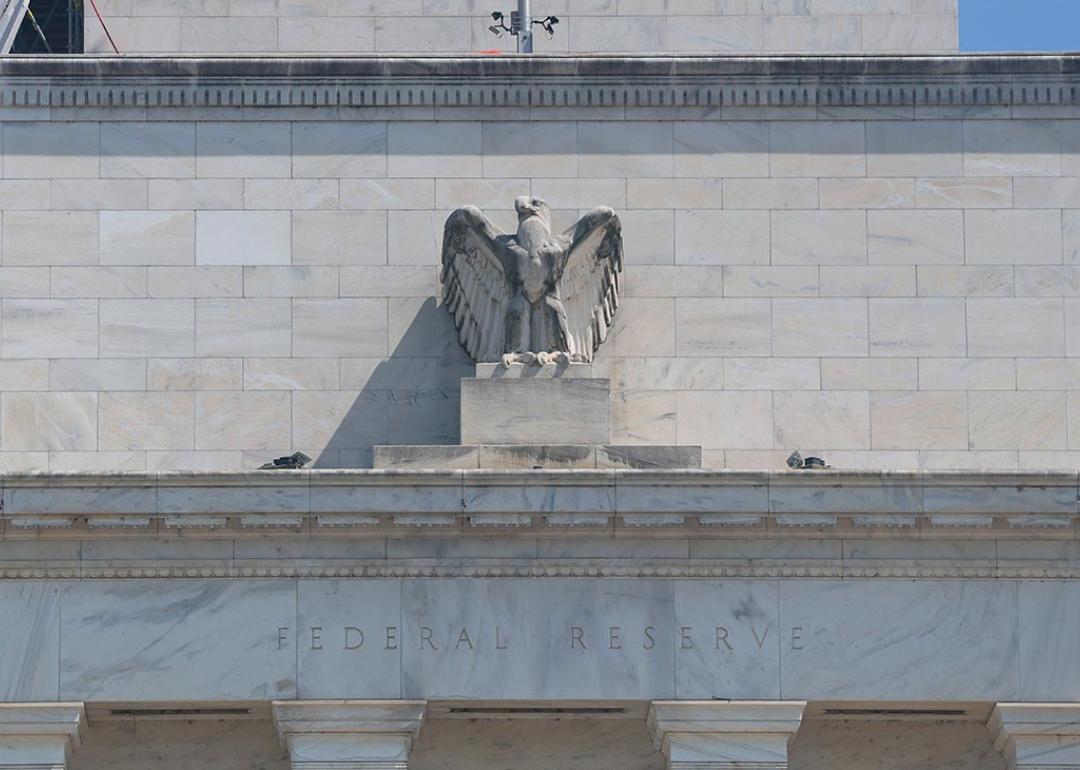
The recent focus on the Federal Reserve, its leadership, and its decisions to lower interest rates has brought renewed public scrutiny of an institution that hasn’t been able to catch a break through the first half of the decade. In this analysis, examined how the Fed’s actions and influence have affected public trust in the central bank.
The onset of the COVID-19 pandemic, the accompanying uncertainty and , Congress’ , generationally , and persistent have all presented enormous challenges for the Fed over the past six years. Without a doubt, the nation’s central bank has been in an unenviable position.
Yet that doesn’t mean the Fed is above reproach. On the contrary, the level of scrutiny it receives—the good, the bad, and even the misguided—is healthy. This is especially true given how much the Fed has grown over time and the immense influence it wields over the modern economy. Its role in conducting monetary policy, regulating and supervising banks, and facilitating the nation’s payment systems is intended to ensure the nation’s financial stability.
The founding of the Fed: Preventing bank panics (or not).
In the late 19th and early 20th centuries, the United States experienced several banking crises, culminating in the Panic of 1907. These crises were characterized by bank runs in which depositors lost confidence in their banks’ ability to meet withdrawal demands. Because banks held only a fraction of deposits as cash reserves, large-scale withdrawals could quickly lead to insolvency, leaving late-withdrawing depositors with huge losses.
To address this instability, Congress created the National Monetary Commission in 1908 to study potential reforms. Its work ultimately led to the creation of the Fed in 1913, designed to serve as a “lender of last resort.” In theory, it would reassure depositors that banks could access emergency liquidity, ensuring all depositors are covered and thereby preventing bank runs.
However, the evidence suggests that the Fed’s early record on financial stability was underwhelming. “No genuine post-1913 reduction in banking panics, or in total bank suspensions, took place until after the national bank holiday of March 1933,” economists George Selgin, William Lastrapes, and Lawrence White in a 2010 assessment. Even credit for later success, they argue, is due to the Reconstruction Finance Corporation, established in 1932, and federal deposit insurance, enacted the following year—not the Fed.
Ouch.
Even the St. Louis branch of the Federal Reserve acknowledges that bank panics during the early Fed era contributed to deepening the Great Depression. As its own educational materials , “The U.S. appeared to be poised for economic recovery following the stock market crash of 1929, until a series of bank panics in the fall of 1930 turned the recovery into the beginning of the Great Depression.”
An expanded mission.
This isn’t to say that the Fed has always been an objective failure. The “,” a roughly 20-year period prior to the 2007-08 financial crisis, is regarded by many as a tremendous success because Fed policy yielded relatively stable economic conditions and low inflation.
But managing macroeconomic conditions wasn’t originally part of the Fed’s mission. In fact, the Fed now plays a much larger role in the economy than intended when it was first created.
One of those expanded roles is as a financial regulator, which was greatly influenced by the 2010 Dodd-Frank Act enacted as a result of the financial crisis. Dodd-Frank required the Fed to implement for how large financial institutions would respond during financial distress or failure and conduct on banks. The legislation also placed the Fed chair on a new Financial Stability Oversight Council that would financial threats to “nonbank financial companies, financial markets of the United States, or low-income, minority, or under-served communities.”
The Fed’s regulatory role is largely conducted through its 12 regional banks. But the Fed’s most visible and controversial function—controlling the nation’s monetary policy through management of short-term interest rates and the money supply—is carried out by the Federal Open Market Committee (FOMC).
The FOMC is made up of the seven members, all presidential appointees, of the Fed’s governing body known as the Board of Governors, along with five bank presidents from the regional banks. Through the FOMC, the Fed employs tools such as quantitative easing—the purchase of financial assets, including government debt and mortgage-backed securities—to influence liquidity in the financial system and attempt to stimulate or moderate the economy.
When the Fed wants to conduct an “expansionary” policy, it injects liquidity through quantitative easing or other policies, such as reducing the interest rate it pays on banks’ reserves—the latter of which encourages banks to put those funds back into the market. These expansionary policies cause interest rates to fall—encouraging borrowing, investment, and consumption. Conversely, when the Fed withdraws liquidity—a contractionary policy—interest rates rise and economic activity slows.
The ‘dual mandate’ and its tension.
So, if cutting interest rates is good for the economy and raising rates is harmful, why not always keep rates low? After all, lower interest rates help out the federal budget by keeping borrowing costs lower. Win-win.
That’s the thinking behind the Trump administration’s push for rate cuts, but it’s not so simple. The elephant in the room is inflation.
First, recall the elementary definition of inflation: too many dollars chasing too few goods. By pumping money into the economy, the Fed brings down short-term interest rates, but it does so at the risk of increasing inflation.
If inflation rises—as it did at the beginning of the decade and continues to this day—then investors will demand higher interest rates to for the higher rate of inflation. This makes borrowing for homes or cars more costly for Americans.
If we’ve learned anything in the past five years, it’s that people don’t like inflation. So, you might say, “Let’s go the other way and keep those rates high enough to tame inflation.”
That brings us to the second issue: The Fed isn’t just worried about interest rates and inflation. In 1977, Congress gave the Fed a dual mandate to pursue both maximum employment and stable prices. Both of those sound desirable, but they often conflict with each other.
To promote employment, the Fed typically pursues expansionary policies, lowering interest rates at the risk of higher inflation. After all, businesses borrow, too. Some need money to build new factories or increase their ability to hire more people. However, when the Fed attempts to reduce inflation, it must raise interest rates, which risks lower employment.
In periods of low unemployment and high inflation, that trade-off isn’t too difficult. But in a period such as the 1970s, when both inflation and unemployment were high, deciding which problem to tackle is much more difficult.
A natural solution would be to give the Fed a single mandate: stable prices. But as Selgin, Lastrapes, and White also point out, the Fed has failed at giving us stable prices both before and after the dual mandate was issued. They that a consumer basket of typical goods costing $100 in 1790 rose to just $108 by 1913—a mere 8 percent increase over 123 years. Since the Fed’s founding, the same basket rose to roughly $2,422 by 2008—a more than 2,000 percent increase in 95 years.
That’s a bigger ouch.
While a single mandate would be an improvement, there’s no guarantee that alone would ensure stable prices for the U.S. economy or lead to greater economic stability. That’s partly because the Fed faces both explicit and implicit to backstop the federal budget, which has amassed $38 trillion in debt, through inflation. But it’s also because there is an inherent flaw in setting interest rates: It distorts market signals.
One of the key insights of the of economics is that the interest rate, like other prices, is a coordinating signal in the market. Put simply, interest rates coordinate household decisions to save money with business decisions to borrow from those savings and invest. A low interest rate tells businesses that households are choosing to save for future consumption and that there are profitable opportunities to invest in future production. A high interest rate tells consumers they ought to increase their savings while simultaneously telling businesses to hold off on low-return investments.
By intervening in short-term interest rates, the Fed distorts the signal provided to both households and businesses. Setting interest rates artificially low means households are encouraged to continue consuming rather than saving, while businesses are incentivized to borrow and invest—leading to both overconsumption and overinvestment that cannot be sustained.
The reality is that the Fed has an incredibly difficult job that is full of trade-offs. Its track record on inflation alone suggests a need for serious discussions on reform. But unfortunately, the current attention the Fed is receiving is because of its reluctance to cave to the Trump administration’s demands for inflationary monetary policies. Hopefully, the Fed will continue resisting that pressure, or both macroeconomic and price stability could be at risk.
was produced by and reviewed and distributed by Â鶹ԭ´´.