‘This isn’t school’: Teaching work etiquette to summer interns
‘This isn’t school’: Teaching work etiquette to summer interns
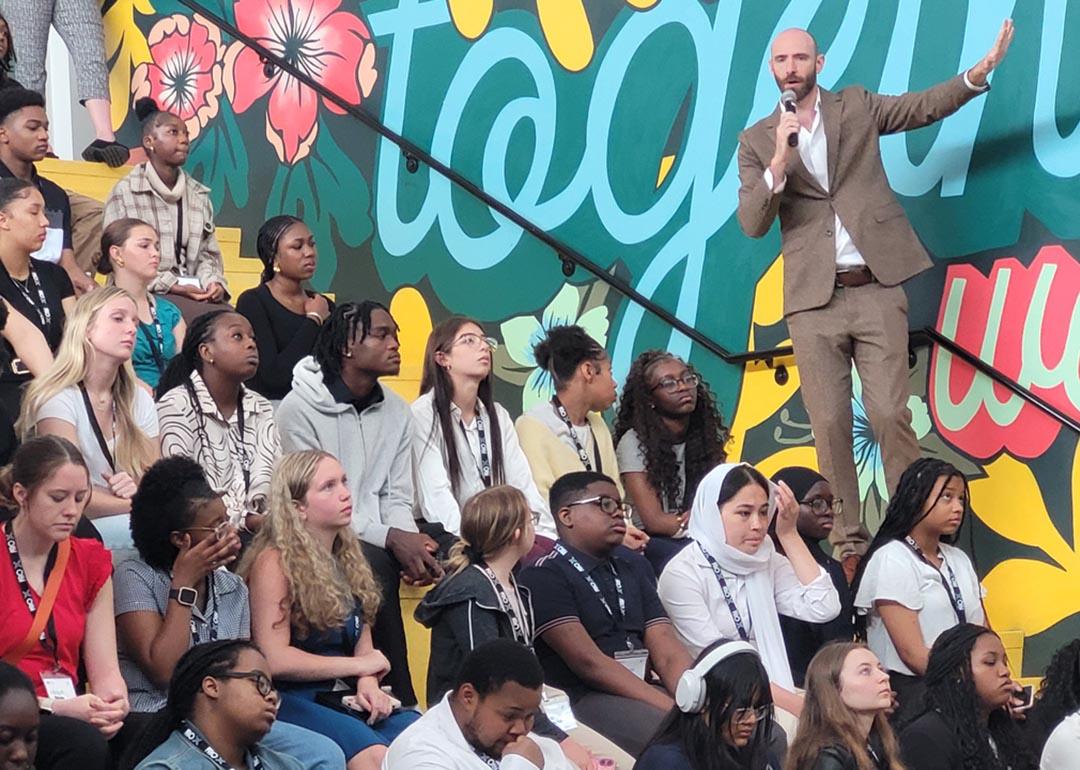
Izsie Robinson looked out at the rows of high school students in the cafeteria of a Kansas City school and started listing expectations for their upcoming summer .
“This isn’t school,” Robinson, a business owner, told the teenagers at the early June launch of the ProX internship program. “This is a summer internship. You all have employers.”
You can’t just skip a day or come in late, said Robinson. If something happens that gets in the way, you need to call your employer. You can’t be on your phones all day. Each employer will have a cell phone policy to learn, along with dress codes. And work hours must be entered online.
It’s a lot for some of the 660 new interns from across the Kansas City area, some as young as 15 and whose internships are their first job ever. Many have never had a boss or a work schedule before, so working alongside adults can be intimidating, said Robinson and program head Solissa Franco-McKay.
ProX, short for “professional experience,” has created one of the strongest and most structured support systems for interns in the country, hoping to solve a challenge that regularly scares away employers and trips up high school interns anywhere — student and business expectations not matching up. highlights how ProX and other programs like it are working to prepare the next generation of workers.
Each student participating in ProX’s program has a coach hired by the program they meet weekly, as well as a mentor who is an employee at the business. ProX also sets aside every Monday of the internship as “professional development” to work on such as punctuality, teamwork and communication, which many teens lack and employers want.
“This is a starting point of a journey for you,” Franco-McKay told the students. “This is about growing your network, growing your skills, and just doing a little exploration…You have your coaches who help, guide and support you along the way.”
“If you mess up, that’s alright. That’s what it’s about, right?” she stressed. ”And we’re going to be doing it together.”
Providing all the training and support for students and companies has one big drawback, however: It limits how many students the program can serve.
ProX had 3,000 students apply for spots this summer, so the majority had to be turned away. The program’s budget has already grown from $1 million at its start to $4 million today. More coaches and other staff would need to be hired to accommodate every student.
The ProX program, launched in 2021 by the Ewing Marion Kauffman Foundation, is a rare opportunity for high school students with paid summer internships for five weeks each summer that let them test drive a career they may want to pursue.
Though internships are common for college students, . Only about 5% of high school students have a chance at an internship or a more advanced apprenticeship, either in summer or during the school year.
That’s partly because U.S. companies, unlike those in Europe where internships and apprenticeships are common, don’t always trust high school students with business tasks.
A , a nonprofit that promotes career opportunities for students, found that some of the most common barriers to hiring high schoolers listed by companies included determining what kind of work interns can do and finding qualified interns.
It’s left to outside agencies like ProX to manage internships for many companies, finding interns, teaching them soft skills and verifying they can handle the workplace. The more those agencies take on for the companies, the easier it is for a business to hire students for the summer.
“When we were first created, it was really about making this as plug-and-play for the employer as possible,” said Franco-McKay. “We want the employer to kind of see us as a common front door.”
“If you’re wanting to engage with students here in Kansas City, you can come to the ProX program and we’ll handle all the paperwork,” she added. “We hire the interns. We pay them the stipend. We track their hours. The employer really just has to focus on providing a quality experience and mentoring them.”
ProX isn’t the only agency, often known as “intermediaries,” taking on training and hiring interns to help companies. The nonprofit Boston Public Industry Council manages that city’s extensive summer jobs program for the city and school district. Though many students are taught basic soft skills at school there, Executive Director Neil Sullivan said employers rely on PIC staff to meet with students and vouch for them being ready to handle work.
The Genesys Works high school internship program in eight cities, including Houston, Chicago, New York City and Washington, D.C., is another. It also makes teaching soft skills as much a priority as ProX. Students spend the summer before their internships learning several skills — communication, time and project management, work ethic, problem solving, collaboration, and initiative — and are rated on each one. They are placed in internships only if they score well.
“It’s meant to be broad, so that students go into their internship on day one with the baseline skills that they need,” said Mandy Hildenbrand, chief services officer for Genesys Works. “The internship then can train them in more specific skills to their internship.”
The ProX internship program has made training an integral part of the internships since it was started by the Ewing Marion Kauffman Foundation, named for the pharmaceutical magnate best known as the former owner of the Kansas City Royals baseball team.
The internship isn’t a full-time job. It pays a stipend of $1,250 for 25 hours a week for five weeks, less than some fast food and retail jobs pay per hour. But the internships aim to give students a taste of potential careers and practice navigating the job application and hiring process, rather than just being a way to earn money during summer break.
ProX also prioritizes bringing in students from low-income neighborhoods, so it offers students money to buy work uniforms if needed or rides to work through zTrip, a local rideshare company.
“Our program is really focused on breaking down any barriers that may exist to student participation,” said Franco-McKay.
That’s a big reason why ProX invests heavily in coaches and training. Each Monday, interns spend a half day at the Ewing Marion Kauffman School in the city to learn about a different skill each week — critical thinking, communication, collaboration, leadership and understanding one’s own thinking process.
In addition, while each of the 95 companies in the program assigns an employee mentor to each intern, ProX hires educators like Kristi Larison, a teacher at Liberty North High School in a neighboring suburb, to be a coach and liaison between interns and companies. Larison has 19 students to follow this summer, visiting them at their companies once a week and discussing their goals for each week and the summer.
“We know kids and we know job sites, so we’re going to kind of pull them through,” she said. “I had a lot of students last year that relied heavily on me with questions, because maybe they didn’t quite have skills to communicate with the employer yet, or they were too timid. I really was a bridge to kind of help them learn how to do that on their own. I think that’s critical.”
Don Simon, another coach who teaches at suburban Smithville High School, said he believes the coaching helps students who may have never had a job before. Having coaches also reassures employers that they are not alone in supporting students.
“A lot of our employers have experience with college internship programs, but not really high school,” Simon said. “For the kids to have a coach with them, that really sort of seals the deal for a lot of employers. They’re like, ‘Okay, let’s do this.’”
Some students, like Bradley Epps, an incoming senior at Park Hill High School, are so directed in their goals, they’d rather just work on Mondays instead of having workplace training. An aspiring architect, he’s still excited, though, to intern at the architecture and urban planning-focused Kansas City Design Center.
“I think it will give me some experience,” he said. “And, if I had any doubts, it will give me a chance to see for myself.”
Others appreciate both the instruction and a chance to test out a career.
Trisha Rastogi just graduated from Blue Valley High School south of the city and hopes to be a cancer researcher. She said a chance at real work experience at Children’s Mercy Hospital, even in the public health department, is a great opportunity for her.
“I want to become a physician, which is healthcare at a more individual level,” she said. “But I also like that I’m doing this internship because it gives me exposure to healthcare at a community level too.”
was produced by and reviewed and distributed by Â鶹ԭ´´.