NFT and crypto scams: What is a rug pull?
NFT and crypto scams: What is a rug pull?
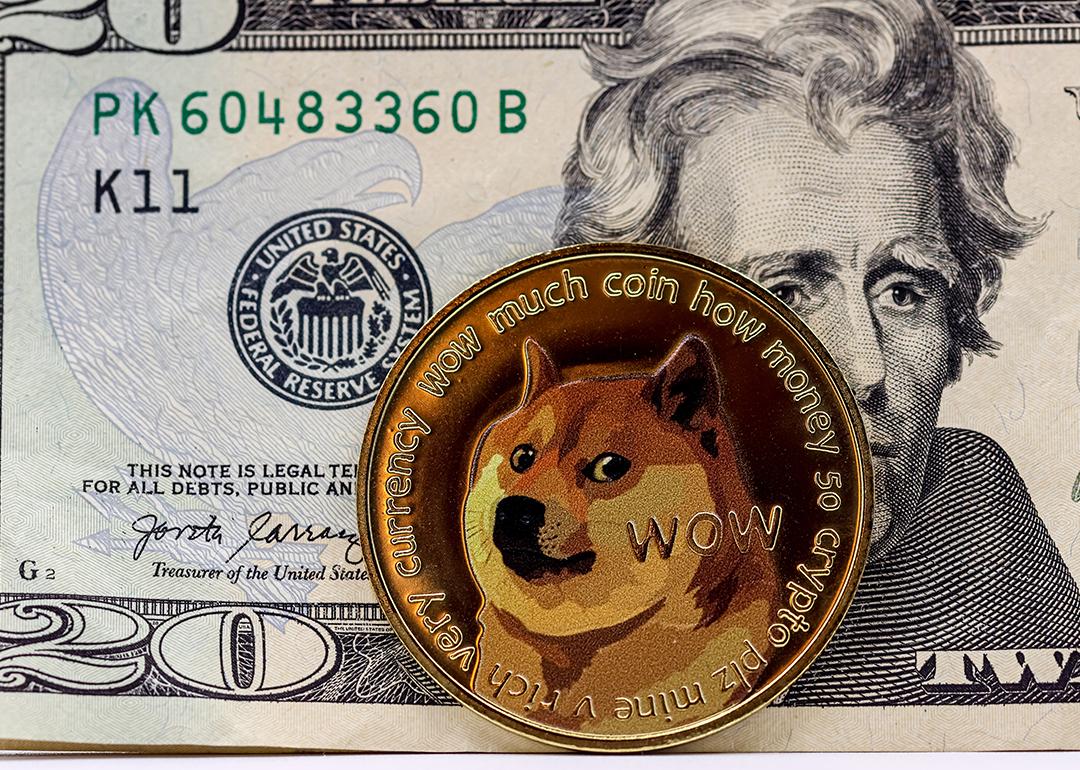
At best, most Americans are skeptical about cryptocurrency ( that 63% of Americans have little confidence in crypto’s reliability and safety). But that hasn’t stopped crypto from becoming a staple in the investing world, with the global market value of cryptocurrency. So, if you’re hoping to join the ranks of the 562 million people who are crypto owners worldwide, it helps to go into your investment with eyes wide open to scams and risks. And one of the biggest of all? Rug pulls.
Here, digs into what rug pulls are, how they affect the sector at large, and what you can do to avoid falling victim to one.
What Is a Crypto Rug Pull?
Since it first broke into the mainstream in 2018 (it’s been available since around 2009), crypto has become central to the online scam artist’s repertoire, especially in popular grifts like online and over-the-phone phishing, catphishing, and identity theft. Scammers like to target crypto as it’s difficult to trace; there’s no centralized banking authority to flag suspicious transactions, and unlike most bank transfers, crypto transfers can’t be reversed. And the problem is so widespread that consumers around the world to crypto scams in 2024, 21% more than they did in 2021.
Despite their popularity, those day-to-day scams aren’t crypto rug pulls, but rug pulls rely on many of the same elements — namely, crypto’s lack of traceability and centralized accountability.
In a crypto rug pull, a person or group accrues assets from the public by selling a token (that’s crypto’s digital representation of assets — the “currency” in cryptocurrency), commonly promising a big return on investment, or even exclusive rewards and other incentives for investing. Once they’ve scooped up tons of assets from those token investments, they suddenly shut the project down entirely and often “coincidentally” disappear from public view at the same time. This, of course, leaves them holding a great big bag of money while their victims have nothing to show for it but piles of worthless tokens. The rug has been pulled out from under them in one swift motion.
Types of Crypto Rug Pulls
Crypto rug pulls generally follow the same cadence of “gather assets and unceremoniously bail,” but they do vary in terms of execution. Crypto rug pulls typically fall into one of these categories:
- The team exit is probably the most well-known type of crypto rug pull. Here, the team behind the coin drums up support and investment, and then falls off the map, leaving investors with a worthless token.
- Similarly, some crypto rug pulls revolve around completely fake projects that never even come to fruition before the creators run away with the bag.
- The pump and dump strategy happens when scammers artificially inflate the token’s price via coordinated buying, then coordinate a mass sale at peak value, crashing the token’s value in turn. This is also known as token dumping.
- Liquidity pulls are a little more nuanced. Here, fraudsters drain a token pool of its liquidity, intentionally causing a token’s value to plummet due to a lack of interest.
In the NFT Space
For those unfamiliar, NFT stands for non-fungible token, which are digital assets like visual art, videos, and other content that have been tokenized via a blockchain. More simply, they’re digital assets with unique identification codes. In 2025, however, you don’t have to be too worried about NFT rug pulls, unless you’re floating in some pretty niche spaces, with market penetration forecasted at a whopping — and stable —
That said, an works just a little differently from a crypto rug pull: NFT developers promote a project — often under false pretenses — until they attract a whole bunch of investors’ assets selling it. Whether a newly developed NFT or an existing one, the developers will make misleading claims about its value or potential, with the goal of knowingly selling low-value or valueless tokens at an inflated price.
Another, less common, NFT rug pull occurs when bad actors knowingly sell a token that has already been minted — meaning its ownership has already been established — to unsuspecting buyers.
(In)Famous Rug Pulls
Because crypto rug pulls rely on investors to raise assets — and because they’re most effective when they gain investors’ ill-begotten trust — it’s common for these scams to involve a public figure. That’s also why so many rug pulls have escaped the crypto community and made mainstream headlines. Well, that and the monumental losses some have imparted onto their victims.
Hawk Coin
Alright, let’s get this one out of the way. We know no one wants to hear the words ever again, but what is perhaps the most well-known example of a crypto rug pull also happens to be one of the most perfectly succinct, textbook examples of the grift.
In 2024, break “Hawk Tuah” memester Haliey Welch leveraged her sudden viral popularity to launch a meme coin called “Hawk.” She promo’d it all the way to a $490 million market cap before the token lost 95% of its value in a matter of hours. Welch then, of course, went totally incognito.
Squid Token
Similarly, in 2021, unknown South Korean devs launched , unofficially themed around the Netflix hit, “Squid Game.” When the price per token hit $2,861, the team’s site magically disappeared, and the team couldn’t be reached.
Thodex
Also in 2021, founder, Faruk Özer, took a total of $2.6 billion worth of investment funds from 400,000 users before fleeing to Albania, claiming that the money was lost in a cyberattack.
EthereumMax
On the note of more celebrity-driven rug pulls, hyped EthereumMax to her 220 million-plus Instagram followers, alongside the likes of other celebs like Floyd Mayweather. She straight-up posted that EthereumMax’s team burned 40 trillion tokens to inflate its value as a way of “giving back to the community.”
The token’s value tanked 97% over six months, and Kim only suffered a measly (to her) SEC fine of $1.26 million for failing to label her post as an ad.
How to Stay Safe from Scams
{Note: This article is not intended as investment advice, but rather to help you identify potential scams.}
Entering a (relatively) young investing space that’s known for a lack of regulation and governing bodies — while a core part of crypto’s decentralized appeal — inherently comes with a touch of risk. But as is virtually always the case, risk can be minimized with a healthy dose of know-how. Whether you’re thinking of investing for the first time or you’ve already been around the block(chain) a few times, keep in mind:
- Always, always, always do your research before investing in any token. Look for transparency and a solid track record from the team behind it. Avoid anonymous developers, and if you plan on adding crypto to your portfolio, stay up-to-date and engaged with the goings-on in the crypto community.
- On a similar note, try to get an audit report from a third party before you drop any money, especially if the token comes from newer or lesser-known devs.
- Check the token’s liquidity via white papers or smart contracts. Confirming that funds are locked for a reasonable window is a green flag; loopholes that enable devs to withdraw funds without any warning are a big red flag.
If you’re uncertain about a token in any way, shape, or form, avoid investing at all — or, at the very least, start with a small amount of crypto before diving in head-on to minimize potential losses. And we probably don’t need to tell you this, but if you take one thing away from the crypto rug pulls of the past, let it be this: Don’t get pulled in by the paid promises of influencers or celebs promoting a token. Someone best known for making crude jokes on the internet probably isn’t your best financial consultant.
You can also use tools to find publicly available information about crypto developers, promoters, or influencers. It’s one way to add an extra layer of due diligence.
was produced by and reviewed and distributed by Â鶹ԭ´´.