No teachers and no curriculum: Is this the school of the future?
Walking into could be a shock for helicopter parents — there are no rows of desks, no hallway passes and no bells to jolt students from one class to the next, reports. Instead, the K-12 school is alive with invention, autonomy and what founder Gever Tulley calls “the energy of a big multi-generational family household.” In a quiet pocket of San Francisco’s Presidio, just a short walk from the Golden Gate Bridge, a sandy beach and a winding forest creek, the three school buildings buzz with purpose and possibility.
The topic this semester is space. In the basement workshops, student Reza proudly shows off a Mars habitat model; another is designing an alien restaurant. In the light-filled atrium, Bix is writing a screenplay about alien politics, and Truman discusses his model of Larry Niven’s imagined Ringworld, giant wheels where humans will hover in their habitat held in place by centrifugal force. In a transformed room-turned-planetarium, kids recline on couches pushed to the side, gazing at student-constructed celestial projections. Others are working on terraforming Venus or sketching Martian gardens.
“I think it’s arbitrary to form collections of kids that are all exactly the same age and they only play with the exact same age,” Tulley says. “That seems very unhealthy to me. It also seems weird about schools that parents drop off their kids at the perimeter and then are somehow not invited to be in the mix.”
Therefore there are no traditional grades or classes at Brightworks. Students are grouped into “bands” by interest and maturity, not by age. There are no teachers — just “collaborators,” and parents are invited to visit and join as they please.
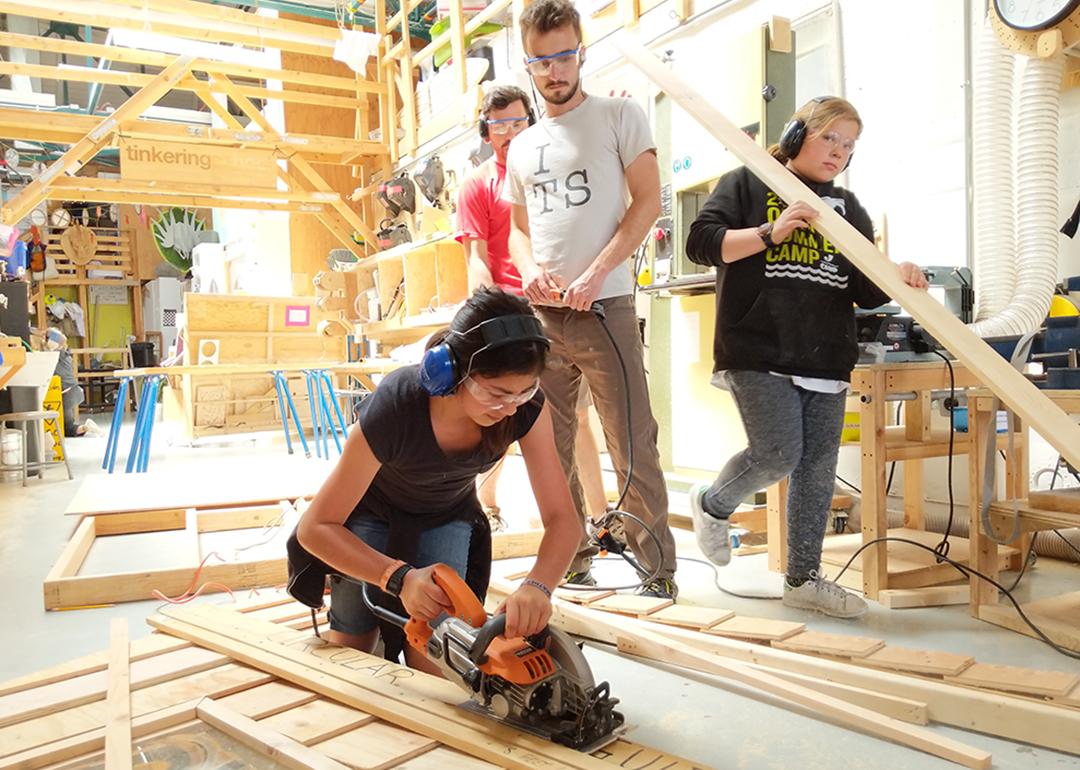
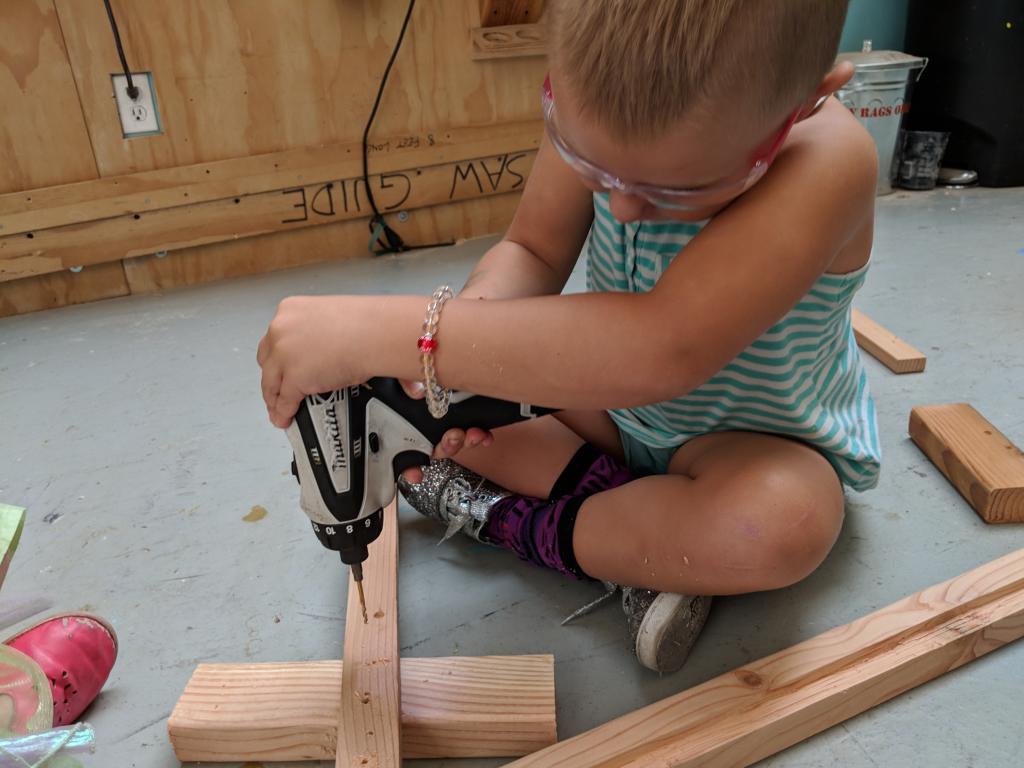
The school founder puts great trust in his students. He hands six-year-olds power drills and matches, inviting them to build whatever their imaginations dream up. Tulley’s round, friendly face lights up with almost childlike enthusiasm when he picks up a drill to show a student how to protect their thumbs. “Don’t hurt yourself and don’t hurt others,” that’s the most important rule at Brightworks.
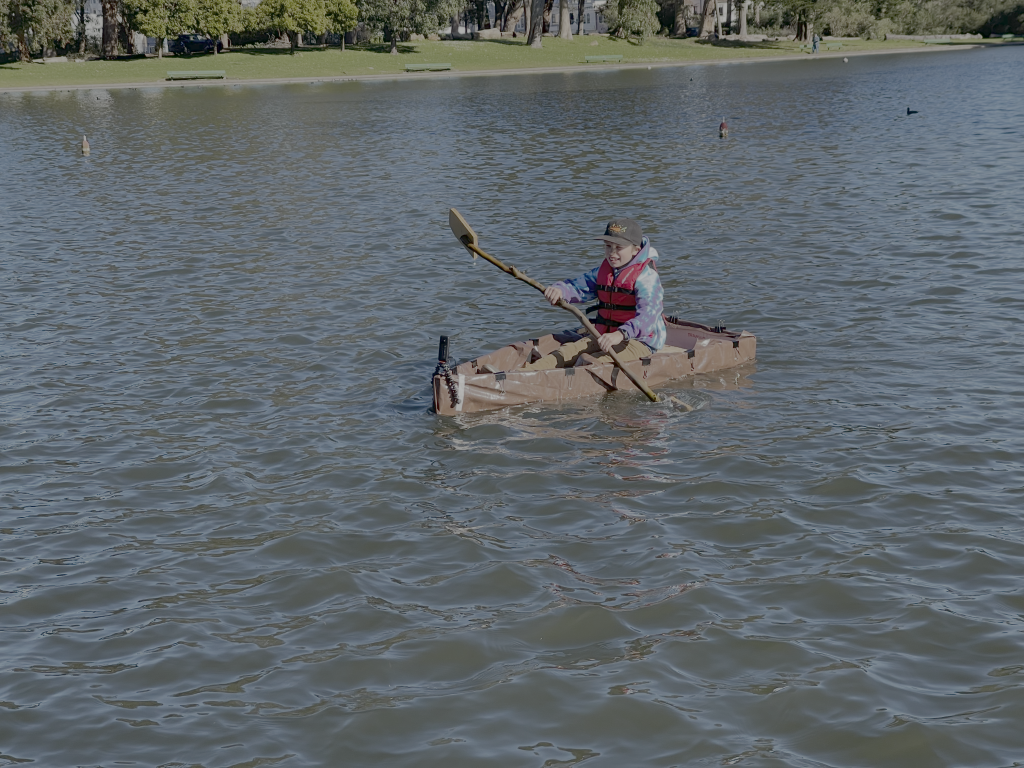
When a third grader suggested building a boat, Tulley encouraged him: “If it’s seaworthy by Friday, we’ll launch it in the Pacific.” That’s how Tulley tells it today, showing a photo of the brave eight-year-old paddling through the foggy San Francisco Bay in his plastic-wrapped tub, broomstick-turned-oar in hand.
Agency is woven into every part of Brightworks’ ecosystem. Students move freely through the buildings. “The first instinct can’t be, ‘Where are you supposed to be?’” Tulley explains. “You have to assume they’re on a mission — maybe to grab a wrench from the shop or to take a walk. That’s part of the culture here.”
His experimental school is well-known across California, and many Silicon Valley parents send their kids there. Around half of the parents belong to the tech elite — Google, Apple, Facebook or startups. The rest of the spots are subsidized for families who can’t afford the $42,000 tuition per school year.
Tulley himself is neither a trained educator nor a parent; he’s a former software programmer who worked at Adobe, developed special effects for a film company and ran his own consultancy, Helium, which once advised the San Francisco 49ers football team.
The school he founded in 2011 is deeply shaped by his own upbringing. He grew up in Mendocino, “below the poverty line.” His mother worked as a nurse, while his father — fisherman, filmmaker and poet — remained “playful like a child all his life” and was only later diagnosed with bipolar disorder. Tulley and his brother were largely left to their own devices after school. “The beach, the streets, the whole world was our playground,” Tulley recalls. As an adult, he watched in disbelief as his childhood friends didn’t allow their own kids the same freedom.
Tulley taught himself to code as a teenager, later founded his own company and climbed to middle management at Adobe. In his early 20s, he briefly enrolled in computer science at the University of California, San Diego — but lasted just two months. “Why should I take an intro course when I’d been programming professionally for five years?” he says. He’s still puzzled by that system. “I was shocked I couldn’t just walk up to a professor and ask questions.”
Being smaller than average and often mistaken for a third grader well into his teens, Tulley has long been drawn to alternative education. He was influenced by the late Sir Ken Robinson, a British education reformer who believed schools kill creativity, and psychologist Peter Gray, a champion of the “unschooling” movement that emphasizes learning through curiosity outside traditional schools. “Children’s capacity to learn is limitless,” Tulley says.
Tulley first tested his educational ideas in 2005. On a whim, he invited eight of his friends’ children to a one-week “Tinkering School” in his backyard. Together, they built a seven-meter wooden bridge strong enough to hold them all. One girl said she had never worked so hard on anything in her life, and wondered aloud why regular school couldn’t be like that. “That question stuck with me for years,” Tulley recalls. “Eventually I thought: Yeah, why can’t school be like that?”
In California, anyone can start a school, and so in 2011, Tulley opened Brightworks with just 19 students in a converted mayonnaise factory near the Presidio. That same year, he published a book that brought him wider recognition: . He encourages parents to let their kids play with fire or even drive cars: “If your kid is into dinosaurs, it’s time to teach them how to drive. It’s totally legal on an empty parking lot in the U.S. — perfect family fun,” says Tulley.
He has drawn sharp criticism for such ideas. “Far too dangerous,” said Australian child psychologist Michael Carr-Gregg, who called for the book to be banned. Tulley counters: “Our injury rate is the same as at other schools.”
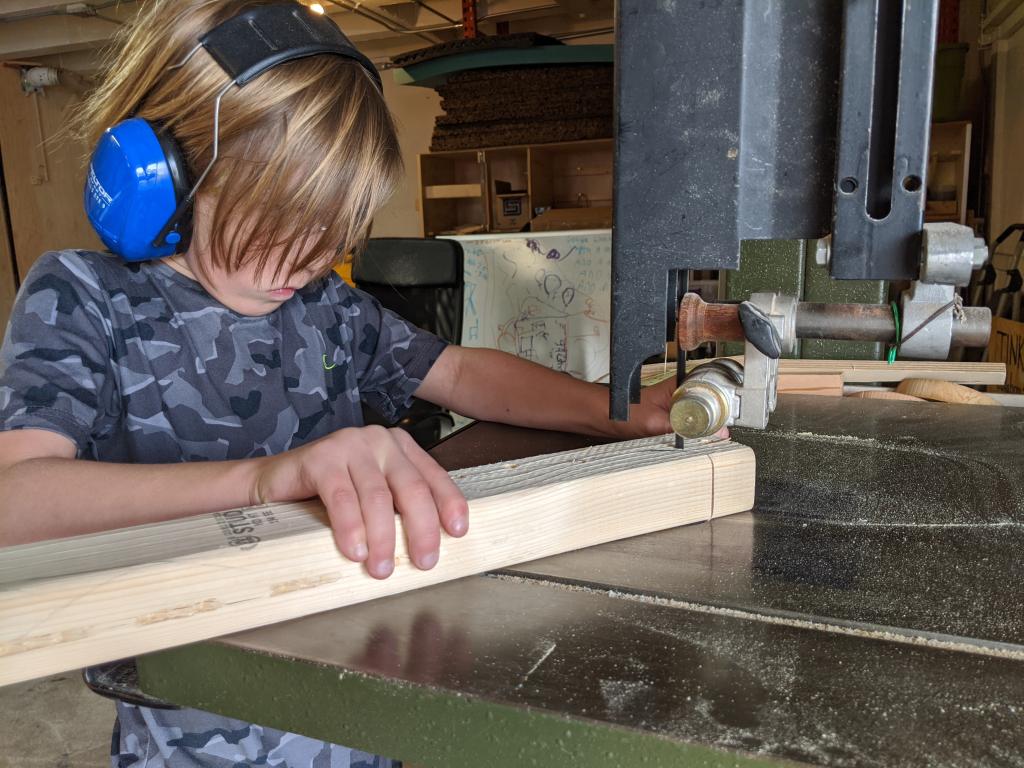
His decision to let first graders use power drills and fire stems from a moment years ago. A friend visited with her six-year-old daughter, who reached for a stick in the yard — and the mother leapt up in alarm. “We don’t trust our kids enough,” Tulley concluded. “If we teach them when a tool or fire is dangerous, they’ll be careful.”
What continues to drive Tulley is a simple question: “What kind of learning experiences do we want our children to have, and how do they build real skills?” Traditional schools, he says, are “incredibly inefficient.” With fewer than a of American students completing a higher degree, Tulley concludes that conventional schools only work for about 15-30% of students. “The government seems to think education is all books and tests,” he says. “But that kills creativity.”
Brightworks’ current campus was originally built as barracks for mounted World War II soldiers and now serves nearly 100 students. Each one is responsible for their own education. Three times a year, the school picks a theme, like body, space or bridges.
Almost nothing is off-limits. Video games are allowed, but only if students code them themselves. “We offer ideas, then let the kids run with them,” Tulley says and shows off a cardboard robot and a cardboard version of an offline Gameboy called the Basic Box that the students built themselves.
On a cool morning, a group of nine-year-olds — calling themselves the “Golden Night Tree Frog Brigade” — heads into the underbrush of a chilly Golden Gate Park in search of buried treasure. Their collaborator, Rich Willow Perenyi, a trained biologist and zoologist, wears frog-green outdoor gear and tucks his long curls under a cowboy hat. He’s drawn a treasure map for the group, burning the edges to make it look ancient.
The six kids find treasure after treasure, including some that weren’t even on the map. Ronan catches two crayfish in the pond. Calvin gathers logs for a raft. Beck defends the picnic site from a family of raccoons. Sylvester, after chatting with a park gardener, learns that banana stalks can yield juice if drained properly.
Their school day is one big adventure: They observe turtles in the lake, spot birds of prey overhead and count dozens of whitefish in a stream. “Whoa, that’s a hawk!” shouts Dash, and everyone watches its wings beat overhead. Asked what he’s learned so far, Sylvester beams: “We can now tell the red-tailed hawk from the broad-winged hawk just by its call. And raccoon poop from dog poop!”
But is Brightworks more than a supervised adventure playground? Are the students actually learning anything?
“Yesterday, we calculated the speed of falling leaves drifting down the river,” explains Dash, lounging in a hammock he strung between two trees. “And the throwing speed of mud balls from eight meters,” adds Perenyi.
Though playful, the school’s approach is no cakewalk. Children, parents and teachers all attest that they’ve never worked harder than at Brightworks. Teachers can’t just reuse last year’s lesson plans — they constantly reinvent the curriculum. “I show up with a plan every day, until something better comes along,” admits Perenyi with a laugh.
In a sunny corner of the old school music hall, the “Azores Band” is trying to save a mission on the Mars landscape. They need to build a landing pad for a remote-controlled Mars rover — fast. “If it’s not done in time, the rover will crash!” shouts one flushed-faced boy.
What defines a “good” education is hotly debated. The topic often divides families. “It’s common to see one parent wide-eyed with excitement during an info session, and the other sitting there with arms crossed,” Tulley says. “That one usually asks, ‘When’s the first written test?’” The answer: never.
“We overload our kids with testing,” Tulley is convinced. He points to the sharp increase in suicide rates among 10- to 24-year-olds over the past decades, attributing it in part to academic pressure. Tulley’s school model deliberately omits exams. “We learn better when we want to learn — not when we’re just cramming for a test. And we remember what we’ve truly discovered ourselves much longer.”
Tulley believes this kind of learning — driven by curiosity — pays off for life: “We see students as heroes on their own journey.” His aim is also to prepare kids for the future. “Twenty years from now, every industry will need small teams of highly specialized people solving complex problems,” he says — people who can also communicate and collaborate well. “Education will change. Young adults will have deep knowledge in the areas that matter most to them.”
For instance, one graduate, who pioneered a piece of playground equipment at Brightworks, now works at the Denver Children’s Museum, creating site installations — his dream job.
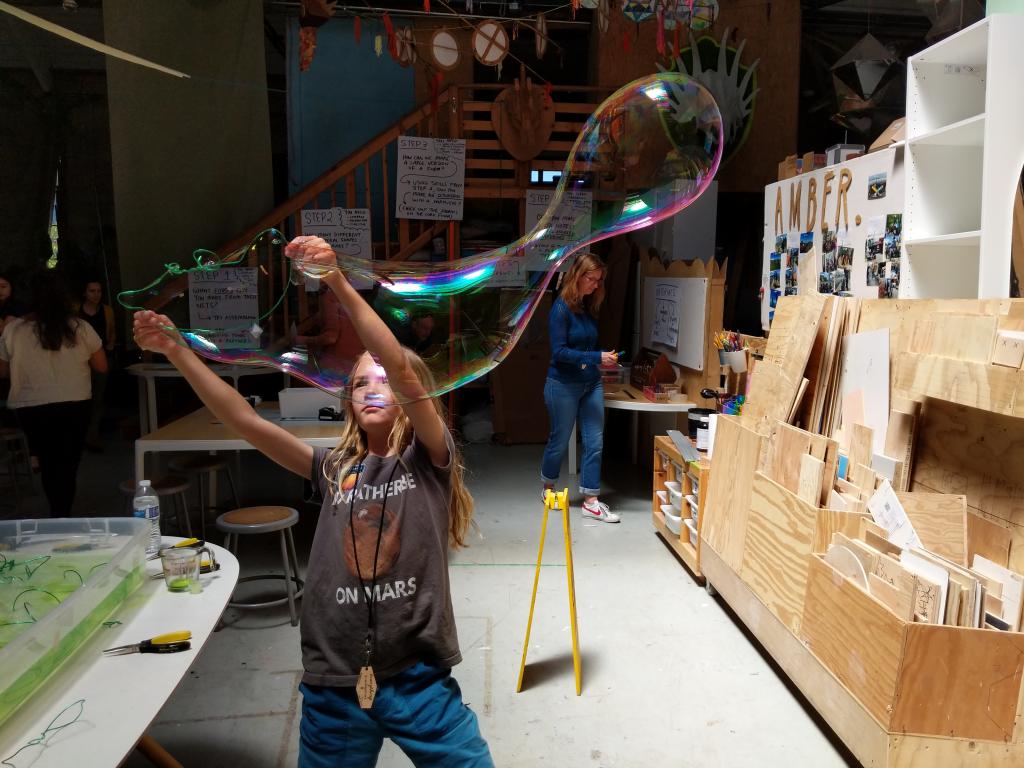
At the end of each school year, Brightworks students don’t receive traditional report cards, but they do compile a portfolio of their drawings, essays, crafts, short films, computer programs and video games. Brightworks graduates have been accepted at top-tier universities, including Harvard.
“Cassandra applied to 18 colleges and got into 12,” says Cynthia Metcalfe, mother of two Brightworks students. “Our kids really shine in interviews. They make eye contact, hold their own in discussions and present themselves differently than other applicants.”
Why choose this school? Metcalfe laughs. “I dragged my son to visit three elementary schools. Each time, he pleaded: Can we please go home now?” At Brightworks, he didn’t want to leave. “When the adults tied the kids into aerial silks during P.E. for acrobatics, I nearly fainted. Ramses has a congenital heart defect and joint weakness; his hands aren’t as strong as other kids’.” But everything went smoothly — and she could only coax him to the exit by promising he could come back soon.
Brightworks may not be every parent’s answer to the future of education, but for those who play in its colorful workshops and build habitats for imaginary worlds, it is a living proof-of-concept that learning can be full of meaning, community, and wonder.
Tulley’s measurement for children’s progress is not expressed in score cards. “I think we should measure joy,” he says.
By that metric, Brightworks students are off the charts.
was produced by and reviewed and distributed by Â鶹ԭ´´.