Anthropologic discoveries the year you were born
Anthropologic discoveries the year you were born
The past 100 years have seen incredible change and development for humankind. There have been many positive advancements, such as the and other innovative medicines, as well as new historical finds, including . Researchers and the public alike gained valuable insight into human development through medical advancements, psychological experiments, and archeological findings.
Â鶹ԭ´´ surveyed the discoveries and advancements for each year from 1919 to 2018, using university research departments and anthropologic scientific journals. Of the hundreds of advancements that have taken place over the past century, the following list included only those that had the most significant impacts on human society and culture from all over the world—from Paris to Kenya. Many of these discoveries and advancements pushed for new ways of thinking about humans, society and culture, and humans' impact in the world.
Read on to learn about the anthropological discovery or advancement the year you were born.
You may also like:
1919: International Astronomical Union is founded
The in Paris was founded in 1918 with its mission to promote research, communication, education, and development of astronomy through international cooperation. Members of the IAU are professional astronomers at the doctorate level and higher who actively participate in research, education, and outreach in this field. The IAU has made incredible discoveries since its founding and continues to educate the public about astronomy and human beings' relationship to the cosmos.
1920: Little Albert experiment conducted
Psychologist John B. Watson conducted an at Johns Hopkins University on a 9-month-old baby, whom he named “Albert B.” Through classical conditioning, Albert became afraid of a white rat and other furry objects after associating these toys with a loud, scary noise. Although this experiment would not be approved under laws today, it provided deep insight into how humans make associations between items, sounds, and situations.
1921: Indian physicist C.V. Raman discovered Raman effect
C.V. Raman was interested in why the sea was blue, and he did not agree with the reasoning that it was a reflection of the blue sky. He and his research group in Calcutta set up experiments to test if in the same way air molecules could. The so-called “Raman effect” was a new form of scattering effect, specifically in the scattering of light in liquids. This discovery has contributed significantly to physics and chemistry—and it all started with a deceptively simple question in 1921.
1922: King Tut's tomb discovered by Howard Carter
was a British archaeologist who spent decades studying the lives of ancient Egyptian necropolis workmen in order to locate the most likely sites for long-buried tombs. The discovery of King Tut's tomb is one of the most celebrated contributions to Egyptology, and it brought Carter enormous fame.
1923: Fossil dinosaur eggs discovered in Mongolia
An expedition to Mongolia by Roy Chapman Andrews and the American Museum of Natural History led to the . These eggs were later determined to belong to the theropod Oviraptor and contributed to the dialogue of the evolution of the Earth and its mammals.
1924: The star that changed the universe
In 1924, Edwin Hubble announced to the public that a previously thought nebula, . This discovery changed the idea of the Milky Way being the only galaxy in immediate space and proved that there were many, many other galaxies out there. Hubble and his discovery arguably changed the entire course of modern astronomy.
1925: Taung Child discovery announced
Found in 1924 and displayed in 1925, the was one of the earliest fossils found in Africa. The skull dates back 2.8 million years and provided evidence of early human upright bipedal walking, based on a hole found on the skull that connects the spinal cord to the brain. This fossil brought attention to Africa and helped spark the notion that Africa was a major source of human evolution.
1926: Airship Norge flies over North Pole
Roald Amundsen, Umberto Nobile, and their crew participated in many exploration attempts of the North Pole, which had been largely unexplored up until that point. Although their trip ended in a crash and resulted in a rescue mission, it gave access and knowledge of this otherwise uncharted territory on Earth.
1927: Gene theory developed
Thomas Hunt Morgan is recognized for that established individual units of heredity. His experiments relating to inheritance encouraged research on chromosomes, which has led to many major discoveries about the human body and its genes.
1928: Penicillin is discovered
Scottish scientist Alexander Fleming was sorting through petri dishes containing colonies of Staphylococcus, a bacteria that causes boils, sore throats, and abscesses, when he noticed that one dish was covered in mold—and the areas directly around the of the Staphylococcus bacteria. Although it wouldn't be another decade or so before penicillin is used, this initial discovery was a significant starting point.
1929: Photosynthesis as a light-dependent redox reaction was discovered
C.B. van Niel was a Dutch-American microbiologist who made key discoveries regarding the . Through studying purple and green sulfur bacteria, he found that photosynthesis was a light-dependent redox reaction, where hydrogen from an oxidizable compound reduces carbon dioxide to cellular materials. This discovery gave insight into how organisms in our environment work and survive.
1930: Pluto is discovered
Clyde Tombaugh, a farm boy from Kansas, began working at the Lowell Observatory in Flagstaff, Ariz., in 1928. He was tasked with searching for “Planet X,” which had been predicted by Percival Lowell. In February 1930, using a blinking comparator and intense concentration, Tombaugh that had moved slightly between the two exposures in the blinking comparator. A few months later, the planet was named Pluto. This discovery was important in learning more about the many planets and dwarf planets that inhabit our galaxy.
1931: Stone tools found in Peking Man site in China
The , has revealed many fossils dating roughly 750,000 years ago. French archaeologist Henri Breuil visited this site in 1931 and confirmed the presence of stone tools, which gave researchers an inside look into how these Homo erectus lived in this area and at this time. During the excavation of this site, 15 partial crania, 11 mandibles, and many other remnants of human life were found. Based on these findings, researchers determined Peking Man as an ancestor to the Chinese people.
1932: Dura-Europos synagogue discovered
The was discovered in 1932 in Dura-Europos, Syria. This synagogue is significant because it is one of oldest synagogues in the world, with the last phase of construction occurring in 244 A.D. After excavation, the synagogue was found to be virtually intact, which is one unique feature of this synagogue—and it contains extensive figurative wall paintings.
1933: Discovery of Mari, Syria
Mari was a city-state during the Bronze Age and Middle Bronze Age situated in Northern Mesopotamia (modern-day eastern Syria). The ancient city's remains were discovered by a Bedouin Tribe near the Iraqi border when they found a fragment from a headless statue which, when removed, led to the discovery of the temple of Ishtar and numerous full-size excavations still largely intact. The findings, which included in excess of 25,000 tablets regarding diplomacy and administrations of state, provided valuable information about international relations in regard to Mesopotamia and the region's extensive trade networks that covered the area from Afghanistan all the way to Crete.
1934: First use of sodium thiopental as an anesthetic
Ernest Volwiler and Donalee Tabern at Abbott Laboratories, which was first used on human beings on March 8, 1934. Years later, it would become a core medicine in the World Health Organization's List of “essential medicines.”
1935: Concept of ecosystem introduced
Arthur Tansley was an English botanist and a . He wrote many books relating to ecological methods and helped create an inventory of England's vegetational species to better understand the world. Tansley created a new field of study within science that focused on interactions between organisms and their environment, all while sparking a new way of researching and collecting data through this lens.
1936: Mästermyr chest is accidentally found
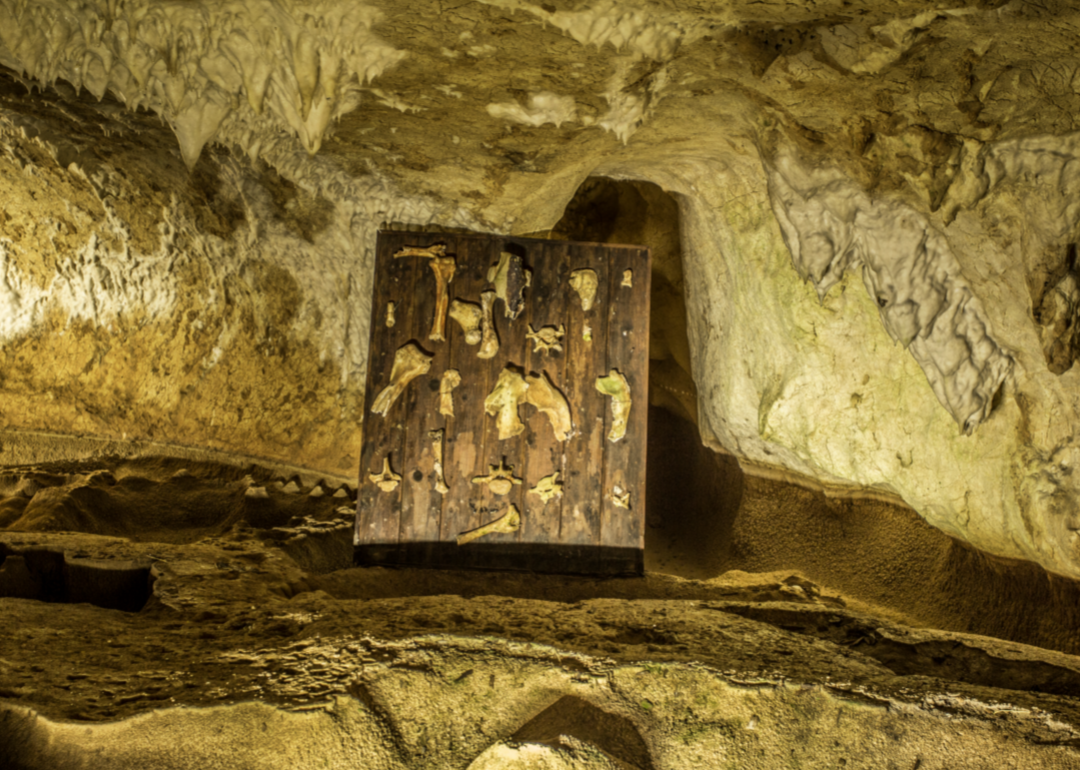
The Mästermyr chest was accidentally discovered by farmer Hugo Kraft in Gotland, Sweden. The chest contained more than from the Viking Age, making this the largest tool find for that era in Europe. It is one of the most complete collections of Viking tools in good condition, and it provided valuable information about the skills and ways of life of this time.
1937: Earliest known papyrus scroll found
In the tomb of Hemaka in Saqqara, Egypt, the earliest known papyrus scroll was found. These scrolls The discovery adjusted the timeline of humans and their ability to write throughout the 4,000-year history of papyrus and ancient Egyptian life.
1938: Coelacanth discovered in a fisherman's cave in South Africa
Marjorie Courtenay-Latimer, a South African paleontologist, discovered the coelacanth, a fish that was thought to have . This find caused large public attention in the area, with some people equating the find to catching a live dinosaur. It provided critical information for understanding how and where these fish had been living during their supposed extinction.
1939: Einstein-Szilard Letter is signed
The Einstein-Szilard Letter advised the president of the United States, Franklin D. Roosevelt, of the as an important tool for creating atomic bombs. It was signed Aug. 2, 1939 and demonstrated the advancements in science of the U.S. and those advancements' capability to produce a highly controversial weapon.
1940: Plutonium is first synthesized
, was first synthesized on Dec. 14, 1940 by Glenn Seaborg, Joseph Kennedy, Edwin McMillan, and Arthur Wahl at the University of California, Berkeley. It was synthesized by bombarding uranium with deuterons. Many experiments were performed on humans to determine the effects of plutonium on the body, but results mostly came back inconclusive. Plutonium was used in the atomic bombings during World War II, which have continued to raise concern about the lasting effects of atomic radiation on people and environments.
1941: Folic acid is first isolated
Herschel Mitchell, Esmond Snell, and Roger Williams of the University of Texas, Austin first from spinach leaves. This discovery is important, particularly for women, because high folic acid intake can counter certain cancers associated with HPV and reduce a woman's risk of having an infant affected by neural tube birth defect.
1942: Human-controlled nuclear reaction success
Enrico Fermi and his colleagues , self-sustaining nuclear chain reaction on Dec. 2, 1942, at the University of Chicago. This discovery changed the future of nuclear science, as it showed the beneficial uses of nuclear energy—as well as the terrible and destructive power of nuclear weapons.
1943: First public use of term 'autism' by hospital
Leo Kanner was an Austrian-American psychiatrist, physician, and social activist who worked at Johns Hopkins Hospital. His most famous piece of work, "Autistic Disturbances of Affective Contact," was published in 1943 and describes . It was the first time this term was used publicly and brought attention to this type of disorder. Kanner is considered one of the most powerful U.S. clinical psychiatrists of his time, most notably for his research on and advocacy regarding autism.
1944: Echolocation is discovered
Data published by Donald Griffin and G.W. Pierce, after years of research, found that bats through emitting intense ultrasonic sounds. This discovery sparked the idea of creating better sonar systems using this information—though the full extent of echolocation and how bats communicate is still unknown.
1945: Nag Hammadi Library is discovered
The Nag Hammadi library is a located near the town of Nag Hammadi in Egypt. Writings include Gnostic treaties, as well as three works from “Corpus Hermeticum” and a partial copy of Plato's “Republic.” Both the discovery of the library, as well as the contents inside, were extremely exciting for learning more about ancient Egyptian civilization.
1946: Chamberlin trimetric projection developed
The , developed by Wellman Chamberlin, is a map projection in which three points are fixed on the globe and are mapped onto a plane by triangulation. Based on the findings and calculations of this projection, further calculations years later would be able to provide accurate information for determining a spherical Earth. This development and the later determination of a spherical Earth were significant for understanding our planet and the land areas on it.
1947: Dead Sea Scrolls discovered
A young Bedouin shepherd discovered the , ancient Jewish writings found in the seaside Qumran Caves in the West Bank. The findings sparked an investigation into the past of this area and changed the world's understanding of the region's history and religion. The area from the Dead Sea to the Judean Hills are the settings for many dramatic biblical stories, and Dead Sea Scrolls represent the second-oldest known manuscripts included in the Hebrew Bible canon. It is widely believed that the texts were written by a Jewish sect called the Essenes in the first century B.C.; however, the scrolls could have been written by multiple Jewish groups from various locations, perhaps even some who fled the Romans around 70 A.D. when they destroyed the Temple in Jerusalem.
1948: World Health Organization is established
The is a specialized agency of the United Nations that focuses on international public health and was established on April 7, 1948. This organization has played a crucial role in educating the public about diseases and epidemics, as well as participating in research to find cures and prevention techniques.
1949: Radiocarbon dating technique discovered
Willard Libby proposed radiocarbon dating as a . This technique measures content levels of carbon-14, a radioactive isotope of carbon. By using this method, scientists can estimate the age of carbon-based organisms. The radiocarbon dating technique allowed for more precise and accurate historical dates and timelines in many different fields of science.
1950: Garima Gospels discovered in Abba Garima Monastery
The Garima Gospels are the earliest surviving , dating back between the fifth and seventh century. They were found in the Abba Garima Monastery in Ethiopia and contain many similarities to other Christian manuscripts outside of Africa. The manuscripts provide significant information about ancient Christian civilizations in Ethiopia, the history of the Bible, and late antiquities.
1951: HeLa cells
Henrietta Lacks was diagnosed with cervical cancer at the Johns Hopkins Hospital, where Dr. George Gey took a sample of her cells for research. Unlike the other cancer cells he had collected from other patients, Lacks' cells survived and doubled every 24 hours. These cells—nicknamed HeLa—contributed to , such the development of the polio vaccine and the study of leukemia, the AIDS virus, and cancer.
1952: Temple of Isthmia discovered and excavation begins
The Temple of Isthmia is an ancient Greek temple discovered by Oscar Broneer in Corinthia, Greece. The and was built in the Archaic Period, circa 700 B.C. This discovery gave insights into the architecture of ancient Greece and is a strong source of information about Greek history.
1953: Discovery of the double helix
James Watson and Francis Crick of England worked together for two years to solve the structure of DNA through use of available X-ray data and model building. They determined the structure to be a , a twisted ladder structure. This discovery gave rise to modern molecular biology and earned them—along with Maurice Wilkins—the 1962 Nobel Prize for Physiology or Medicine.
1954: Marble head of Mithras discovered
W.F. Grimes , also known as the Temple of Mithras Walbrook, in Walbrook, London. The temple was built in the third century and was dedicated to the Roman god Mithras. This find was one of the most famous Roman discoveries in London. One of the most famous finds within this temple is a white marble relief showing Mithras slaying a bull.
1955: Smoking study causes turning point in history
A three-year study conducted by E. Cuyler Hammond and Daniel Horn, who worked for the American Cancer Society, found that men with a history of have a higher death rate than men who have never smoked, or only smoke cigars or pipes. They also concluded that these death rates were due to heart disease and cancer. This study had clear, undeniable results connecting smoking and cancer, and marked a turning point for public knowledge surrounding smoking and its health consequences.
1956: Swedish warship Vasa is located in Stockholm harbor
Anders Franzén discovered the famous warship Vasa outside of the Stockholm harbor. It resides in the and is a major tourist attraction. The warship represents Sweden's “great power period” and played a major role in evaluating the historical importance of shipwrecks.
1957: Soviet Union sends up Sputnik 1
Sputnik 1 on Oct. 4, 1957, marking the beginning of the Space Age. This launch was the first artificial satellite that provided information on the density of the atmosphere as well as other aspects of the Earth's orbit. It was also a critical point in the Cold War and space exploration.
1958: United States launches Explorer 1
The U.S. Army Ballistic Missile Agency , following the Soviet Union's launch of Sputnik 1. The satellite measured the radiation environment in Earth's orbit, and Dr. James Van Allen used the information the satellite provided to determine the existence of a belt of charged radiation particles trapped in space by Earth's magnetic field. These belts were later named the Van Allen Belts, and the satellite provided crucial information about Earth and its orbit.
1959: Mary Leakey discovered Zinjanthropus boisei
While on an excavation in Tanzania, Mary and Louis Leakey discovered a , their first significant hominid fossil. It was nicknamed the “Nutcracker Man” and dated back to 1.75 million years ago. Louis claimed it was a human ancestor, but the fossil eventually proved too different from modern humans to be related. Regardless, it became widely publicized, and Louis and Mary received large amounts of funding to continue their research, which later led to other major discoveries.
1960: USS Triton completes first underwater circumnavigation of Earth
In 1958, the began her voyage underwater around the Earth. She broke the surface on May 10, 1960 after the completion of her submerged circumnavigation of the Earth. This voyage opened the possibilities of submersible ships for the future, specifically within the military.
1961: Robbers Cave experiment
Muzafer Sherif and Carolyn Wood Sherif conducted the , which helped develop the realistic conflict theory. This theory explains how intergroup hostility occurs as a result of conflicting goals and limited resources. This experiment and the theory offer an explanation for feelings of prejudice and discrimination toward out-group members, as well as intergroup conflict.
1962: Derveni papyrus, the oldest surviving manuscript in Europe, is discovered
The Derveni papyrus was found in Greece, and is a philosophical treatise and an allegorical commentary on an Orphic poem. The ., during the reign of Philip II of Macedon, which could make it Greece’s oldest surviving manuscript. The manuscript as a whole was published in 2006.
1963: Milgram shock experiment conducted
The Milgram shock experiment, conducted by Stanley Milgram, researched the . Milgram asked people to give other participants an electrical shock, and he expected that the majority would refuse as the voltage was increased. He found the opposite: With urging from the experimenter, 65% of participants were willing to progress to the maximum voltage level. This experiment, while arguably crossing ethical lines, provided crucial information regarding the power of authority in daily life.
1964: Johnny's Child at Olduvai Gorge (Tanzania)
The second major Leakey discovery consisted of a , and hand bones. The hand bones revealed that the hominid had a precision grip, which allowed for fine manipulation of objects, indicating that this hominid was responsible for creating stone tools found at the site. The fossil dated back to 1.8 million years ago and was nicknamed Johnny's Child. This find was classified as Homo habilis, meaning “Handy Man.”
1965: Mosaic floor at Sparsholt Roman Villa discovered in Hampshire, England
Sparsholt Roman Villa was built from the second to the fifth century and was excavated in 1965–1972, led by David E. Johnston. A was taken from one of the buildings in the villa and provides insight into the lifestyle and design of people in this area during the Roman Empire.
1966: Third trove of Qabala treasures
The Qabala treasures are monetary treasure troves discovered in current-day Azerbaijan, previously named Qabala. This third trove contained , including drachmas of Alexander the Great. These treasures date back to the second and third century B.C. and provide information regarding how these people traded and interacted with others during this time.
1967: Jane Goodall and the chimpanzees in Tanzania
Jane Goodall and her research revealed the , which was a significant new discovery. Goodall captured large amounts of data and film showing chimps hunting and fighting among enemy packs, as well as embracing and begging for food or affection. These connections led to many more discoveries and connections between humans and nonhuman primates.
1968: Peter Nzube discovers the oldest skull found in Olduvai Gorge, Tanzania
While in Olduvai Gorge, Peter Nzube discovered a skull dating to roughly 1.8 million years ago—the . The skull was mostly crushed, which is the reason for its nickname Twiggy, but it was reconstructed by Ron Clarke and determined to be a part of the Homo habilis family. The skull represents a larger brain size and the reduction of facial size, which is typical of the evolution of early members of the homo family.
1969: Apollo 11 landed on the Moon
Commander Neil Armstrong and Lunar Module Pilot Edwin Aldrin become the , with Armstrong's iconic line “one small step for man, one giant leap for mankind.” They successfully returned to Earth, which was also a major feat. This mission furthered the course of space exploration by humankind.
1970: First photograph of an individual atom taken
Albert Crewe, who worked at the University of Chicago, invented the that allowed him to take the first picture of an isolated atom. This discovery was important for understanding human biology, and it sparked further research into how atoms interact with each other.
1971: First patient brain CT was performed
In Wimbledon, England, the was installed in 1971. The success of this case popularized the use of the CT scanner, and by 1977 there were over 1,000 machines installed across the world. CT scans became critical in medical advances and patient outcomes.
1972: Long thigh bone fossil found suggesting farther and faster walking
John M. Harris discovered this in Koobi Fora, Kenya. It is from the Homo erectus species and allowed its individual to walk further and faster and take longer strides than earlier humans. This discovery indicates this group of individuals had the ability to travel to new regions.
1973: American Psychiatric Association declares homosexuality is not a mental disorder
The American Psychiatric Association (APA) declared that homosexuality was not a mental disorder in 1973, indicating a major societal shift concerning normal sexual behavior. Many early scientific theories were established, which originally led to in the Diagnostic and Statistical Manual (DSM). After more extensive alternative research, theories, and arguments, the APA removed homosexuality from DSM III.
1974: Lucy was found in Hadar, Ethiopia
Donald Johanson and Tom Gray uncovered a skeleton they named Lucy, who walked upright, along with 12 other individuals in a set of fossils colloquially known as the “first family.” The bones were about 3.2 million years old and belonged to a species called Australopithecus afarensis. The discovery changed the way scientists understood evolution, including the fact that bipedalism and walking upright came before other human traits, such as the creation of tools.
1975: One of the best preserved skulls found in Koobi Fora, Kenya
The fossil skull, found by Bernard Ngeneo in 1975, represents a . Researchers compared the anatomical features of her face to determine her sex and used information from her cranial structure, the extent of wear on teeth, and status of a third molar to determine the fossil represents an adult. The skull dates back 1.8 million years ago.
1976: Tomb of Fu Hao discovered in Yinxu
The Tomb of Fu Hao was discovered by Zheng Zhenxiang at the archaeological site of Yinxu in 1976. Fu Hao was a queen and military general in the ancient Shang dynasty. Her tomb is the found intact with all of its contents inside. This finding was significant because the contents provided deep knowledge into the legacy of Fu Hao and the ancient Shang dystany.
1977: Eradication of smallpox
Smallpox has been around for more than 3,000 years and was once one of the deadliest diseases on the planet, killing three out of every 10 people who caught it. The first successful was introduced by Edward Jenner back in 1796, who found he could inoculate cowpox into subjects' arms and they would thereafter be immune to smallpox. It wasn't until 1966, however, that a worldwide eradication campaign took place to rid the world of smallpox once and for all—a feat accomplished in 1977. Since then smallpox remains the only human disease to have been completely eradicated by vaccination.
1978: Paul Abell and the trail of hominid footprints in Laetoli, Tanzania
Paul Abell, who was a part of the Leakey team, found a trail in 1978 of about belonging to the A. afarensis group. Prior to this discovery, the oldest known footprints of early humans were tens of thousands of years old. These imprints, however, date back to 3.6 million years ago. The footprints appeared more human-like than ape-like, with the big toe aligned with the rest of the toes instead of out to the side, and they also had arches; demonstrating how some of our first, upright-walking ancestors moved about.
1979: Dinosaur eggs discovered in Two Medicine Formation, Montana
An area located in the Two Medicine Formation, named Egg Mountain, became a very prominent site for dinosaur nests and dinosaur fossils. Paleontologist Jack Horner discovered juvenile dinosaurs, as well as 14 dinosaur nests in this area. It is the first set of evidence that , demonstrating their complex behaviors.
1980: Alvarez hypothesis
The Alvarez hypothesis, suggested by Luis and Walter Alvarez, claims that the mass extinction of dinosaurs and other living things during the Cretaceous-Paleogene extinction event was the result of a 65 million years ago. The father and son scientist team found evidence of an asteroid falling in the Yucatán Peninsula at Chicxulub, Mexico. This discovery and hypothesis provided answers to the mystery of dinosaur and other living beings' existence. Recently, the timeline has been updated to 66 million years ago after more recent research and evidence became available.
1981: AIDS detected
In Los Angeles, five young, white, and otherwise healthy gay men were diagnosed with a rare lung infection called Pneumocystis carinii pneumonia (PCP). Immunologists at the hospital also found that all five men had other unusual infections, indicating that their immune systems were not working properly. An article published during this time marked the of what later became known as AIDS.
1982: First artificial heart transplant performed
At the University of Utah Hospital, cardiothoracic surgeon William DeVries performed a heart transplant on Dr. Barney Clark. In this seven-hour long operation, DeVries removed the torn heart of Clark and replaced it with the world's first artificial heart, known as Jarvik-7. This operation marked the beginning of a new era in organ transplantation.
1983: PCR technique developed
Biochemist Kary Mullis developed what is called the polymerase chain reaction (PCR) technique, a methodology that provides the ability to exponentially amplify exact copies of biological material. PCR-based strategies have led to major scientific achievements, such as the Human Genome Project. Mullis was awarded the Nobel Prize in Chemistry for his work.
1984: Identification of HIV/AIDS
The 1980s was a time of discourse surrounding the outbreak of AIDS and its origins. In 1984, research groups led by Dr. Robert Gallo from the National Cancer Institute, Dr. Luc Montagnier from the Pasteur Institute in Paris, and Dr. Jay Levy at the University of California, San Francisco, identified a . This discovery provided a specific target for blood-screening tests and for scientists conducting research to defeat AIDS.
1985: Black skull found in West Turkana, Kenya
The so-called “black skull,” found by Alan Walker in 1985, is the of the species Paranthropus aethiopicus. The fossil was originally white but turned black after millions of years absorbing minerals as it fossilized. The skull has a face that projects far outward from the forehead and large and many teeth, which were features of adaptation for heavy chewing. It dates back to 2.5 million years ago in West Turkana, Kenya.
1986: Chernobyl accident
The Chernobyl accident was a result of a flawed Soviet reactor design that was operated by inadequately trained plant operators. The at least 5% of the radioactive reactor core into the atmosphere. The long-term effects of radiation poisoning are still unclear and are being monitored in the cities and populations that have been exposed to large amounts of radiation.
1987: Discovery of the royal tomb of Sipán Peru
The of Sipán Peru contained a high-ranking warrior-priest of the Moche people, as well as several of his wives, servants, and dogs. This discovery is the richest collection of pre-Columbian artifacts ever found in the Americas, containing numerous elaborate gold and silver artifacts, finely crafted jewelry, and other treasures.
1988: The term 'global warming' is used for the first time
In June of 1988, U.S. senators met to discuss climate change and the greenhouse gas effect. For the first time, the term "global warming" was used and its impacts were discussed intensely. This moment marked the beginning of an ongoing effort to reduce humanity's carbon footprint on Earth and resulted in a worldwide discussion of how to tackle this problem. Many important treaties and agreements have been established as steps toward reducing humans' negative impact on the Earth.
1989: Hepatitis C virus is identified
After six years of research, the hepatitis C virus was identified at Chiron Corporation in San Francisco. This discovery was crucial for the spread of this infection. Scientists are still currently conducting more research to better understand this virus.
1990: Hubble Space Telescope is launched
The , launched in April 1990, was the first major optical telescope to be launched and remain in space. This moment was significant because Hubble has a clear view of the universe, and scientists have continued to use this telescope to observe distant stars, galaxies, and planets in our own solar system. This launch of this telescope marked a significant advancement in astronomy and human understanding of space.
1991: Ötzi the Iceman is discovered
The Ötzi Iceman is a well preserved natural mummy of a man found in the Ötztal Alps on the border between Austria and Italy. The man lived between 3400 and 3100 B.C. This discovery is significant because it is the (Chalcolithic) and has given extensive insight into that era of humans.
1992: Dunbar's number is proposed as the cognitive limit for interpersonal relationships
British anthropologist Robin Dunbar proposed that the humans to 150 meaningful relationships at a time, regardless of the rise of social media. Dunbar found a correlation between brain size and average social group size, which determined the 150 number—later simply referred to as “Dunbar's number.”
1993: First Bambiraptor skeleton found in Montana
The was found in Montana by a young boy named Wes Linster. Scientists at the University of Kansas, Yale University, and the University of New Orleans determined that the skeleton was 72 million years old and is a late Cretaceous, which is a bird-like theropod dinosaur. This discovery added a new fossil and species to the collection of dinosaurs found to date.
1994: Upper tibia fossil found in Kanapoi, Kenya
Well-known fossil collector Kamoya Kimeu discovered a from the species Australopithecus anamesis, a hominin species that lived near open areas and in dense forests. The fossil indicates their bodies evolved so they could walk upright most of the time as well as climb trees, which allowed them to take advantage of both types of terrain.
1995: Inca Ice Maiden discovered in Peru
The “Ice Maiden” was the first of a series of Inca mummy discoveries made by , who found this 500-year-old mummified teenager on top of Mount Ampato in Peru. The 13-year-old girl was an Inca sacrifice to the gods, and this discovery provided valuable information on Inca sacrificial rituals—from what she ate and drank (coca leaves, meat, corn, and corn-based beer) to how she may have died (intense sedation from coca leaves and beer could have caused her to fall asleep and be overtaken by the high altitudes and intense cold). From this Ice Maiden, studies proved that these girls were .
1996: Dolly becomes the first adult mammal cloned
The Roslin Institute and a team led by Professor Sir Ian Wilmut conducted a series of experiments to develop a better method for producing genetically modified livestock. was cloned from a cell taken from the mammary gland of a Finn Dorset sheep and an egg cell from a Scottish Blackface sheep. This discovery prompted the development of personalized stem cells, also known as iPS cells.
1997: World's oldest spears are discovered
were discovered in Schoningen, Germany, by Hartmut Thieme, suggesting that early man could hunt and not only scavenge. This ability was crucial for the settlement of the Stone Age in northern Europe, where hunting was limited due to climate and sunlight.
1998: RNA interface and gene expression
Andrew Fire and Craig Mello were researching how gene expression is regulated in a nematode worm by injecting mRNA into the genes but saw no impact on the worm's behavior. After a series of experiments trying to understand why, these researchers found that , which is a process that defends against viruses that insert themselves into DNA and controls gene expression. Fire and Mello won the Nobel Prize in 2006, and their discovery has led to research on other phenomenons, such as gene silencing.
1999: Study finds that AIDS virus originated in chimps living in central Africa
Dr. Jacques Pepin of the University of Serbrooke in Quebec is credited with discovering the link between chimpanzees and the AIDS virus. He found that in the early 1920s, hunters may have had blood-to-blood contact with infected chimp meat, which caused the transmission of SIV (in the chimp) to HIV (in the human). Scientists have been able to trace a "family tree" of the AIDS virus, pinpointing that first transmission in Kinshasa, the capital of the Democratic Republic of Congo. These discoveries were important in and how it spread from Kinshasa by train and trade throughout the world.
2000: Monkeys control movements with their brains
At Duke University Medical Center, researchers implanted electrodes in monkeys' brains that allowed the animals to control wheelchairs using their minds. In the study, when the monkeys thought about moving in the direction of a bowl of grapes across the room, computers were able to translate their brain activity into wheelchair operation. This technology may help amputees one day to fully control their robotic limbs.
2001: Study shows multitasking may diminish productivity
A study performed by Joshua Rubenstein from the Federal Aviation Administration and David Meyer and Jeffrey Evans from the University of Michigan found that . They determined that switching tasks resulted in lost time—and this lost time increased as tasks became more complex or unfamiliar. This study contradicted the belief that multitasking was more efficient.
2002: Old Timer skull found in Dmanisi, Republic of Georgia
A team led by David Lordkipanidze discovered the dating from 1.77 million years ago. It is part of the Homo erectus species, specifically a population that traveled from Africa to the Caucasus Mountains in Western Asia. His teeth had fallen out and his jaw had deteriorated—indications that people in his social group must have taken care of him for him to have lived so long, which is the earliest known evidence of this type of behavior in the human fossil record.
2003: Human genome project is completed
Completed in April 2003, the (HGP) was an international research effort to sequence and map all of the genes (known as the genome) of members of the species Homo sapiens. This project gave scientists the ability to read the complete genetic blueprint for creating a human being.
2004: Spirit and Opportunity discover evidence of water on Mars
Two rovers, Spirit and Opportunity, landed on Mars in January 2004 and collected large amounts of data about the red planet, specifically . Spirit collected data that showed the presence of a mineral that is only formed in pools of liquid water, and Opportunity discovered evidence of cycles of flooding and drought. This information was crucial in understanding this planet, its past, and a possible human future on Mars.
2005: Huygens probe lands on Titan
The European Space Agency’s Huygens Probe landed on Titan on Jan. 14, 2005. This , such as that its surface is orange and spongy and that the moon emits a low, constant whooshing sound. This discovery was significant in understanding the makeup of planets and their moons within our solar system.
2006: New type of stem cells discovered
A was first reported by Japanese Nobel Prize-winning stem cell researcher Shinya Yamanaka. These cells are a type of pluripotent stem cell that can be created directly from adult cells with an original set of reprogramming factors and specific genes. These cells are critical for tissue engineering and regenerative medicine.
2007: Oldest and most complete human skeleton found
The skeleton found in Yucatan Cave, Mexico, is dated between 12,000 and 13,000 years old and offered insights into the the first humans in the Americas and the later tribes of Native Americans. Craniofacial features of ancient Paleoamericans and mitochondrial DNA showed that their differences were a result of evolutionary change, though what drove that change is still unknown.
2008: 40,000-year-old bone flute found in Germany
were found in Hohle Fels, a Stone Age cave in southern Germany, by archaeologist Nicholas Conard. This artifact may be the oldest surviving human musical instrument. Researchers say that the mammoth ivory flutes would have been very difficult to make, indicating great skill and potential social purposes.
2009: Studies show jellyfish may stir the oceans
A 2009 study showed that small sea creatures, such as jellyfish, may by pulling water along as they swim. These researchers said that this collective movement can generate the same levels of stirring as winds and tides. Although opinions are divided as to whether this phenomenon is true to the extent that the study claims, this information could be crucial in understanding the future impact of climate change and species extinction within the ocean.
2010: Genetic sequencing identifies previously unknown disease
A team of scientists and physicians at the Medical College of Wisconsin and Children's Hospital of Wisconsin used a previously unknown mutation. They were able to not only identify, but to treat the mutation and stop the course of the disease. This result was one of the first times in medical history where genetic sequencing was used to identify and treat a disease.
2011: Genome sequencing may become part of clinical care
Researchers at the Medical College of Wisconsin are pushing to make whole genome sequencing, which reads a patient's entire DNA code, a routine part of diagnostic testing for. Whole genome sequencing has been used to detect genetic mutations underlying a range of rare diseases. These researchers are in the process of deciding how to make these tests available to the public.
2012: Curiosity lands on Mars
The NASA rover Curiosity landed on Mars Aug. 6, 2012. After 14 years of planning, including the automated “,” Curiosity touched ground. This rover has gathered enormous amounts of information about the rocks, regolith, and atmosphere of Mars. Its main mission is to determine if Mars is now or could have been a site to host life.
2013: CRISPR gene-editing goes public
Clustered Regularly Interspaced Short Palindromic Repeats (CRISPR) are pieces of genetic code that are used to detect and fight off—or edit out—invaders. These various systems or patterns allow . A team of researchers at UCLA posited that their CRISPR technique will help scientists easily distinguish between damaging genetic edits and harmless genetic edits in the future.
2014: Earliest cave art found in Sulawesi, Indonesia
The contain beautiful prehistoric graffiti: hand stencils colored with mouth-blown red paint and images of rare “pig-deer” in red and mulberry hues cover the walls. Scientists originally thought these images were about 10,000 years old, but recent research proved they are closer to 40,000 years old. This finding indicates that humans in Indonesia invented symbolic art as early as humans in Europe did—and that the idea of humans as artists dates far back than modern human history.
2015: Possible hidden chambers found in King Tut's tomb
Using infrared scans, archeologist Nathan Reeves discovered two possible doorways in King Tut's tomb that had been painted and plastered over. He theorized that the was buried in this hidden room. The discovery of Nefertiti's tomb would be hugely significant for Egyptology and history in general.
2016: Mitochondrial DNA as an age preventer
A team of researchers, led by Nikolay Kandul from Caltech, developed a technique to . The accumulation of mutant mtDNA, which stands for mitochondrial DNA, is thought to be connected to aging and degenerative diseases such as Parkinson's and Alzheimer's. The team found a way to remove mutated mtDNA from the mitochondria, which would prevent the issues created by the high levels of mutant mtDNA in the cell. This discovery could have huge impacts in reducing cases of degenerative age-related diseases.
2017: Oldest fossil of Homo sapiens jawbone found in Morocco
An adult hominin's jawbone with teeth similar to those of anatomically modern humans was discovered in Jebel Irhoud, Morocco, in 2017. This fossil dates between 200,000 to 400,000 years ago, making Jebel Irhoud the Middle Stone Age hominin site. These findings are some of the oldest modern human fossils found to date.
2018: New cell type found in human brain
Researcher Shao Wang from West Virginia University has contains a functional type of cell unknown until now called target cells. This discovery shows direct evidence for a specific top-down goal relevance signal—key in understanding how humans recognize faces and other specific objects.