Cities with the most green space per capita
Green space is beneficial anywhere, but especially in concrete jungles like those found in many U.S. cities. The World Health Organization reports that green area is essential to both the ecosystem and the mental health of citizens; though the color is fading quickly in urban areas that are cutting down trees and rapidly building on open space. There are, however, some cities across America that are fighting hard to keep green space within their borders.
Using data from the , analyzed by the United Nations Office for the Coordination of Humanitarian Affairs, Â鶹ԭ´´ considered the 70 U.S. cities with the most green space per capita and then ranked the top 50 by the green space areas devoted to parks and urban regions.
Some cities have gotten creative in constructing green space within their boundaries. Houston, Nashville, and Des Moines, Iowa, are among the many cities putting large green spaces on public rooftops. Atlanta even has plans to cover some of its highways with parks.
The former commissioner of the New York City Department of Parks and Recreation Adrian Benepe promotes the 10-Minute Walk campaign, an initiative to have a park within a 10-minute walk in all U.S. cities by 2050. Now the senior vice president for the Trust for Public Land, Benepe points to how green space helps the ecosystem. "When I see a tree, I see the work of God because a tree is a remarkable machine," . "It does extraordinary things in exchange for very little."
What's more, the health benefits of parks and green spaces in cities are numerous, according to . Large parks promote active living, which can reduce the risk of diabetes and heart disease, while research shows even small parks can reduce stress and improve creativity and mental health.
Read on to see which cities have the most green space per capita.
You may also like:
#50. Oklahoma City, OK
- Green space per capita: 1,772 sq. ft.
- Population: 1.3 million
As one of Oklahoma City’s newest parks, Scissortail Park, which connects the city center to the riverfront, is made up of bike routes, sky bridges, and stages that welcome outdoor life and physical activity on 70 acres of green space. While the government is transforming old highways into parks like Scissortail, citizens are encouraged to purchase and beautify their own green space with the , where citizens maintain a city greenbelt or local green space.
#49. Jacksonville, FL
- Green space per capita: 2,341 sq. ft.
- Population: 1.5 million
More green space should be the core of downtown Jacksonville, , who has said the rhythm and spacing of trees throughout the 2.7 miles of city ignite citizens’ senses. Plans to develop Jacksonville’s Emerald Necklace, 19 miles of new trails, green space, and waterways, will further benefit Sunshine State residents. The proposed encircling of trees will act as a “public works infrastructure,” as the greenery naturally purifies the air and manages stormwater.
#48. New Orleans, LA
- Green space per capita: 2,572 sq. ft.
- Population: 1.2 million
Famous for concrete streetways of fun, New Orleans also has the most significant section of mature live oak trees in the world, . Armstrong Park, Crescent Park, Longue Vue House and Gardens, and the Houmas House Plantation all add additional acres of land to the historic city. Plus, in 2018 from the National Park and Recreation Association to reduce flooding by adding green space.
#47. Toledo, OH
- Green space per capita: 2,724 sq. ft.
- Population: 607,456
Toledo encourages residents to “Get Outside Yourself” with the city’s , which boasts 10,000 acres of green space along the western shores of Lake Erie. In the system sits the Toledo Botanical Garden, 50 acres of pristine land famous for the annual Crosby Festival of the Arts. Through continued land management in the Oak Openings Preserve, up to .
#46. Seattle, WA
- Green space per capita: 2,962 sq. ft.
- Population: 3.7 million
With 485 parks, Washington's famous city . The Seattle Green Spaces Coalition, which has helped preserve 400 acres of forest, wetlands, and open space in town, reports that Seattle's trees and green spaces "deliver $1 billion worth of value to the city annually through public health, erosion control, improved property value, habitat, oxygen output, carbon absorption." Meanwhile, until this century ends.
#45. Austin, TX
- Green space per capita: 2,978 sq. ft.
- Population: 2 million
Wildflower centers, hike and bike trails, and Lake Austin beach entrances . The Texas town touts the health benefits that public open space offers, particularly in the development of children, higher property values, and decreased crime rates. Events like Zilker Botanical Garden’s , which promotes further pollination for an even greener ecosystem, draw thousands of visitors to Austin annually.
#44. San Antonio, TX
- Green space per capita: 3,172 sq. ft.
- Population: 2.3 million
Without careful planning and preservation through land conservation and community engagement, the that urban growth will disrupt San Antonio residents’ quality of life. The in 2016 with American Ninja fitness zones and zip lines to keep citizens moving. Along with major parks, and family activities, including giant chess, public art, and trails.
#43. Charleston, SC
- Green space per capita: 3,260 sq. ft.
- Population: 726,770
There are 10 green space hangouts in Charleston that top the rest, . There are more to come, with the Charleston Parks Conservancy, for more green space to promote physical activity and community involvement. The chief facility behind the plan, the Medical University of South Carolina, , which is why preserving it is critical.
#42. Boston, MA
- Green space per capita: 3,413 sq. ft.
- Population: 4.3 million
Beantown has 500,000 trees that canopy up to 30% of the city to absorb carbon dioxide and keep the streets cool, and there is more greenery to come, A shows the need for more green space, For now, green space is spread widely throughout the city’s 89 square miles, but it’s most prominent in the 527 acres of Franklin Park, filled with a zoo, golf course, ponds, a river glen, and gardens.
#41. Atlanta, GA
- Green space per capita: 5,025 sq. ft.
- Population: 5.3 million
Nicknamed "A City in the Forest" due to its 47% tree coverage, even more of its vast urban thicket of green space. Additionally, plans for "Stitch," that would run from the Civic Center MARTA Station to Piedmont Avenue, are underway. The city is likely to accomplish this goal, with .
#40. Baton Rouge, LA
- Green space per capita: 5,841 sq. ft.
- Population: 825,478
whose love for saplings helped the city win the Arbor Day Foundation Tree City USA in 2017 and 2018. Strategies like the City Citrus Project, which transforms underused green spaces into orchards, and Living Roadways, which has grown 4,300 trees along significant corridors . One nationally recognized historic park in Louisiana that makes up hundreds of acres of green space is New Orleans Jazz, a large lawn dedicated to the city’s most famed musical genre.
#39. Tampa, FL
- Green space per capita: 6,112 sq. ft.
- Population: 358,754
The Environmental Protection Agency reports in Tampa, with research proving “that physical and visual access to trees and other green space has positive physiological, cognitive, and emotional benefits,” on Florida citizens. Green Tampa, a group of city employees, plans on keeping it that way through green spaces, green building, and green operations. The City of Tampa Urban Forest Management Plan continues to collaborate with area officials in a 20-year plan to oversee the preservation of the 178 city parks.
#38. Salt Lake City, UT
- Green space per capita: 6,784 sq. ft.
- Population: 1.2 million
Liberty Park, 80 acres of green space in the city center, and Antelope Island State Park, 15 miles of hiking trails, are two of the Beehive State’s biggest green space areas. Part of former eight-year Mayor Ralph Becker’s “Vision for a Green City” is to , while also acquiring and preserving more open space. Community gardens, annual bee pollination festivals, and green buildings are just a few other ways the Utah town is staying green.
#37. Omaha, NE
- Green space per capita: 6,876 sq. ft.
- Population: 461,386
Mixed-use development project Avenue One, has 7 acres of public plaza and 6 miles in trails and cost $1.2 billion to build. New “enhanced employment areas” like Avenue One, and the reconstruction of Gene Leahy Mall, the 9.6-acre park in downtown Omaha, are ways the city is staying green along with preserving its three major parks. Heartland of America, Walnut Grove, and Memorial Parks offer hundreds of acres of green space with ponds, trails, waterfalls, and fountains.
#36. New York, NY
- Green space per capita: 7,087 sq. ft.
- Population: 8.4 million
While Central Park, the Big Apple's most famous green space, offers health benefits to millions of New Yorkers daily, so do many others, including Prospect Park, 585 acres of green space in the middle of Brooklyn. that the nearby Brooklyn Bridge Park, which hosts sunset pilates and hip-hop aerobics on its 85 acres, and The High Line park, built on an old elevated freight line, was "inspired by the self-seeded landscape originally growing out of the rail tracks."
#35. Akron, OH
- Green space per capita: 7,500 sq. ft.
- Population: 703,825
Since which featured trails, almost 100 newly planted trees, and events for the community to gather and discuss the future, the city decided to make the decommissioned highway into a 35-acre park. When Akronites are not busy turning freeways into forests, they enjoy 14,000 acres of green space in the Summit Metro Park System, with Firestone Park in Akron featuring a sled hill drop-off, Little Turtle Pond, and Tuscarawas Meadows.
#34. Pittsburgh, PA
- Green space per capita: 8,119 sq. ft.
- Population: 1.4 million
Parks like Hartwood Acres with a 31-room mansion and 15 miles of trails make up some of Pittsburgh’s green space. White Park, with some of the city’s oldest trees, and Deer Lakes, with year-round fishing, are two more of Pittsburgh’s prime green space spots. But it may be Mellon Square Park that’s most appreciated for its green space, since “the 1.37-acre area is a perfect refuge to relax from the hustle and bustle of downtown’s office-goers (or at least sit somewhere more scenic than your desk),” .
#33. Cleveland, OH
- Green space per capita: 8,260 sq. ft.
- Population: 33,768
The city of Cleveland is doing it all it can to keep it green, is a “main driver in economic prosperity and a crucial factor in retaining and attracting residents to a city plagued with depopulation.” The Cleveland Tree Plan, inaugurated in 2015, aims to increase forest neighborhoods that canopy the city from 19% to 30% by 2040. Other government programs include the Rain Barrel Program, a garden project to capture stormwater, and the Riparian Setback Ordinance, a law established to protect streams and wetlands.
#32. Dayton, OH
- Green space per capita: 8,360 sq. ft.
- Population: 800,836
Designated as one of the top 10 U.S. cities with the most green space by National Geographic in 2018, There is also a preserved 15,400 acres in the Five Rivers MetroParks system. With land protection goals including linking forests and parks along river beds and creating buffers to preserve open space, Five Rivers MetroParks maintains more than a dozen parks, three conservation areas, and four regional trails of green space.
#31. Miami, FL
- Green space per capita: 8,805 sq. ft.
- Population: 32,105
While shady sea grape trees and 36 acres of oceanfront are accessible in North Shore Open Park, 75-foot-tall oak trees and exotic wildlife fill Sherwood Forest in Miami. More secret green spots, or the 37 botanical acres at the Fruit & Spice Park, also make up Miami's green space. The Magic City's is one way the spot is sustaining green spaces in town.
#30. Dallas, TX
- Green space per capita: 9,637 sq. ft.
- Population: 7.1 million
Green Dallas reports that . Other green initiatives Dallas is taking include increasing the urban tree canopy, preserving the Great Trinity Forest, and restoring wildlife territory. For now, Texans take in urban green space in popular parks, including Dragon, White Rock Lake, and River Legacy. Other popular green spots include Arbor Hills Nature Preserve and the Dallas Arboretum and Botanical Garden.
#29. Portland, OR
- Green space per capita: 10,379 sq. ft.
- Population: 2.2 million
Portland has . Waterfront Park’s 30 acres of green space downtown feature boat docks, biking trails, and open plazas, plus the 1893 Battleship Oregon Memorial, nicknamed “The Bulldog of the United States Navy.” Portland is also home to Urban Greenspaces Institute, who work with nonprofits, the government, and the private sector to protect open space in the Portland-Vancouver region.
#28. Orlando, FL
- Green space per capita: 10,654 sq. ft.
- Population: 262,507
Lake Eola Park, with a 9-mile sidewalk circling the water, sits in downtown Orlando, offering residents green space fun from feeding live swans to renting swan-shaped paddle boats. Other popular Orlando parks include Barnett, with 159 acres, and Dr. Phillips Community, with 43 acres. Through the 2018 Green Works Community Action Plan, to assure open space remains protected.
#27. Charlotte, NC
- Green space per capita: 10,980 sq. ft.
- Population: 1.9 million
Grassy parks and green spaces are spread all throughout Charlotte, with 14 parks in total for residents to relax in. But it’s parks like , a literary-themed green space with book statues, and McGill Rose Garden, that are most popular. Additionally, the city is investing in ReVenture Park, a 667-acre sustainability-focused industrial
#26. Birmingham, AL
- Green space per capita: 11,712 sq. ft.
- Population: 1.1 million
Ruffner Mountain Nature Preserve, 1,040 acres right in the center of Birmingham, contains mines, caves, and green space for residents to explore. But officials want more: , to have "an accessible city connected by green spaces," has the government turning former coal mines into zip line parks. They also intend to update the city's parks and recreation master plan and purchase additional park and greenway sites.
#25. Philadelphia, PA
- Green space per capita: 16,324 sq. ft.
- Population: 1.6 million
Home to Green Space Community Development Corporation, . They even create “parks in the sky” with rooftop lawns like Cira Green. Other popular parks in the City of Brotherly love include Glendinning Rock Garden, with a pond and waterfalls, and Benjamin Rush with 275 acres of community gardens, hiking trails, and bike paths. with 9,200 acres including free waterfront yoga classes and miles of running trails.
#24. Albany, NY
- Green space per capita: 17,241 sq. ft.
- Population: 977,791
With an Open Space Institute office in town, Albany assists cities in preserving green space all across the U.S. while it touts more than 30 parks throughout its almost 22 square miles. Albany 2030, , was initiated in 2012 and promises to keep the city green. So far, it has done just that, as Albany offers 17,241 square feet of green space per capita. Some of that green space can be found in John Boyd Thacher State Park, Howe Caverns, or Mountain Ridge, where you can fly through the trees on a zip line.
#23. Grand Rapids, MI
- Green space per capita: 18,177 sq. ft.
- Population: 194,352
Grand Rapids got a little greener in 2018, when the . The city also has a group dedicated to keeping it green. The Friends of Grand Rapids Parks works to make green spaces more inclusive by leading he Barbecue & Beautify series, a community-wide dinner, while also planting trees and providing green space education.
#22. Indianapolis, IN
- Green space per capita: 18,429 sq. ft.
- Population: 2 million
Project Greenspace, created by Keep Indianapolis Beautiful (KIB), makes the state capital green by converting vacant lots and underused spaces into lawns and gardens with only indigenous foliage. “Landscapes without plants native to Indiana will also be missing the native insects that support the rest of the ecosystem and provide services like pollination and pest control,” . According to USA Today, including White River State Park, where a zoo, three museums, and a stadium for the city’s minor baseball league, the Indians, make up 250 acres of green space.
#21. Raleigh, NC
- Green space per capita: 19,949 sq. ft.
- Population: 1.2 million
With construction on Dorothea Dix Park, a 308-acre park , currently underway, Raleigh's green spaces are only growing. Southwest Raleigh has four major green space regions including the Capital Area Greenway Trail, Reedy Creek, Beaver Dam, and the Centennial Bikeway Connector. Lake Johnson, Fred Fletcher, Pullen, and Jaycee Parks also add hundreds of acres of green space to the capital city.
#20. Little Rock, AR
- Green space per capita: 20,284 sq. ft.
- Population: 197,533
The Environmental Protection Agency assisted Little Rock under its Greening America’s Capital Program by sending in a team of designers to help carry out green space strategies. the city’s miles of riverfront paths along the Arkansas River Trail as one of the top 10 things to love about the city.
#19. Baltimore, MD
- Green space per capita: 20,878 sq. ft.
- Population: 623,165
Baltimore Green Space, a nonprofit environmental land trust, works with residents and officials alike to keep Maryland’s largest city healthy and green. Programs like in keeping up Baltimore's tree canopy. A 2016 Baltimore Sun editorial notes that “green spaces boost Baltimore's bottom line, with more .”
#18. Tulsa, OK
- Green space per capita: 22,071 sq. ft.
- Population: 1 million
, Tulsa’s riverfront playground designed by Michael Valkenburgh Associates, was named America’s Best New Attraction by USA Today. Though not all Tulsa’s green space is as grand, and trees in its 135 parks. Within the parks, residents enjoy up to 57 miles of trails, 103 tennis courts, 185 sports fields, 15 water playgrounds, and more.
#17. Detroit, MI
- Green space per capita: 22,572 sq. ft.
- Population: 682,669
notes as the Detroit population declines, the city’s green space grows, with up to 30 miles of vacant land available in the Motor City. For now, Lafayette Greens, an urban garden downtown, offers pollinator education and classes on raising butterflies, which draws many citizens to the green space. Residents can also enjoy downtown Detroit parks, including Beacon and Campus Martius that feature beach parties and concert series.
#16. Harrisburg, PA
- Green space per capita: 23,519 sq. ft.
- Population: 560,849
Harrisburg turns sinkholes into green space, . The cost of an upcoming sinkhole restoration project is $6.5 million. While federal, state, and local officials are redeveloping holes into lawns, the Capital Area Greenbelt Association maintains the Trail, a 20-mile loop around Harrisburg and through Riverwood and Reservoir Parks. Another popular Harrisburg park is Five Senses Garden, which was created to help visitors explore their powers of sight, hearing, taste, smell and touch.
#15. Milwaukee, WI
- Green space per capita: 26,650 sq. ft.
- Population: 1.6 million
Milwaukee is making strides to become even more green, with Mayor Tom Barrett announcing a plan in 2018 to create . The 150-plus parks within the county limits of Milwaukee were recognized in 2009 with the national for “excellence in the field of park and recreation management” by the National Recreation and Park Association. Whitnall Park, the city’s largest, is over 600 acres and hosts the Boerner Botanical Gardens and a golf course.
#14. Buffalo, NY
- Green space per capita: 28,427 sq. ft.
- Population: 259,584
New York state’s second-largest city made updates to its zoning laws in 2016 to help increase the city’s green space even further, . Situated along Lake Erie, Buffalo’s attracts thousands of visitors to see 435 of the most creative and enjoyable gardens found anywhere in the U.S. Delaware Park, the city’s biggest at over 500 acres, was designed in 1876 and is listed on the National Register of Historic Places, and is home to the Buffalo Zoo.
#13. Madison, WI
- Green space per capita: 29,044 sq. ft.
- Population: 349,596
Wisconsin’s capital city boasts 282 parks and had , more than any other city in the U.S. that year. Researchers from the University of Wisconsin-Madison are at the and their ecological effects, including flood remediation and carbon storage. The city of Madison got help from the EPA’s Greening America’s Capitals Program in 2016 to help beautify and create more green space around Brittingham Park.
#12. Des Moines, IA
- Green space per capita: 32,544 sq. ft.
- Population: 611,549
Water Works Park near downtown Des Moines is one of the , covering more than 1,500 acres. The Central Library was added near the park in 2006 and sports the . Iowa’s capital city joined the , with a focus on reducing carbon emissions and creating an overall healthier city by offering rewards to buildings for compliance.
#11. Columbus, OH
- Green space per capita: 34,298 sq. ft.
- Population: 2 million
The Scioto Mile connects the Scioto River with downtown Columbus through a 145-acre network of waterfront parks, bike paths, and pedestrian walkways. The was formed in early 2019 with the goal of having green space within a 10-minute walking distance of every resident of Ohio's largest city. From a 13-acre , Columbus hosts green space for all tastes.
#10. Houston, TX
- Green space per capita: 41,514 sq. ft.
- Population: 6.6 million
Houston has undergone a green renaissance recently with the , which hopes to have 60% of residents within 1.5 miles of a park when it’s completed. Developers announced in 2019 that the 550,000-square foot, abandoned Barbara Jordan Post Office has been repurposed and , one of the largest in the world.
#9. Chicago, IL
- Green space per capita: 42,744 sq. ft.
- Population: 2.7 million
From the Garden of the Phoenix to Promontory Point, roughly of some of the best-kept parks in the country. The Windy City , concerts, and food and drink-related events in its nearly 600 parks. In an effort to curb crime levels, the city is working with two nonprofits on , a program to turn vacant lots into green space in some of the city’s most troubled neighborhoods.
#8. Memphis, TN
- Green space per capita: 43,691 sq. ft.
- Population: 1.3 million
is one of the 20 largest urban parks in the country, more than five times the size of Central Park, and offers everything from bike trails to dog parks, fishing, and hiking. Construction of began in 2019 and will connect Shelby Farms and Overton Park with a biking path. Predominantly African American, Memphis has been at the forefront of removing the remaining from its parks.
#7. St. Louis, MO
- Green space per capita: 51,281 sq. ft.
- Population: 2.6 million
Forest Park in western St. Louis is home to the St. Louis Zoo, Art Museum, Science Center, an amphitheater, and . The , the symbol of St. Louis, is part of a 90-acre park that includes the Old Courthouse, museums, and green space. The Metropolitan Sewer District is knocking down buildings in an effort to create and has partnered with the state to create green spaces in the resulting vacant lots.
#6. Louisville, KY
- Green space per capita: 55,678 sq. ft.
- Population: 771,158
Louisville has been making a push to be known as the City of Parks. Former Mayor Jerry Abramson began a project aimed at creating a 100-mile trail of pathways and green space around the city. Frederick Law Olmsted, famed for designing New York City's Central Park, is credited with designing many of Louisville's 120 parks. Joint efforts by Indiana and Kentucky turned Louisville's Waterfront Park from an eyesore into one of the
#5. Nashville, TN
- Green space per capita: 57,699 sq. ft.
- Population: 1.8 million
amid expansion. The is home to the largest green roof in the Southeast, a 4-acre rooftop plot that houses rolling hills and a bee sanctuary. is an effort to connect the residents of Nashville through a system of trails and paths.
#4. Washington DC
- Green space per capita: 63,138 sq. ft.
- Population: 32,729
The nation’s capital has some of the most recognizable parks and green spaces in the world. is home to the Lincoln Memorial and the Washington Monument, with views of the Capitol and White House on the outskirts. Away from politics, is a favorite of locals, with miles of trails, a planetarium, and historic Civil War battlefields.
#3. Cincinnati, OH
- Green space per capita: 67,723 sq. ft.
- Population: 2.1 million
Recognized annually as one of the , Cincinnati touts more than 115,000 acres of protected green space. The Queen City is also , thanks to its vast system of parks and open spaces. The is charged with setting the foundation for moving Cincinnati toward 100% renewable energy.
#2. Kansas City, MO
- Green space per capita: 93,349 sq. ft.
- Population: 2.1 million
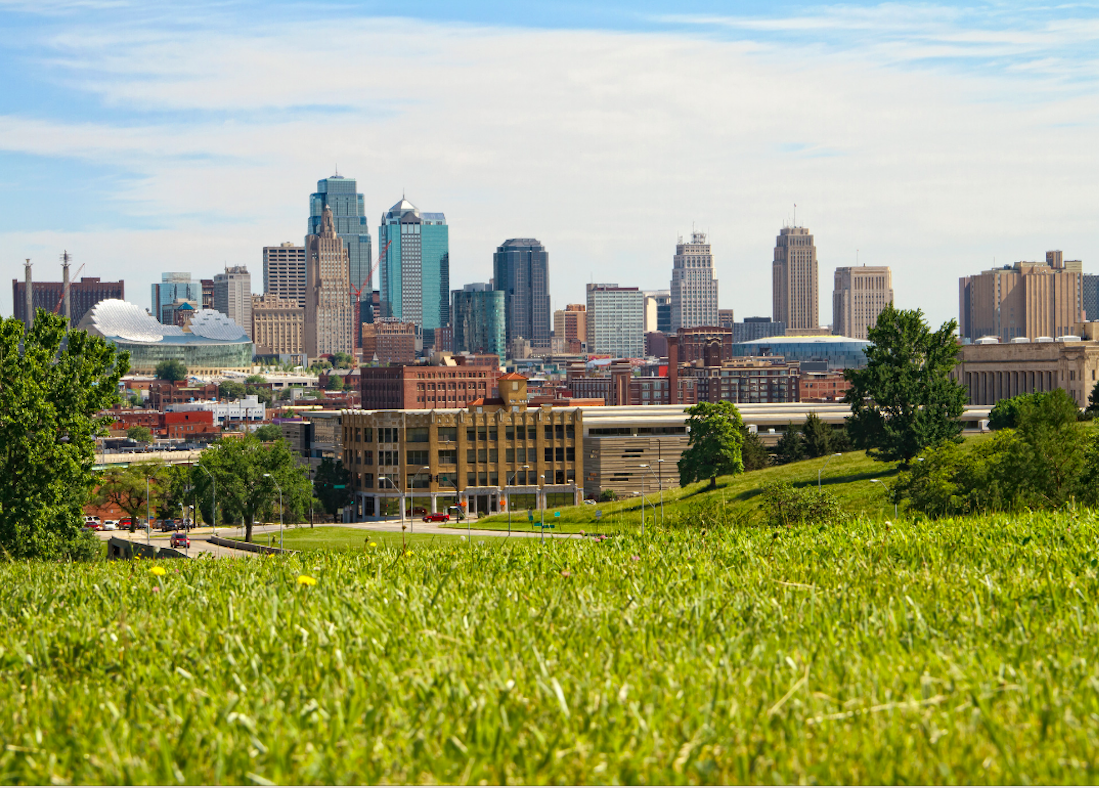
The Paris of the Plains is continually looking to expand its green space, with resurrected plans to . In 2019, Kansas City opened the on the site of a former golf course, complete with playgrounds and walking trails.
#1. Minneapolis, MN
- Green space per capita: 105,843 sq. ft.
- Population: 3.4 million
The the "Mini Apple" America's Best City for Parkland and Green Spaces in 2016, pointing out that "Minneapolis reserves 14.9% of city area for parkland and 95% of residents live within a ten-minute walk of a park." the most beautiful parks in Minneapolis include Loring, Lake Harriet, Powderhorn, Minnehaha, and Lake of the Isles. One reason the city is as lush as it is Green Minneapolis, a nonprofit, multi-project conservancy that purposes to "create a green and engaging realm" downtown.