Crops affected by western droughts

Written by:
August 18, 2021
Jasper Suijten // Shutterstock

Crops affected by western droughts

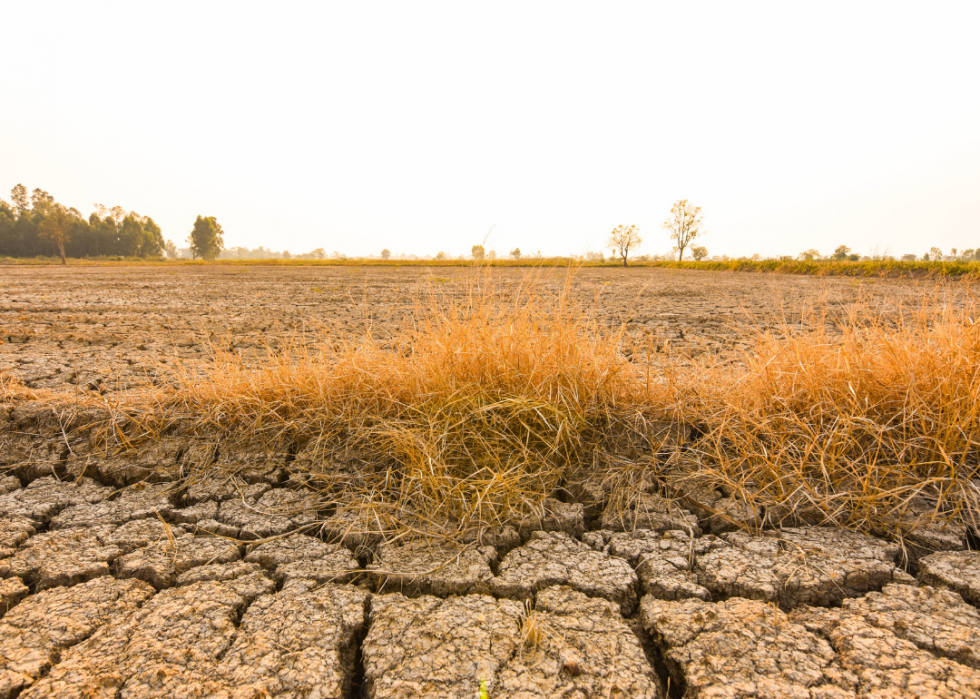
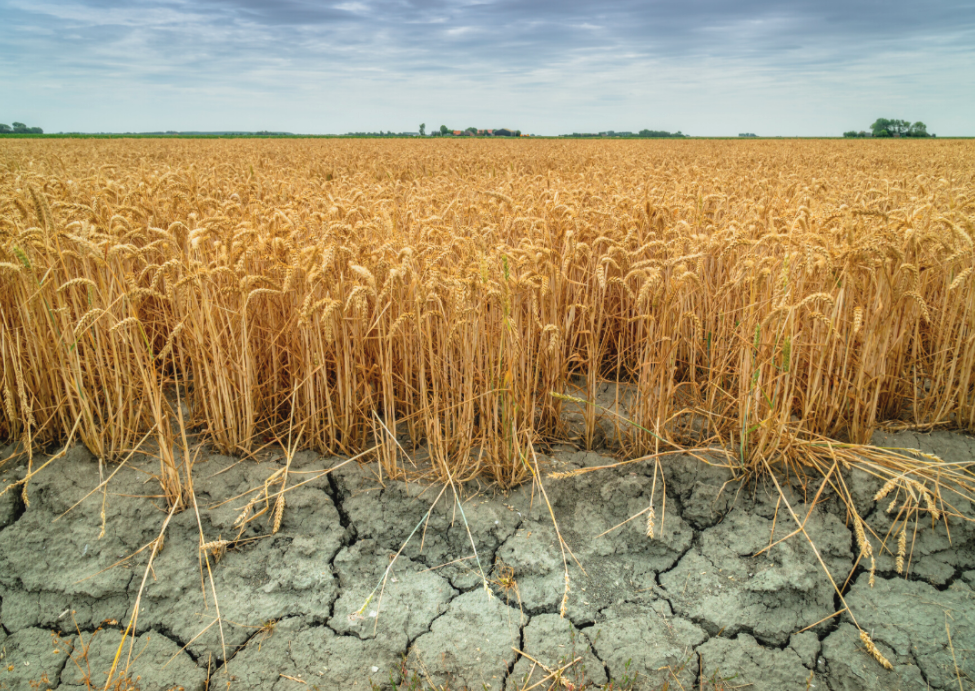
Climate change has brought historic droughts to virtually half the American population this year, starting in the spring and disproportionately affecting the Southwest, California, and Washington.

The hyperbolically dry conditions are wreaking havoc on agriculture, drying up lakes, and causing local and state governments to declare drought emergencies. The frequency and severity of droughts in recent years have scientists concerned about the prospect of the West, where reservoirs and water systems were constructed based on a climate that no longer exists, entering into a state of .

Farmers have responded to drought conditions by tilling ruined crops, , and swapping out the crops they normally grow with more ones. While droughts have been becoming increasingly common over the last two decades, this year's drought is exceptional in reach鈥攁ffecting nearly every state 鈥攁s well as in its extremity.

Using (USDA), 麻豆原创 identified reservoirs throughout Western states which reached below 75% of their typical capacity due to droughts. We combined this data with the, last completed in 2017, to find what crops are grown in each of the counties experiencing greater water stress.

1 / 20
Canva

#20. Mint

- Total acreage in drought-affected areas: 9,100 acres
- Affected crops as a percentage of national production: 10.63%

The majority of mint crops are grown in the Northwest, concentrated in Washington, Oregon, and Idaho. These states are currently experiencing 鈥,鈥 the most severe drought classification. Production of peppermint has been over the last ten years, and despite being a fairly drought tolerant crop, will likely continue doing so this year.

2 / 20
Canva

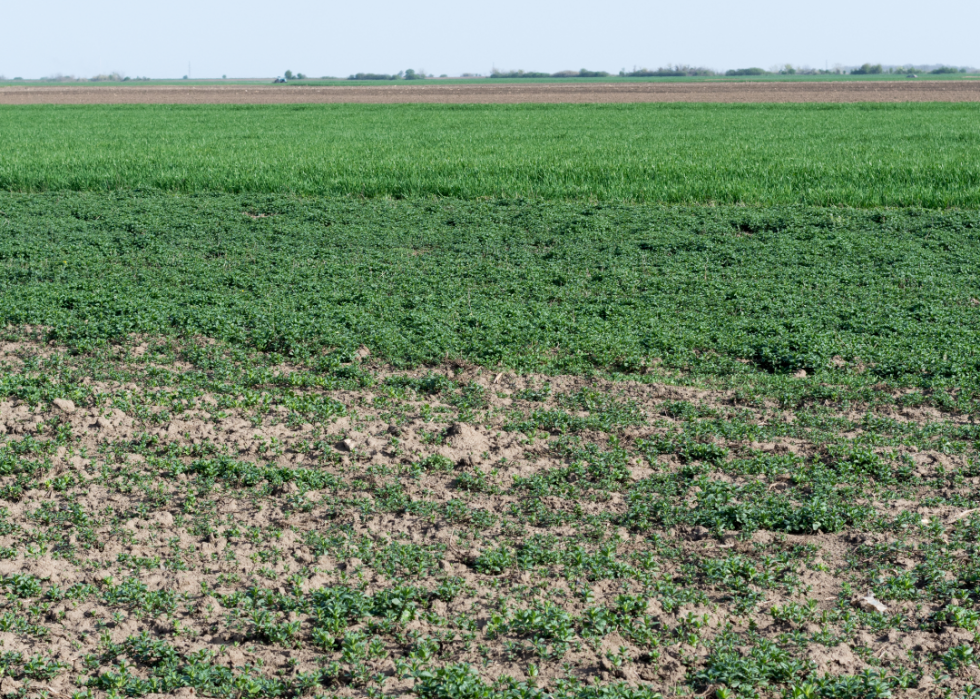
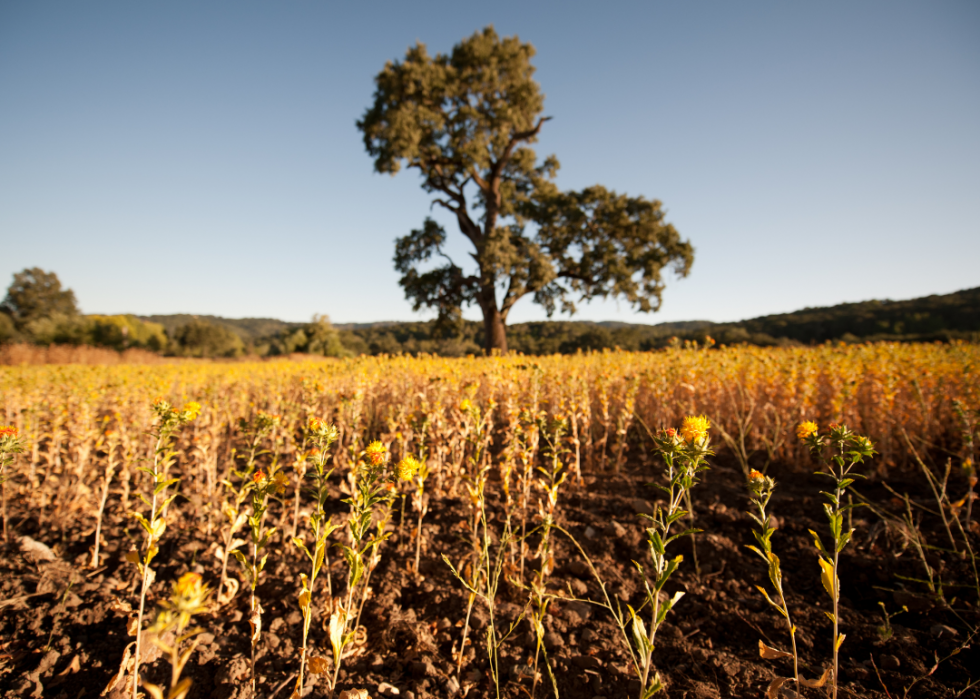
#19. Safflower

- Total acreage in drought-affected areas: 9,708 acres
- Affected crops as a percentage of national production: 6.27%

Extreme droughts have caused , like canola, to wither despite being fairly drought-resistant. The area planted for safflower in 2021 across the nation was some of the and early 2000s when records began.

3 / 20
Canva

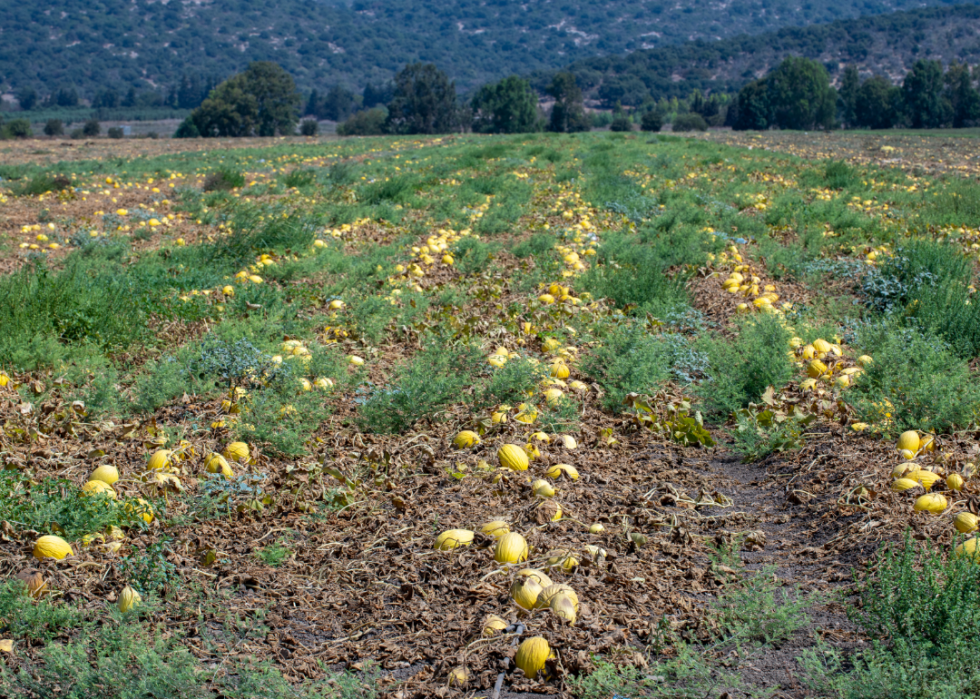
#18. Melons

- Total acreage in drought-affected areas: 10,620 acres
- Affected crops as a percentage of national production: 8.18%

In California, whose San Joaquin and Imperial Valleys are responsible for roughly 75% of the nation鈥檚 melon production, a has greatly reduced the amount of acreage given to melon growing. Record-high temperatures have also affected melon yields because extreme heat pressure can stress the plant to the point where the flower or fruit falls off.

4 / 20
arhendrix // Shutterstock

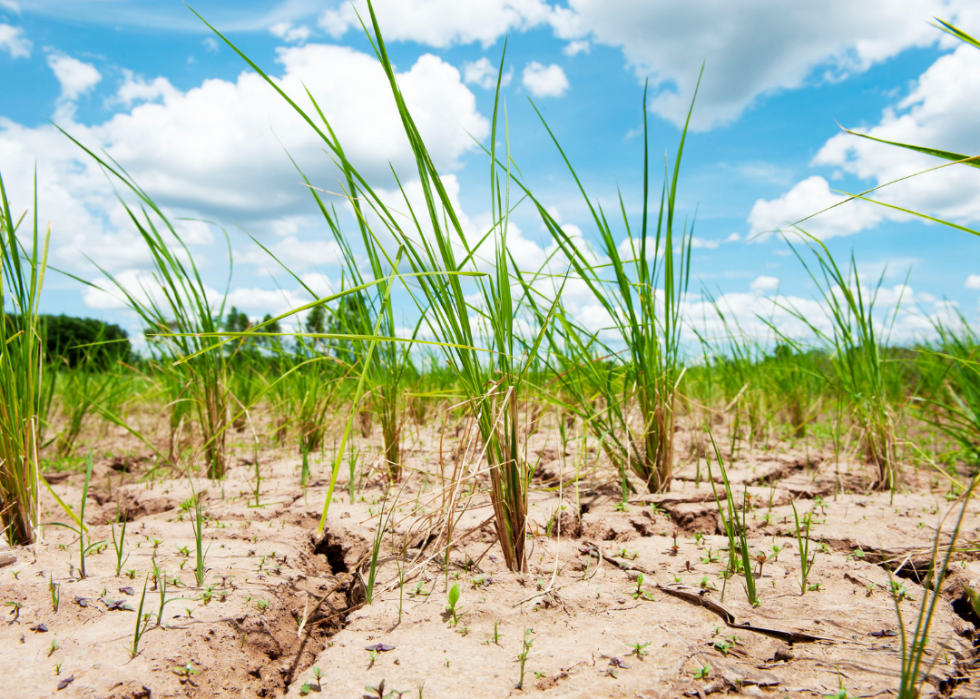
#17. Rice

- Total acreage in drought-affected areas: 12,001 acres
- Affected crops as a percentage of national production: 0.48%

In 2020, worth roughly $847 million were harvested in California. Tim Johnson, president of the California Rice Commission, estimates that drought conditions will lead rice farmers in the state to plant 100,000 fewer acres than usual in 2021, though that number is subject to change.

5 / 20
ID-VIDEO // Shutterstock

#16. Oats

- Total acreage in drought-affected areas: 13,146 acres
- Affected crops as a percentage of national production: 1.49%

Droughts out west have reduced American oat crop production to its , according to USDA data. , farmers expect to harvest 50 bushels of oats per acre鈥16 fewer than in 2020.

6 / 20
Ivan Semenenko // Shutterstock

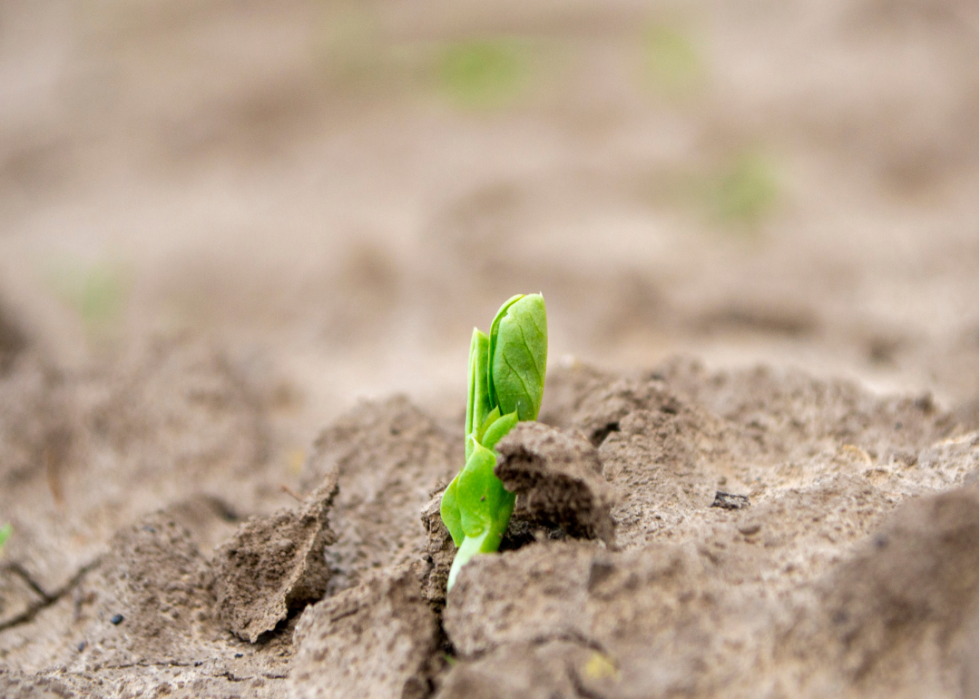
#15. Peas

- Total acreage in drought-affected areas: 20,004 acres
- Affected crops as a percentage of national production: 1.80%

Drought conditions out west have led to pea crops that are just a fraction of what they should be, leading many farmers to rely on federal crop insurance. Insurance can mitigate losses caused by extreme weather conditions or drops in commodity pricing. But with extreme weather events happening more frequently, some farmers are annually. Repeated insurance claims translate to a nosedive in production history and take away a farmer's ability to insure a high percentage of their crops.

7 / 20
AlxYago // Shutterstock

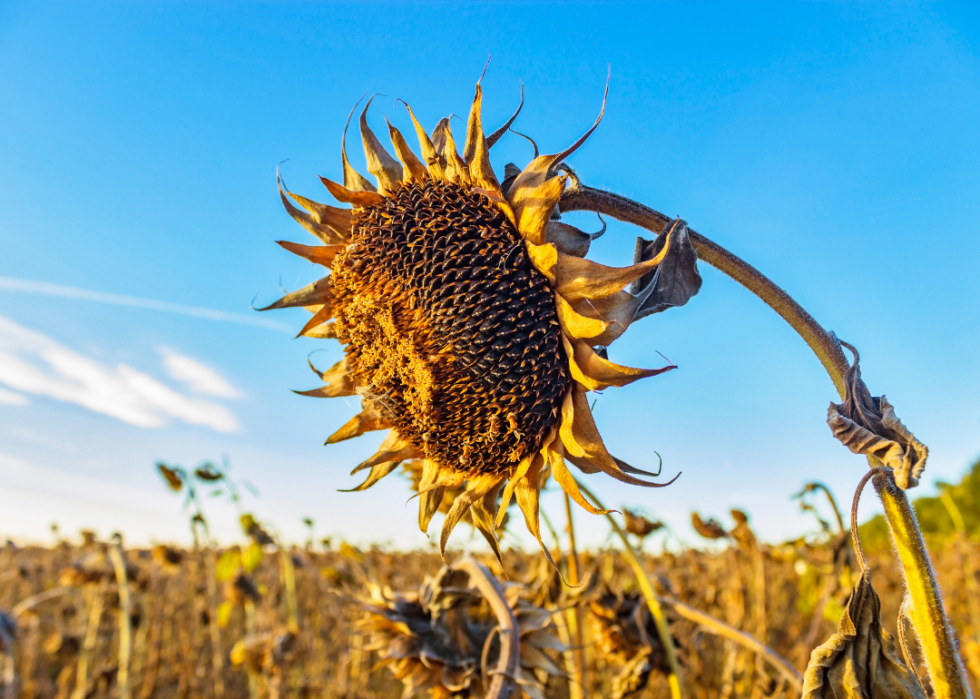
#14. Sunflower

- Total acreage in drought-affected areas: 20,623 acres
- Affected crops as a percentage of national production: 1.53%

Back in 2017, drought conditions meant harvested sunflower acres decreased roughly 21% from 2016, . John Sandbakken, the executive director of the National Sunflower Association, said that while sunflowers are 鈥渧ery drought tolerant,鈥 they require rain particularly during the transition from the vegetative to the reproductive phases, which typically occurs around June.

8 / 20
photowind // Shutterstock

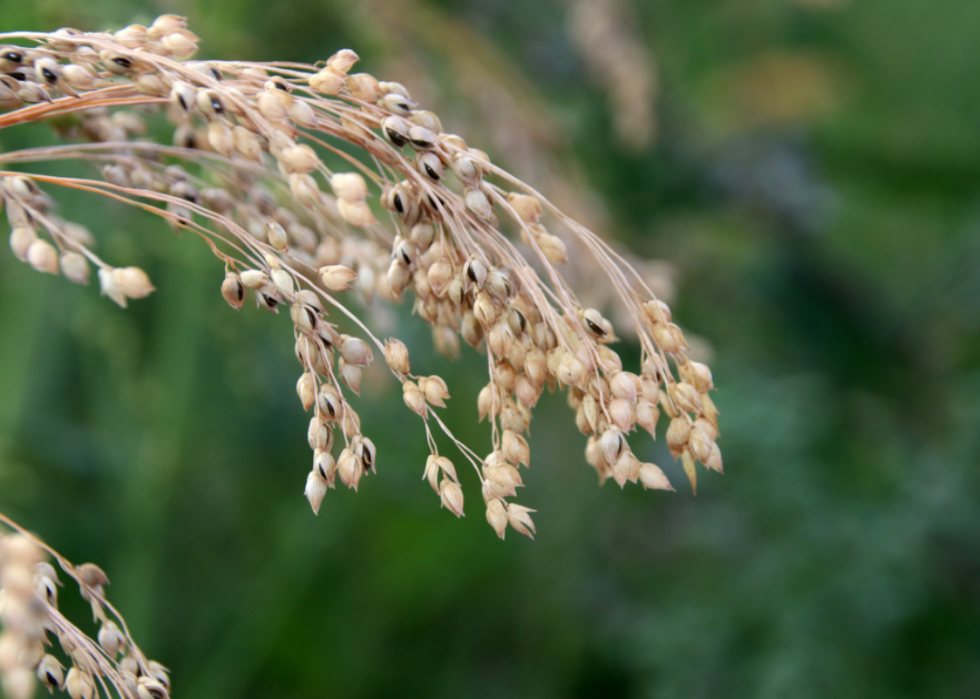
#13. Millet

- Total acreage in drought-affected areas: 25,203 acres
- Affected crops as a percentage of national production: 5.99%

Pearl millet is among the most drought-resistant grains used in commercial production, although extreme drought can stress the plants and lead to limited production. Because millet can be grown in areas that are inhospitable to other crops, producers around the world face a unique challenge as many of these . Experts say millet seed production may be impacted in the U.S. this year due to .

9 / 20
Michelle Aleksa // Shutterstock

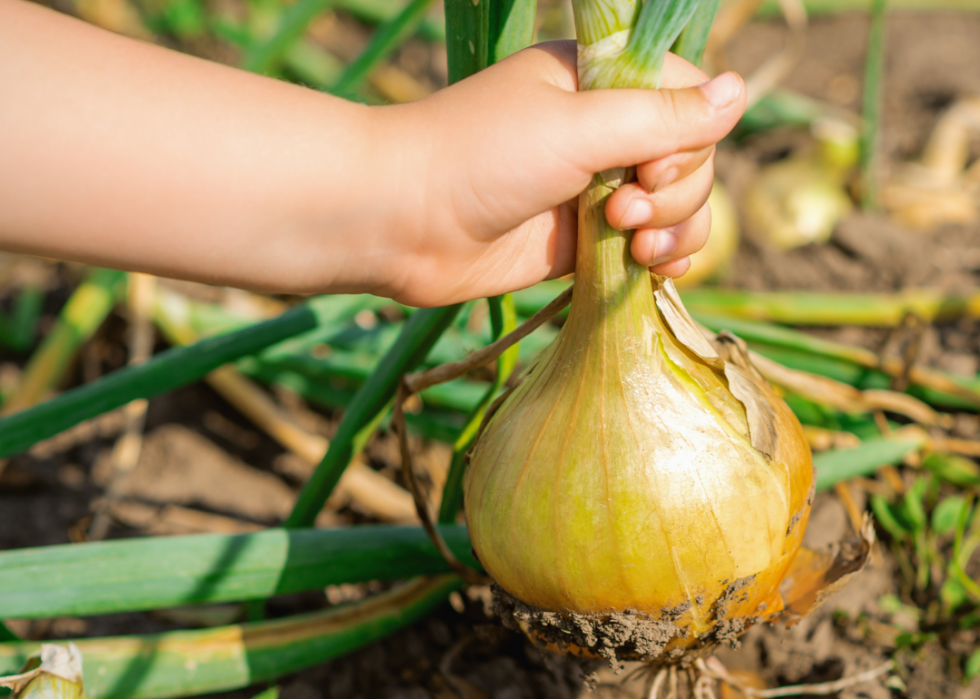
#12. Onions

- Total acreage in drought-affected areas: 47,692 acres
- Affected crops as a percentage of national production: 29.08%

California is the largest producer of onions in the U.S., accounting for in 2015. California is not the only Western state whose onions have been impacted by drought, however. Washington, another large producer of onions, during a record-breaking heatwave in July whentemperatures reached 120 degrees.

10 / 20
J.J. Gouin // Shutterstock

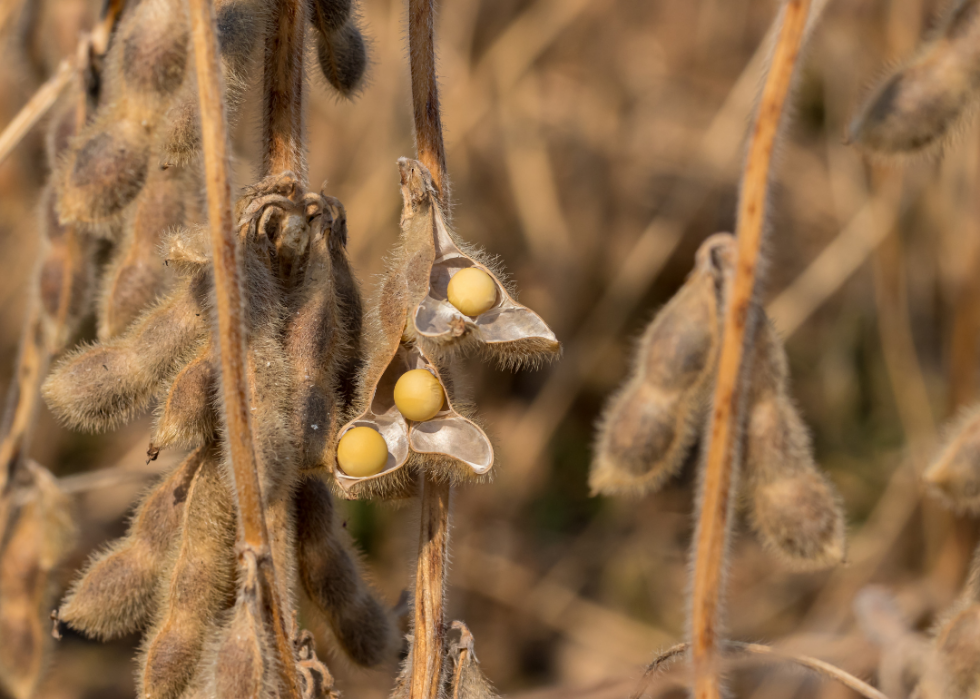
#11. Beans

- Total acreage in drought-affected areas: 71,323 acres
- Affected crops as percentage of national production: 3.51%

The Dakotas, which have been experiencing for months, account for in the U.S. Nationally, 60% of soybean crops were rated to be in good to excellent condition, which is the numbers from August 2020. However, showed that resilient soybeans can recover from a dry growing season if it rains in August and September.

11 / 20
Olivier Uchmanski // Shutterstock

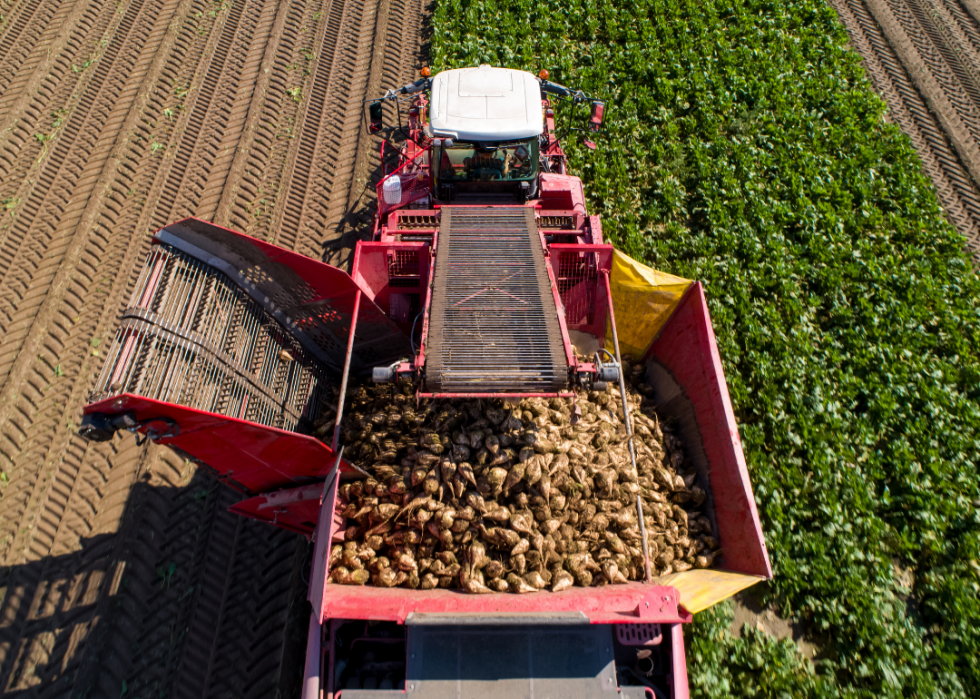
#10. Sugarbeets

- Total acreage in drought-affected areas: 74,259 acres
- Affected crops as a percentage of national production: 6.45%

The is the nation鈥檚 foremost sugar beet (not to be confused with beetroot) growing region. It has also been subject to extreme drought which only appears to be . Beet sugar production in the U.S. for 2021 is , according to the USDA.

12 / 20
ToppyBaker // Shutterstock

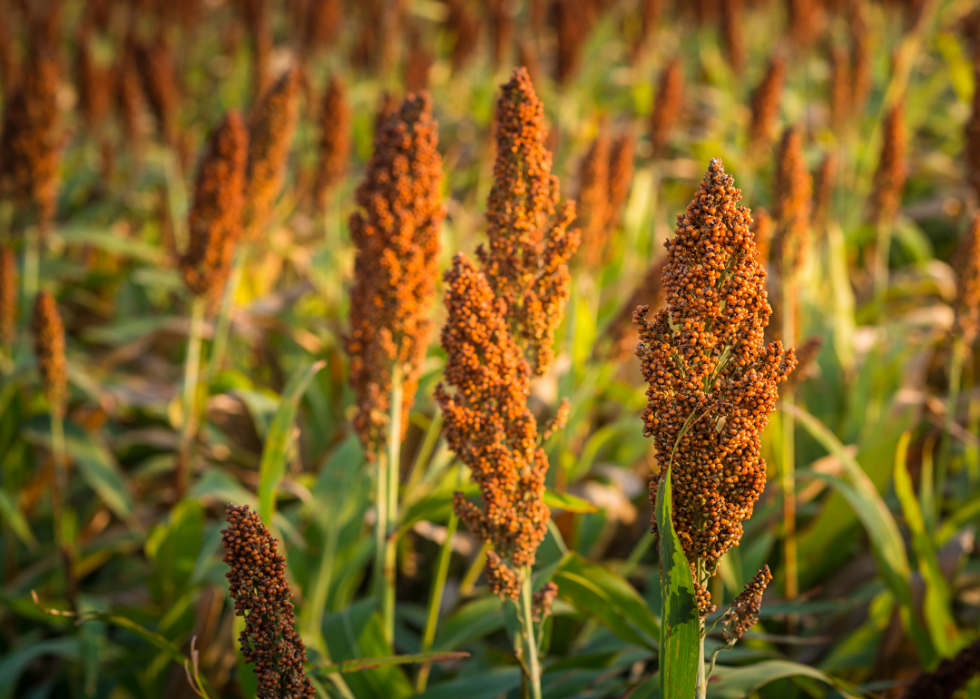
#9. Sorghum

- Total acreage in drought-affected areas: 85,918 acres
- Affected crops as percentage of national production: 1.62%

The severe drought which plagued the Northern Plains in 2012 resulted in harvest failure for sorghum, among other crops, and in losses. So far, however, the current drought has not caused discernable damage to sorghum crops. According to USDA data, sorghum production overall is .

13 / 20
Thomas Rosenzweig // Shutterstock

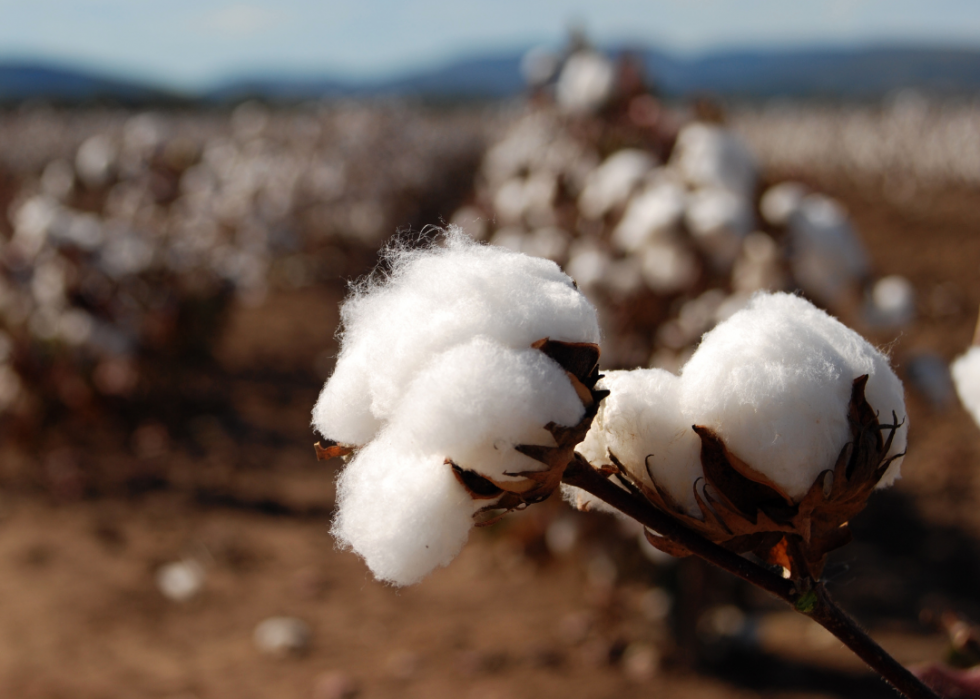
#8. Cotton

- Total acreage in drought-affected areas: 115,767 acres
- Affected crops as percentage of national production: 1.01%

The U.S. is the third-largest producer of cotton in the world, while the cotton industry accounts for . Currently, cotton crops due to moderate amounts of rain. However, in other parts of the West, droughts persist and cotton crops are struggling to keep up. Overall, cotton crop progress is roughly .

14 / 20
Animaflora PicsStock // Shutterstock

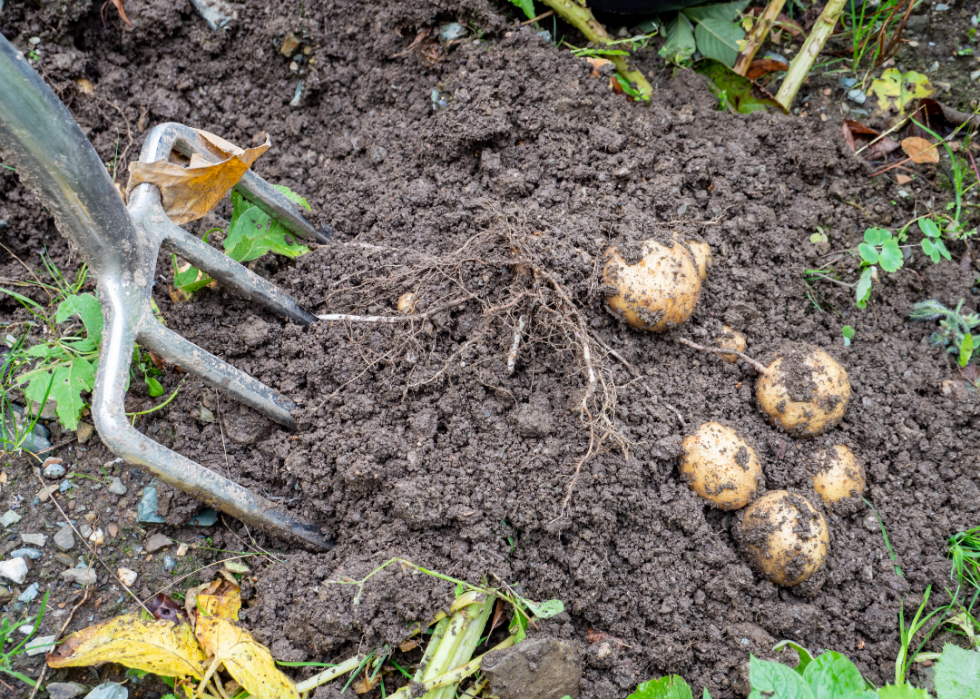
#7. Potatoes

- Total acreage in drought-affected areas: 137,855 acres
- Affected crops as a percentage of national production: 12.17%

In Idaho and Washington, despite drought conditions, potato crops seem to be faring well. This is because most surface water in these states comes from snowmelt in the winter, according to Chris Voigt, executive director of the Washington State Potato Commission. Since there was sufficient snowfall in those areas this past winter, the potato crops have enough water to sustain the dry summer.

15 / 20
neenawat khenyothaa // Shutterstock

#6. Grasses and legumes

- Total acreage in drought-affected areas: 148,355 acres
- Affected crops as a percentage of national production: 20%

Drought and record-setting temperatures in the Pacific Northwest for legumes and other crops grown in the Willamette Valley in Oregon, among other regions. To protect crops from drought, researchers at the Massachusetts Institute of Technology have developed a for seeds to supply nutrients and water during germination.

16 / 20
Canva

#5. Barley

- Total acreage in drought-affected areas: 165,544 acres
- Affected crops as a percentage of national production: 7.50%

Drought in Idaho, which typically comes in at , has led farmers to forecast a significant decline in yield this year. In 2020, Idaho barley farmers harvested a record 500,000 acres of barley, or 110 bushels per acre, accounting for roughly 33% of the nation鈥檚 barley supply. This year, production is expected to drop to 460,000 acres, or 81 bushels per acre. Nationally, the percentage of barley crops which were rated good to excellent by the USDA is last year鈥檚 number.

17 / 20
roibu // Shutterstock

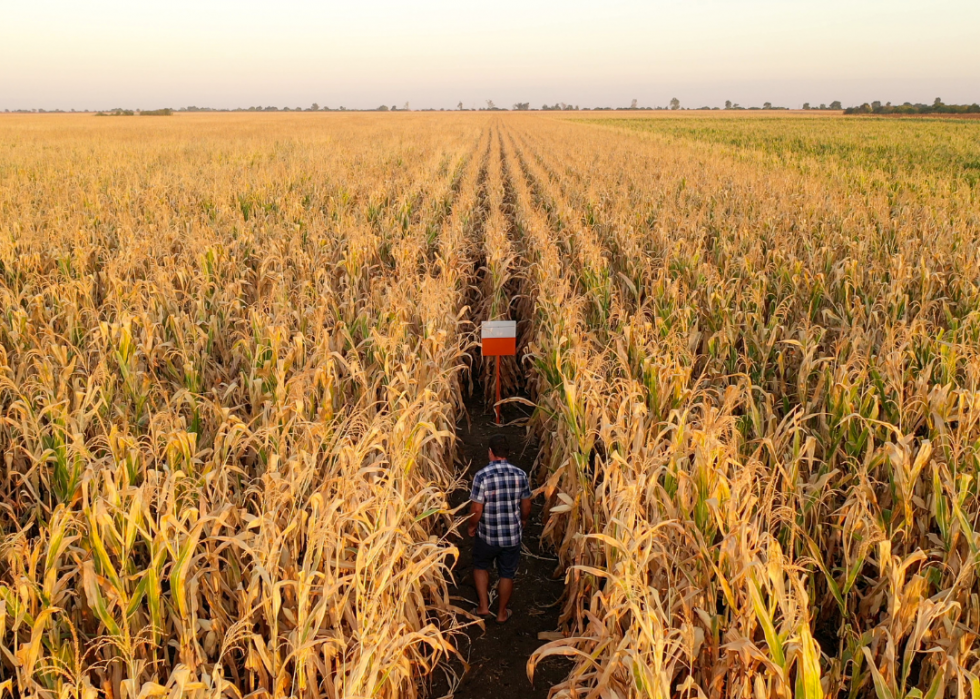
#4. Corn

- Total acreage in drought-affected areas: 361,291 acres
- Affected crops as a percentage of national production: 0.40%

The U.S. is the , accounting for over 30% of global corn production. , president of AgResource Co in Chicago, anticipates that drought in the western corn belt has already cut American corn yield this year by between two and four bushels per acre. On average, are harvested per acre in the U.S. With corn crops occupying over nationally, this forecast could mean a loss of billions of bushels of corn this year.

18 / 20
RobShea // Shutterstock

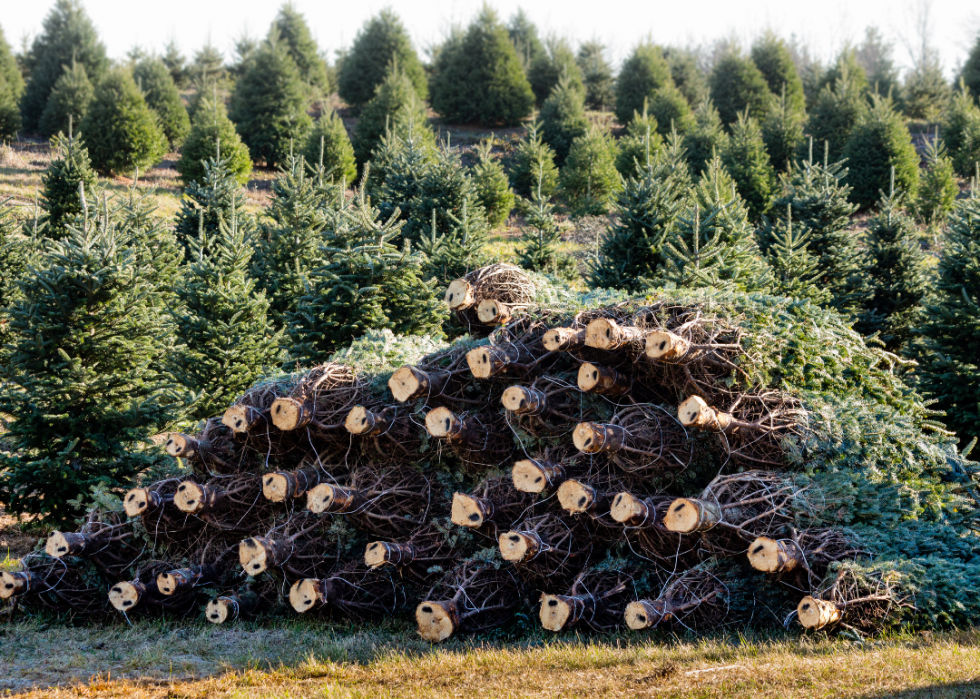
#3. Cut Christmas trees

- Total acreage in drought-affected areas: 629,884 acres
- Affected crops as a percentage of national production: 4.17%

The acreage growing Christmas trees in the U.S. dropped by 24% over the last five years, according to a . This is in large part due to drought conditions, unprecedented heat waves, and wildfires, especially in Oregon, the nation鈥檚 largest Christmas tree producer. The average maturation time for a typical Christmas tree is about , meaning the impact of droughts and other environmental conditions on Christmas trees will likely be seen for many years to come.

19 / 20
Simon Annable // Shutterstock

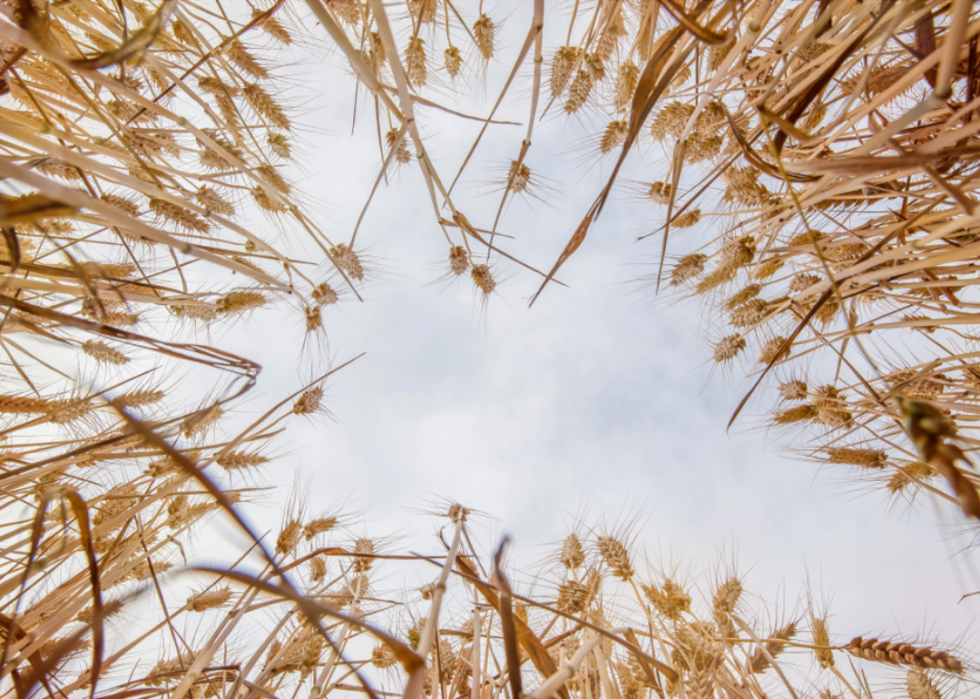
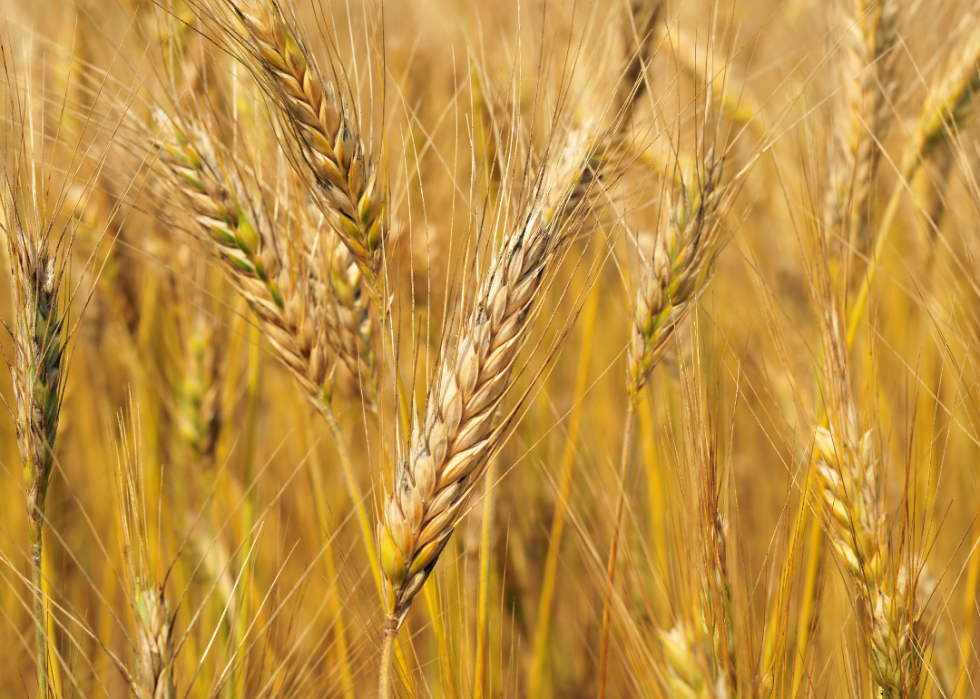
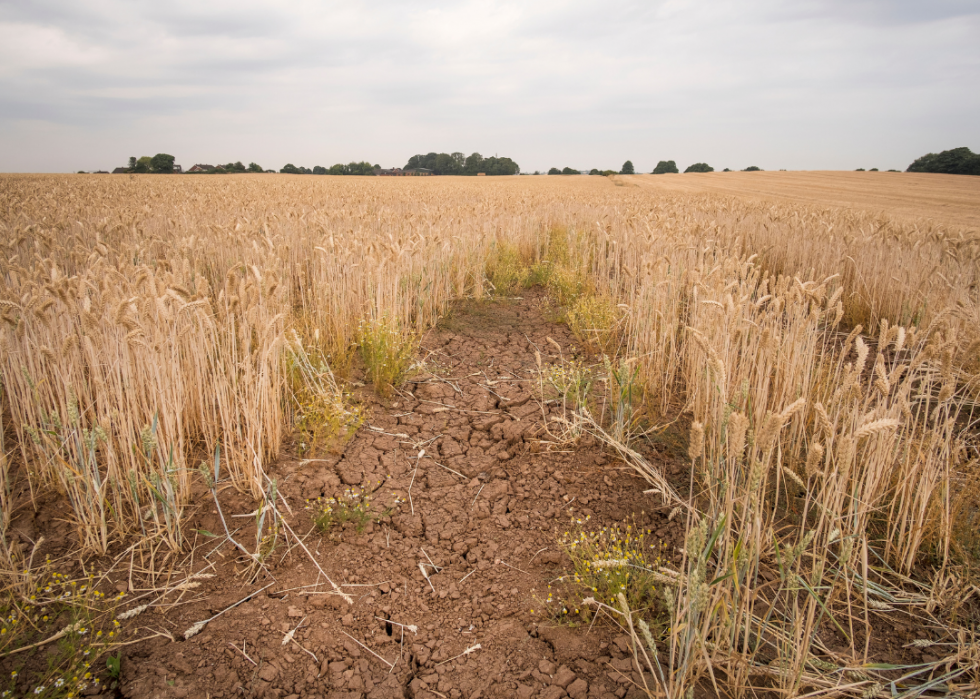
#2. Wheat

- Total acreage in drought-affected areas: 1,103,368 acres
- Affected crops as a percentage of national production: 2.84%

As of , 61% of the U.S. spring wheat crop was rated poor to very poor, while a mere 11% was rated good to excellent. This summer鈥檚 ratings mark the lowest they鈥檝e been since the . The USDA has forecast wheat harvests will yield 41% less than last year, which is expected to and other wheat products.

20 / 20
Oleksiichik // Shutterstock

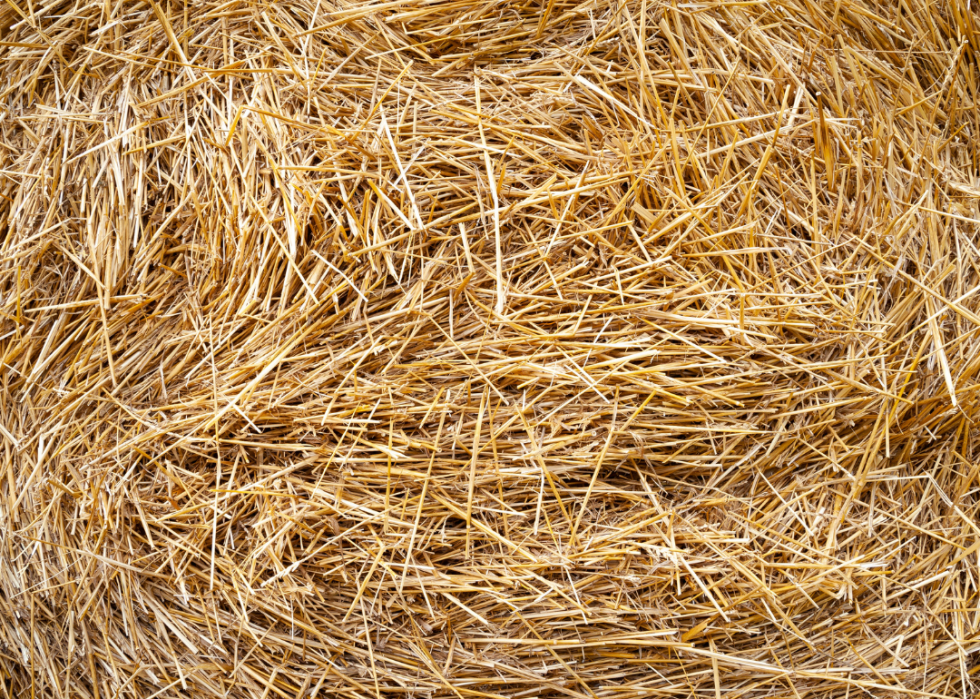
#1. Hay and haylage

- Total acreage in drought-affected areas: 3,407,971 acres
- Affected crops as a percentage of national production: 6%

Hay shortages due to drought have caused farmers across the country to cut . In North Dakota, of what is produced on average, while in , Gov. Kristi Noem signed an executive order at the end of June allowing early haying of grasses by roadsides, a measure usually not permitted until after July 10. The shortage poses a that subsist largely on hay during the winter months.

Trending Now