Scientific breakthroughs from the year you were born
Scientific breakthroughs from the year you were born
Chemist and Intel co-founder Gordon Moore . This idea came to be known as Moore's Law.
Moore's theory was daring for its time but appears less so when looked at in the context of the massive scientific and technological breakthroughs of the decades prior. Starting in 1927, Â鶹ԭ´´ has done just that: By combing through the archives of science's highest achievements, we've selected some of the top scientific breakthroughs of the last 93 years. Because of these milestones, humans today are capable of things earlier generations would have chalked up to be pure science fiction. Scientists have extended and improved human life, cured seemingly incurable illnesses, uncovered previously unknown worlds and creatures, and unearthed fascinating discoveries about our world and the solar system beyond.
Keep reading to discover major scientific breakthroughs of the last century.
1927: Matter found to be wavelike
In 1925, Clinton Davisson and Lester Germer of Bell Telephone Laboratories experienced a fortunate accident. A botched experiment ended up showing that and that electrons scatter from a crystal the same way an X-ray does. In 1927, they published two papers describing their findings. Their work eventually earned Davisson a Nobel Prize.
1928: Discovery of penicillin
a bacteriologist at St. Mary’s Hospital in London, returned to the lab from a trip and discovered something had changed in his petri dishes of Staphylococcus aureus. A particular mold had invaded and prevented normal growth. This soon resulted in the discovery of penicillin, one of the world’s first antibiotics (still used widely today) and a game-changer in the field of medicine.
1929: Hubble’s Law of the expanding universe
In 1929, Edwin Hubble published . He detailed what would later be known as Hubble’s Law, which explains how the universe is continually expanding, a postulation that changed humankind’s understanding of space.
1930: Absolute geological timescales developed
(such as the Mesozoic) and epochs (such as Pleistocene). This measure, which is based on rock layers, had been theorized about for centuries, but, , British geologist Arthur Holmes established the first absolute timescale.
1931: First electron microscope created
The University of Berlin's Ernst Ruska, a physicist, and Max Knoll, an electrical engineer, . This development overcame and aided discoveries in physics.
1932: Discovery of the neutron
In 1932, used scattering data to , which would become known as neutrons. This fundamental discovery for his field earned him a Nobel Prize.
1933: Concept of neutron stars developed
A neutron star is created when a large star—four to eight times as big as the sun—. After the outer layer blows off, its dense core continues to collapse, pressing so tightly that its protons and neutrons combine into neutrons. , especially impressive considering that neutrons had only recently been discovered.
1934: Sonoluminescence discovered
When high-pitched sounds hit liquids, the liquid’s , an event known as sonoluminescence. Researchers at the University of Cologne in Germany discovered this in 1934. Today, , and continue to study it.
1935: Magnitude scale for earthquakes developed
If you read about an earthquake, one of the first things you’ll learn about it is its magnitude. The namesake of the Richter scale is Charles Richter, . He modeled it after the stellar magnitude scale for stars.
1936: First nerve agent discovered
Nerve agents have done immeasurable damage as biological weapons. The first such agent to be synthesized was tabun, . He was testing insecticides when some of the chemicals spilled. His colleagues at the lab began experiencing serious side effects, such as dizziness, which lasted for weeks.
1937: Citric acid cycle discovered
Many high school biology students will have heard of the Krebs cycle, named for Sir Hans Adolf Krebs, a German biochemist. for discovering how living organisms break down and convert sugars, fats, and protein to carbon dioxide, water, and other energy-rich compounds.
1938: Nuclear fission discovered
In December 1938, radiochemistry researchers . When this technology arrived in America, it was used to develop the Manhattan Project, producing the world’s first nuclear weapons.
1939: 1DDT first used as an insecticide
Though it had been synthesized in earlier decades, Paul Müller, a research chemist in Switzerland, was . Though at first it seemed like a miracle chemical, cheap to produce and effective at reducing harmful pests, it was later discovered to be a dangerous pollutant, as publicized in
1940: Plutonium first synthesized
Plutonium, the radioactive metal used to create nuclear weapons, was . Researchers didn’t publicize this finding until the conclusion of WWII, in to keep its existence secret from enemy forces.
1941: Hormonal treatment of cancer developed
Cancer has always been a complex disease for doctors to treat—it can be found on nearly any part of the body, and comes in countless forms. . This form of treatment has since become standard for breast, gynecological, and other types of hormone-driven cancer.
1942: Race-based blood typing debunked
African American immunologist in 1942, which . The research effectively debunked the concept of a “superior” race.
1943: DNA proved to be genetic material of chromosome
Oswald Avery, , conducted research demonstrating that . This showed that DNA, not protein, was the human genetic molecule, and laid the foundation for the field of molecular genetics. His landmark paper on this was published the next year.
1944: Echolocation discovered
, animal behaviorist Donald Griffin caused a stir in the scientific community when he and a colleague realized that bats reflect sound off objects in order to detect their location. He named this “echolocation.” Today, we know that dolphins, shrews, and other animals also use this method of tracking, and it’s inspired technology like sonar detection.
1945: First atom bomb test
. The blast emitted the power of 20,000 tons of TNT. Later that year, the first atomic bombs would be deployed in warfare, dropped on Hiroshima and Nagasaki, causing large-scale destruction and changing the course of WWII.
1946: Fluoride water study begins
to demonstrate how adding fluoride to drinking water could help prevent cavities. His findings led to widespread fluoridation of community water in America. Today, .
1947: Invention of the transistor
William Shockley, John Bardeen, and Walter Brattain of Bell Labs created the transistor, a semiconductor device with three connections, in 1947. This invention would become incredibly important to communications technology throughout the 20th century. .
1948: The introduction of the Big Bang theory
In 1948, American cosmologist Ralph Apher, as well as Robert Herman and George Gamow, first predicted “,” or the heat left from what would later be known as the Big Bang. The Big Bang theory transformed human understanding of the history of the solar system.
1949: First bone marrow transplant
Leon Jacobson, a medical researcher, . It wasn’t until 1956 that the procedure was successfully performed on a human (). Now, tens of thousands of people receive bone marrow transplants each year.
1950: Leukemia drugs developed
Chemist Gertrude Elion experienced immense discrimination as a female researcher, but defied expectations by becoming . In 1950, she created a purine chemical that disrupted the formation of leukemia cells. It soon became the foundation for drugs used for those suffering from childhood leukemia, previously a fatal diagnosis.
1951: HeLa cancer cells harvested
Henrietta Lacks died from cancer in October of 1951, but her cells live on. Because her "immortal" cells did not die after a certain number of divisions, as normal cells do, researchers were able to propagate them in order to do an infinite number of tests and experiments. These cells have contributed to . wrote about the Lacks family in The Immortal Life of Henrietta Lacks.
1952: Polio vaccine created
Though polio had been claiming human lives for centuries, took the biggest step toward eradicating it in 1952, that would, years later, become widespread. Today, polio has been all but eradicated.
1953: Discovery of the structure of DNA
We know about the thanks to James Watson and Francis Crick. This groundbreaking development served as a foundational discovery of molecular biology, and made Watson and Crick one of the most famous scientific duos of all time.
[Pictured: James Watson.]
1954: First organ transplants
The first-ever successful organ transplant? , transplanted by a group of surgeons led by Harvard’s Joseph Murray. The procedure was performed by . Today, organ transplants are commonplace, with about 17,000 kidney transplants alone each year in the United States.
1955: The placebo effect identified
Harvard Medical School’s , which identified the placebo effect and the need for double-blind, placebo-controlled clinical pharmaceutical trials. Though there had been talk of the placebo reponse in the scientific community before, Beecher was the first to quantify it through experiments. Today, double-blind tests are standard in the research community.
1956: Theory of free-radical aging developed
In 1956, biochemist Denham Harman proposed . In 1956, he published a seminal paper suggesting that aging occurs when free radicals damage cells. This implied that aging could be cured, or at least substantially delayed. Though scientists have since begun looking at new theories, the free-radical theory of aging is responsible for the widespread antioxidant food trend and many anti-aging and beauty product formulas. It's also also led to important research on dementia, heart disease, and other conditions.
1957: Invention of the birth control pill
Enovid, the first FDA-approved oral form of birth control, was released in 1957. one of its side effects was effective contraception. In 1960, Enovid was officially branded as a birth control pill.
1958: Researchers link hormones and cancer
Elwood Jensen was one of the era’s pioneering endocrinologists. In 1958, he and a fellow researcher published a paper that in the female reproductive system. Not only did this change how doctors viewed hormones’ role in the body, it .
1959: Float glass invented
Window panes created in the 1950s or earlier had a “fun-house effect,” because they were made by rolling sheets of hot glass. This type of glass was inexpensive to manufacture, but uneven. In 1959, , made by floating hot glass on a bath of molten tin, which is completely flat. Most plate glass today is still produced with his method.
1960: First laser demonstrated
Today, lasers are used for everything from complex surgery to reading bar codes (to ). The first one was .
1961: The first human goes to space
. Though animals had been sent up before, Yuri Gagarin was the first person to do it during a 108-minute flight. Upon re-entry to Earth, there was no way to gracefully land the craft—Gagarin was ejected from the craft four miles above land and parachuted down.
1962: Launch first active communications satellite
AT&T Bell Telephone Laboratories collaborated with NASA to launch , which facilitated television transmissions and phone calls around the world. Today, communications satellites are commonplace.
1963: Discovery of quasars
A quasar is a massive, remote celestial object which often appears to look like a star. , a discovery which would support the Big Bang theory.
1964: Research from the Great Alaska Earthquake
The 9.2 magnitude quake that destroyed roads, liquefied ground, caused a tsunami, and killed 130 was . It was devastating, but , resulting in discoveries about plate tectonics and developments in how societies approach earthquake preparedness.
1965: Kevlar developed
In 1965, , which included the material now known as Kevlar. Now, this material has more than 200 uses and can be found in planes, ships, shoes, frying pans, and combat armor.
1966: ELIZA published
In 1966, , a chatbot which responded like a therapist. Type to ELIZA about your feelings of sadness or despair, and you could begin engaging in a conversation. "She" passed a Turing test for machine intelligence, and has set the foundation for many of the AI assistants and smart technology we see today.
1967: Handheld calculator invented
Prior to the 1960s, most math was done with the help of slide rules or handwritten formulas. In coordination with Caltech, . It would be available for sale four years later and, soon, would become ubiquitous.
1968: Intel founded
Chemist Gordon Moore and physicist Robert Noyce in 1968. The chips made by the company became foundational for computer science and can still be found in most electronics today.
1969: First man on the moon
"That's one small step for man, one giant leap for mankind." Those words from Neil Armstrong became immortal during . Armstrong, Buzz Aldrin, and Michael Collins were all aboard the iconic Apollo 11 flight, which entranced viewers around the world and changed the possibilities for space travel forever.
1970: The Exeter stem first used for hip replacement
The Exeter stem——was different from the implants used before, which attached to the skeleton. The Exeter, created by Robert Ling and Clive Lee, allowed for self-locking. Improved versions of it are still used, .
1971: First PC goes on sale
Before the Apple 1, there was . Created by John Blankenbaker, it was the first commercially available PC. Personal computers were not only key for the technology industry, they transformed the way scientists conducted experiments and processed data.
1972: CAT scan developed
In 1962, , a CT brain scanner, as well as the first clinical results. Strangely enough, South African researcher Allan McLeod Cormack simultaneously—and independently—developed a method for the CT scan, too. In an unusual twist, the two were .
1973: Invention of recombinant DNA
, when Stanley Cohen and Herbert Boyer cut open a plasmid loop from one bacteria, inserted a gene from a different bacteria, then inserted the gene into a third organism. GMO technology has paved the way for new crops, medicines, and even “chimeric” animals. This breakthrough has also been key for developments in cloning.
1974: Discovery of “Lucy”
Donald Johanson and Tom Gray were traveling through Ethiopia searching for fossils . These were the remains of “Lucy,” an early hominin who lived 3.2 million years ago. This partial skeleton has been studied extensively, and has changed our understanding of early human species.
1975: Cancer linked to genes
Geneticist Janet Davidson Rowley when she found consistent chromosomal abnormalities associated with cancer. This discovery has been foundational in how the disease is treated and prevented. .
1976: The Viking 1 lands on Mars
NASA's Viking 1 arrived on Mars in July of 1976, making it the first craft to do so as well as the first to remain long-term. and is considered one of NASA's greatest successes.
1977: First complete DNA sequencing
English doctor Frederick Sanger known as the Sanger method, which read 500 to 800 bases at a time. The same year, he and his team published the sequence of a virus genome. .
1978: First baby born using in-vitro fertilization
In-vitro fertilization (IVF), wherein eggs and sperm are combined in a petri dish and implanted in a uterus, is now a widespread means of enhancing fertility. . The next year, her daughter, Louise Joy Brown, was born. IVF has since resulted in millions of births.
1979: Biologists investigate thermal vents
Thermal vents are not very hospitable to life: these underwater fissures, usually found near volcanically active areas, are incredibly hot. A great deal of marine life exists there, nevertheless, from certain species of shrimp to giant worms. In 1979, scientists from Rutgers, the University of Miami and other institutions at this strange, deep-sea world in the Galapagos Islands, a major step for the field of marine biology.
1980: Smallpox eradicated
Smallpox was among humanity’s most devastating diseases. About 300 million people died from it —which is why the World Health Organization targeted it with a . Their efforts were successful, and in 1980, they declared the highly contagious disease eradicated.
1981: First fetal surgery
UC San Francisco clinical surgeon Michael R. Harrison was the first to complete fetal surgery, which is now used regularly to fix abnormalities or other conditions in unborn babies. to unblock urinary tract obstructions in fetuses in 1981; the second surgery resulted in a healthy baby. Today, many more surgical procedures are available to treat fetuses.
1982: First artificial heart transplant
Seattle dentist Barney Clark volunteered to receive the world’s first artificial heart transplant in 1982. . , far longer than expected. Though artificial hearts have only kept patients alive for as long as 500 days, they are now commonplace as a “bridge” between when a patient’s own heart is removed and when they’re able to receive a transplant.
1983: AIDS virus identified
In the 1970s and 80s, rare types of pneumonia, cancer, and other diseases were being reported around the country. By 1982, scientists were beginning to use the term “acquired immunodeficiency syndrome” (AIDS) to describe it. It wasn’t until 1983 that that causes AIDS. Though an estimated as a result of contracting AIDS, treatment options are now readily available and many people can effectively fight infection for many years.
1984: DNA fingerprinting uncovered
University of Leicester geneticist Alec Jeffreys analyzed DNA to discover that certain . This discrepancy was specific to each individual, and could be used to link biological samples to out someone’s identity. He coined the term “genetic fingerprinting,” a development which contributed to paternity testing, crime scene analysis, and more.
1985: Hole in the ozone layer discovered
In 1985, Joe Farman, Brian Gardiner, and Jon Shanklin published an alarming paper in the journal Nature: Ozone levels above the Antarctic had over the previous decade. This would become known as the “hole” in the ozone layer. This became one of the most important discoveries in the history of climate science.
1986: High-temperature superconductor created
Today, high-temperature superconductors—material that, even at high temperatures, can conduct energy with no resistance—are used in medical and physics research. One such experiment resulted in the discovery . In 1986, IBM's Johannes Bednorz and Karl Mueller discovered that copper oxide ceramics can conduct currents without resistance at higher temperatures, which earned them a Nobel Prize and to develop superconductors.
1987: Prozac hits the market
Prozac . A new antidepressant with fewer side effects than other drugs of its time, it soon became the most-prescribed psychiatric drug in American history and later inspired the pop-culture film .
1988: Hawking publishes “A Brief History of Time”
Theoretical physicist Stephen Hawking’s “A Brief History of Time” was not only a defining book in the field, it appealed to a worldwide audience. In it, the famed scientist answered questions about , the nature of time, and much more.
1989: Hepatitis C identified
Though hepatitis C has plagued humans throughout history, the particulars about how the disease works were largely . Researchers at the California biotech company Chiron and the Centers for Disease Control and Prevention identified a new virus separate from known forms of hepatitis, a discovery which led to methods for testing individuals and screening blood donations.
1990: The “Pale Blue Dot” photographed from space
On Valentine’s Day of 1990, NASA’s Voyager 1 spacecraft took one of the most famous photographs in the world: The picture features Neptune, Uranus, Saturn, Jupiter, Earth, and Venus, with our home planet appearing as nothing more than, as the name would suggest, a blue speck. The idea to take the photograph came from renowned astrophysicist Carl Sagan, who would go on to write his 1994 book of the same name.
1991: Carbon nanotubes discovered
Carbon nanotubes are microscopically thin tubes just a few nanometers thick. Sumio Iijima discovered them in 1991 . Today, they're used in countless applications among many scientific and engineering fields.
1992: First pulsar planets observed
Aleksander Wolszczan used a high-powered radio telescope and found three planets in 1992. These weren’t just any planets, though: . These planets were circling a pulsar—a rotating neutron star. In the years since, more than 160 planets have been found outside of our solar system.
1993: Microprocessor-controlled prosthetic released
Prosthetics were once incredibly restrictive for amputees. In the 1990s, engineers began to integrate microprocessors into prosthetics, which were life-changing for many patients. : the first artificial knee with a microprocessor to adjust its motion according to its wearer’s walking speed.
1994: Breast cancer gene discovered
Oncologists knew that breast cancer often ran in families, so that’s where they looked to hunt down the hereditary link in breast cancer., named for being the BReast CAncer gene. In 1995, a second such gene was found, making huge strides in cancer prevention.
1995: First exoplanet identified
It comes with a whimsical name: The 51 Pegasi b, or “Dimidium.” , it was the first exoplanet found to be orbiting a star similar to Earth’s sun. The impact on our understanding of the universe was huge: For the first time, we could confirm that Earth-like planets might exist elsewhere.
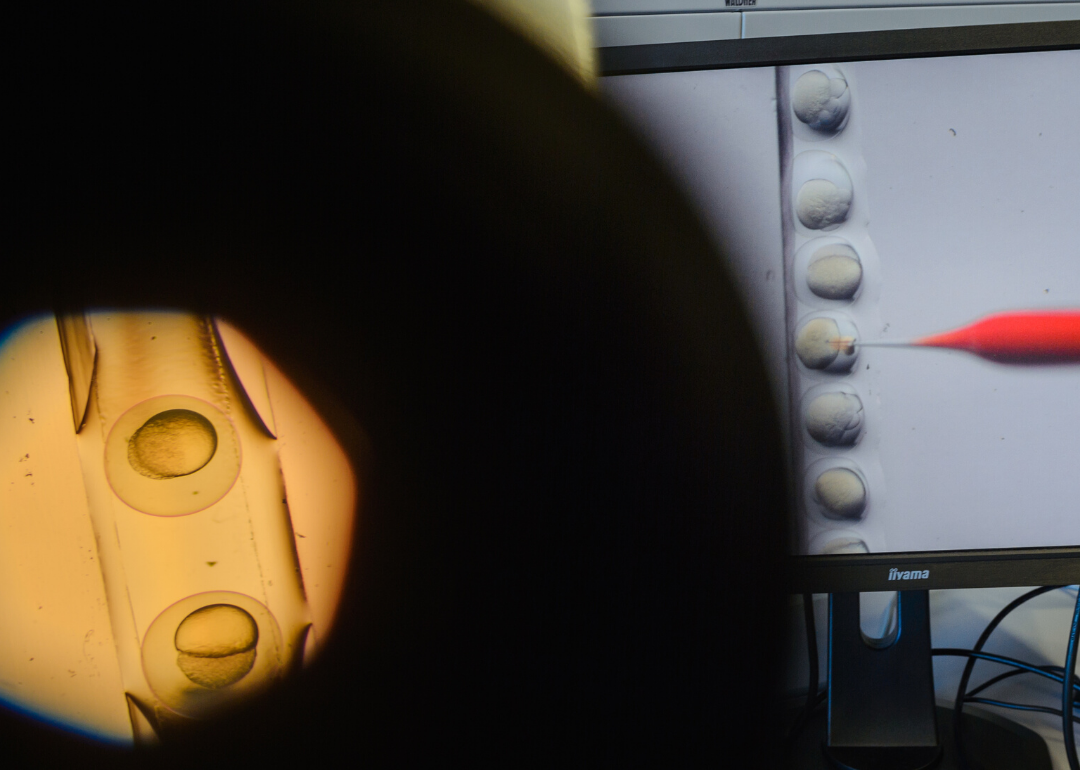
1996: Cloning of Dolly the sheep
Dolly, the first mammal to be cloned from an adult cell, was born in July of 1996, . This little sheep was cloned from the cells of a Finn Dorset sheep and a Scottish Blackface sheep, and named for singer Dolly Parton. She lived at the Roslin Institute until her death in 2003.
1997: KLOTHO aging gene discovered
Clotho one of the mythical Greek fates who acts as a “spinner” of life. A disambiguation of this figure was a fitting title for . Discovered by Japanese-born researcher Makoto Kuro-O and his colleagues in 1997, degenerations or mutations in this gene are linked to skin atrophy, osteoporosis, bone loss,
1998: Genetic sequencing completed
The parasitic roundworm had its 15 minutes of fame in 1998 when Human Genome Project researchers at the Washington University School of Medicine in St. Louis and the Sanger Centre in Cambridge . This was the first time such a sequence was conducted for a “complete animal.” This was a huge step toward eventually completing the human genome.
1999: Cell phone miniaturization
Peter Gammel and his peers at Bell Labs and Lucent Technologies got one step closer to creating the small, super-thin cell phones on the market today. The team used micromachining to , allowing them to all fit on a single chip.
2000: Tau neutrino discovered
Though Wolfgang Pauli first proposed that in 1930, it wasn’t until 2000 that his theory was proven. A neutrino is a neutral subatomic particle with a mass close to zero, which rarely reacts with normal matter. An experiment called DONUT was designed to search for tau neutrinos, and found evidence of them in 2000, opening up new pathways in the study of physics.
2001: Draft of the Human Genome Project released
After many years and the collaborative efforts of more than 20 research centers around the world, The Human Genome project of the human genome sequence. This covered more than 90 percent of the human genome, and the complete draft was published just two years later.
2002: Anthrax toxin structure revealed
Anthrax, used as a biological weapon, resurfaced in post-9/11 America. In 2002, University of Chicago oncologist Wei-Jen Tang . Tang’s research took us one step closer to developing the treatments available today.
2003: Commercial gene therapy approved
Gene therapy remains an experimental medical technique, using genes to target complex disorders. In 2003, the China State Food & Drug Administration approved Gendicine, for head and neck squamous cell carcinoma. It’s hoped that someday doctors may treat patients by rather than using drugs or surgery.
2004: The Mars rovers discovers remnants of water
In 2004, . Research carried out by these two little vehicles found that Mars was once home to an ocean, demonstrating that there was once water on the planet and, possibly, life.
2005: First partial-face transplant
Though doctors have done transplants of organs, skin grafts, and other body parts, facial transplants have been among the most difficult procedures to refine. In 2005, a French woman in a dog attack. Surgeons were able to complete a partial face transplant—a huge breakthrough. Since then, dozens of similar procedures have been performed.
2006: Evolutionary link discovered between fish and land animals
The average person may not have heard of Tiktaalik roseae, a now-extinct creature with fish-like scales and the long body of an alligator. Discovery of its fossils changed our understanding of evolution forever. University of Chicago paleontologist Neil Shubin made the discovery, which showed between fish and the animals that evolved to live on land 375 million years ago.
2007: Skin cells used for stem cells
Though stem cells had proven to be one of the greatest scientific discoveries of the 20th century, its use was controversial, as the cells were usually obtained from embryos. This changed in 2007, when researchers at Kyoto University and the University of Wisconsin , fat, heart, and nerve tissues. Today, there are for stem cells.
2008: The Large Hadron Collider begins its proton beam tests
The Large Hadron Collider, , switched on its proton beams in 2008. The machine based near Geneva, Switzerland, took 15 years to build. Among other things, .
2009: First extinct animal cloned
Though dreams of cloning wooly mammoths or saber tooth tiger are still the stuff of science fiction, . Spanish researchers used frozen skin from a Pyrenean ibex to create a clone. Though the ibex had only been extinct since 2000 and the clone died shortly after birth, this was still considered a substantial advancement.
2010: Nanorobotic spiders created
Arachnophobes need not fear: Nanorobotic spiders have nothing to do with insects. In fact, they’re , impossible to see with our naked eye. These microscopic “robots,” made from DNA, were created by a team at Columbia University. It’s hoped that someday nanorobots may be deployed inside the human body to crawl across our DNA and perform medical procedures.
2011: First artificial organ transplant
Organ transplants carry the risk of being rejected by their new body's immune system. Plus, for certain vital organs, a transplant requires someone else passing away. . The first such artificial organ, a windpipe created in London and coated in the patient's own stem cells, was successfully implanted in Sweden.
2012: Discovery of the Higgs boson
, when scientists at CERN identified a new particle that was consistent with the elusive Higgs boson. The next year, physicists Peter Higgs and François Englert won the Nobel Prize in Physics for this work.
2013: 3D printing makes massive strides
During his State of the Union address in 2013, President Barack Obama said 3D printers had "the potential to revolutionize the way we make almost everything.” In that year alone, he was proven right: .
2014: Stem cells cure paralysis
After being paralyzed by an attacker brandishing a knife, Darek Fidya regained the ability to walk in 2014, . In 2012, doctors transplanted cells from the patient’s nose to the gap in his spinal cord, using nerve tissue from his ankles as a “bridge” to help the nerves grow. It worked: After several years, Fidya was mobile, with the help of a walker.
2015: Traces of water discovered on Mars
Though NASA rovers had shown that there was likely once water on Mars, the Mars Reconnaissance Orbiter presented strong evidence that on the planet. This could influence our knowledge of whether life may exist there.
2016: First space-time ripples detected
Albert Einstein was the first to predict the existence of ripples in the universe: gravitational waves, created from violent events. A century after he made this postulation, —caused by the distant merging of two black holes.
2017: First mammals incubated in an artificial womb
In 2017, scientists at the Children’s Hospital of Philadelphia grew eight fetal lambs in “biobags,” artificial wombs. Some compared them to the “rebirth pods in The Matrix. . However you view it, it was a massive leap forward for science. This development could be a precursor to being able to bring prematurely born babies to term outside of the uterus.
2018: CRISPR babies
In a monumental—if highly controversial—moment for science, —gene-edited infants—were allegedly created in 2018 in China. Scientist He Jiankui claimed to have successfully deactivated the CCR5 gene in two infant girls, theoretically offering them protection from several strains of HIV.
2019: First image of a black hole
Capturing an was once considered totally impossible. To prove that assumption wrong, a team of international astronomers set up a series of tightly synchronized telescopes in a process called Very Long Baseline Interferometry, or VLBI.
2020: Open public access to COVID-19 research
During the COVID-19 pandemic, the resulting —i²Գ¦±ô³ܻ徱²Բµ and pre-prints—came about on a never-before-seen scale. Worldwide collaboration, if imperfect, allowed for real-time data to be shared instantly across the planet as countries worked together to staunch the virus’ spread.