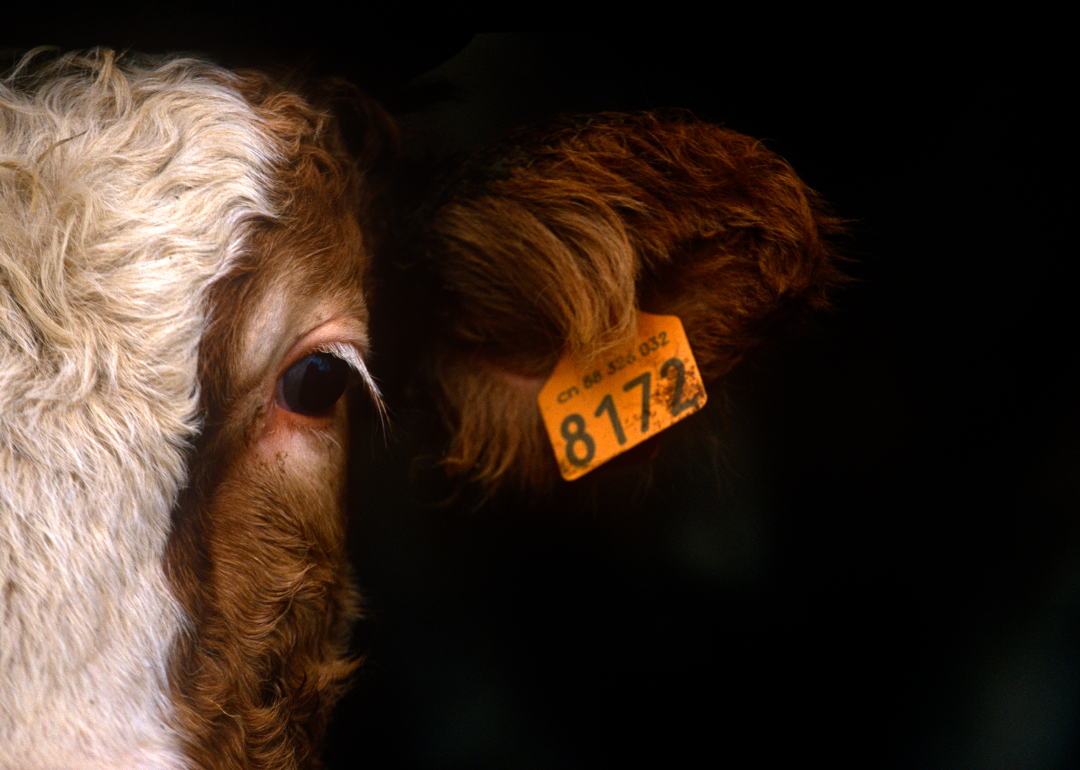
How your food consumption impacts the global environment
How your food consumption impacts the global environment
Each of us has an effect on the environment, and it's often in ways we don't think about. Take food, for example. It accounts for, which is the total amount of greenhouse gas emissions we cause directly and indirectly. These gases, including methane and carbon dioxide, trap heat in the atmosphere and are a significant cause of climate change.
Food also takes water to produce, and when we waste food, we're wasting all the water, energy, and other resources that went into it. There's packaging to consider as well—oh, so much packaging.
"The anyone can take [on climate change] today is to look at what they're putting on their plate and what they're putting in their body," Jillian Semaan, food and environment director at the Earth Day Network, told The Verge in February 2020.
It can be empowering to realize we can help mitigate huge environmental problems through our food choices. But knowing what to eat and what to cut back on isn't easy when there are so many steps that occur between the farm and our table. Measuring climate impact can be difficult, and the U.S.'s dietary guidelines don't include environmental considerations.
Â鶹ԭ´´ used news reports, studies, and blog posts from environmental organizations to compile a list of ways food production and consumption impact the environment. Many sources reference data from a meta-analysis of global food systems published in by Joseph Poore and Thomas Nemecek in 2018.
A warning: Some of your favorite foods may be driving deforestation, changes in land use, biodiversity loss, pollution, and water supply stress. Just know that even minor tweaks in your diet can be beneficial.
On a larger scale, more awareness, collective action, consumer pressure on producers and large companies, government action, and emerging technologies can reverse some of the negative trends of agriculture and aquaculture, the latter of which is the farming of aquatic animals. For instance, the United Nations' Food and Agriculture Organization estimates that irrigated land in developing countries will increase by , but the amount of water used by agriculture will rise by only 14% because of improved irrigation practices.
Read on for some food for thought about the intersection of agriculture and the environment.
You may also like:
Food production accounts for 26% of global emissions
The global food system is responsible for about a quarter of greenhouse gases, and 58% of those emissions stem from producing animal products. This reality may surprise many, as 65% of surveyed Americans said they look for information about the environmental impact of different products and foods
Agriculture represents 10% of total U.S. greenhouse gases
The EPA says agriculture made up about emissions in the U.S. in 2018 and this amount has increased 10% since 1990. Livestock, with their methane-releasing digestion, are responsible for more than a quarter of those emissions. Other emissions are tied to management practices that add nitrogen to the soil, manure management, rice cultivation, and burning crop residues.
[Pictured: Palm oil harvest in Sumatra, Indonesia.]
Cattle are significant gas emitters
Global livestock are responsible for of global greenhouse gas emissions. Cattle raised for beef, milk, manure, and draft power account for about 65% of the livestock sector’s emissions.
Food production is destroying rainforests
Clearing rainforests destroys the habitats of plants and animals and contributes to global warming. In fact, an estimated 10% of greenhouse gas emissions are . Often these vital resources are destroyed to produce agricultural commodities, and four are responsible for a majority of the ruin: beef, soy, palm oil, and wood.
[Pictured: Soy plantation in Amazon rainforest near Santarem, Brazil.]
Cattle ranching is a big threat to Amazon
The Amazon rainforest absorbs carbon dioxide, but with so many trees being cleared for grazing and to plant crops such as soy to feed the grazers, the "lungs of the planet" are weakening. Cattle ranching accounts for of the Amazon region.
[Pictured: Cattle graze in a pasture that was formerly rainforest in Para, Brazil.]
Biodiversity is suffering because cows need so much land
Cows require lots of land—several times the amount is required to produce an equal amount of beef as poultry and about 10 times as much to produce grain. There are trade-offs when forests are cleared for cattle and other uses, including the biodiversity loss of .
[Pictured: A large ranch in California with over 100,000 cattle.]
Cow burps are dangerous
Cow burps sounds like concoctions of a comic genius, but they actually happen, and they’re actually pretty bad for our Earth. As part of their digestive process, those belches release the greenhouse gas methane. In fact, dairy cows each belch an average of it each year.
Majority of agricultural land is used for livestock
Nearly 80% of all agricultural land is used to produce livestock meat and dairy, including for grazing and producing animal feed. Yet, there’s a relatively low bang for the buck, so to speak. Only supply comes from meat and dairy, and only 37% of the global protein supply does.
[Pictured: Livestock on a ranch in Australia.]
Producing animal feed has big impacts
An estimated from food production come from producing crops for humans, and 6% come from producing animal feed. Among the sources: fertilizers that release nitrous oxide and farm machinery that release carbon dioxide. Notably, 36% of the calories produced by the world’s crops are being used for animal feed, and only 12% of those feed calories ultimately are consumed by humans as meat and other animal products.
[Pictured: Feed corn being processed in Brazil.]
There's a lot of unsustainable land use
Pulling up natural vegetation to grow crops like coffee, palm oil, soybean, and wheat can increase , which can lead to multiple environmental problems including pollution, flooding, and clogged waterways. Soil erosion from unsustainable farming renders land unusable, leading to further deforestation.
Organic farming is generally better for the Earth
Organic farming is eco-friendly for so many reasons. Among them: Growers don’t use synthetic pesticides or fertilizers; there’s less soil erosion; more carbon is retained in the soil, and biodiversity flourishes. Organic fruit and vegetable sales hit in 2019, up nearly 5% from 2018.
Land use changes are leading to deadly runoff
Each summer a “dead zone” forms in the Gulf of Mexico that can’t support most marine life because of low oxygen levels. It’s not a quirk of nature. “Land-use changes, with more area given over to cropland and urban areas, are at the heart of the Gulf of Mexico's ,” writes Michon Scott of NOAA’s Climate.gov.
Packaged goods have health and environmental impacts
The U.S. food supply is dominated by packaged goods, a 2019 study found, with around 80% of total calories consumed coming from . There are health ramifications of consuming so much saturated fat, sugar, and salt, and there’s also a hefty impact on the environment. A significant amount of fossil fuel is required for all that processing and packaging, for example, and many discarded bags and containers are destined for landfills.
A reason to tap a keg
Don’t just look at the calories per serving of —consider the carbon footprint per serving, too. A single-use glass bottle generally has the highest environmental impact and decreases in this order: aluminum can, steel can, reused glass bottle, and reused keg.
Aquaculture can feed demand in beneficial ways
Today half the seafood eaten in the U.S. is farmed through aquaculture in tanks, ponds, cages, and other systems, which can be an environmentally responsible method of production that may benefit overfished wild fish stocks. There was a production from 1990 to 2018.
Poorly handled aquaculture can be detrimental
Fish farms that don’t use good practices can harm marine habitats and their inhabitants. Concentrated fish waste in crowded pens can pollute the water and smother marine plants and animals, according to The Monterey Bay Aquarium Seafood Watch, which publishes a Likewise, diseases, pesticides, and antibiotics can drift out of the pen and hurt other fish.
Aquaculture can use more energy than livestock production
Cows get a deservedly bad rap when it comes to their carbon footprint. However, in terms of energy use, most forms of seafood aquaculture generally than livestock production, a 2018 study found. The biggest energy hogs are farmed catfish, shrimp, and tilapia due to the electricity needed to keep their water circulating.
Water requirements vary among crops
Agriculture uses 70% of the , which is three times more than 50 years ago. Products have different needs for water, which are called “water footprints.” The global average water footprint of apples is 822 liter/kilogram, for example, while it’s 15,415 liter/kilogram for beef.
Irrigation is putting stress on water supplies
Irrigation can increase yields of most crops by 100% to 400%, but water isn’t limitless. In 17 countries, irrigated agriculture, industries, and municipalities withdraw more than on average every year. India is among the countries with extremely high water stress, according to the World Resources Institute, which says India’s rivers, lakes, streams, and groundwater resources are severely overdrawn—largely due to irrigation needs.
Agriculture degrades water quality
In the U.S., agriculture is the in rivers and streams, the second main source in wetlands, and the third main source in lakes. Pollutants that find their way into water bodies include pesticides, chemical fertilizers, and veterinary medicines.
Transportation emissions can be surprisingly small
Eating local is a great way to support local farmers, but it doesn’t necessarily reduce your carbon footprint. Hannah Ritchie at Our World In Data says the popular recommendation to eat local “is one of the most .” That’s because emissions from transportation make up a small share of greenhouse gas emissions for most foods—even for beef, for which transport accounts for less than 1% of its emissions.
Air-freighted goods do have high emissions
Though most food is transported by boat, some travels by airplane, a mode that emits around . Asparagus, green beans, and berries are commonly air-freighted, according to Hannah Ritchie at Our World In Data. She writes that while it can be hard to identify foods that have traveled by air, “a general rule is to avoid foods that have a very short shelf-life and have traveled a long way (many labels have the country of ‘origin’ which helps with this).”
Food waste is harmful
It’s not always what you consume that can be impactful on the environment—it’s also what you intended to consume but didn’t. An estimated one-third of all food goes to waste. Americans are part of the problem: A 2019 survey found that about three in four Americans throw out uneaten or (42%), “often” (24%), or “always” (10%) because they don’t want it or it went bad.
Rotting food produces methane
Wasted food that rots in landfills produces the dangerous greenhouse gas methane. If people around the world stopped wasting food, about emissions derived from the food system could be reduced, the WWF says.
The full extent of food waste isn't obvious
When food gets wasted, all the resources that went into producing it are also squandered, including water. Move For Hunger offers perspective with these painful analogies: "By throwing out one kilogram of beef, you are essentially wasting 50,000 liters of water that were used to produce that meat. In the same way, nearly 1,000 liters of water are wasted when you pour one glass of milk down the drain."
Composting food scraps is beneficial
About throw away ends up in landfills or combustion facilities. Composting food scraps is a way to reduce your carbon footprint while also creating something that can keep the soil and plants on your own patch of the Earth healthy.
There’s an upside of product packaging
Researchers estimate that packaging accounts for 5% of food emissions. That can translate into 5% more guilt about buying wrapped cucumbers or grapes in a clamshell, but consider that packaging can help keep food from going bad and being wasted. Researchers found wastage of processed fruit and vegetables is about 14% lower than that of fresh fruit and vegetables.
Most plastic waste is not recycled
It’s comforting to think that all the plastic holding our food—like the takeout orders that are surging during the pandemic—will be recycled. Unfortunately, that’s not likely. As of 2015, only about had been recycled.
[Pictured: Plastic recovered from Tyrrhenian Sea by fisherman in Italy as part of the “Archipelago Pulito” project.]
Plastic can end up in the food chain
About of all plastic ever produced has been released into the environment and remains there in some form—including in agricultural soils and water supplies. Not surprisingly, smaller pieces find their way into the food chain.
[Pictured: A biologist looks at microplastics found in the sea off the coast of Greece.]
Oceans are among the victims of plastic
An estimated of plastic waste enter the ocean every year. If humans don't make changes—like using more paper or compostable materials for food packaging—researchers say the number will nearly triple by 2040 to the equivalent of dumping 110 pounds of plastic on every meter of the globe's coastlines.
Single-serve condiment packets are having a moment
Kraft Heinz Co. said in 2018 that it intends to make 100% of its packaging globally recyclable, reusable, or compostable by 2025. The global pandemic didn’t wait, and as people order more takeout and restaurants remove community bottles, single-serve packets have become popular items.
Food production is threatening necessary pollinators
Pollinators are key to producing of our major food crops. Yet, these hard workers are being stressed by many factors related to food production, including pesticides, habitat loss, and climate change. A 2020 study found pollinator decline resulted in decreased yields for five out of seven observed crops.
Single-crop farms have environmental downsides
Many industrial operations plant a single crop year after year. There are of this monocropping in the U.S. The approach brings down costs and increases efficiency but can also deplete soil nutrients and create pest problems. Those issues increase the need for chemicals like synthetic fertilizers and insecticides that can pollute groundwater supplies.
Beef is big contributor to global warming
One kilogram of beef results in 60 kilograms of greenhouse gas emissions. Those emissions result from not only the methane cows release but also from various activities across the supply chain. They include making changes to the land for herds, producing feed, processing meat, and then packaging, transporting, and refrigerating the product. This huge negative impact on the environment will surprise many.
Devastation is tied to palm oil
The popular vegetable oil contributes the most global warming emissions of any commodity besides beef. Large areas of carbon-rich tropical forests and swamps called peatlands in Malaysia and Indonesia are being destroyed to , leading to a loss of biodiversity and tools to fight climate change. Food brands are under pressure to source deforestation-free palm oil.
[Pictured: A forest in Borneo that has been cleared for a palm oil plantation.]
Three cheers for farmed mollusks
Farmed mollusks like are among your best choices for low-carbon protein, a 2018 study concludes. That’s because mollusk aquaculture requires very little energy, absorbs excess nutrients that can hurt ecosystems, and produces a low amount of air pollution.
[Pictured: A diver inspects mussels at a farm off the coast of Nador, Morocco.]
Almonds are thirsty but don’t have high emissions
The California drought of the last decade exposed almonds as a very water-needy crop, but the nut has another side to it that deserves praise. Researchers have found it not only has a compared to other nutrient-rich crops, but also under certain circumstances, it could even become carbon-neutral or lead to a net reduction of greenhouse gases.
A consideration to chew on
Gum can be such a simple pleasure, but it can also be an eco-headache. Typical gum is actually a plastic made of synthetic rubber, and a large amount—more than —is thrown out every year across the globe. For guilt-free chewing, opt for biodegradable gum.
Chocolate’s origins can be troublesome
Our collective sweet teeth have led to deforestation in Côte d’Ivoire and other countries in West Africa as farmers of cocoa—which is in chocolate—seek new places to plant cocoa trees, according to the WWF. Candy manufacturer Mars is working with other stakeholders to change this. The company aims to achieve a deforestation-free , it says on its website, noting “there is an urgent need to help farmers grow more cocoa on existing farmland, without encroaching on remaining forests.”
Rice needs lots of water and emits gases
Rice is the primary staple for more than half the world, but rice cultivation to meet the demand comes at a price. The Environmental Defense Fund warns methane and nitrous oxide emissions from rice farms could have the same long-term global warming impact as about 600 coal plants and a short-term impact of as much as 1,200 average-sized coal power plants. Rice also consumes .
Avocado demand is driving deforestation and water shortages
The quest to produce more of the brunch favorite is leading to deforestation in Mexico, including in the state of Michoacán, which exports avocados to the U.S. Between are driven by avocado orchards each year, and the clearing is threatening the Monarch Butterfly Biosphere Reserve. Meanwhile, in Chile’s Petorca province, demand for the thirsty fruit is causing water shortages.
Coffee can lead to deforestation and hurt biodiversity
Coffee has traditionally grown in the shade under a forest canopy that is home to animals and helps prevent topsoil erosion. Many coffee producers now shun the canopy to grow coffee in rows with fertilizer and pesticides. This sun-cultivated method produces higher yields but at the expense of biodiversity and deforestation—more than acres of forest has been cleared in Central America as a result.
Growing sugarcane creates many problems
Sugarcane is one of the world’s thirstiest crops—it takes to produce a pound of refined cane sugar, which equates to nearly nine gallons per teaspoon. A dozen countries use at least 25% of their farmland to grow the crop for sugar-craving and as a source of biofuels and bioplastics. Production has driven deforestation and endangers marine ecosystems such as the Great Barrier Reef.
[Pictured: A sugar cane farm in Thailand.]
Reduce carbon footprint by choosing fish over meat
Producing beef, lamb, and goat creates higher levels of greenhouse gas emissions per gram of protein than producing poultry, pork, and fish. Small diet shifts could have big impacts. Researchers say if someone who consumes more than 1.5 pounds of meat per week were to eat fish instead, it would save the emissions equivalent of about 6,000 miles driven over the course of a year.
Meat eaters can replace beef with poultry
Americans are eating less beef and more chicken than they did 18 years ago, which is an eco-friendly development. A 2020 study found substituting poultry for beef—like replacing ground beef with ground turkey—resulted in an average reduction of dietary greenhouse gases by .
Cutting down on animal-based foods can help
Reducing the intake of all animal-based foods by 50% in the U.S. diet has the potential to reduce diet-related greenhouse gas emissions by 35%, a 2020 study concludes. Improving a personal carbon footprint could be one reason grocery sales of plant-based foods that directly replace animal products have grown by 29% in the past two . Milk is the most established in the plant-based category, accounting for 40% of the total plant-based food market.
Dairy alternatives have fewer emissions than dairy milk
A 2019 report found 46% of surveyed Americans were willing to use dairy alternatives like soy milk and almond milk instead of dairy-based milk or cream. That change could have a profound impact given that, as the BBC illustrates, results in nearly three times the greenhouse gas emissions of rice, soy, oat, or almond milk varieties.
Plant-based burgers still have a negative impact
Plant-based burgers are alternatives to actual meat but being processed leads some to reduce their eco-score. University of Oxford researcher Marco Springmann told CNBC that while the products have about half the carbon footprint of chicken, they also have five times more of a footprint than a bean patty. “So Beyond [Meat] and Impossible go somewhere towards reducing your carbon footprint, but saying it’s the most climate friendly thing to do—that’s a false promise,” he says.
Becoming more green can bring in the green
Nestlé, Panera, and Starbucks are among the companies adding more plant-based offerings. The moves come at a time when green-minded consumers are speaking with their wallets. A 2019 report found over the past 12 months, 27% of surveyed Americans have rewarded food companies that are reducing their impacts on the environment by buying their products at least once. Meanwhile, as punishment, 21% have not bought products of companies that aren’t taking steps.
Dual benefit of eating healthy foods
A 2019 study found healthier diets aren't only good for our bodies; they're also good for the environment in terms of water and land usage, greenhouse gas emissions, and water and soil pollution. Producing a serving of unprocessed and processed red meats has environmental impacts than those of plant sources. The authors say increasing consumption of foods associated with low environmental impacts like whole grain cereals, fruits, vegetables, nuts, legumes, fish, olive oil, and other vegetable oils high in unsaturated fats "would have multiple health and environmental benefits globally."