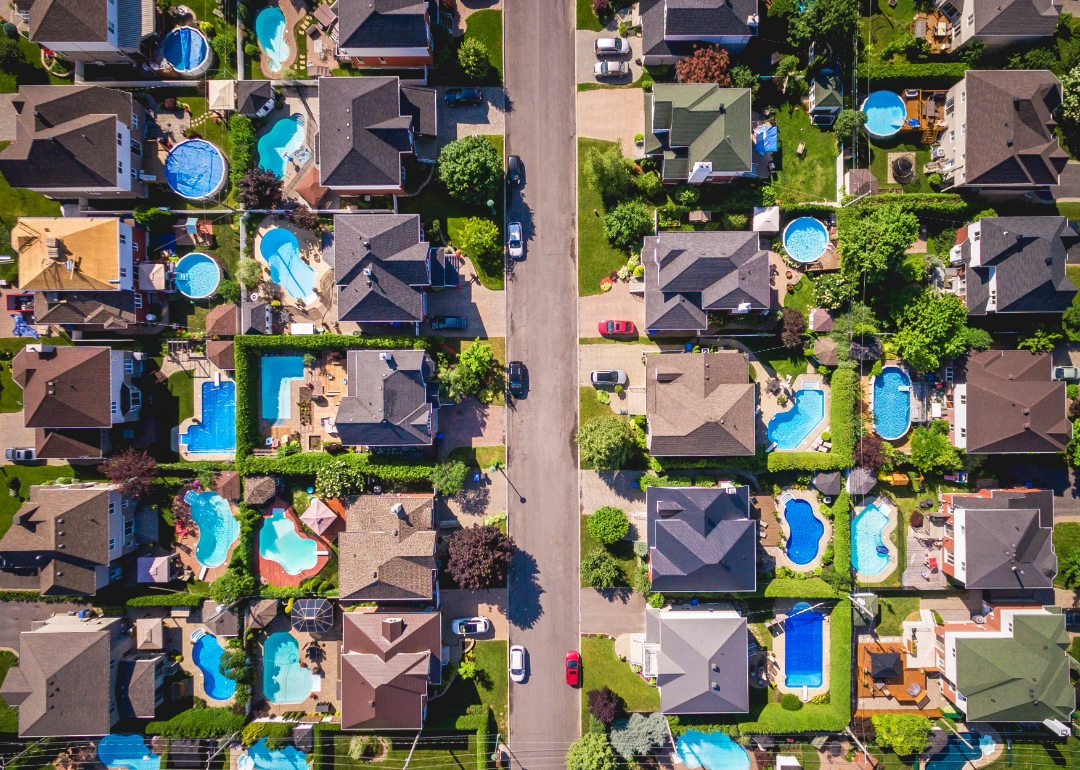
States with the biggest household carbon footprints
States with the biggest household carbon footprints
The environmental and socioeconomic threats posed by climate change prompted calls from people around the world to curtail, if not eliminate, greenhouse gas (GHG) emissions. Leaders from 197 countries in 2015 committed to preventing global temperatures from reaching 2 degrees Celsius above pre-industrial levels by reducing their carbon footprints, a commitment codified by the .
The United States, however, plans to withdraw from the Paris Agreement on , a decision President Donald Trump announced in 2017. While the federal government prepares to exit the international accord, remain committed to its goals, including reducing GHG emissions by 26鈥�28% below 2005 levels by 2025. Each state faces different obstacles to decrease its carbon footprint, particularly in a sector that consists of about of the U.S.'s energy-related emissions: households.
To examine the household carbon footprints in every state in the contiguous U.S., consulted a paper by Goldstein, Dimitrios Gounaridis, and Joshua Newell, all scientists from the University of Michigan, in July 2020. They developed models and used data from the Energy Information Administration's 2015 Residential Energy Consumption Survey to determine the average household fuel and electricity demand in the continental U.S. and Washington D.C. Each of the 48 states and the nation's capital are ranked according to their household GHG intensity, a measure of the total CO2 emissions that households in the state produce. GHG intensity is expressed here in CO2 emitted per square meter of building area. 麻豆原创 also provides each state's total building energy intensity, measured in kilowatt hours of power used per square meter of building area, and total thermal demand, measured in degree days.
Benjamin Goldstein, an environmental scientist from the University of Michigan, told 麻豆原创 that while replacing fossil fuels with renewable energy sources will help reduce GHG emissions, U.S. residents must alter certain living conditions if the nation hopes to meet Paris Agreement goals. Installing heat pumps can improve efficiency for heating and cooling, he said, and his research indicates that decreasing floor space typically equates to a "smaller carbon footprint."
"If you care for the environment, then waiting for the grid to green is not enough," he told 麻豆原创. "There are numerous actions that you can take to aid decarbonization."
#49. California
- Household GHG intensity: 23 CO2 emitted per m2 (51.1% below national average)
- Household building energy intensity: 110 kilowatt hours per m2 (#3 lowest among states, 25.2% below national average)
- Household thermal demand: 3,370 degree days (#1 lowest, 44.1% below national average)
While California is the carbon dioxide (CO2) emitting state in the nation, the residential sector accounted for only as of 2017. Energy use and GHG emissions typically align with carbon (CO2) emissions in western states like California, according to Goldstein and his colleagues. Energy consumption per capita in the state ranked 48 in the nation in 2018, according to the Energy Information Administration, and declined from 2000 to 2017, according to the California Air Resources Board. California ranks in the nation for solar generation, which accounts for 20.7% of the state鈥檚 electricity.
#46. Utah (tie)
- Household GHG intensity: 34 CO2 emitted per m2 (27.7% below national average)
- Household building energy intensity: 150 kilowatt hours per m2 (#15 lowest among states, 2.0% above national average)
- Household thermal demand: 6,082 degree days (#24 highest, 0.8% above national average)
The CO2 emissions from Utah account for of the national output, although per-capita emissions are high due to the state鈥檚 reliance on and generation of coal-powered electricity. The state produced of its energy from coal-fired plants in 2018, down from 81% in 2014. While fossil fuels dominate Utah鈥檚 energy generation and output, utility companies plan to close several coal plants over the next two decades, according to the Kem C. Gardner Policy Institute. also embraced a to tackle climate change with CO2 emission reduction targets similar to the GHG reduction goals in the Paris Agreement.
#46. Oregon (tie)
- Household GHG intensity: 34 CO2 emitted per m2 (27.7% below national average)
- Household building energy intensity: 138 kilowatt hours per m2 (#11 lowest among states, 6.1% below national average)
- Household thermal demand: 4,882 degree days (#11 lowest, 19.1% below national average)
Oregon ranks , and 39th for total energy use per capita. Households, however, accounted for 80% of energy consumption-based CO2 emissions in Oregon in 2015, according to a , with higher-income residences generating more emissions than lower-income households. While natural gas remains a top energy commodity for the state, hydroelectric surpassed it in 2018 as the most consumed source of energy, according to the EIA. Hydroelectric power also accounts for 70% of the state鈥檚 energy generation output, and wind power accounts for 12%, the EIA reported.
#46. Washington (tie)
- Household GHG intensity: 34 CO2 emitted per m2 (27.7% below national average)
- Household building energy intensity: 137 kilowatt hours per m2 (#10 lowest among states, 6.8% below national average)
- Household thermal demand: 5,439 degree days (#18 lowest, 9.8% below national average)
Washington serves as the producer in the nation, and hydroelectric was consumed more than any other energy source in the state as of 2018. Despite its renewable energy generation output, the state in the nation for CO2 emissions, and 32nd in total energy use per capita. have increased overall between 2012 and 2017, although they remain below 2008 levels. Washington officials, however, aim to make the state GHG-neutral by 2030, and generate all energy from non-carbon emitting sources by 2045, according to the state Department of Ecology.
#45. Montana
- Household GHG intensity: 36 CO2 emitted per m2 (23.4% below national average)
- Household building energy intensity: 167 kilowatt hours per m2 (#25 highest among states, 13.6% above national average)
- Household thermal demand: 7,188 degree days (#9 highest, 19.1% above national average)
Montana contributed of total C02 emissions in the U.S. as of 2014. GHG emissions in the state rose about 13% between 1990 and 2017, according to the , and residential emissions increased by during that period. Temperature extremes and a small population contribute to the state ranking second in energy use per capita.
#44. Idaho
- Household GHG intensity: 37 CO2 emitted per m2 (21.3% below national average)
- Household building energy intensity: 159 kilowatt hours per m2 (#21 lowest among states, 8.2% above national average)
- Household thermal demand: 6,483 degree days (#19 highest, 7.5% above national average)
Idaho experienced an increase in CO2 emissions from 2005 to 2017, the largest spike out of any state in the nation for that period. But with a small population and 81% of its energy deriving from renewables, primarily from hydroelectric power, Idaho ranks in the nation for CO2 emissions. Natural gas consumption per capita is in the bottom one-third nationally despite low winter temperatures and about half of homes using it as their primary heat source.
#42. Massachusetts (tie)
- Household GHG intensity: 40 CO2 emitted per m2 (14.9% below national average)
- Household building energy intensity: 181 kilowatt hours per m2 (#16 highest among states, 23.1% above national average)
- Household thermal demand: 6,981 degree days (#13 highest, 15.7% above national average)
High population density typically results in housing with smaller floor area per capita (FAC), which usually correlates with fewer GHG emissions, according to the University of Michigan professors鈥� paper. While 67% of energy used in the state was derived from natural gas in 2018, according to the EIA, programs like the incentive program helped propel the state to in the nation for solar electricity generation.
#42. Nevada (tie)
- Household GHG intensity: 40 CO2 emitted per m2 (14.9% below national average)
- Household building energy intensity: 121 kilowatt hours per m2 (#5 lowest among states, 17.7% below national average)
- Household thermal demand: 5,003 degree days (#14 lowest, 17.1% below national average)
Nevada consumers use natural gas for energy more than any other source by a wide margin. The state consumes 86% of its energy from out-of-state sources, according to the EIA, but it ranks in the nation for geothermal electricity production, and in solar power generation.
#40. Connecticut (tie)
- Household GHG intensity: 41 CO2 emitted per m2 (12.8% below national average)
- Household building energy intensity: 181 kilowatt hours per m2 (#16 highest among states, 23.1% above national average)
- Household thermal demand: 6,856 degree days (#14 highest, 13.6% above national average)
Connecticut has the energy-intensive economy in the nation, behind Massachusetts and New York. While 35% of households in the state rely on natural gas for heat, and 45% rely on fuel oil, 43% of its electricity generation derives from the Millstone Nuclear Station, according to the EIA. The state ranks 41 in the nation for CO2 emissions, which declined between 1990 and 2017.
#40. South Carolina (tie)
- Household GHG intensity: 41 CO2 emitted per m2 (12.8% below national average)
- Household building energy intensity: 123 kilowatt hours per m2 (#6 lowest among states, 16.3% below national average)
- Household thermal demand: 4,325 degree days (#4 lowest, 28.3% below national average)
While natural gas deliveries to South Carolina for electricity have quadrupled in the last decade, consumers in the state use more than any other energy source, with four plants supplying more than half of the state's energy. Emissions fell in South Carolina between 2005 and 2017.
#36. Vermont (tie)
- Household GHG intensity: 42 CO2 emitted per m2 (10.6% below national average)
- Household building energy intensity: 205 kilowatt hours per m2 (#2 highest among states, 39.5% above national average)
- Household thermal demand: 8,222 degree days (#3 highest, 36.3% above national average)
Vermont has a smaller energy consumption than anywhere else in the nation, although it equates to four times as much as the state generates. Emissions fell in Vermont between 2005 and 2017, added in part by serving as a carbon sink. While many consumers in the state rely on petroleum, natural gas, and wood for heating, hydroelectric energy is the top power source consumed, according to the EIA. The state also generates almost all of its energy from renewables. Despite Vermont being one of the three most energy-intensive states in the nation due to heating during extensive cold weather, 鈥渉igh energy intensity can be compensated using low-carbon fuels,鈥� Goldstein said.
#36. Rhode Island (tie)
- Household GHG intensity: 42 CO2 emitted per m2 (10.6% below national average)
- Household building energy intensity: 188 kilowatt hours per m2 (#12 highest among states, 27.9% above national average)
- Household thermal demand: 6,485 degree days (#18 highest, 7.5% above national average)
Rhode Island is one of nine states participating in the (RGGI), the country鈥檚 first compulsory cap-and-trade program. In it, proceeds from CO2 allowance auctions are invested by states into a number of programs for consumers including renewable energy, energy bill assistance, and energy efficiency. The state also offers residents and businesses and for customers with eligible renewable energy systems whereby residents can earn energy credits on their billing statements.
#36. Georgia (tie)
- Household GHG intensity: 42 CO2 emitted per m2 (10.6% below national average)
- Household building energy intensity: 121 kilowatt hours per m2 (#5 lowest among states, 17.7% below national average)
- Household thermal demand: 4,315 degree days (#3 lowest, 28.5% below national average)
High population density in Georgia results in smaller housing and lower FAC, keeping GHG intensity low among households, according to Goldstein and his colleagues. An expected population growth could help the state reduce CO2 emissions, although residential emissions increased from 1990 to 2017. While most of the energy Georgia generates and consumes derive from carbon emitting sources, solar energy development is on the rise, with it currently ranked in the nation.
#36. Arizona (tie)
- Household GHG intensity: 42 CO2 emitted per m2 (10.6% below national average)
- Household building energy intensity: 103 kilowatt hours per m2 (#2 lowest among states, 29.9% below national average)
- Household thermal demand: 4,437 degree days (#5 lowest, 26.5% below national average)
Warm temperatures help keep household building energy intensity鈥攁nd therefore GHG intensity鈥攍ow in Arizona, according to the University of Michigan professors鈥� paper. Solar power accounts for of Arizona鈥檚 electricity, helping rank third in the nation for solar generation.
#35. North Carolina
- Household GHG intensity: 43 CO2 emitted per m2 (8.5% below national average)
- Household building energy intensity: 137 kilowatt hours per m2 (#10 lowest among states, 6.8% below national average)
- Household thermal demand: 4,680 degree days (#10 lowest, 22.4% below national average)
Net GHG emissions in North Carolina fell between 2005 and 2017, a decrease expected to widen to 31% by 2025. North Carolina reported that residential emissions, which accounted for of the state total, experienced a net drop by 21.7% since 2005. Nuclear energy typically accounts for the largest share of electricity generation in the state, but natural gas surpassed it in 2018 at , compared to 31% for nuclear. Solar energy generation is growing in North Carolina, which today ranks second in the nation.
#33. New Hampshire (tie)
- Household GHG intensity: 44 CO2 emitted per m2 (6.4% below national average)
- Household building energy intensity: 196 kilowatt hours per m2 (#6 highest among states, 33.3% above national average)
- Household thermal demand: 7,868 degree days (#5 highest, 30.4% above national average)
New Hampshire accounted for of U.S. GHG emissions in 2014. The state, however, still houses two of the three operating in New England, and 40% of residents rely on fuel oil as a primary heat source. While the overall release of GHG emissions has remained relatively flat since 1990, New Hampshire hopes to generate of its energy from renewables in five years. The state incentivizes residential solar and wind power with various .
#33. Washington D.C. (tie)
- Household GHG intensity: 44 CO2 emitted per m2 (6.4% below national average)
- Household building energy intensity: 160 kilowatt hours per m2 (#22 lowest among states, 8.8% above national average)
- Household thermal demand: 5,731 degree days (#20 lowest, 5.0% below national average)
Washington D.C.鈥檚 GHG emissions fell between 2006 and 2017. The nation鈥檚 capital was one of the cities in the U.S. with in 2018, and has . Solar panels on homes and buildings generate almost half of the city鈥檚 electricity.
#30. Virginia (tie)
- Household GHG intensity: 45 CO2 emitted per m2 (4.3% below national average)
- Household building energy intensity: 150 kilowatt hours per m2 (#15 lowest among states, 2.0% above national average)
- Household thermal demand: 5,434 degree days (#17 lowest, 9.9% below national average)
Virginia, which will become an active participant in the Regional Greenhouse Gas Initiative , aims to generate of its electricity from renewables by 2045. The state offers several for residents to help meet its renewable goals, including funding for heating and cooling systems upgrades that increase energy efficiency for low-income households and a program that allows county and municipal governments to grant local property tax abatement for energy efficient buildings. The state, however, still relies heavily on fossil fuels, with of its net generated energy deriving from natural gas and 10% coming from coal.
#30. New Mexico (tie)
- Household GHG intensity: 45 CO2 emitted per m2 (4.3% below national average)
- Household building energy intensity: 147 kilowatt hours per m2 (#13 lowest among states, 0.0% above national average)
- Household thermal demand: 4,988 degree days (#13 lowest, 17.3% below national average)
While only accounting for about of the nation鈥檚 GHG emissions as of 2014, New Mexico the state produces more emissions per capita than the U.S. average. The state is one of the top natural gas producers in the nation, accounting for of national natural gas production. New Mexico aims to generate all of its electricity from zero-carbon emitting sources by .
#30. Florida (tie)
- Household GHG intensity: 45 CO2 emitted per m2 (4.3% below national average)
- Household building energy intensity: 97 kilowatt hours per m2 (#1 lowest among states, 34.0% below national average)
- Household thermal demand: 4,233 degree days (#2 lowest, 29.8% below national average)
A warm climate helps place Florida among the three states with the lowest household building energy intensity, according to the University of Michigan professor's study, which affects household GHG intensity. Florida , with natural gas serving as the primary power commodity, but ranks 49 in total energy use per capita. Natural Gas fueled 70% of the state's electricity generation in 2018, according to the EIA. While the state voluntary targets for meeting a certain percentage of its electricity from renewables, it ranks in the nation for solar power generation, which accounts for two percent of the state's energy output.
#28. New Jersey (tie)
- Household GHG intensity: 46 CO2 emitted per m2 (2.1% below national average)
- Household building energy intensity: 195 kilowatt hours per m2 (#7 highest among states, 32.7% above national average)
- Household thermal demand: 6,192 degree days (#23 highest, 2.6% above national average)
New Jersey's residential sector accounts for just of the state's overall GHG emissions. About three-fourths of households in the state use natural gas as their primary heating fuel, and about 10% rely on petroleum products, according to the EIA. New Jersey in 2020 , establishing a goal of receiving 100% of its energy from renewables.
#28. Maryland (tie)
- Household GHG intensity: 46 CO2 emitted per m2 (2.1% below national average)
- Household building energy intensity: 156 kilowatt hours per m2 (#19 lowest among states, 6.1% above national average)
- Household thermal demand: 5,860 degree days (#22 lowest, 2.9% below national average)
Maryland in the nation for CO2 emissions and 42 in total energy use per capita. The state鈥檚 GHG emissions fell between 2005 and 2017, more than any other state during that time. Maryland plans to receive 100% of its electricity from zero-carbon sources by , in part with help from rebates, tax credits, grants and loans for .
#26. New York (tie)
- Household GHG intensity: 47 CO2 emitted per m2 (0.0% above national average)
- Household building energy intensity: 201 kilowatt hours per m2 (#4 highest among states, 36.7% above national average)
- Household thermal demand: 7,183 degree days (#10 highest, 19.1% above national average)
contributed the ninth-most GHG emissions out of any state in the nation as of 2014, accounting for more than 2% of the national output. The residential sector, as of 2016, accounted for of emissions, and decreased 22% since 1990. Unlike other states, population density in New York fuels high GHG emissions, particularly due to New York City鈥檚 heavy reliance on fossil fuels for electricity, according to Goldstein and his colleagues. The state, however, adopted an in 2019 that calls for 100% carbon-free electricity by 2040 and an 85% drop in GHG emissions by 2050.
#26. Delaware (tie)
- Household GHG intensity: 47 CO2 emitted per m2 (0.0% above national average)
- Household building energy intensity: 175 kilowatt hours per m2 (#21 highest among states, 19.0% above national average)
- Household thermal demand: 5,859 degree days (#21 lowest, 2.9% below national average)
In Delaware, of households use natural gas, about 10% using fuel oil and almost 10% using propane. Residential GHG emissions in the state have remained relatively flat overall between 1990 and 2016, albeit with wide fluctuations in between due to weather and shifting fuel use, but are expected to climb % by 2030 as a result of increased hydrofluorocarbons. To help generate enough renewable energy to meet 50% of its electricity needs by , Delaware has partnered with utilities to offer that help offset installation costs for clean energy systems.
#25. Texas
- Household GHG intensity: 49 CO2 emitted per m2 (4.3% above national average)
- Household building energy intensity: 133 kilowatt hours per m2 (#8 lowest among states, 9.5% below national average)
- Household thermal demand: 4,623 degree days (#9 lowest, 23.4% below national average)
Texas emits more GHG emissions than any other state in the nation, accounting for almost of the national total in 2014. The state, the largest energy consumer and producer, also ranks in total energy use per capita. While Texas produces more natural gas than any other state, it also generates the most energy from wind energy, accounting for 28% of the national output in 2019, according to the EIA.
#24. Louisiana
- Household GHG intensity: 50 CO2 emitted per m2 (6.4% above national average)
- Household building energy intensity: 145 kilowatt hours per m2 (#12 lowest among states, 1.4% below national average)
- Household thermal demand: 4,517 degree days (#8 lowest, 25.1% below national average)
Louisiana was in the nation for overall GHG emissions, emissions per unit of GDP and per person in 2014 as a result of its extensive natural gas and oil production. The also ranks second in both energy use per capita and electricity use for capita among residences. Almost all households use air conditioning, according to the EIA.
#22. Pennsylvania (tie)
- Household GHG intensity: 51 CO2 emitted per m2 (8.5% above national average)
- Household building energy intensity: 194 kilowatt hours per m2 (#9 highest among states, 32.0% above national average)
- Household thermal demand: 6,409 degree days (#20 highest, 6.2% above national average)
Gov. Tom Wolf plans to have Pennsylvania join the Regional Greenhouse Gas Initiative, codifying a plan for the state to reduce emissions , but the move has come under challenge by the state . As the governor attempts to pursue a new effort to combat climate change, Pennsylvania second in the nation for natural gas, third in coal production, and fourth in CO2 emissions. The state, however, experienced a drop in emissions between 2005 and 2017. About of Pennsylvania households are heated primarily with natural gas.
#22. Colorado (tie)
- Household GHG intensity: 51 CO2 emitted per m2 (8.5% above national average)
- Household building energy intensity: 152 kilowatt hours per m2 (#18 lowest among states, 3.4% above national average)
- Household thermal demand: 6,591 degree days (#16 highest, 9.2% above national average)
Colorado, which adopted the voter-led Renewable Energy Standard in the nation in 2004, aims to generate electricity from renewable sources by 2040 and reduce GHG emissions by 90% below 2005 levels by 2050. Renewable energy accounted for of net electricity generation in Colorado in 2019. The state, however, produces the seventh largest amount of natural gas in the U.S., and produces 45% of its net energy generation from coal, according to the EIA. About of homes in Colorado are heated with natural gas, and 54% of home energy expenditures are allocated toward heating. Goldstein and his research partners, however, believe household GHG emissions could fall as FAC is expected to decrease by 26% as the population grows over time.
#21. Maine
- Household GHG intensity: 52 CO2 emitted per m2 (10.6% above national average)
- Household building energy intensity: 220 kilowatt hours per m2 (#1 highest among states, 49.7% above national average)
- Household thermal demand: 8,301 degree days (#2 highest, 37.6% above national average)
The cold climate in Maine drives up heat usage enough to rank it among the top three states in the nation for energy intensity, according to Goldstein and his fellow University of Michigan scientists. While the state generates of its electricity from renewables, 24% of which derives from wind power, biomass, a GHG emitting renewable energy source, accounted for 25% of its energy generation. According to the EIA, almost two-thirds of homes in the state use fuel oil for heating. The University of Michigan researchers also wrote in their study that heavy use of carbon-intensive fuels for heating can reduce the benefits of a low-carbon grid.
#19. Ohio (tie)
- Household GHG intensity: 54 CO2 emitted per m2 (14.9% above national average)
- Household building energy intensity: 178 kilowatt hours per m2 (#18 highest among states, 21.1% above national average)
- Household thermal demand: 6,398 degree days (#22 highest, 6.0% above national average)
A in coal-powered electricity plants resulting from the increase in natural-gas power plants helped Ohio reduce emissions by almost 20% between 2005 and 2014, but the state remains among the top 10 coal consumers in the nation. State lawmakers reduced Ohio's Renewable Portfolio Standard target from of its electricity deriving from clean energy sources by 2026.
#19. Arkansas (tie)
- Household GHG intensity: 54 CO2 emitted per m2 (14.9% above national average)
- Household building energy intensity: 157 kilowatt hours per m2 (#20 lowest among states, 6.8% above national average)
- Household thermal demand: 5,054 degree days (#15 lowest, 16.2% below national average)
Arkansas, which produces of the U.S.鈥檚 natural gas output, ranks 29th in the nation for CO2 emissions and 17th for energy consumption per capita. Arkansas鈥檚 CO2 increased between 2005 and 2017. Natural gas dominates both energy generation and use in the state, but 22% of its electricity was generated from nuclear power in 2019, according to the EIA.
#18. Michigan
- Household GHG intensity: 55 CO2 emitted per m2 (17.0% above national average)
- Household building energy intensity: 188 kilowatt hours per m2 (#12 highest among states, 27.9% above national average)
- Household thermal demand: 7,051 degree days (#12 highest, 16.9% above national average)
Despite CO2 emissions falling between 2005 and 2017, Michigan ranks in the nation for them. The state generated 32% of its electricity from coal, 30% from natural gas, and 8% from renewables as of 2019, according to the EIA. Michigan鈥檚 Renewable Energy Standard calls renewables to fuel of its electricity by 2021, but no additional clean energy policies have been adopted at the time of writing.
#17. Tennessee
- Household GHG intensity: 56 CO2 emitted per m2 (19.1% above national average)
- Household building energy intensity: 152 kilowatt hours per m2 (#18 lowest among states, 3.4% above national average)
- Household thermal demand: 4,964 degree days (#12 lowest, 17.7% below national average)
Tennessee consumes more natural gas than any other energy source but generates more energy from nuclear power than from any fossil fuel or renewable. While the state lacks voluntary renewable targets, of 101 cities, counties, and businesses formed the Tennessee Renewable Energy & Economic Development Council to promote renewable energy, economic development, and energy efficiency. The Tennessee Valley Authority, which owns 90% of energy generating facilities in the state, according to the EIA, plans to have reduced CO2 emissions from 2005 levels by 60% by the end of 2020.
#14. Minnesota (tie)
- Household GHG intensity: 58 CO2 emitted per m2 (23.4% above national average)
- Household building energy intensity: 198 kilowatt hours per m2 (#5 highest among states, 34.7% above national average)
- Household thermal demand: 8,218 degree days (#4 highest, 36.2% above national average)
Minnesota plans to reduce its GHG emissions in increments by at least of 2005 levels by 2050. The state, however, already missed its first benchmark in 2015, reducing emissions by only 5% at that time instead of 15%, according to the state Department of Commerce鈥檚 Pollution Control Agency. Minnesota鈥檚 GHG emissions decreased 12% from 2005 to 2016, but residential emissions increased by 11% in that time, according to the state鈥檚 2019 emissions report.
#14. Indiana (tie)
- Household GHG intensity: 58 CO2 emitted per m2 (23.4% above national average)
- Household building energy intensity: 178 kilowatt hours per m2 (#18 highest among states, 21.1% above national average)
- Household thermal demand: 6,405 degree days (#21 highest, 6.2% above national average)
A from researchers at Purdue University found the average residential energy consumption in Indiana could fall by up to 3% by the mid-century and up to 3.5% by the late century as the climate warms. Residences in the state use more energy for heating than cooling, and the warmer climate will cause a decline in energy demand for home heating, according to the study. Indiana, which generated of its net electricity with coal, ranked eighth in the nation for CO2 emissions and 11 for energy use per capita.
#14. Alabama (tie)
- Household GHG intensity: 58 CO2 emitted per m2 (23.4% above national average)
- Household building energy intensity: 132 kilowatt hours per m2 (#7 lowest among states, 10.2% below national average)
- Household thermal demand: 4,438 degree days (#6 lowest, 26.4% below national average)
Alabama serves as the biomass-generated electricity producer in the nation, the fifth-largest nuclear power generator, and the second-largest hydropower producer east of the Rocky Mountains. The amount of CO2 emissions in the state has fallen between 2005 and 2017.
#11. Illinois (tie)
- Household GHG intensity: 59 CO2 emitted per m2 (25.5% above national average)
- Household building energy intensity: 190 kilowatt hours per m2 (#11 highest among states, 29.3% above national average)
- Household thermal demand: 6,821 degree days (#15 highest, 13.1% above national average)
Illinois has the second-largest coal reserves in the nation, according to the EIA. The state鈥檚 GHG emissions, however, fell from 2005 to 2017. According to the EIA, energy consumers in Illinois use natural gas and hydroelectric power more than any other source, and the state generated 12% of its power from nuclear in 2019. Gov. J.B. Pritzker, however, has been advocating for the , which calls for the state to shift toward 100% renewable energy by 2050.
#11. Wyoming (tie)
- Household GHG intensity: 59 CO2 emitted per m2 (25.5% above national average)
- Household building energy intensity: 178 kilowatt hours per m2 (#18 highest among states, 21.1% above national average)
- Household thermal demand: 7,537 degree days (#6 highest, 24.9% above national average)
Wyoming is the -most energy intensive state in the nation and ranks second in energy use per capita, both a result of having a low population and high energy supply. The state also ranks eighth in the nation for crude oil production as of 2018, is among the top marketed natural gas producers, and has been a top coal producer since 1986, according to the EIA. proposed a bill earlier this year that, if adopted, would have penalized utilities for serving ratepayers with renewable energy, but the bill lacked the legislative support needed to move forward.
#11. Nebraska (tie)
- Household GHG intensity: 59 CO2 emitted per m2 (25.5% above national average)
- Household building energy intensity: 171 kilowatt hours per m2 (#22 highest among states, 16.3% above national average)
- Household thermal demand: 6,584 degree days (#17 highest, 9.1% above national average)
Nebraska鈥檚 CO2 emissions increased from 2005 to 2017. The state, which has , ranks in the nation for total energy consumption per capita, in part because of its hot summers, cold winters, and energy-intensive industrial sector. Coal fuels 55% of Nebraska鈥檚 in-state electricity, according to the EIA, followed by wind power at 20% and nuclear at 19%.
#10. Wisconsin
- Household GHG intensity: 62 CO2 emitted per m2 (31.9% above national average)
- Household building energy intensity: 204 kilowatt hours per m2 (#3 highest among states, 38.8% above national average)
- Household thermal demand: 7,272 degree days (#7 highest, 20.5% above national average)
Wisconsin officials expect to practically meet the state's 2030 goal of reducing emissions by 40% in . Coal power accounted for of Wisconsin's net electricity generation in 2019, the first time it generated less than half of the state's power output in more than 30 years. Wisconsin offers the energy efficiency and renewable resource program which among other things, offers homeowners cost incentives for insulation, heating and cooling systems, and solar panel installation.
#7. South Dakota (tie)
- Household GHG intensity: 63 CO2 emitted per m2 (34.0% above national average)
- Household building energy intensity: 187 kilowatt hours per m2 (#14 highest among states, 27.2% above national average)
- Household thermal demand: 7,246 degree days (#8 highest, 20.1% above national average)
South Dakota ranks in the nation for total energy use per capita. CO2 emissions rose between 2005 and 2017. Natural gas, which accounts for 21% of the power generated in the state, and biomass are the two most consumed energy sources, but renewables dominate energy generation at 68% of the state鈥檚 output, according to the EIA.
#7. Kentucky (tie)
- Household GHG intensity: 63 CO2 emitted per m2 (34.0% above national average)
- Household building energy intensity: 168 kilowatt hours per m2 (#23 highest among states, 14.3% above national average)
- Household thermal demand: 5,508 degree days (#19 lowest, 8.7% below national average)
Coal drives Kentucky鈥檚 power sector. Kentucky generated of its net energy with coal in 2019, and with one-fifth the U.S.鈥檚 coal plants in its backyard, the state has become the fifth-largest coal-producing state in the nation. The Tennessee Valley Authority in 2020 sent shockwaves through the coal community when it .
#7. Mississippi (tie)
- Household GHG intensity: 63 CO2 emitted per m2 (34.0% above national average)
- Household building energy intensity: 151 kilowatt hours per m2 (#16 lowest among states, 2.7% above national average)
- Household thermal demand: 4,505 degree days (#7 lowest, 25.3% below national average)
While Mississippi has , that operate in the state plan to reduce their emissions by 50鈥�70% by 2030 or 2035. Mississippi generated of its electricity from natural gas in 2019, when nine out of the 10 largest power plants used it as their primary fuel. According to the EIA, 11 out of 100 households use propane as their primary source of heat, double the national rate.
#6. Iowa
- Household GHG intensity: 64 CO2 emitted per m2 (36.2% above national average)
- Household building energy intensity: 195 kilowatt hours per m2 (#7 highest among states, 32.7% above national average)
- Household thermal demand: 7,100 degree days (#11 highest, 17.7% above national average)
One in eight Iowa households used hydrocarbon gas liquids to heat their homes in 2018, according to the EIA. The state, however, has also become a leader in wind energy development, which accounts for of its electricity generation.
#5. Kansas
- Household GHG intensity: 65 CO2 emitted per m2 (38.3% above national average)
- Household building energy intensity: 166 kilowatt hours per m2 (#24 lowest among states, 12.9% above national average)
- Household thermal demand: 5,931 degree days (#23 lowest, 1.7% below national average)
dominate Kansa's energy consumption, with natural gas intake greater than its production. The state adopted its in 2009, which requires the state to receive 20% of its power from renewables by 2020, but that only applies to peak demand. Ten years later in 2019, wind power accounted for 41% of Kansas's electricity output. The boom in wind energy facility development helped the state to annually reduce emissions for .
#4. Oklahoma
- Household GHG intensity: 67 CO2 emitted per m2 (42.6% above national average)
- Household building energy intensity: 168 kilowatt hours per m2 (#23 highest among states, 14.3% above national average)
- Household thermal demand: 5,265 degree days (#16 lowest, 12.7% below national average)
Oklahoma produces 9% of the national marketed natural gas production, 5% of the national crude oil production, and 3% of the national petroleum supply. The state鈥檚 CO2 emissions fell between 2005 and 2017. Wind energy development has boomed in the state in recent years, propelling it to in the nation for wind power production and third for wind鈥檚 portion of overall state electricity generation. According to the EIA, Oklahoma, which ranked 10 in the nation for energy use per capita, generated 35 percent of its net electricity from wind power.
#3. Missouri
- Household GHG intensity: 69 CO2 emitted per m2 (46.8% above national average)
- Household building energy intensity: 165 kilowatt hours per m2 (#23 lowest among states, 12.2% above national average)
- Household thermal demand: 6,023 degree days (#25 highest, 0.2% below national average)
Household energy and household GHG intensity correlate for some states, but not Missouri. While the state exhibited a medium-level of household energy intensity, household emissions were very high. The state obtained 73% of its electricity from coal power in 2019. Some , however, plan to develop wind energy facilities in the state, and one, Ameren in St. Louis, plans to retire all of its coal plants by 2040.
#2. West Virginia
- Household GHG intensity: 70 CO2 emitted per m2 (48.9% above national average)
- Household building energy intensity: 184 kilowatt hours per m2 (#15 highest among states, 25.2% above national average)
- Household thermal demand: 5,956 degree days (#24 lowest, 1.3% below national average)
West Virginia was the in the nation to abandon it鈥檚 Renewable Portfolio Standard in 2015, withdrawing the policy it adopted in 2009. Coal power provided of the state鈥檚 electricity in 2018, followed by renewables at 5.3% and natural gas at 2.1%. According to the EIA, West Virginia ranks eighth in the U.S. for energy consumption per capita. Despite ranking second in household GHG emission intensity, Goldstein said residents can still take measures to reduce their carbon footprints. 鈥淗omeowners can use proven technologies to make meaningful reductions to their carbon footprints,鈥� he said. 鈥淲eatherizing and installing heat pumps can go a long way.鈥�
#1. North Dakota
- Household GHG intensity: 74 CO2 emitted per m2 (57.4% above national average)
- Household building energy intensity: 191 kilowatt hours per m2 (#10 highest among states, 29.9% above national average)
- Household thermal demand: 8,805 degree days (#1 highest, 45.9% above national average)
North Dakota, which ranks in the nation for total energy use per capita, relies heavily on fossil fuels. According to the EIA, the state, which houses 2% of natural gas reserves in the U.S., is among the top 10 producers of coal and received 63% of its electricity from it in 2019. The EIA also reported that wind power generated 27% of the state鈥檚 energy in 2019. The state experienced a increase in CO2 emissions between 2005 and 2017.