25 ways dating has changed in the last 50 years
25 ways dating has changed in the last 50 years
From physical attraction to romantic longing, the feelings we associate with love are natural human sensations that largely come down to our minds and the But while the basic science behind human connections is something that remains constant over time, how people connect and act on their emotions are everchanging. This is because while love and attraction may be a matter of chemistry, behavior around those feelings is very much a product of social norms, available modes of communication, and general relationship trends. In some cases, that behavior may even be informed by certain political climates and laws.
These various potential influences on romantic behavior are at the root of what has been a constantly shifting and evolving dating landscape in America over the decades. Between political movements (e.g., LGBTQ+ rights movement and the feminist movement), advances in health care (e.g., the rise of widely available contraceptives), shifts in communication (e.g. Skype and SMS), and new technologies (e.g., dating apps and social media platforms), the last five decades alone have seen a tremendous amount of evolution in dating culture.
Dating apps, for example, Meanwhile, one of the byproducts of the internet and subsequent technologies that have emerged to disrupt the dating industry is that an entirely new language has evolved as part of today's dating culture. Terms like "catfishing" (i.e., using a fake profile to deceive a romantic interest online), "ghosting" (i.e., going radio silent without warning), and "breadcrumbing" (i.e. sending sporadic messages to keep potential love interests in play without committing) have all come about as a way of explaining new realities that exist as a result of the current dating scene, which is a very different one than that which existed 50, 30, or even just 10 years ago.
To better understand how dating has evolved over the past 50 years, Â鶹ԭ´´ compiled a list of 25 key milestones and transformative moments from the 1970s through today. We examined news reports, research journals, and statistics from dating sites to offer a comprehensive look at the events and trends that ultimately shaped the dating landscape as we've come to know it today.
1970s: Personal ads are on the rise.
Prior to the 1970s, some of the primary modes of finding romantic partners was through arrangements and introductions made by friends and family. However, the 1970s were part of a period in history when people’s attitudes toward being fixed up were changing and those seeking love were looking for new ways to go about it.
Personal ads in newspapers became an increasingly popular way of approaching dating, as publications like and began featuring “advertisements” for love-seeking men and women. Interestingly, the personal ads placed in papers at the time tended to reflect gender norms of the period as well—while women often spoke of their physical attributes, men tended to stress their financial security or occupation.
1970s: The feminist movement changes priorities.
Women’s roles were changing in the 1970s. As they began and building their own careers separate from men, that came with a movement away from the mentality of earlier decades in the 20th century that . As these gender norms were challenged by women’s shifting priorities, casual dating and relationships that weren’t entered into with marriage as the ultimate goal became a new norm.
1970s: Online dating was having its first moment.
While we tend to think of online dating as a fairly new phenomenon, it turns out that the first foray into tech-powered romance had already taken place by 1970. Just a few years before, in 1965, a pair of Harvard students—Jeff Tarr and Vaughan Morrill—created the
The way it worked was that clients would pay $3 and mail in an answer sheet for a paper survey containing 150 questions (75 about themselves, and 75 about their ideal love match). Tarr and Morrill would then run clients’ answers through a massive IBM 1401 computer that would identify ideal matches, six of whom’s names would then be mailed back to the client along with contact information.
[Pictured: IBM 1401 Data Processing System from the late '60s.]
1970s: Same-sex and interracial couples are still not a norm.
By the 1970s in America, both the civil rights movements and the fight for LGBTQ+ rights had been seeing some traction for several years. The ’50s and ’60s saw the passing of four Civil Rights Acts and the March on Washington, while the ’60s saw the passing of anti-sodomy laws that criminalized homosexuality, along with the 1969 Stonewall Riots, which served as a catalyst for the gay rights movement.
As equality efforts continued throughout the ’70s, politics were concurrently reflected in dating norms. were still far from being widely accepted, as was the case with interracial couples, who . However, certain milestones around this time—for example, the Supreme Court ruling in Loving v. Virginia to get rid of laws banning interracial marriage in 1967, and —show that this was a critical period in the history of relationship norms throughout the U.S.
[Pictured: Newlyweds Berta and Roger Mills, shown here on their wedding day Aug. 2, 1970, as the first interracial marriage.]
1970s: Mixtapes come onto the scene.
The 1970s saw a , which were a comparable alternative to vinyl, and the new musical medium quickly became ubiquitous. With that, it became much easier for people to create their own compilations of personal music mixes. Naturally, this was the start of a unique method of professing one's love: the romantic mixtape. This became an artistic way for someone to bear their soul to a love interest by creating a thoughtfully curated mix of songs that could showcase their musical taste and reveal a romantic interest through lyrics.
The trend of creating these mixtapes is , even as cassettes were being phased out by their successor, the CD, and now streaming services like Spotify and Apple Music (though ).
1970s: Love connections are seen in the stars.
While horoscopes are certainly all the rage today, the ’70s were arguably at the forefront of zodiac-fueled romance. The New Age movement that overtook the U.S. in the ’60s and ’70s came with an increasing interest in astrology that extended to the dating scene, hence the now-cliché pickup line of the era: “Hey baby, what’s your sign?” This era’s astrological approach to love and dating is also apparent in the popularity of the 1978 book, “Linda Goodman's Love Signs: A New Approach to the Human Heart,” which set a record when it raked in
[Pictured: German women reading their horoscope in the 1970s.]
1970s: Popularity of contraceptives gives rise to casual sex.
The the first birth control pill, , but it wasn’t until 12 years later that birth control would be easily accessible for all women. In 1972, the Supreme Court legalized birth control for every woman, whether she was married or single, and the number of women using the pill in the . This was a huge step as far as sexual liberation, and was a turning point for women and dating as far as reducing risks for them when engaging in premarital sex.
1980s: The concept of 'hooking up' came about.
While the term “hooking up” has been around for decades, it wasn’t until the . Prior to this time, the slang term would often be used in reference to getting married. During the ’80s, though, the definition began to shift; first, to mean picking someone up casually—at a party, for example—and later, to mean making out or having sex. The shift in the term’s mainstream meaning not only marks an important point in the evolution of modern dating language, but also reflects some of the changing trends and values that continued evolving from the ’70s into the ’80s.
1980s: Poultry becomes a key ingredient on the marriage track.
It was in the 1980s that dating couples looking to take their relationships to the next level first started circulating the that has come to be known for its ability to inspire a proposal. Though it wasn’t until January 2004 that the recipe graced the pages of Glamour and became famous for its matrimonious reputation, it was in 1982 that the recipe was first shared among women at the magazine’s fashion department and hailed for the proposals that often followed its preparation.
1980s: Safe sex becomes a key priority.
While the '70s were marked by a movement of sexual liberation, especially for women, the '80s became a time when safe sex took center stage. People were still engaging in casual sex as they had been in the '70s, but they now had health considerations in mind. With the , there was a major spike in the sale and use of condoms in an effort to curb the spread of STDs. In 1987, for example, .
1990s: A comprehensive guide helps women land Mr. Right.
Many women spent the large part of the ’70s and ’80s riding a wave of independence that included dating casually without thinking too much about settling down. In the ’90s, that took a bit of a turn as women poured over a self-proclaimed dating “bible” that was aimed at helping every woman win the right man. “The Rules: Time-Tested Secrets for Capturing the Heart of Mr. Right” was published in 1995 and was for its guaranteed-to-get-a-guy advice, which included such guidance as refraining from humor (“don’t be a funny girl”) and refraining from being too chatty (“be quiet and reserved”).
1990s: Speed dating makes it onto the scene.
A major characteristic of dating today is the desire for efficiency, and the ’90s were one of the first decades where we saw dating hit peak efficiency with the advent of speed dating. The concept of speed dating—which has potential romantic partners work through a series of short chats (3–10 minutes) with each other to determine who they’re interested in seeing again—was , who was looking to create a simple way for Jewish singles to meet.
1990s: The first SMS is sent.
Though it’s not until the early aughts that texting became mainstream and began to surpass regular phone calls, . From there, 1997 saw the first mobile phone with a full keyboard, and 1999 saw texting take place between different phone providers and networks for the first time.
SMS became more prevalent, laying down the foundation for what would become one of the biggest shifts in how couples communicate while dating. For example, an increasing number of people——say that they have broken up with someone they’re seeing over text. And while calling someone remains the primary mode of asking someone out on a date, 37% of people prefer to do it over a text message. Beyond the general use of text messaging, gives rise to a slew of potential questions, including how grammar and the use of “chatspeak” can play into the perception of a potential love match.
1990s: World wide web opens the virtual door to online dating.
Unlike Tarr’s and Morrill’s earliest version of online dating, which called for mail-in survey responses, the rise of the internet and the world wide web during this time was the first step toward online dating as we know it today. Some of the first dating websites to register their domains and help prospective couples find love online included Kiss.com, which launched in 1994, and Match.com, which launched in 1995.
1990s: Hollywood helps normalize online dating.
Like any new or unfamiliar concept, online dating wasn't totally immune to skepticism and hesitations as it became an increasingly prevalent player in the '90s dating scene. To that end, Hollywood helped play a role in normalizing the new idea of meeting people on the internet. In 1998, Tom Hanks and Meg Ryan starred in "You've Got Mail," which played a big part in changing society's attitude toward connecting with people and finding love online.
2000s: Craigslist allows people to track down missed connections.
While previous decades saw in-person meetings starting to get phased out by technologically enabled dating, the 2000s saw the rise of an interest trend where the two converged. With Craigslist’s Missed Connections—which launched in September of 2000—. It’s a hit-or-miss, last-ditch effort to track down a potential connection that wasn’t pursued in real-time; aka the “one that got away.” Though the is not particularly impressive, the forum’s popularity remains strong, which could be thanks to its endearingly hopeful and longingly romantic nature.
2000s: Technology gives rise to long-distance relationships.
Before the internet and technology, the entire concept of a long-distance relationship as we know it today was virtually impossible. With the advent of video technology like Skype—which launched in 2003—it suddenly became easier than ever for couples to connect across long distances and international borders.
2000s: Facebook introduces the digital poke.
One of the first features that Facebook brought to the table when it launched in 2004 was the poke, which, for better or worse, didn’t seem to have much of a set or widely understood purpose. What it evolved into, however, was a flirty way to interact with other users on the social network. The : It went from being flirty, to seeming somewhat creepy, to being an innocent way to reconnect with an old friend. This Facebook feature ultimately paved the road for other forms of digital flirting like the use of a winking emoji, or for the cheekier, more suggestive flirters: a peach.
2010s: Online dating makes way for 'catfishing.'
Unfortunately, with the rise of a new mode of dating comes the rise of new potential problems. As online dating ramped up throughout the early aughts, so did the likelihood of “catfishing,” which is the term used to describe someone pretending to be someone else online by using fake photos and information. ” catfishing has proven to be one of the biggest concerns that comes with online dating, since the nature of the internet and dating from behind a screen leaves plenty of room for secrecy and deception.
In a small study published by Phy.org, said loneliness was their main reason for catfishing, and another large percentage cited self-esteem issues and dissatisfaction with their physical appearance as key drivers.
2010s: Social media gives daters unprecedented access.
In the age of social media, blind dates—which were once very much a dating norm—are virtually impossible. Platforms like Instagram, Twitter, Facebook, and LinkedIn have increased the exposure and online presence of people to a huge degree, which has . In fact, before meeting them for the first time. And just like the personal ads of the '70s varied between men and women, so do the cyberstalking habits of single daters: While women tend to look at a date's work and criminal history, men put more consideration into pictures, videos, and their date's interests.
2010s: 'Swiping' makes its mark on the dating scene.
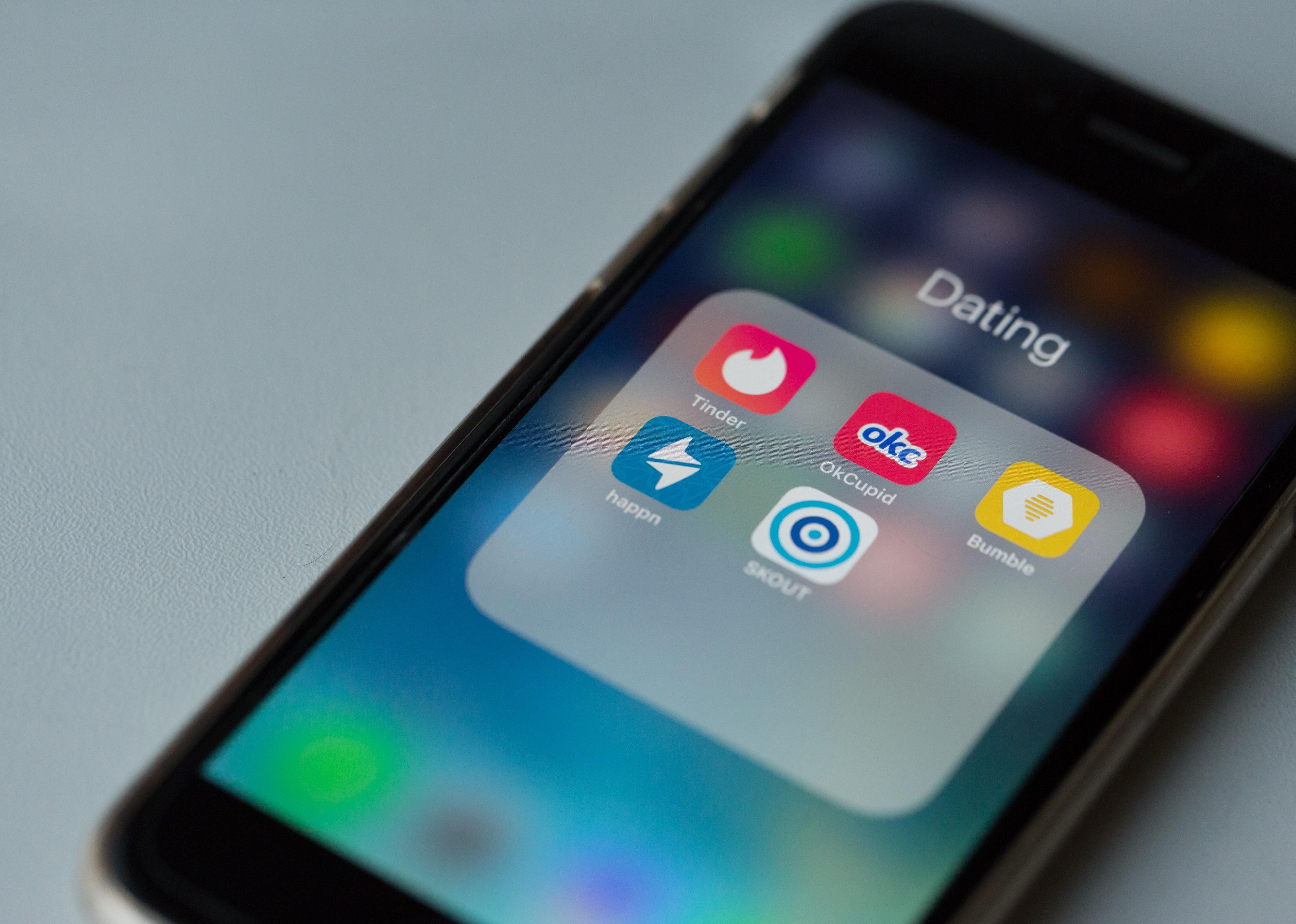
Today, “swiping right” and “swiping left” are synonymous with romantic interest—the former connotes interest, whereas the latter represents a lack thereof. But while this language has become commonplace in today’s dating lingo, it didn’t mean much of anything prior to the launch of Tinder in 2012. Though Tinder wasn’t the first dating app of its kind—gay dating apps Grindr and Scruff came before—it was, by and large, the most ubiquitous, with . Other dating apps that launched after Tinder—i.e., Bumble, Hinge, etc.—continued popularizing this new swipe culture of dating where people have access to countless potential matches at their literal fingertips, whether they’re looking for long-term love or quick hookups.
2010s: People start sliding into each others’ DMs.
The idea of “sliding into the DMs” is one that has evolved with social media and means that someone is sending another person a private, direct message. The phrase first started appearing as a , and has since come to represent a slick, confident way for someone to start a conversation with a romantic interest—most often one that they don’t know well or, in some cases, at all—on social media. Though the trend has its , it has a number of success stories, too, including a few celebrity romances that started with a slide into the DMs. For example, by sliding into her DMs on Twitter.
2010s: Money sharing apps change the financial etiquette of dating.
Dating apps may have changed how people meet potential partners, but money-sharing apps are switching up the finances of dating today. Apps like Venmo have made it so that dating can be more transactional than romantic thanks to changing how people pay for dates—with potentially petty or stingy implications. A new , whereby one person covers the cost of the date, but if the other person later expresses a lack of interest in pursuing the relationship further, the person who paid sends a Venmo request to the uninterested party for their portion of the date.
For some couples, —made infinitely easier by money-sharing apps—tends to feel slightly unromantic and somewhat jarring when every purchase or activity—from an Uber ride to a bottle of water—has a Venmo request tacked onto it.
2010s: 'Ghosting' becomes a dictionary-approved term.
Like “rebating” and “catfishing,” “ghosting” is yet another term and phenomenon that has emerged alongside the rise of online dating. In 2017, In this case, the trend is one where people essentially disappear from a developing flirtation or relationship. To “ghost” is to stop responding to messages and to go radio silent without warning.
For the most part, and can save someone an awkward conversation where they have to confess a lack of interest in the other person. It’s also possible that ghosting emerged as a byproduct of people remaining constantly dissatisfied with matches on apps, in part, because they are always thinking about their other potential matches. In that sense, the idea that these dating apps are overly plentiful with eligible singles can make people tempted to cut ties with less-than-perfect matches in favor of seeing what other options are out there.
2020s: People are experiencing dating fatigue.
Many of the changes in dating that have occurred in the past couple of decades have reflected society's overarching need to create convenience, efficiency, and tech-powered solutions in the romantic arena. However, we're now at a point where dating tools and trends that have emerged—swiping, DMing, ghosting, etc.—are leading to dating and hookup fatigue. Ironically, this is resulting in a new trend that is, in essence, a return back to .
With this old-turned-new approach, daters prefer smaller pools of potential matches to the wide variety that they were presented with through apps. While volume was once exciting, . Now, many are opting for quality over quantity.